Water deeply, then allow the upper few inches of soil to dry before watering again. Established plants tolerate some drought but need supplemental irrigation during Phoenix summers. Containers require more frequent checks.
Size
10-20 ft tall × 8-15 ft wide
Habit
Upright tree – multi-trunk
Toxicity
Toxic — Pets & Livestock
Description
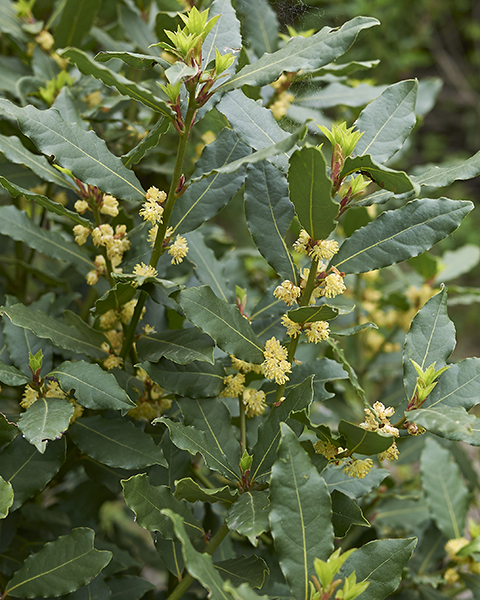
Bay laurel (Laurus nobilis) is an aromatic Mediterranean shrub or small tree with leathery leaves traditionally used as a culinary seasoning.
Bloom Time
Spring
Deciduous / Evergreen
Evergreen
Special Features
Edible, Fragrant
Growth Rate
Slow to moderate
Growth Habit
Upright tree – multi-trunk
Mature Size
10-20 ft tall × 8-15 ft wide
Flower Color
Yellow-green
Foliage Color
Dark green
Landscape Use
Container / Patio, Hedge / Screen
Garden Style
Edible Garden, Hedge / Formal
Soil
Alkaline Tolerant, Sandy / Rocky, Well-Drained
Companion Plants
Oregano, Rosemary, Sage, Thyme, Well-drained areas
Toxic — Pets & Livestock
Toxic to pets if ingested (ASPCA lists bay laurel as toxic to dogs, cats, and horses)
Care Instructions
Light: Morning sun with afternoon shade is best in Phoenix; protect from intense western exposure and reflected heat.
Water: Water deeply, then allow the upper few inches of soil to dry before watering again. Established plants tolerate some drought but need supplemental irrigation during Phoenix summers. Containers require more frequent checks.
Soil: Well-drained loam or sandy soil; tolerates moderately alkaline conditions. Avoid waterlogged sites and use a freely draining potting mix in containers.
Mature size: Typically 10–20 feet tall and 8–15 feet wide in cultivated landscapes; potentially larger with age. Easily maintained smaller through pruning or container culture.
Bloom: Small, inconspicuous flowers appear in spring on established plants.