

Dypsis lutescens, the feathery clumping palm sold for indoors — the standard way to soften a corner. In Arizona it is an indoor plant, and the brown tips are a water-quality problem you can manage.
Nothing fills an empty corner like an areca palm: a clump of slender golden canes carrying arching, feathery fronds, five or six feet tall in a few years and soft where most big houseplants are stiff. It is one of the better palms for indoor light and tolerates our air conditioning reasonably well. Ours are already full clumps.
The one honest warning: almost every areca palm in Arizona has brown frond tips. That is fluoride and mineral salts in our hard tap water plus dry air, not neglect, and it is manageable with filtered water and a regular flush. Outdoors it fails here — the sun burns it and the dry heat browns it — so plan on keeping it inside. The rest of the bench is on our Houseplants page.

This is the areca palm we commonly carry. Availability changes week to week and season to season, so call (480) 987-3308 or stop in to see what’s on the bench today.
A multi-cane clump with arching, feathery green fronds on golden-yellow stems. Sold at about three feet; reaches six feet indoors. Bright indirect light, evenly moist, filtered water if you can.
Looking for one that isn’t listed? Ask — we can usually suggest a close match or tell you when it tends to come around.
The care tag was written somewhere else. This is the Queen Creek version.
Areca palms want bright indirect light — a spot near an east window or across the room from a south one, all day. In a dim corner the fronds thin out and yellow over months. Direct sun through a west window in summer scorches the fronds. Turn the pot every couple of weeks so the clump grows evenly.
Dry air adds to the tip burn. Keep the palm well away from air-conditioning and heater registers, group it with other plants, and mist or use a pebble tray in the driest months. Trim brown tips with scissors, following the leaf shape, rather than cutting whole fronds.
Remove whole fronds only when they are entirely brown, cutting at the base. Never cut the growing tip of a cane — a palm cane that loses its tip is dead. The lowest fronds yellow and drop over time as the clump grows; that is normal.
Water when the top inch of mix is dry, thoroughly, every five to seven days in summer indoors and every ten days in winter, and empty the saucer. Our tap water is hard and fluoridated, and areca palms show it as brown frond tips. Use filtered or rain water when you can, and flush the pot with several times its volume of water every couple of months to push salts out.
A well-draining palm or potting mix with added perlite, in a heavy pot with a hole — a tall areca in a light pot tips over. They like to be slightly root-bound; repot every two to three years. Feed a balanced fertilizer with micronutrients at half strength monthly from March through October; yellowing between the leaf veins means it wants magnesium and iron.
Areca palm is non-toxic to cats and dogs. Spider mites are the pest in dry air — look for fine webbing and stippled fronds, rinse in the shower and treat with insecticidal soap. Outdoors in Queen Creek it burns in sun and browns in the dry heat; a fully shaded patio in spring or fall is the most it can take.
Yellowing, spots, no new growth — snap a photo of the plant and its window and we’ll diagnose it at the bench. Advice is free.
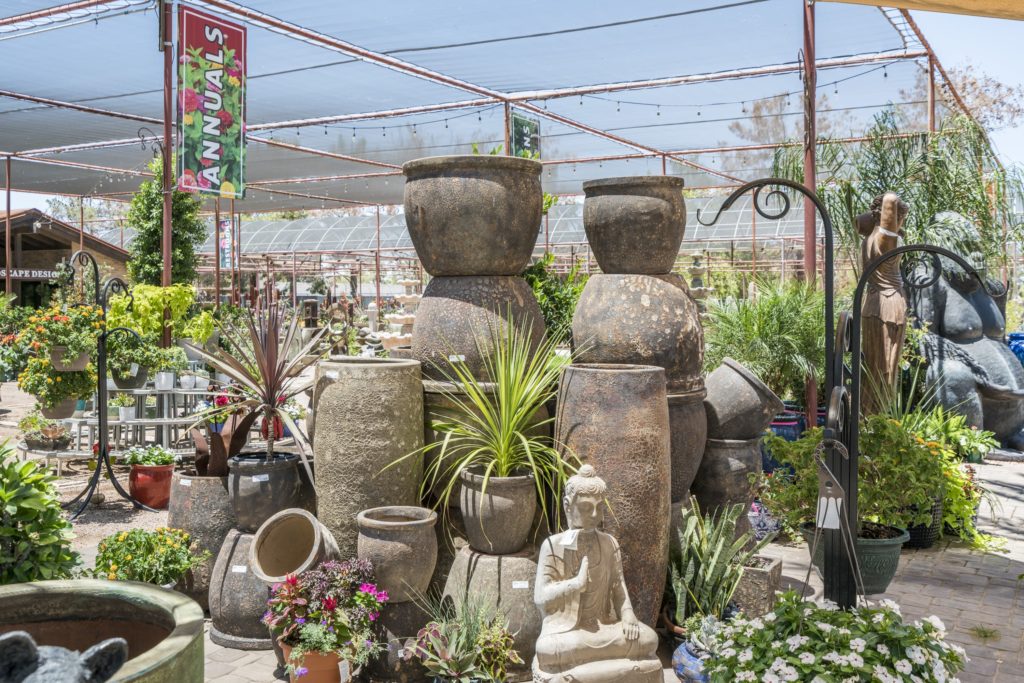
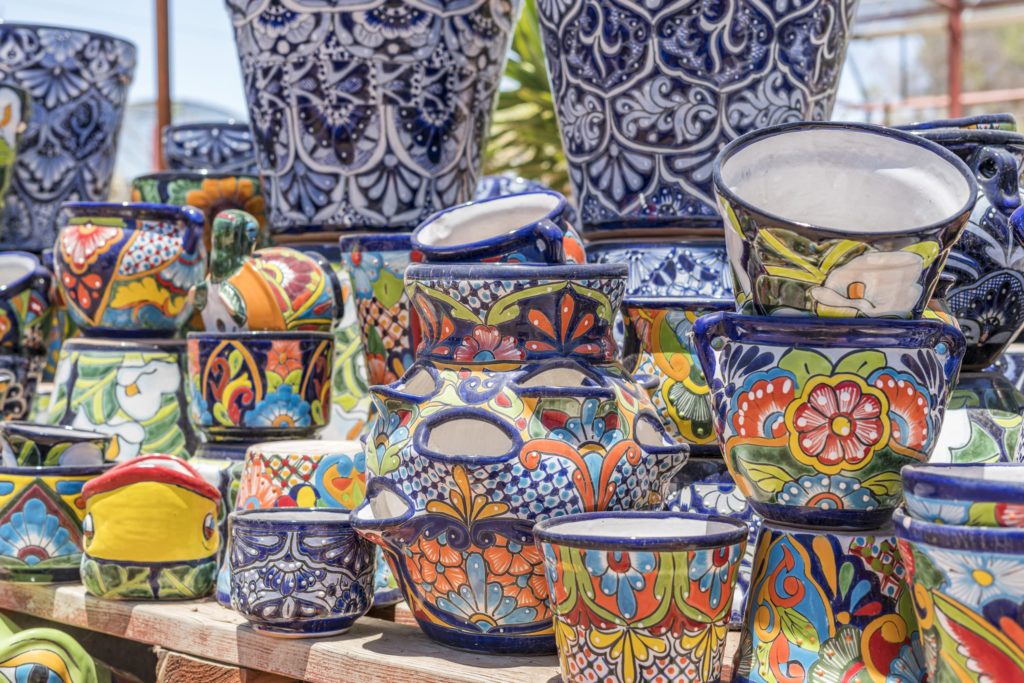
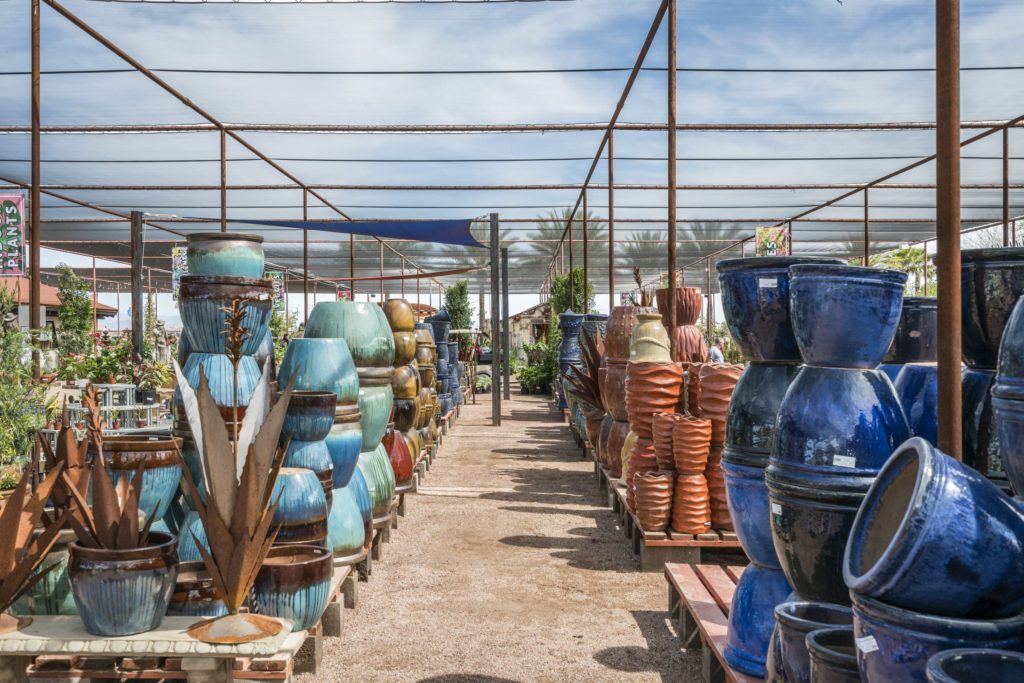
We stock indoor potting mix, orchid bark and perlite for the chunky blends aroids and epiphytes want, balanced houseplant fertilizers, insecticidal soap and neem for the usual mealybug and mite visits, and moss poles, hoops and saucers. The pottery yard has terracotta, glazed and lightweight pots from 4-inch up, plus hanging baskets and cache pots.
Fluoride and mineral salts in hard tap water, plus dry indoor air — nearly universal in Arizona. Switch to filtered or rain water, flush the pot every couple of months, keep it away from vents, and trim the tips cosmetically.
Not well. Direct sun scorches it, the dry heat browns it, and frost kills it. Keep it indoors, with at most a shaded patio stay in spring or fall.
Yes — it is non-toxic to cats and dogs, one of the reasons it is so widely used indoors.
When the top inch is dry: about every five to seven days in summer indoors and every ten days in winter. Water thoroughly and empty the saucer.
The oldest fronds yellow and drop naturally as the palm grows. Widespread yellowing means too little light, overwatering, or a magnesium or iron shortage — a palm fertilizer with micronutrients fixes the last one.
Six feet or so in a large pot over several years, and as wide as it is tall. Slightly root-bound plants grow more slowly, which is often what you want.
Areca Palm live on the houseplant bench; any staff member can point you to them. Locally owned, and a short drive from San Tan Valley, Gilbert, Chandler and Mesa.