Low water once established. Water deeply, then let soil dry between waterings. Occasional supplemental summer irrigation supports flowering; water new plants more regularly while roots establish.
Size
0.5-1 ft tall × 1-1.5 ft wide
Habit
Perennial clump – mounding
Toxicity
Not Established
Description
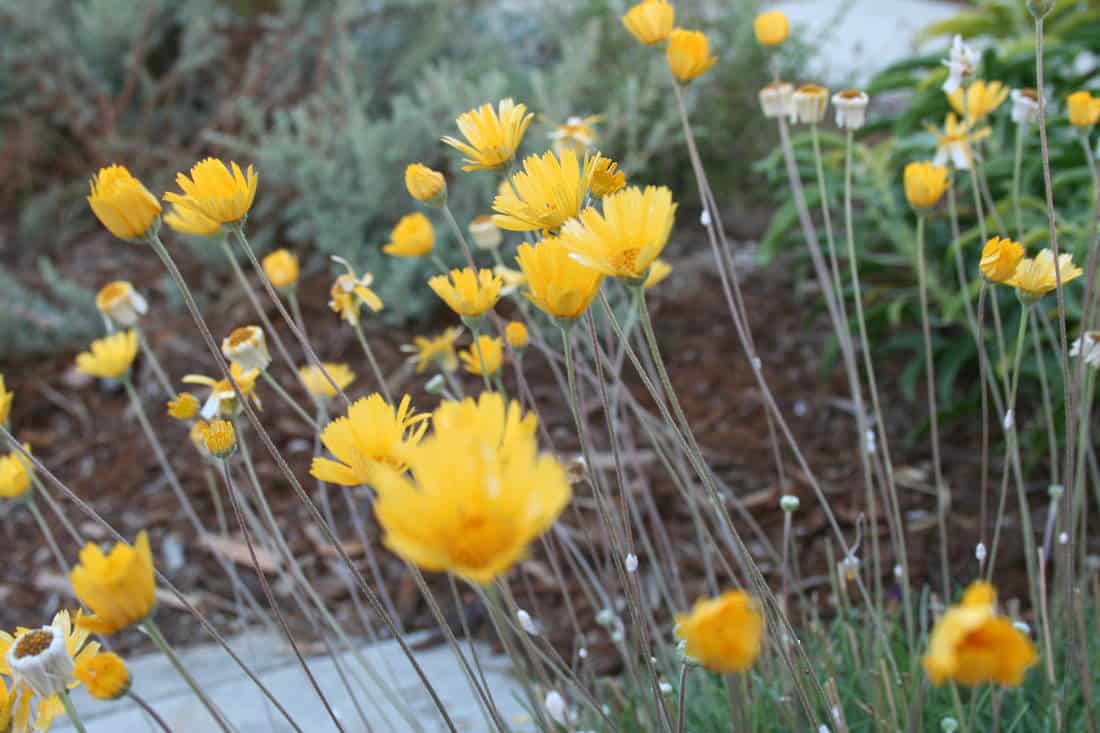
A compact Southwestern native perennial with a tuft of narrow leaves and cheerful yellow daisies held above the foliage on slender stems.
Bloom Time
Spring through fall; nearly year-round in mild winters
Blackfoot daisy, Damianita, Desert marigold, Firecracker penstemon, Red yucca
Not Established
Not established — verify
Care Instructions
Light: Full sun; tolerates light afternoon shade in Phoenix, especially near hot west-facing walls.
Water: Low water once established. Water deeply, then let soil dry between waterings. Occasional supplemental summer irrigation supports flowering; water new plants more regularly while roots establish.
Soil: Well-drained sandy, gravelly, or rocky soil; tolerates alkaline desert soils. Avoid soggy soil and excessive fertilizer.
Mature size: Approximately 6–12 inches tall and 12–18 inches wide; flower stems may reach 18 inches.
Bloom: Flowers most heavily in spring and fall in Phoenix, with intermittent blooms during mild winter weather; extreme summer heat may reduce flowering.
Evergreen / deciduous: Evergreen in Phoenix; foliage may thin under severe drought or cold stress.