

Assorted tillandsias — soilless bromeliads for terrariums, driftwood and shelf displays. In our dry air they need more water than the label says, and the rest is easy.
Air plants are epiphytes that take everything they need through their leaves, so they live on driftwood, in glass globes, on a shelf or wired to a wreath — anywhere with light and airflow. We carry a mixed selection of species and sizes, from finger-length silver rosettes to hand-sized green ones, and the mix changes through the year.
The instruction most people get with an air plant — “mist occasionally” — is written for a humid climate. In an air-conditioned Arizona house at 15–25 percent humidity, they need a proper weekly soak and a fast dry-off, and with that one change they live for years and flower. The rest of the bench is on our Houseplants page.

This is the air plants we commonly carry. Availability changes week to week and season to season, so call (480) 987-3308 or stop in to see what’s on the bench today.
A rotating assortment of Tillandsia species — silvery, fuzzy-leaved types that take brighter light and drier conditions, and smoother green types that want a little more shade and water. Sold individually; sizes vary. Ask which is which at the bench.
Looking for one that isn’t listed? Ask — we can usually suggest a close match or tell you when it tends to come around.
The care tag was written somewhere else. This is the Queen Creek version.
Once a week, submerge the plants in room-temperature water for twenty to thirty minutes. Then — this is the important part — shake out the water trapped in the center and set them upside down somewhere airy to dry completely within four hours. Water left in the crown rots the plant. In the hottest, driest weeks, soak twice a week; during the monsoon, once is plenty. Misting between soaks is fine but is not a substitute.
Air plants need moving air to dry out and to breathe. Closed terrariums, sealed globes and enclosed shadow boxes hold moisture and kill them slowly. Use open containers, and give them a spot where air circulates but not directly under an air-conditioning vent, which desiccates them.
Add a bromeliad or air-plant fertilizer at quarter strength to the soaking water once a month in spring and summer. Healthy plants flower once — often a vivid spike of pink, purple or red — and then produce offsets (“pups”) at the base before the mother plant slowly declines. Leave the pups attached until they are a third the size of the parent, then twist them off.
Bright, indirect light near a window; silver, fuzzy-leaved species (the ones with more trichomes) take more light than smooth green ones. Direct sun through glass cooks them, especially in a closed glass globe, which turns into an oven. A few feet from an east window or under a skylight is ideal.
Our tap water is hard and softened water is worse — the sodium damages them. Use filtered, rain or bottled water for soaking if you can. If you must use tap water, let it sit overnight and soak a little less often. A white mineral crust on the leaves means it is time to switch.
Glue (a dab of E6000 or hot glue on the base, never over the leaves) or wire to wood, cork or stone; never bury the base in moss that stays wet. Air plants are non-toxic to cats and dogs, though cats like to bat them off shelves. Outdoors, a shaded patio in the mild months only; frost and full sun both kill them.
Yellowing, spots, no new growth — snap a photo of the plant and its window and we’ll diagnose it at the bench. Advice is free.
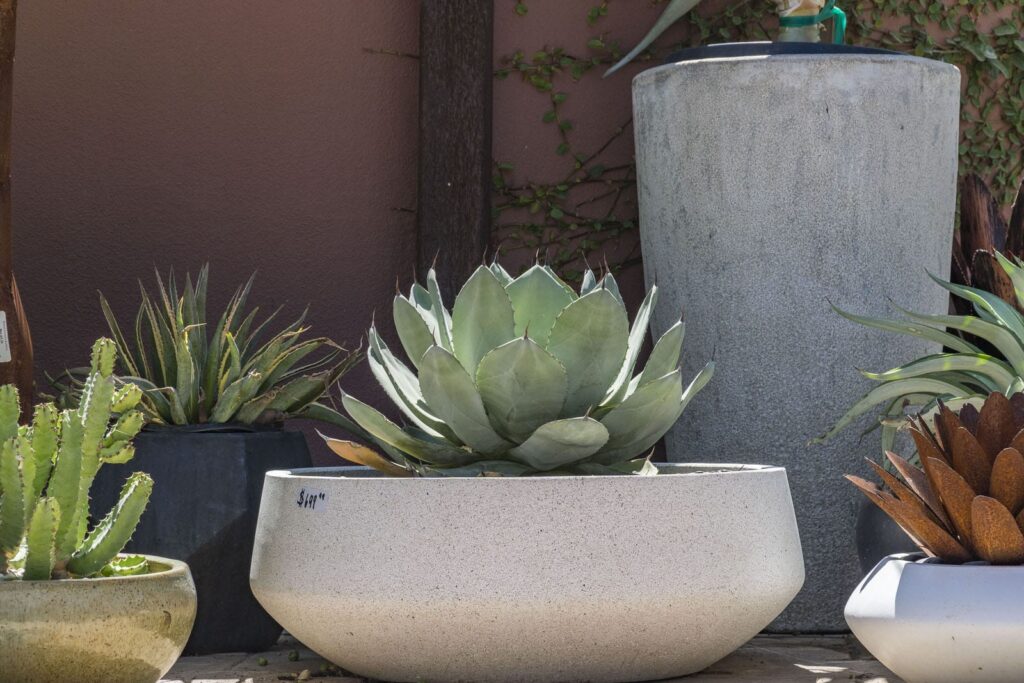
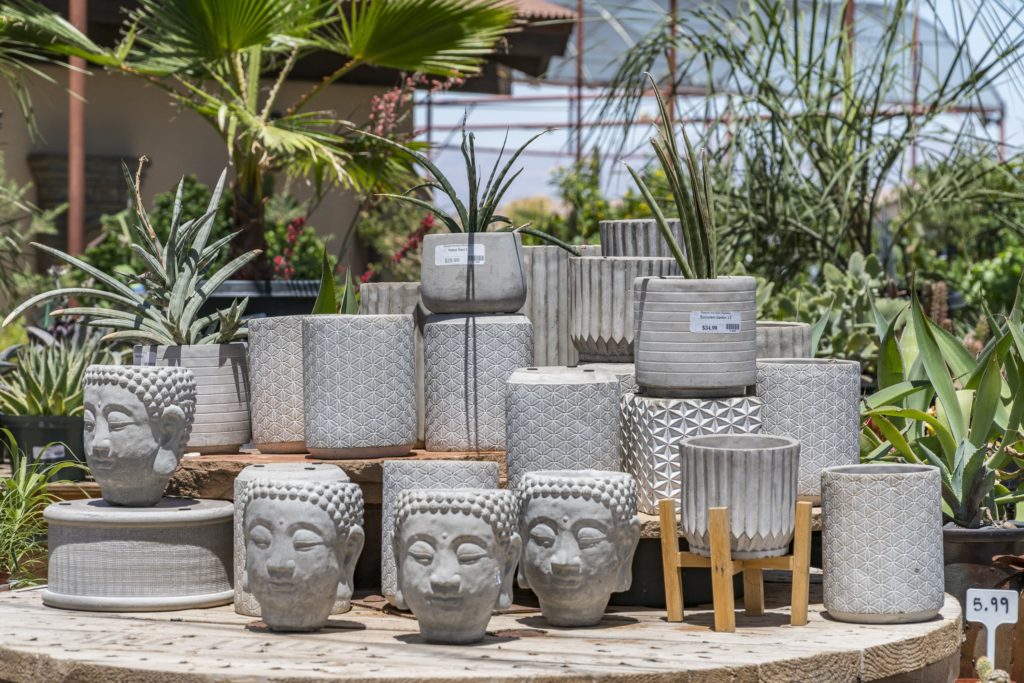
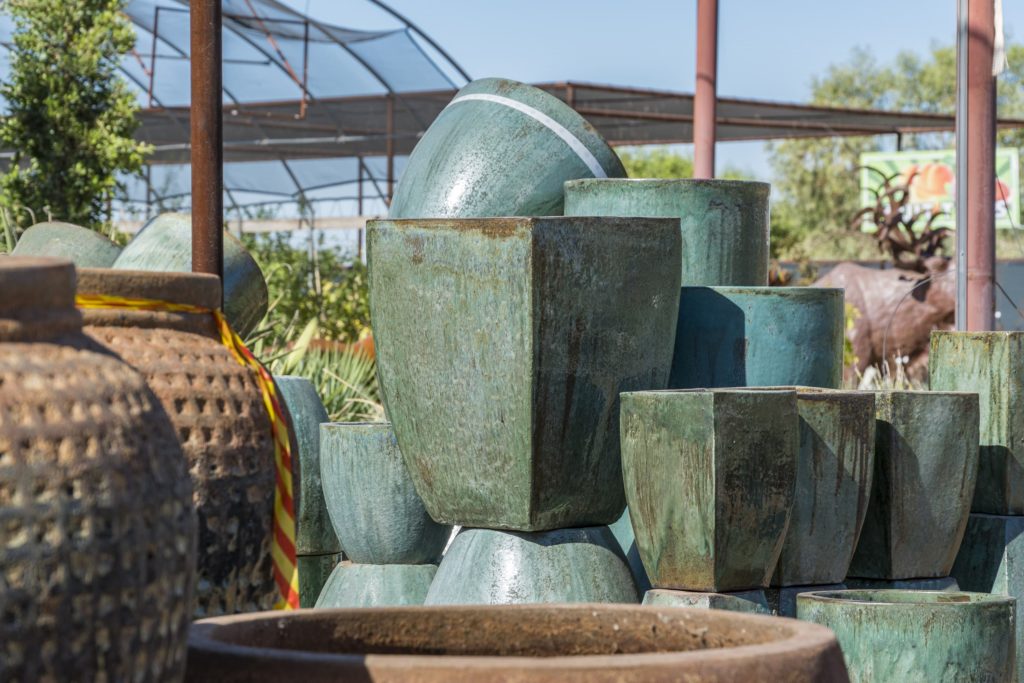
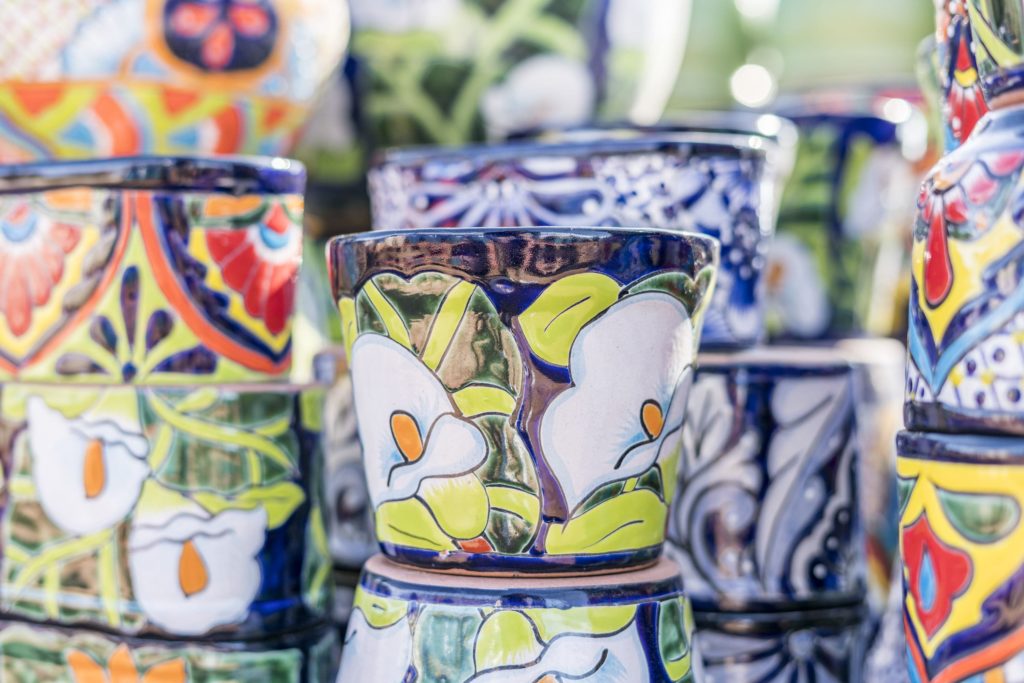
We stock indoor potting mix, orchid bark and perlite for the chunky blends aroids and epiphytes want, balanced houseplant fertilizers, insecticidal soap and neem for the usual mealybug and mite visits, and moss poles, hoops and saucers. The pottery yard has terracotta, glazed and lightweight pots from 4-inch up, plus hanging baskets and cache pots.

Soak them for twenty to thirty minutes once a week — twice in the hottest, driest weeks — then shake them out and dry them upside down within four hours. Misting alone is not enough in our dry air.
Water sat in the center after soaking, or it lived in a closed container without airflow. Always shake out and dry upside down, and keep them in open displays.
Underwatering, the most common problem here — the “mist occasionally” advice does not work at 20 percent humidity. Move to weekly soaks and it will plump up within a few weeks. Extra-curled leaves on a silver species are normal.
No. They absorb water and nutrients through their leaves. Never pot them in soil or wet moss; mount them on wood, stone or wire, or set them in an open dish.
Yes, tillandsias are non-toxic to cats and dogs.
Once, when mature, with a colorful spike that lasts weeks. Afterwards it produces pups at the base, which grow into new plants as the parent fades over a year or two.
Air Plants live on the houseplant bench; any staff member can point you to them. Locally owned, and a short drive from San Tan Valley, Gilbert, Chandler and Mesa.