Low water once established. Water deeply but infrequently, allowing soil to dry thoroughly between waterings. Reduce watering in winter; containers need more frequent monitoring.
Size
1.5-2 ft tall × 2-3 ft wide
Habit
Rosette succulent – clumping
Toxicity
Sap / Skin Irritant
Description
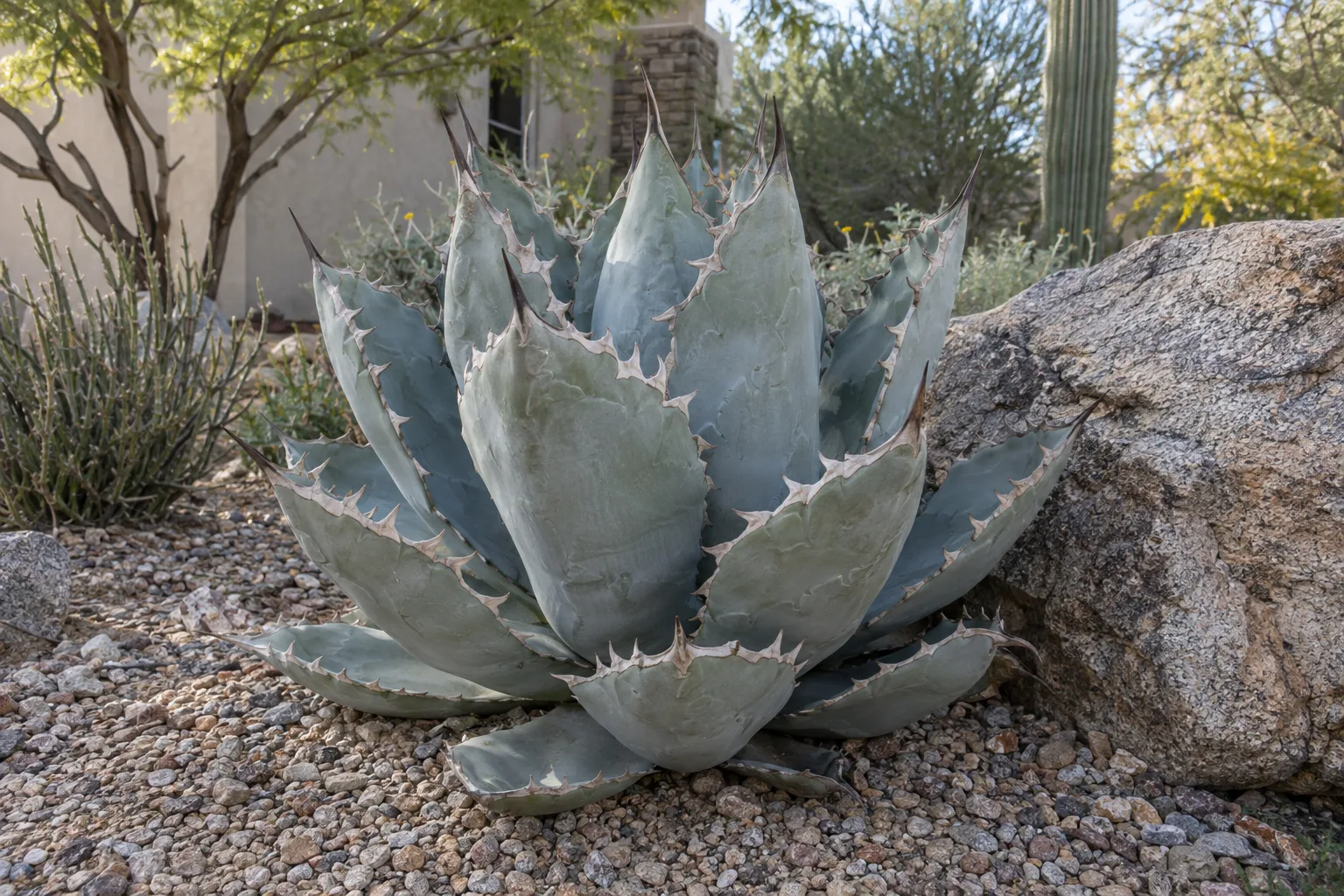
A sculptural agave sold as ‘Dakota’, forming a compact rosette of broad, thick blue-green leaves edged with prominent teeth and tipped with sharp terminal spines.
Blackfoot daisy, Golden barrel cactus, Red yucca, Santa Rita prickly pear
Sap / Skin Irritant
Sap is a skin/eye irritant.
Care Instructions
Light: Morning sun with afternoon shade is best in Phoenix. Acclimate gradually to stronger sun; intense reflected heat and western exposure can scorch leaves.
Water: Low water once established. Water deeply but infrequently, allowing soil to dry thoroughly between waterings. Reduce watering in winter; containers need more frequent monitoring.
Soil: Excellent drainage is essential. Use gritty mineral-rich soil or cactus mix amended with pumice. Plant above grade in heavy desert soils.
Mature size: Approximately 1–2 feet tall and 2–3 feet wide, excluding the flower stalk; dimensions vary with growing conditions and the plant sold under this trade name.
Bloom: Blooms once at maturity, typically after many years to decades. The flowering rosette dies afterward; any offsets can continue growing.