Low water once established. Water deeply but infrequently, allowing soil to dry thoroughly between waterings. Occasional supplemental summer irrigation helps during prolonged Phoenix heat; keep nearly dry in winter.
Size
2-3 ft tall × 3-4 ft wide
Habit
Rosette succulent – clumping
Toxicity
Sap / Skin Irritant
Description
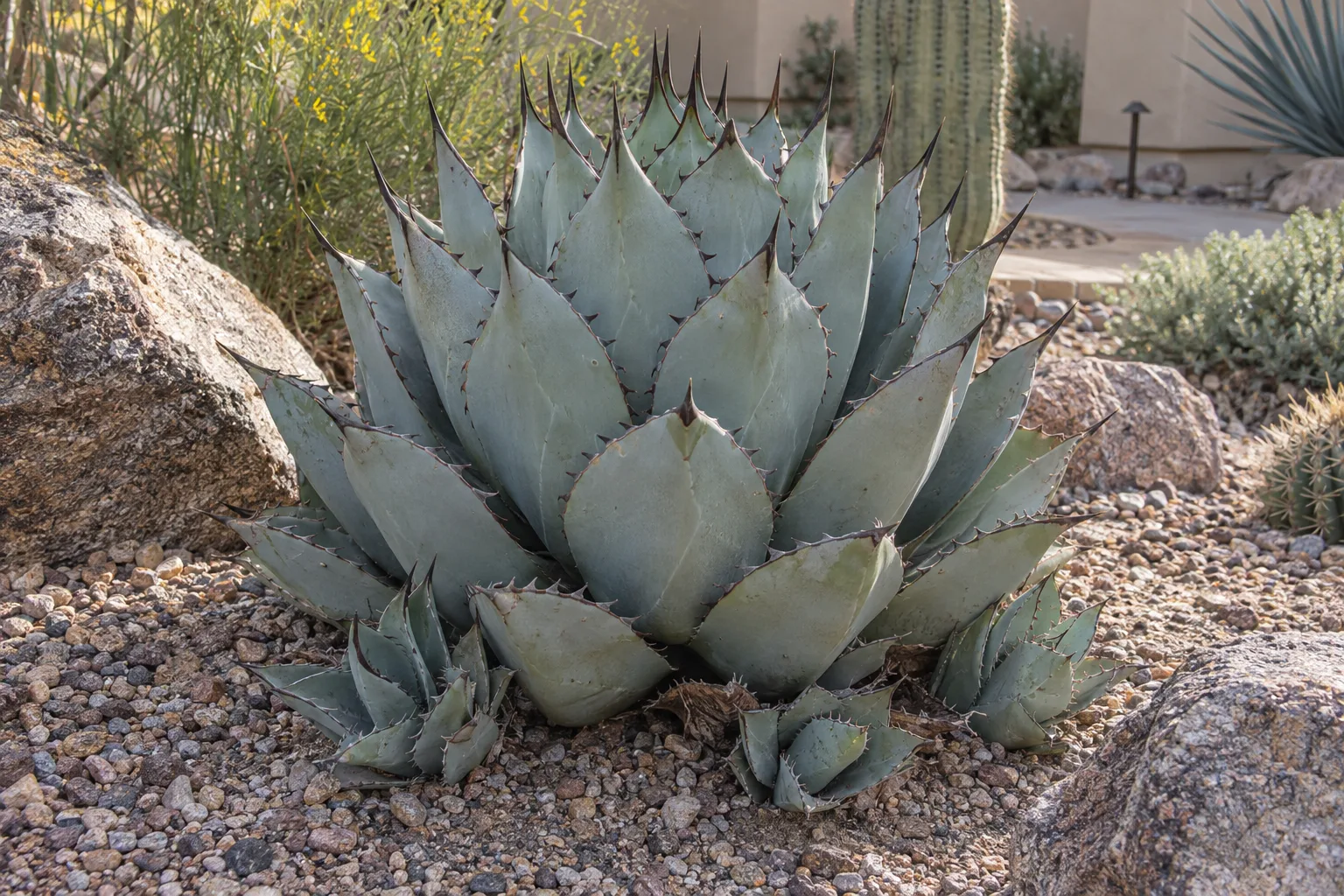
A compact agave native to New Mexico and western Texas, with stiff, blue-gray leaves edged in dark teeth and tipped with sharp terminal spines. Also classified as Agave parryi subsp. neomexicana.
Bloom Time
Late spring to early summer; monocarpic (blooms once at maturity)
Blackfoot daisy, Desert spoon, Golden barrel cactus, Red yucca, Santa Rita prickly pear
Sap / Skin Irritant
Sap is a skin/eye irritant.
Care Instructions
Light: Full sun to light shade; afternoon shade is beneficial in Phoenix, especially near heat-reflecting walls or pavement.
Water: Low water once established. Water deeply but infrequently, allowing soil to dry thoroughly between waterings. Occasional supplemental summer irrigation helps during prolonged Phoenix heat; keep nearly dry in winter.
Soil: Very well-drained, gravelly or sandy soil. Plant on a raised mound if drainage is poor, and keep the crown above surrounding soil.
Mature size: Typically 1–2 feet tall and 2–3 feet wide per rosette; offsetting colonies become wider.
Bloom: Blooms once at maturity, usually after several decades. The flowering rosette dies afterward, but established offsets can continue growing.