Moderate water needs; not a desert-adapted tree. Water deeply across the root zone, allowing the upper few inches of soil to dry between irrigations. Increase irrigation during extreme heat and fruit development; avoid constantly wet soil.
Size
15-20 ft tall × 15-20 ft wide
Habit
Upright tree – single-trunk
Toxicity
Toxic — Pets
Description
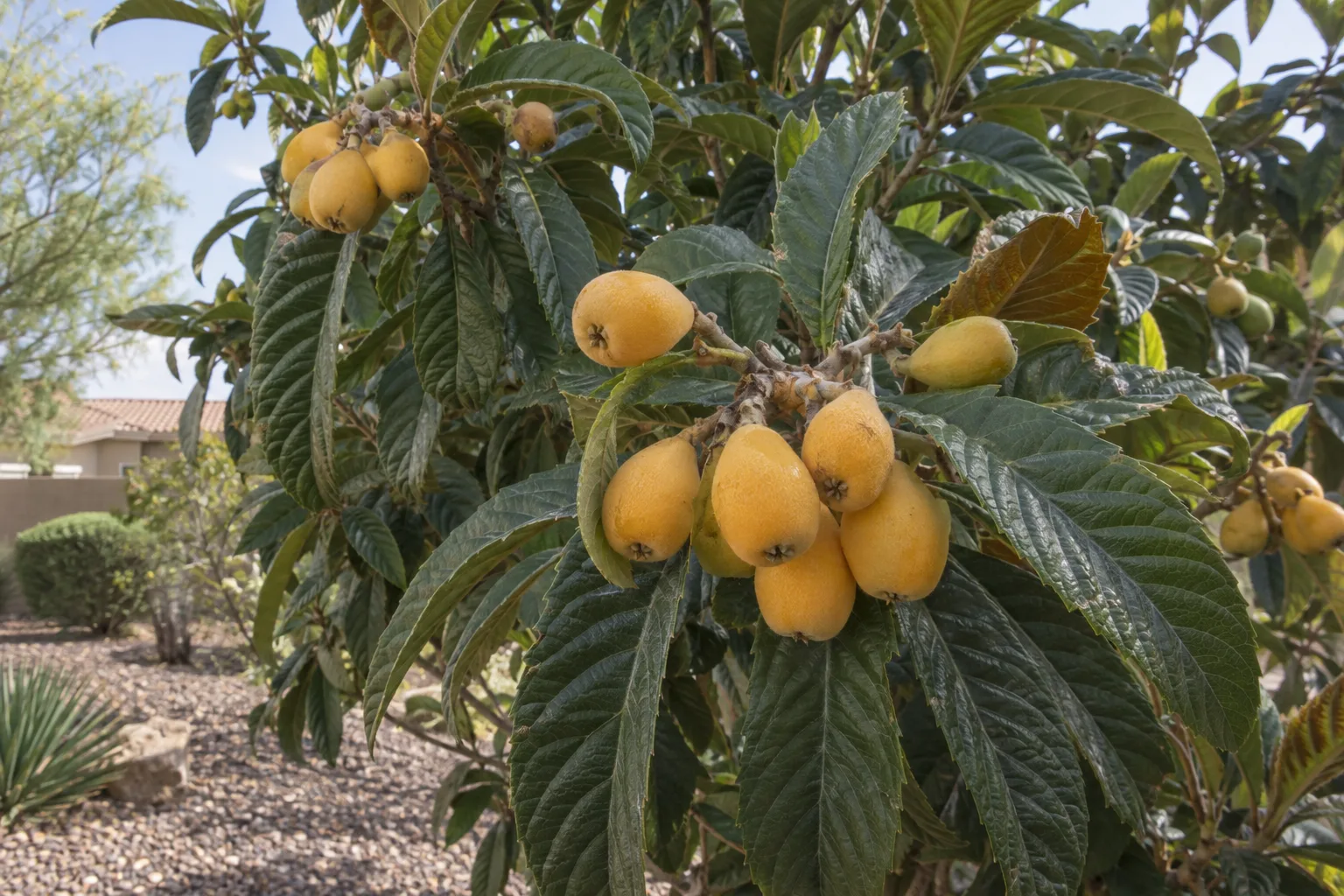
A compact fruiting loquat cultivar with bold evergreen leaves and yellow-skinned, pear-shaped fruit containing pale, juicy, sweet-tart flesh. Benefits from protection against Phoenix’s intense summer heat.
Dwarf pomegranate, Pineapple guava, Society garlic
Toxic — Pets
Fruit flesh edible; seeds contain cyanogenic compounds, toxic if eaten in quantity.
Care Instructions
Light: Morning sun with afternoon shade is ideal in Phoenix. Avoid reflected heat from west-facing walls, pavement, and gravel.
Water: Moderate water needs; not a desert-adapted tree. Water deeply across the root zone, allowing the upper few inches of soil to dry between irrigations. Increase irrigation during extreme heat and fruit development; avoid constantly wet soil.
Soil: Well-drained soil; slightly acidic to neutral conditions are preferred. Phoenix’s alkaline soils may cause micronutrient deficiencies. Mulch the root zone, keeping mulch several inches away from the trunk.
Mature size: Relatively compact for a loquat; allow approximately 10–15 feet of height and spread, with ultimate size varying by rootstock, growing conditions, and pruning.
Bloom: Fragrant flowers appear in fall through early winter, followed by fruit in late winter or spring. Freezing temperatures can damage flowers and developing fruit.
Evergreen / deciduous: Evergreen.
Growth rate: Moderate; slower with intense heat, alkaline-soil stress, or insufficient irrigation.