
January is a good time to plant peas in Arizona, as long as seed goes in the ground by about the middle of the month. Peas sown then grow through cool weather and produce pods in March and April, before highs in the mid 80s slow them down.
Key takeaways
- Sow pea seed directly in the ground in early to mid January; most varieties need roughly 55 to 70 days to reach harvest.
- Pod production slows once daytime highs reach the mid 80s, which in the East Valley is usually late March or April.
- Plant seed 1 inch deep and 2 inches apart, in rows 18 to 24 inches apart, and put the trellis up on planting day.
- Keep the soil evenly moist with drip irrigation, since overhead watering encourages powdery mildew as the weather warms.
- Skip transplants, because pea roots resent being disturbed and direct seeding is faster.

Why is January a good time to plant peas in Arizona?
January soil and air temperatures sit in the range peas prefer, and the harvest window closes before the heat arrives. Peas germinate in cool soil, roughly 45°F to 70°F, and set the best pods when days stay below about 80°F.
Our winter days in Queen Creek often run in the 60s and low 70s, with nights in the 40s. That is ideal for steady growth. By late March, highs climb into the 80s, and pods slow down or stop. A mid January sowing gives the vines about ten weeks of cool growing weather, which is enough for most varieties to flower and fill pods.
Earlier sowings in the fall and early winter also work, and the University of Arizona Cooperative Extension publishes a vegetable planting calendar for Maricopa County with the recommended pea windows. Late January is cutting it close. February sowings often give a small harvest at best.
Frost is the other consideration. Pea seedlings handle a light frost, but open flowers and young pods can be damaged by a hard freeze. Queen Creek can see frost into February, so keep a frost cloth on hand. For more cool-season edibles, browse our herbs, vegetables and berries page.
Which peas should I plant in the low desert?
Snap peas, snow peas and shelling peas all work here, and the best choice depends on how you want to eat them and how much trellis space you have. Pick varieties that mature in 70 days or fewer.
Snap peas
Snap peas have thick, crunchy, edible pods with developed peas inside. Sugar Snap grows on vines that can reach 5 to 6 feet, so it needs a sturdy trellis. It produces over a longer stretch than shelling types.
Snow peas
Snow peas are picked while the pod is still flat, and the whole pod is eaten. Oregon Sugar Pod II is a common choice and matures in about 60 days. Fast maturity is a real advantage when spring heat is coming.
Shelling peas
Shelling peas are the classic garden pea, where you open the pod and eat only the seeds. Wando is known for tolerating warmth better than most, and Little Marvel stays around 18 inches tall, which suits a container. These are varieties we commonly carry, though availability changes week to week and season to season.
How do I prepare Queen Creek soil for peas?
Work 3 to 4 inches of compost into the top 8 to 12 inches of soil before planting. Native East Valley soil is alkaline, often compacted, and may sit on a layer of caliche, a hard calcium carbonate hardpan that stops water from draining.
Peas want well-drained soil with a pH close to neutral. You cannot change our alkaline soil quickly, but compost improves drainage and buffers the root zone. If you hit caliche within a foot of the surface, plant in a raised bed instead of fighting it. Water that pools around the roots rots seed before it sprouts.
Go easy on nitrogen fertilizer. Peas pair with soil bacteria that supply much of their own nitrogen, and heavy feeding produces leaves at the expense of pods. A pea inoculant powder on the seed is optional but cheap, and it helps most in beds that have never grown peas or beans.
How do I plant peas in January?
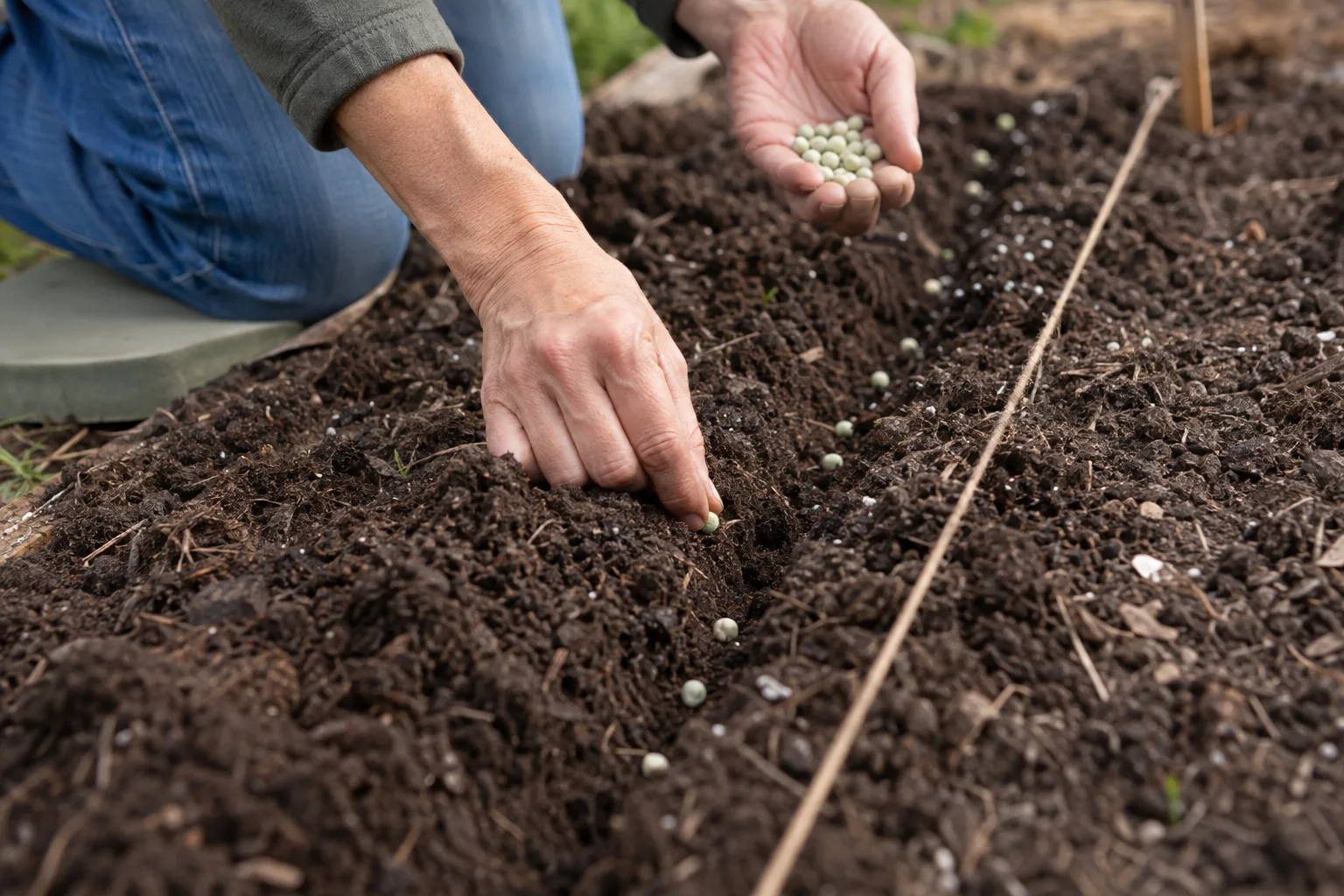
Sow seed directly into prepared soil, set up the trellis first, and keep the bed moist until the seedlings emerge. Follow these steps on a calm day.
- Pick a spot with at least 6 hours of direct sun. An east or south facing bed warms fastest in winter.
- Install the trellis, netting or wire before you sow, so you do not damage roots later.
- Dampen the seed in water for a few hours if you like, then roll it in inoculant if you are using it.
- Sow seed 1 inch deep and about 2 inches apart, in rows 18 to 24 inches apart.
- Water gently but deeply to settle the soil. Keep it evenly moist, not soggy.
- Expect sprouts in roughly 7 to 14 days. Cold soil slows germination.
- Once seedlings are up, spread 2 inches of straw mulch around them, keeping it off the stems.
Do not start peas indoors and transplant them. The taproot is sensitive, and even careful handling sets plants back.
How much water do peas need in the low desert?
Peas need evenly moist soil through the whole season, which in January usually means watering about every 3 to 4 days. Wind and sun change that, so check the soil 2 inches down before you water.
As days warm in March, plan on watering more often, sometimes every day or two in a sunny bed. Drip irrigation or a soaker line is the better choice, because wet leaves invite powdery mildew. Our water is hard, and the salts can build up in containers, so flush pots with a long, slow soak now and then. Wilting at midday in cool weather usually signals dry roots or a root problem.
What should I do with peas from February to April?
Keep them watered, picked and watched for the first signs of heat stress. The table below is a rough guide for a mid January sowing in the East Valley, and your own bed may run a week earlier or later.
| Month | What to expect | What to do |
|---|---|---|
| January | Seed germinates, seedlings emerge | Sow early to mid month, trellis, water, protect from hard frost |
| February | Vines climb and begin to flower | Guide tendrils onto the trellis, check for aphids, keep soil moist |
| March | Pods form and fill | Pick every 2 to 3 days, watch for mildew, increase watering |
| April | Production slows as highs reach the mid 80s or more | Pick what is left, pull spent vines, prepare the bed for warm-season crops |
Frequent picking keeps the plant producing. Pods left to mature on the vine tell it to stop flowering. For a month-by-month view of everything else in the garden, see our gardening calendars.
What problems show up on winter peas?
Aphids and powdery mildew are the two you are most likely to meet. Aphids are small, soft insects that cluster on new growth and the undersides of leaves. A firm spray of water from the hose knocks most of them off.
Powdery mildew shows as a white, dusty coating on leaves, and it becomes more common as March warms up. Give vines room for air to move, water at the soil line, and remove badly affected leaves. If you choose a spray such as insecticidal soap, read the label and follow it exactly.
Yellow leaves usually point to soggy soil or poor drainage. Pods that stop forming late in the season usually point to heat, and at that point the best step is to pick what is there and pull the plants.

Frequently asked questions
Can I plant peas in February in Arizona?
You can, but expect a smaller harvest. Seed sown in February often reaches the flowering stage just as highs push into the 80s, and pods stop filling. Choose a fast variety of 60 days or less, sow as early in the month as possible, and have a shaded or cooler spot ready.
Will a frost kill my pea seedlings?
A light frost usually leaves seedlings unharmed, though leaf tips can look limp for a day or two. A hard freeze in the mid 20s can damage them, and it can ruin open flowers. Cover the bed with frost cloth or a sheet on freezing nights and remove it in the morning.
Can I grow peas in containers?
Yes, and dwarf shelling types suit pots best. Use a container at least 12 inches deep with a quality potting mix, never native soil. Pots dry out faster than beds, so check them often. Browse our pottery and planters for sizes that fit a trellis.
Do I have to inoculate pea seed?
No, peas will grow without inoculant. The powder adds the soil bacteria that help peas make their own nitrogen, and it is most useful in a new bed that has never grown legumes. If your soil has grown peas or beans before, you can skip it without much loss.
What do I plant after the peas finish?
Plant warm-season crops once the soil warms and frost danger has passed. Bush beans, cucumbers, squash and other heat lovers can take the bed in spring, and the pea roots leave some nitrogen behind. Our classes and events page lists upcoming workshops on seasonal planting.
Are peas worth planting if you wait until late January?
Yes, if you can sow by the last week of January and give the bed good sun, drainage and a trellis. You will get a modest harvest of snow or snap peas in March and April. Skip them if your yard is shaded in winter, if you cannot water every few days, or if you want a large crop for freezing. Choose a fast variety and sow early. Come visit us in Queen Creek and we will help you pick one.