

Plant own-root roses in the Arizona low desert from late February to early April, in a hole dug through caliche, with compost-amended backfill, 3 to 4 inches of mulch and deep, drip-fed watering. That timing gives roots six to eight weeks of mild weather before summer.
Key takeaways
- Plant from late February through early April so roots get six to eight weeks of mild weather before highs pass 100°F.
- Choose a spot with at least 6 hours of sun, ideally morning sun and afternoon shade, and keep it 18 inches or more from a block wall.
- Dig the hole about 18 inches deep and 24 inches wide, and break through any caliche so water can drain.
- Set the crown at soil level to 1 inch below it, then add 3 to 4 inches of mulch kept off the canes.
- Water deeply and slowly with drip, about every 2 to 3 days for the first 4 to 6 weeks.
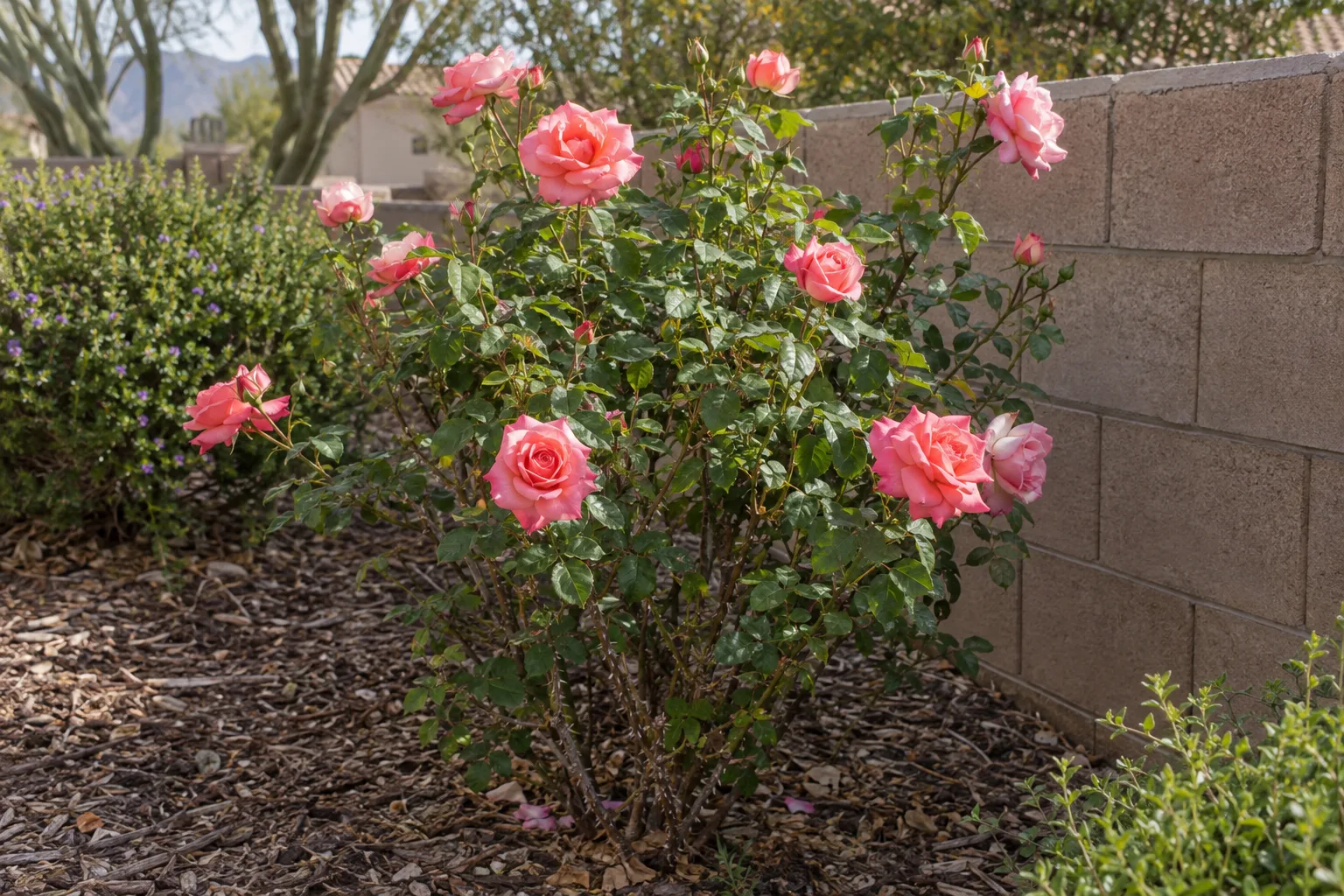
What is an own-root rose, and why plant one in the low desert?
An own-root rose grows on its own roots, so the plant above and below ground is the variety on the label. A grafted rose is a variety budded onto a different rootstock, and you can spot the graft union as a knobby bump at the base of the canes.
When a grafted rose freezes or fails in summer, the rootstock can send up its own canes in place of the variety. Southwest gardeners often see this with the rootstock ‘Dr. Huey’, which makes dark red canes and a short burst of bloom. An own-root rose that dies back to the ground regrows as the same variety, and that is the main reason to choose one here.
Own-root plants can start more slowly, and some varieties are less vigorous than they would be on a strong rootstock. Browse our plant selection to see what roses are available, keeping in mind that availability changes week to week and season to season.
When should I plant own-root roses in Arizona?
Plant from late February through March, with early April still workable if you water carefully and give the young plant some afternoon shade. Earlier is better than later.
By late February, nights in Queen Creek are mostly above freezing, though an occasional frost can still burn tender new growth, so hold off until mid-March if a cold night is in the forecast. Daytime highs in the 70s and low 80s let roots settle in without heat stress. You want six to eight weeks of mild weather before highs reach 100°F, which often happens by May.
A rose planted in May or June spends its first weeks fighting heat instead of growing roots. Our gardening calendars lay out the East Valley timing month by month.
Where should I plant an own-root rose?
Pick a spot with at least six hours of direct sun, ideally morning sun with shade after about 2 p.m. An east-facing bed usually fits that best.
West and south walls throw reflected heat that can scorch leaves and dry the soil quickly, so keep roses roughly 18 inches or more from block walls. Own-root roses tolerate heat better than many gardeners expect, but a wall-side bed in July above 110°F is still a hard place for a first-year plant.
Check drainage before you commit. Dig the hole, fill it with water, and see how long it takes to empty. Water still standing after a full day usually points to caliche or compacted soil below, and the hole needs more work or the bed needs to be raised.
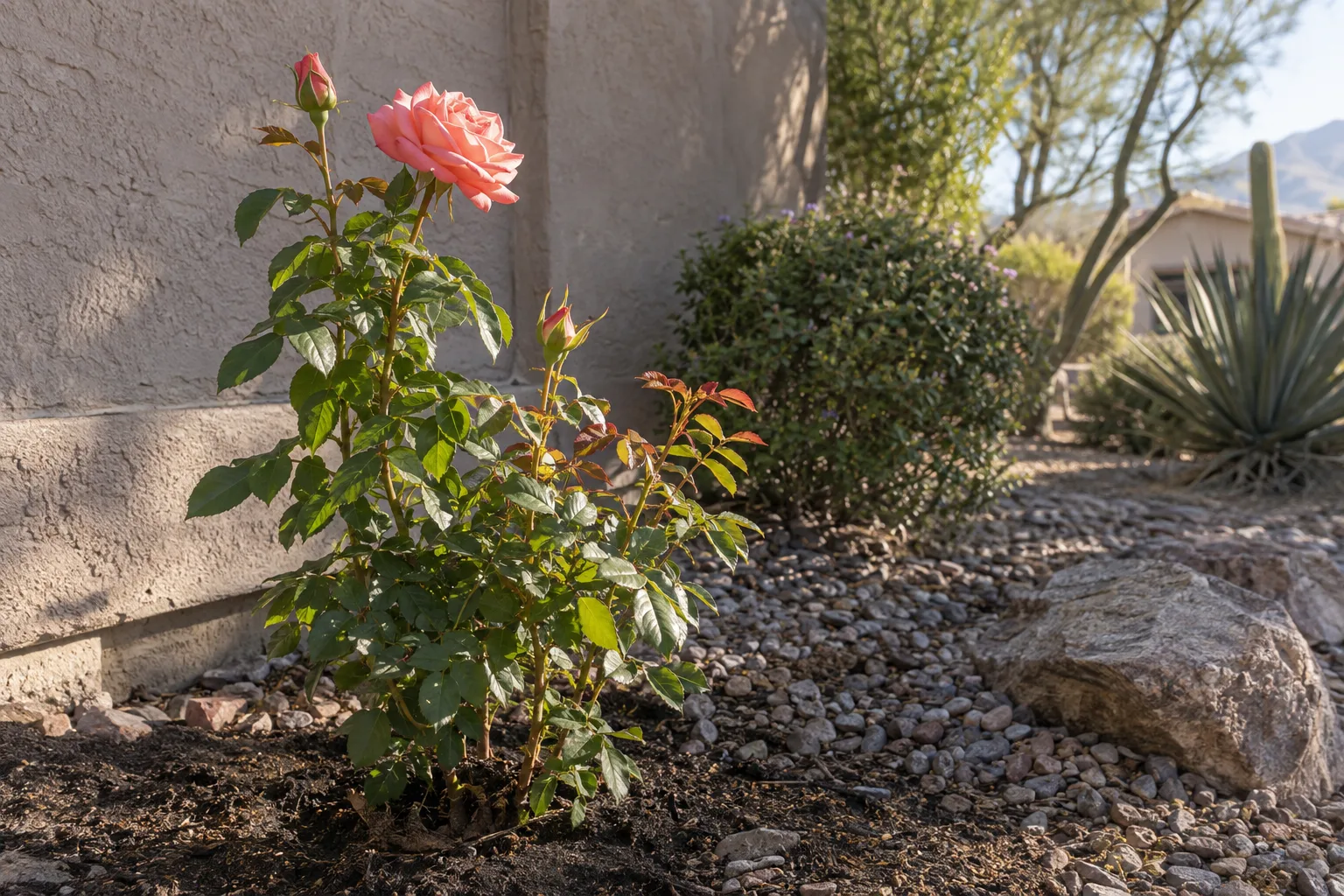
What do I need before I start?
You need a few basic tools and materials, and most of the effort goes into the hole and the soil rather than the plant.
- A shovel and a tile spade or digging bar for breaking through caliche
- Compost, to be mixed with your native soil at no more than about one part in three
- Organic mulch such as wood chips, shredded bark or pecan shells
- Drip tubing with emitters, or a hose you can run slowly for a long soak
- Elemental sulfur, if a soil test shows high pH and you can work it in well ahead of planting
Most low desert soils are alkaline, often with a pH above 7.5, and many have a caliche layer somewhere in the top 2 feet. Alkaline soil ties up iron, and the first sign is yellow leaves with green veins. Sulfur lowers pH only slowly, over months, so treat it as a long-term adjustment and rely on compost and mulch for the first season.
How do I plant an own-root rose step by step?
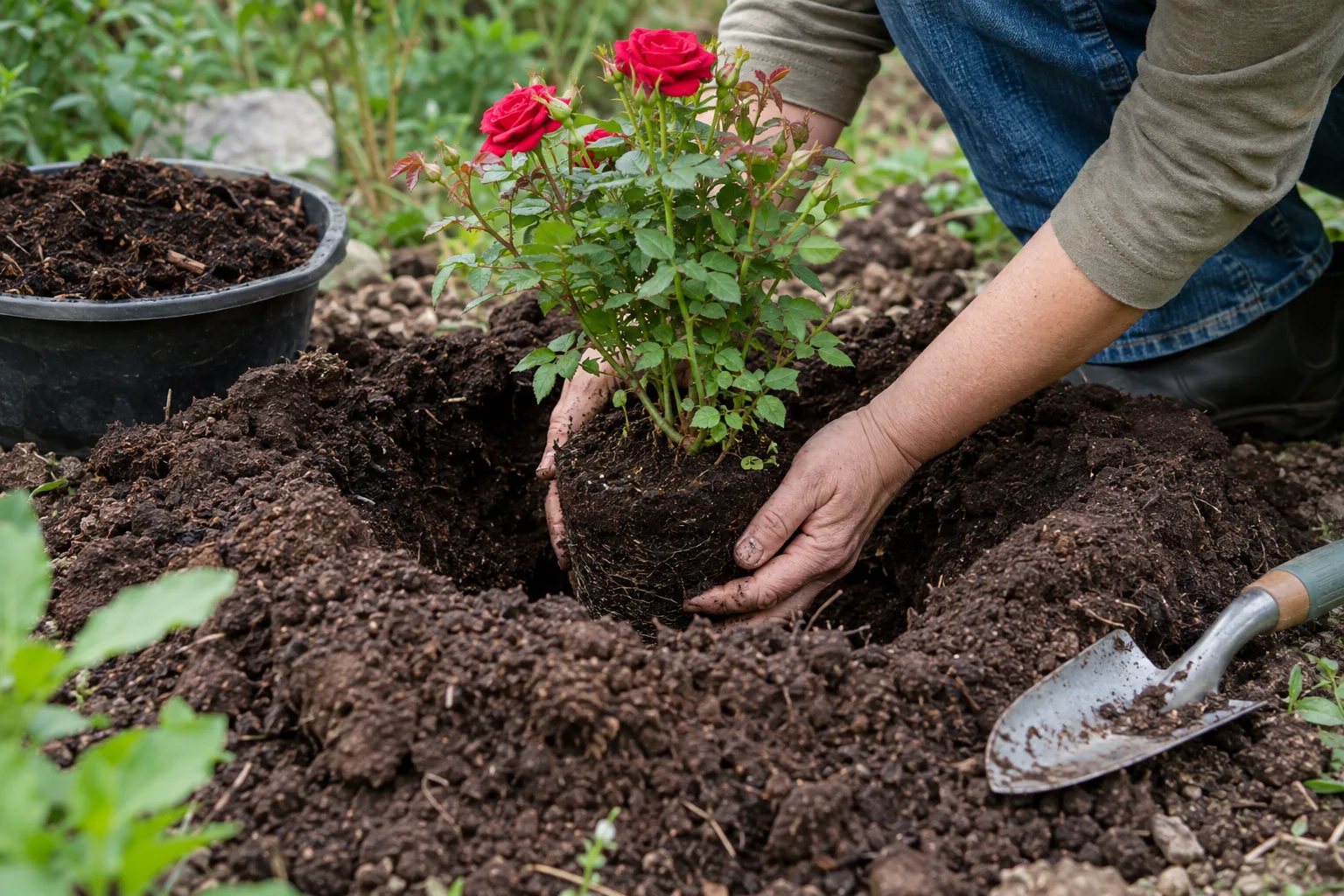
Planting takes about an hour once the site is chosen. Work through these steps in order.
- Dig a hole about 18 inches deep and 24 inches wide. A wide hole gives lateral roots loose soil to move into.
- Check the bottom for caliche. If you hit it, break through it with a digging bar so water can drain below the root zone.
- Mix the soil you removed with compost, using no more than about one-third compost. A richer mix than that can hold water in the hole and leave roots sitting wet.
- Remove the rose from its pot and loosen circling roots gently with your fingers.
- Set the crown, the point where the canes meet the roots, at soil level to about 1 inch below it. Own-root roses do not have a graft union to keep above ground.
- Backfill halfway, water to settle air pockets, then finish filling. Firm the soil lightly and do not pack it.
- Build a berm of soil 3 to 4 inches high around the hole to form a watering basin.
- Spread 3 to 4 inches of mulch across the basin, keeping it a few inches away from the canes.
- Soak the plant slowly and deeply, using several gallons, then set up your drip emitters.
Mulch does a lot of work here. A thick layer keeps the root zone cooler than bare soil, slows evaporation and reduces weeds, and it breaks down into organic matter that the native soil lacks.
How often should I water a new rose in the low desert?
Water a new rose about every 2 to 3 days for the first 4 to 6 weeks, then stretch the gap as the roots reach deeper. Check the soil 2 inches down before each watering, and water only when it has started to dry.
Place drip emitters 12 to 18 inches from the canes rather than at the crown. That encourages roots to spread outward and keeps the crown from sitting wet during monsoon rains, which run from roughly July through September.
- March to May: every 3 to 4 days, with more water per session as highs climb.
- June to September: deep soaks every 1 to 2 days during stretches above 110°F.
- October to February: once every 7 to 10 days for established plants, less after rain.
These intervals shift with soil type, mulch depth and exposure, so treat them as a starting range. Overhead sprinklers encourage black spot in humid monsoon weather, and drip avoids that. Our hard water also leaves mineral deposits over time, so an occasional deep soak that flushes the root zone helps.

What mistakes kill new roses here?
Most losses trace back to a handful of avoidable errors. Each one is easy to fix before planting day.
- Planting in May or June, when roots have no time to establish before triple-digit highs.
- Skipping the caliche check, which leaves the hole holding water after a monsoon storm.
- Backfilling with soil that is mostly compost, which can turn the hole into a bathtub in clay-heavy ground.
- Piling mulch against the canes, which holds moisture on the crown.
- Giving heavy nitrogen feeding in late summer, which pushes soft growth right before humid weather.
- Watering shallow and often, which keeps roots near the hot surface.
Roses go semi-dormant in the hottest weeks, dropping leaves and slowing bloom, and that is normal. Keep watering, hold off on heavy pruning until January or February, and expect a strong flush when nights cool in October. Our classes and events sometimes cover rose care if you want to ask questions in person.
Frequently asked questions
How can I tell if a rose is own-root?
Check the label first, since it should say own-root, and then look at the base of the canes. A grafted rose shows a knobby swelling just above the roots, while an own-root plant has canes that rise straight from the root system with no bump. If you are unsure, ask the staff before buying.
Can I grow an own-root rose in a container?
Yes, if the container is large, about 15 gallons or more, and light-colored. Dark pots in afternoon sun can overheat the roots, so place them where they get morning sun and afternoon shade. Container roses dry out faster and need more frequent watering, and you can browse pottery and planters for options.
Do new own-root roses need frost protection?
Usually not, but young plants in their first winter can use some cover. Drape frost cloth over them on nights forecast near freezing and remove it in the morning. Queen Creek sees occasional winter frost, and low spots in a yard tend to hold cold air longer than higher ground.
When should I fertilize a newly planted rose?
Wait until you see new growth, usually a few weeks after planting, then use a balanced rose fertilizer at the label rate. Go lightly in the first season, because heavy feeding pushes soft growth the plant cannot support in summer heat. If leaves turn yellow with green veins, chelated iron addresses the alkaline soil problem better than extra fertilizer.
How long until an own-root rose looks established?
Expect 12 to 18 months before the plant reaches its full performance. The first summer is mostly about survival, with reduced bloom and some leaf drop. By the second spring, a well-planted rose with deep roots and a thick mulch layer usually grows and blooms much more strongly.
Are own-root roses right for your yard?
Own-root roses are a good fit if you have a spot with six hours of sun, some afternoon shade, and a drip line you can adjust. They suit gardeners who value a plant that regrows true to its variety after a freeze or a hard summer. They are a poor fit for a bare west wall, or for anyone who cannot water through July. Come by our Queen Creek nursery and talk through your site with our staff.
