

Plant citrus trees in Arizona from late February through April or from mid-September through November. Both windows give roots time to establish before 110°F summer heat or winter cold. Avoid planting from May through August.
Key takeaways
- The spring window runs from late February through April, once frost danger has usually passed in Queen Creek and the rest of the East Valley.
- The fall window runs from mid-September through November, when daytime highs fall below 100°F and the soil still holds summer warmth.
- Dig the hole 2 to 3 times as wide as the root ball and no deeper, with the top of the root ball 1 to 2 inches above the surrounding soil.
- Water a new tree every 2 to 3 days for the first 2 weeks, then stretch the interval, soaking the soil 18 to 24 inches deep each time.
- Wait 4 to 6 weeks, until you see new growth, before you fertilize.
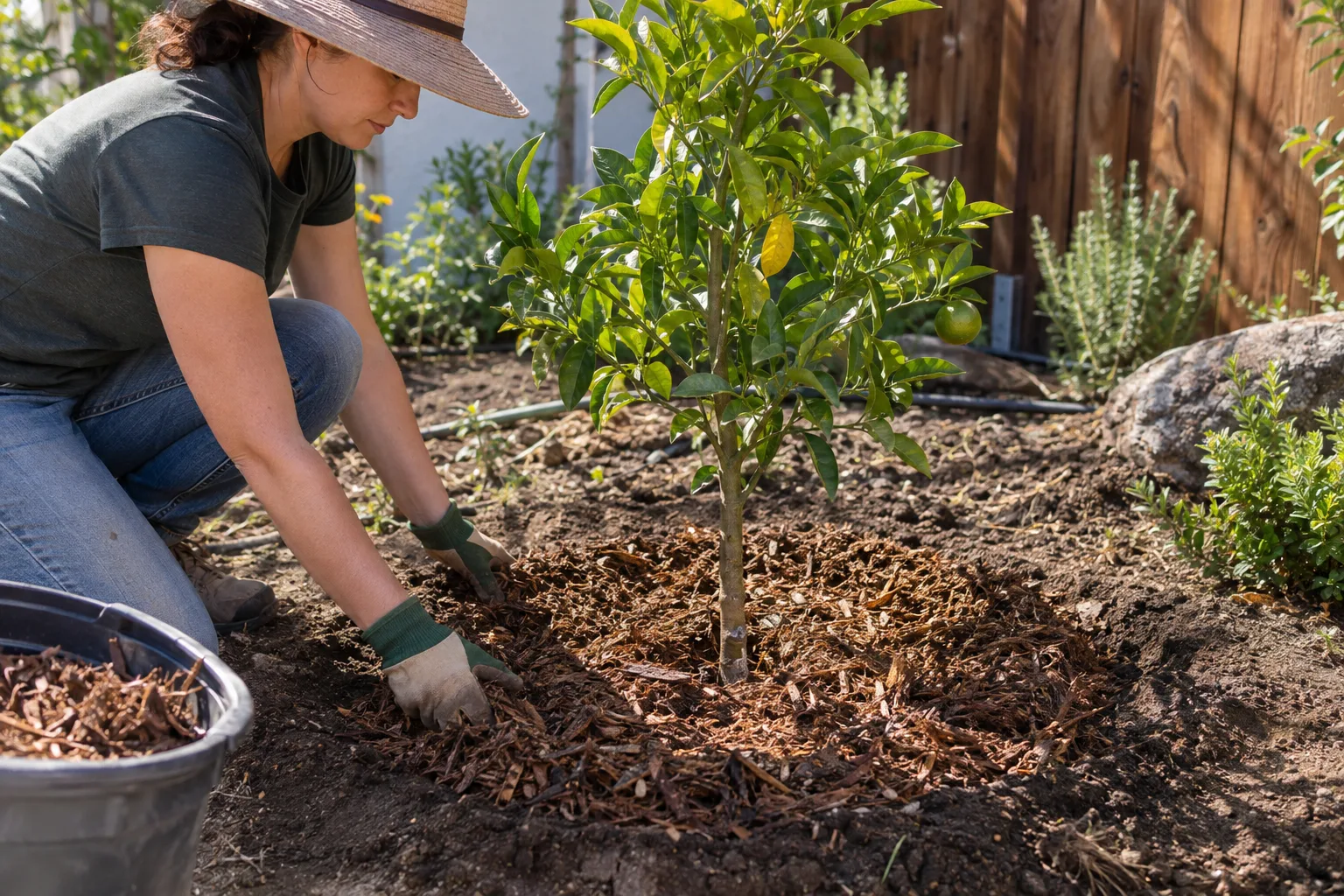
When is the best time to plant citrus in the Arizona low desert?
The best time is late February through April, with mid-September through November as a close second. Both windows keep a young tree out of the temperature extremes while its roots grow into native soil.
Spring planting starts in late February because frost danger has usually passed by then, although cold air settles in low spots and some East Valley yards stay chilly longer than others. A tree planted by early April gets roughly 8 to 12 weeks of mild weather before June heat arrives. That is enough time for roots to spread past the original root ball.
Fall planting works because the soil is still warm from summer while the air cools. Soil temperature drives root growth. You can browse the citrus trees we commonly carry before you settle on a planting date, and keep in mind that availability changes week to week and season to season.
Spring or fall: which planting window is better?
Both work well, so choose the one that matches when you can water consistently. Pick one and commit. The table lays out the full calendar.
| Window | Rating | What to expect |
|---|---|---|
| Late February to April | Best | Mild weather and 8 to 12 weeks of root growth before June heat, with watering needs climbing through May. |
| Mid-September to November | Best | Warm soil, cooling air and falling water demand as winter nears, with frost protection needed on cold nights. |
| May to August | Avoid | Air above 105°F and hot soil stress a new root system, and monsoon humidity raises the risk of root rot. |
| December to mid-February | Possible | Cold soil slows root growth, and frost can damage young growth. |
Spring planting gives the tree a burst of growth as days lengthen, but the watering demand climbs quickly as temperatures rise through May toward the first 100°F days. Fall planting lets roots grow in warm soil while the tree loses little water through its leaves. A fall tree meets its first frost sooner, so young trees need cover on freezing nights.
Our gardening calendars track other seasonal tasks so you can fit citrus planting around them.
Why does summer planting go wrong?
A new tree has a small root ball that cannot supply water to its leaves fast enough on days above 110°F. Leaves lose moisture faster than the roots can replace it, so the tree wilts, drops leaves and can die even with daily watering.
Soil in full sun also runs far hotter than the air, which stresses the fine roots near the surface. During the monsoon, from roughly July through September, humid air and wet soil add a second problem, since root rot fungi favor warm, saturated ground. Wait for fall. If a tree must go in during summer, plant in the evening, shade the west side and expect a slow first year.
How do I choose a spot and prepare the soil?
Choose a spot with 6 to 8 hours of direct sun, good drainage and room for the mature tree. Standard citrus often reaches 12 to 20 feet tall and wide, so keep it clear of walls, pool decks and overhead lines.
Our soil is alkaline, and many East Valley yards have caliche, a cement-like layer of calcium carbonate that can sit anywhere from a few inches to several feet down. Test drainage before you plant: fill a hole about 12 inches deep with water, let it drain, fill it again and watch the second fill. Water gone within a few hours is acceptable. Standing water overnight is a problem.
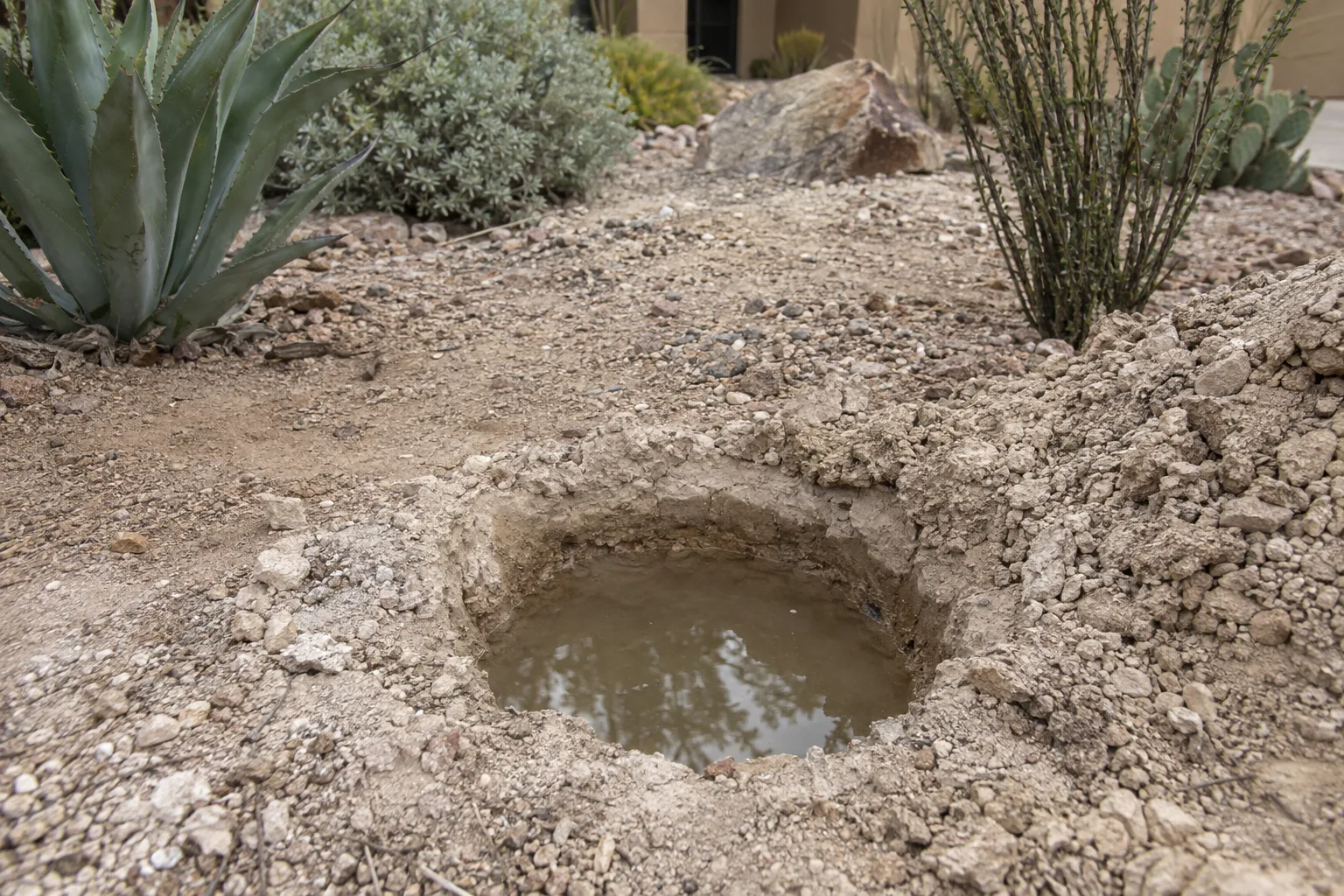
If you hit a thin layer of caliche, break through it with a digging bar or auger so water can move down. When the layer is thick or deep, plant on a broad raised mound instead of digging a bowl that fills with water. Backfill with the native soil and mix in only a modest amount of compost, because a rich pocket of soil surrounded by hard ground holds water around the roots.
How do I plant a citrus tree step by step?
Dig a wide, shallow hole, set the tree slightly high and water it in right away.
- Water the tree in its container the day before so the root ball is moist.
- Dig the hole 2 to 3 times as wide as the root ball and no deeper than the root ball itself.
- Break through any caliche at the bottom of the hole so water can drain.
- Slide the tree out of its container and loosen any circling roots with your fingers.
- Set the tree so the top of the root ball sits 1 to 2 inches above the surrounding soil, with the bud union (the swollen graft scar on the trunk) well above ground.
- Backfill with native soil and firm it gently by hand, without packing it hard.
- Build a soil basin 3 to 4 inches high around the planting area, then fill it slowly with water twice to settle the soil.
- Spread 3 to 4 inches of mulch across the basin, keeping it several inches from the trunk.
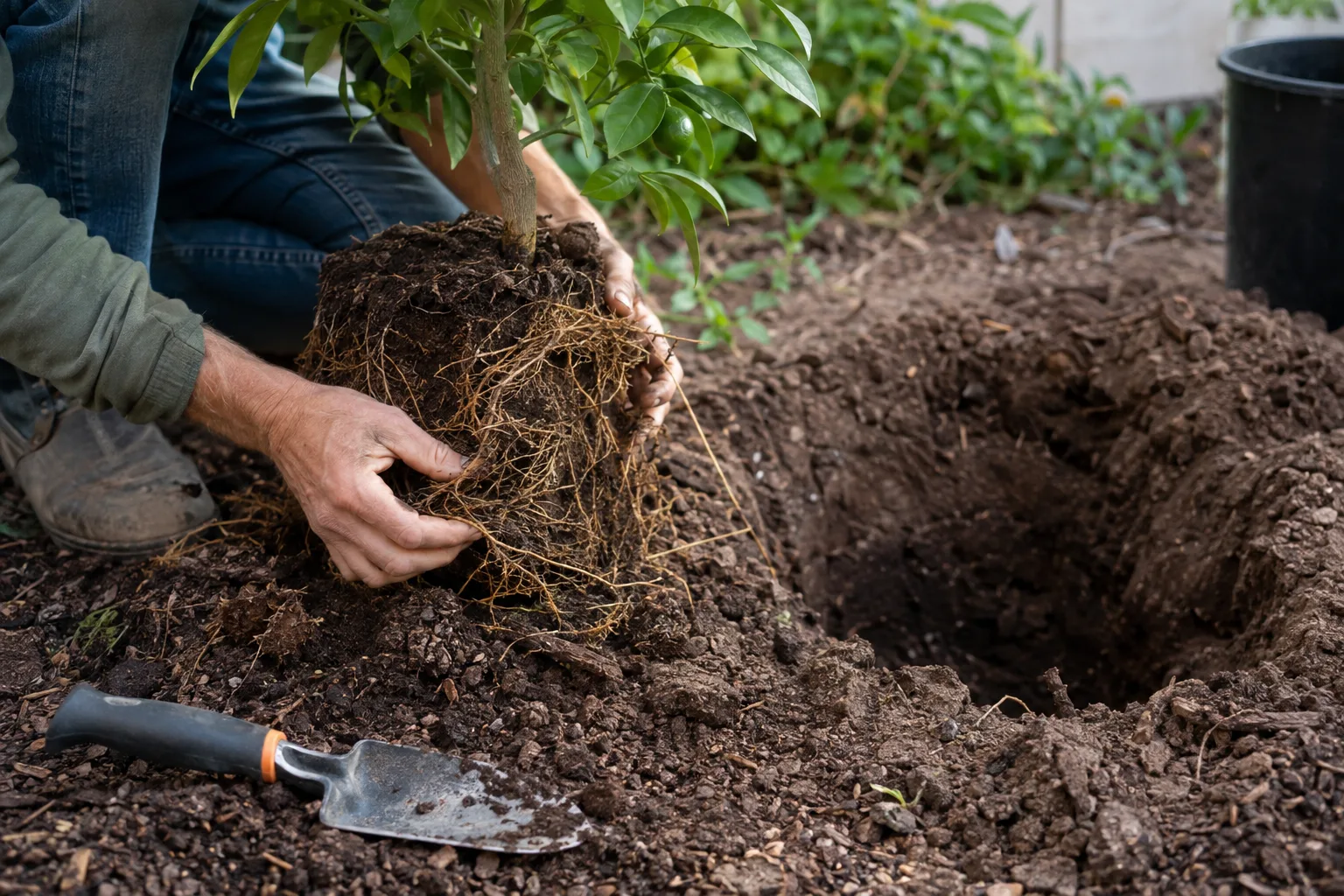
Do not bury the trunk. A buried trunk invites crown rot and gummosis, a bark disease that makes the trunk ooze sap, and both are hard to reverse once they start. If the tree sinks after the first watering, lift it and reset it at the right height.
How often should I water a newly planted citrus tree?
Water every 2 to 3 days for the first 2 weeks, then stretch to every 4 to 7 days as roots reach into the surrounding soil. Soil type, season and tree size shift those numbers, so check moisture before each watering.
Push a long screwdriver or soil probe into the ground near the root ball. It slides easily through moist soil and stops where the soil is dry, so you can tell how deep the last watering reached. Aim for 18 to 24 inches of moisture, which sends roots down instead of leaving them near the hot surface.
Spring trees often need shorter intervals as May and June heat builds, while fall trees can stretch to every 7 to 10 days by December. Overwatering in cold weather harms many young trees, because cold, saturated soil favors Phytophthora root rot. Water slowly and deeply. Hard irrigation water leaves salts near the surface, and deep soaks push those salts below the roots. Place drip emitters at the edge of the canopy and move them outward as the tree grows.
How do I protect a young tree through its first summer and winter?
Shade the trunk, mulch the root zone and cover the tree on freezing nights. Young citrus has thin bark that sunburns, and new leaves and twigs are the first to suffer in a frost.
For sunscald, paint the trunk with white interior latex paint diluted with an equal amount of water, or use a commercial trunk wrap. A piece of 30% shade cloth on the west side blocks the hottest afternoon sun, and you can take it down in October. Keep mulch topped up at 3 to 4 inches and avoid decorative rock near the trunk, since rock holds and reflects heat.
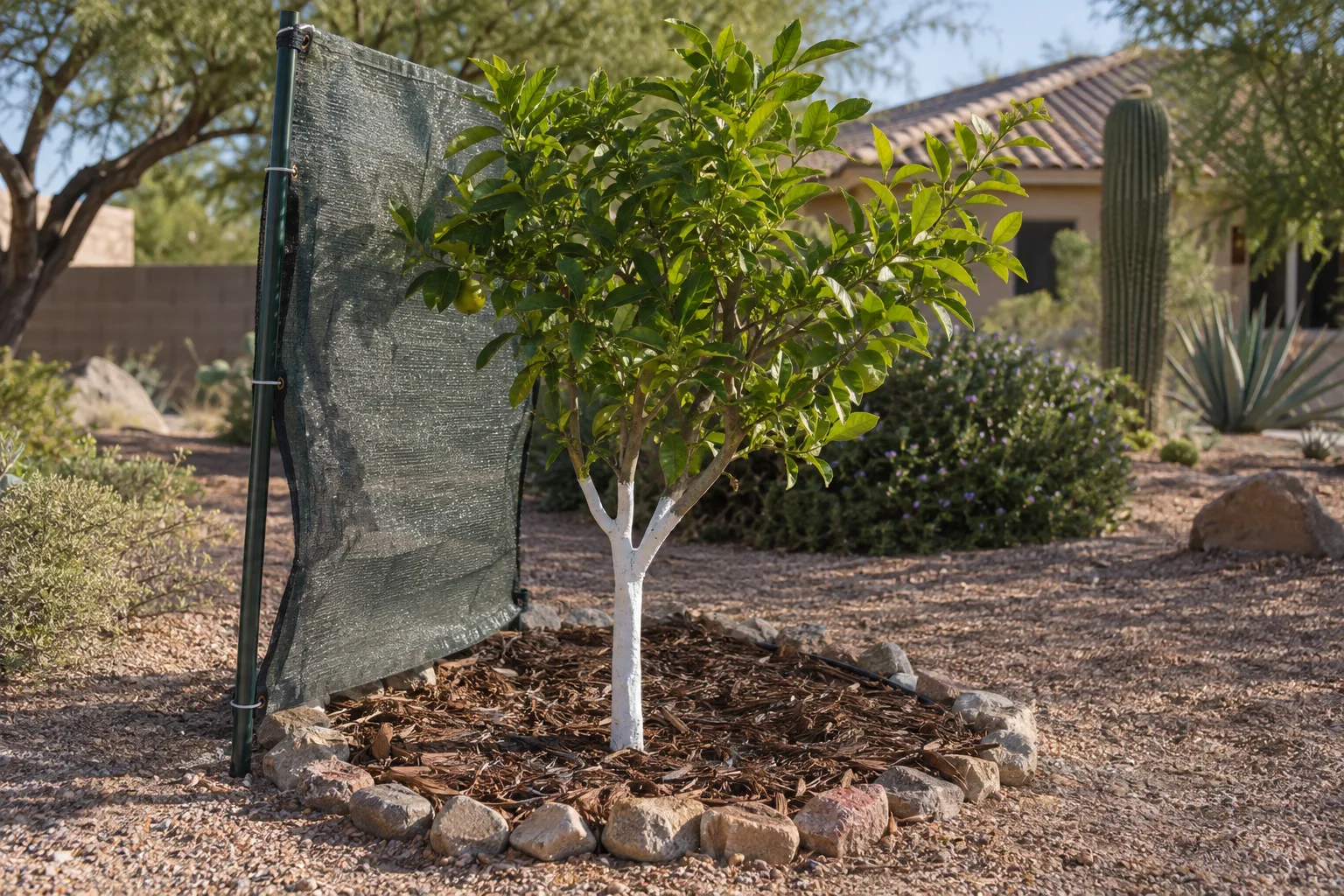
When a forecast calls for lows near freezing, drape frost cloth or a blanket over the tree down to the ground in the evening and remove it the next morning. Cover it before dark. Lemons and limes are the most cold-sensitive citrus, while Satsuma mandarins tolerate cold better than most. After 4 to 6 weeks, once new growth appears, feed with a citrus fertilizer that includes iron, zinc and manganese, since alkaline soil ties up those micronutrients.
What mistakes should I avoid when planting citrus?
These six errors are the ones to avoid.
- Planting too deep. A buried bud union and trunk invite crown rot, so keep the root flare above the soil line.
- Planting from May through August. Heat stress at this stage can set a tree back for a year or more.
- Skipping the drainage test. Standing water suffocates roots and often shows up as yellow leaves months later.
- Planting in a lawn. Frequent shallow lawn watering keeps citrus roots near the surface, and citrus does better on its own deep-watering drip line.
- Fertilizing at planting. Fresh nitrogen pushes soft growth before the roots can support it.
- Watering on one schedule all year. Cold months call for far less water than summer does.
If you want a hands-on walkthrough, see our classes and events page for upcoming sessions.
Frequently asked questions
Which citrus varieties are easiest to grow in the Arizona low desert?
Lemons, navel oranges and Satsuma mandarins are common starting points here because they handle our heat and, in the case of mandarins, occasional cold well. Grapefruit and Valencia oranges also grow well. The varieties we commonly carry change week to week and season to season, so ask what is available when you visit.
Can I plant citrus in December or January?
You can, but waiting until late February is safer. Cold soil slows root growth, and a freeze can damage a tree that has not settled in. If you plant in winter, choose a mild stretch, water sparingly and keep frost cloth ready for nights near freezing.
Can I grow citrus in a pot?
Yes, citrus grows in a large container with drainage holes, and dwarf varieties suit pots best. Choose a pot of at least 15 gallons for a tree you plan to keep and fill it with fast-draining potting mix. Pots heat up in summer, so move them out of reflected afternoon sun. Look through pottery and planters for something large enough.
Should I pick off fruit from a first-year tree?
Yes, removing fruit in the first year lets the tree put energy into roots and branches. Small trees can set a few fruit soon after planting. Pinch them off while they are small. Most home trees give a meaningful crop about 3 to 5 years after planting, depending on variety and tree size.
How far apart should I space citrus trees?
Space standard citrus 12 to 20 feet apart and dwarf types 6 to 10 feet apart. Mature size depends on variety and rootstock, so check the plant tag. Also leave room from walls, since reflected heat adds stress, and keep the future canopy clear of pool decks and overhead lines.
Should you plant citrus in spring or wait for fall?
Plant in spring, from late February through April, if you can water every few days through the first summer. Wait for fall if you travel in May and June or prefer a gentler start. Skip a ground-planted tree if your yard gets less than 6 hours of sun, drains poorly with no room for a raised mound, or has no way to water deeply. A container tree may suit those yards better. Come by the nursery in Queen Creek and we will help you choose a tree and a planting date.