
The seven peach tree mistakes that most often hurt Arizona trees are a high-chill variety, misread chill hours, poor planting timing, unprepared soil, shallow watering, cold-climate pruning and late fertilizing. Each one is fixable, and most are easy to avoid at planting.
Key takeaways
- Choose a peach rated for roughly 150 to 300 chill hours, because varieties rated for 700 hours or more bloom and fruit poorly in the low desert.
- Plant dormant trees from about January to February, so roots grow in cool soil before 100°F days arrive.
- Probe the planting spot with a metal rod, and if you hit caliche within about 18 inches, break through it or build a raised bed.
- Water deeply enough to wet the soil 2 to 3 feet down, and keep 3 to 4 inches of mulch over the root zone.
- Stop feeding by midsummer and thin fruit to one every 6 to 8 inches along the branch.
Which peach varieties grow well in the Arizona low desert?
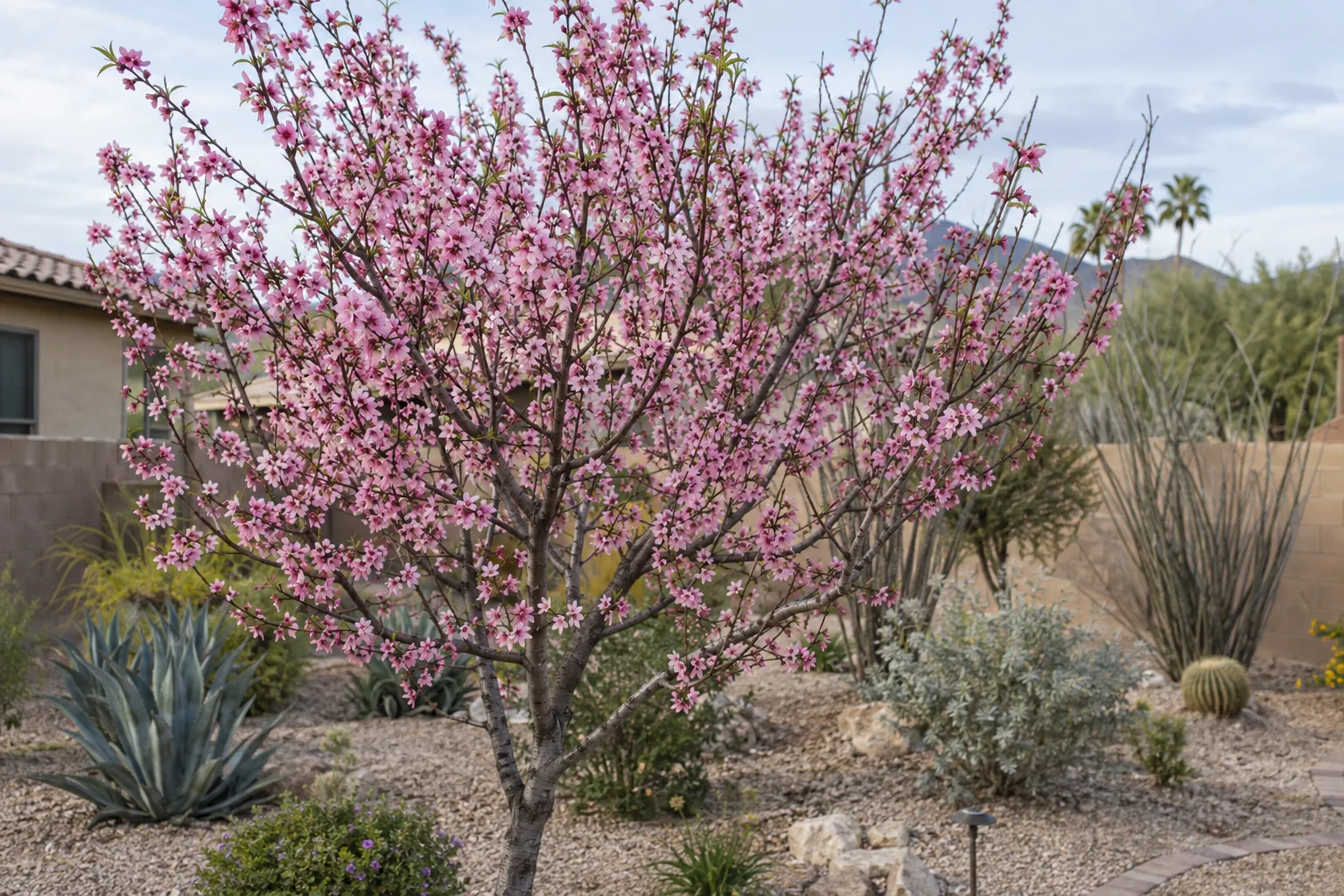
Low-chill varieties, rated for roughly 150 to 300 chill hours, bloom and fruit most reliably here. Chill hours are the winter hours spent below about 45°F, and a peach needs a set number of them before it wakes up evenly in spring.
Peaches sold across much of the country are rated for 700 to 1,000 hours or more. Planted in the East Valley, those trees leaf out unevenly, bloom late and set thin crops, and the trouble grows worse each year. Check the tag.
The low-chill varieties below are ones we commonly carry, though availability changes week to week and season to season. Ratings are approximate and differ between sources, so confirm the number for the exact tree you buy. You can browse what is currently in our fruit trees department.
| Variety | Approximate chill hours | Worth knowing |
|---|---|---|
| Flordaprince | About 150 | Bred in Florida for low chill and warm winters |
| Tropic Beauty | About 150 | A low-chill choice for mild-winter yards |
| Desert Gold | About 250 | Widely grown in Arizona yards |
| Mid-Pride | About 300 | Higher chill, so check it against your yard first |
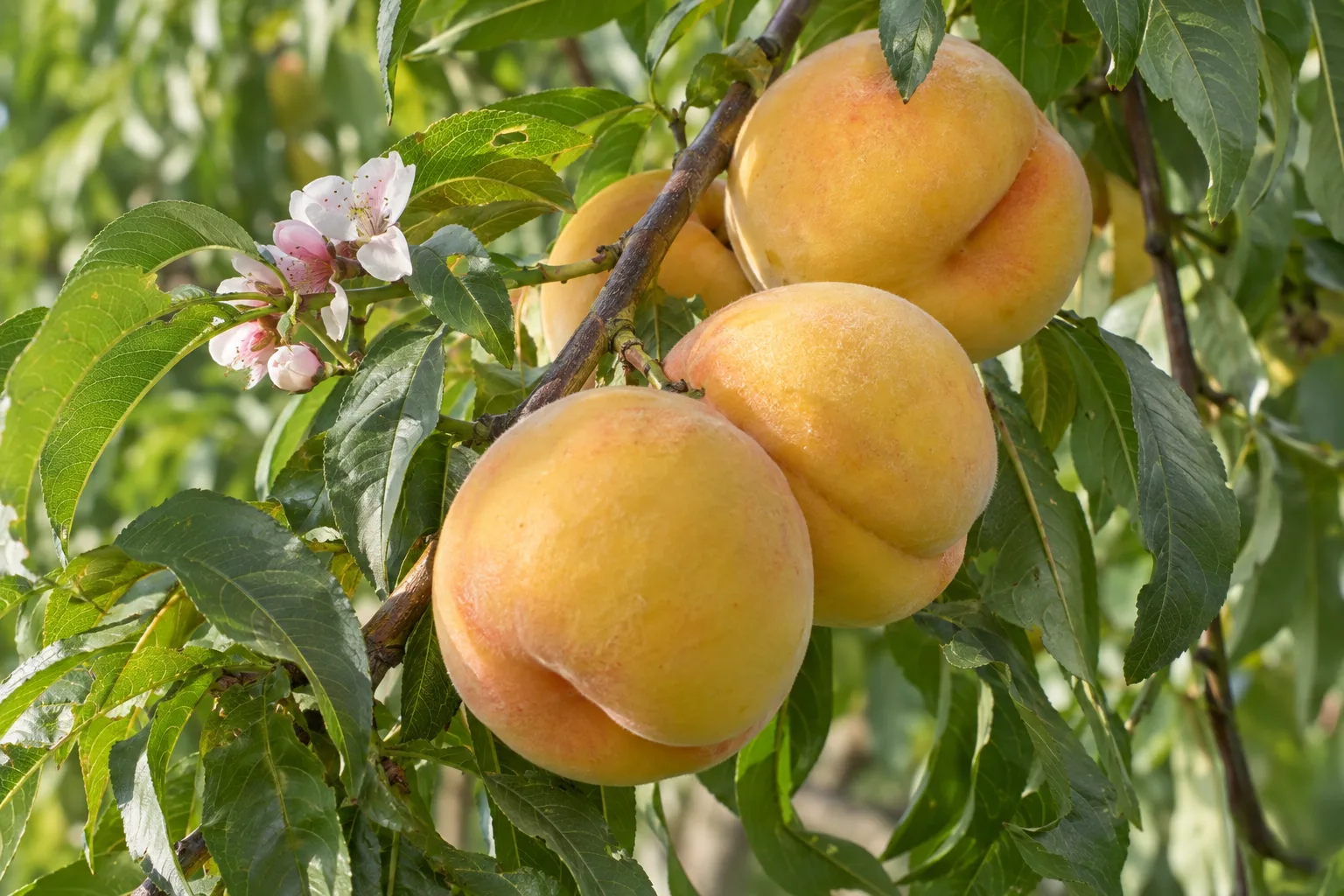
How many chill hours does the East Valley really get?
Most East Valley yards collect a few hundred chill hours in a typical winter, and the total swings from year to year. Counting models differ, and some subtract credit when afternoons turn warm.
Our January afternoons often climb into the 60s and 70s, so a cold night does not always add up to a full night of chill. Weather apps that show 35°F mornings can overstate what the tree received. Yard location matters too, because a spot where cold air settles collects more chill than a spot against a sunny block wall.
Choose a variety whose rating sits comfortably below what your yard reliably delivers. A warm winter can cut accumulation well below average, and a tree rated near the top of your range will bloom unevenly in those years. Plan for the warm year, not the cold one.
When is the best time to plant a peach tree in Arizona?
Plant a peach while it is dormant, from about January to February, with container trees also going in during fall. That gives the roots several cool months to spread before summer heat arrives.
A tree planted in April or May has to grow roots while daytime highs climb past 100°F and then above 110°F. Its small root system cannot keep up with the water the leaves lose, and the tree spends its first summer struggling instead of growing. Late spring and summer planting should be avoided.
Bare-root peaches are sold in winter in many places, and they establish well when planted promptly and watered in. Our gardening calendars lay out the planting windows month by month for the East Valley. Dormant trees also dodge the stress of a hot move, which is a simple advantage.

How should I prepare alkaline soil and caliche for a peach tree?
Check for caliche first, dig a wide hole, and plant in mostly native soil with the graft union above grade. Peaches prefer slightly acidic to neutral soil, while much of our native soil tests alkaline, often with a pH of 7.5 or higher.
Push a metal rod into the planting spot in several places. If it stops within about 18 inches, you have caliche, a cemented layer that roots and water cannot pass. Break through it with a digging bar, or plant in a raised bed. Water that pools in the hole will rot roots.
Dig the hole two to three times as wide as the root ball and no deeper than it. Set the graft union, the bulge near the base of the trunk, 2 to 3 inches above finished soil. Backfill mostly with the soil you dug out, because a rich pocket of compost surrounded by hard native soil can hold water like a bowl.
Yellow leaves with green veins point to iron chlorosis, which is common in alkaline soil. A chelated iron product applied to label directions helps, and asking about rootstock suited to alkaline soil when you buy is worthwhile.
How deep and how often should I water a peach tree in summer?
Water slowly enough to wet the soil 2 to 3 feet deep, then let the top few inches dry before the next soak. A mature tree in summer commonly needs a deep soak about every week, while young trees need it more often.
Frequent light sprinklings keep roots near the surface, where they dry out fast on a 110°F afternoon. Deep soaks send roots downward into steadier moisture. A long screwdriver or soil probe pushed into the ground shows how far the water went, and it slides easily through wet soil and stops at dry.
Place drip emitters around the tree out to the edge of the canopy, and add emitters as the tree grows. Spread 3 to 4 inches of mulch over the root zone, keeping it several inches from the trunk to prevent rot. Our water is hard, so an occasional extra-long soak helps move salts below the roots.
During the monsoon, soil stays damp longer. Check with the probe before you irrigate, and skip a cycle if the ground is still wet.
When should I prune a peach tree in Arizona?
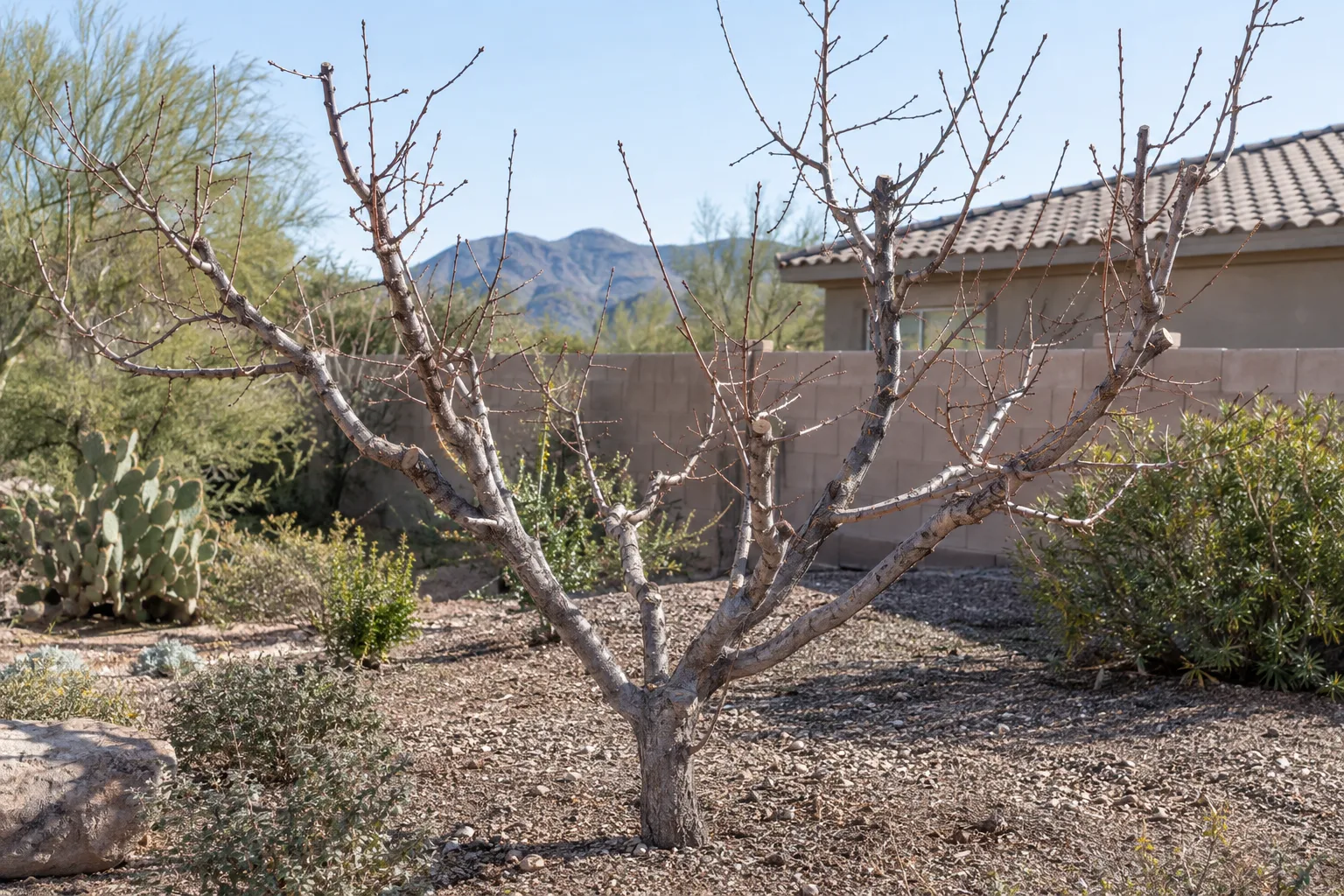
Prune in winter, from late January to mid-February, just before buds swell, and watch the buds more than the calendar. Peaches fruit on the previous season’s growth, so cuts made after bloom remove the crop.
Advice written for cold climates says to prune in late winter, which can mean March or April there. Our trees bloom much earlier, and a warm February can open flowers before you have started. Pruning too early invites frost damage to tender regrowth, and pruning after bud break wastes stored energy.
Aim for an open-center vase shape with three or four main limbs and light reaching the middle. Take out dead, diseased and crossing wood first. Shorten last year’s long shoots by about a third to encourage side branching, and never remove more than about a third of the canopy at once. A light summer trim after harvest can tame vigorous upright shoots.
As deciduous trees, peaches show their branch structure clearly in winter, which makes cuts easier to judge. If you want to watch the cuts being made, check our classes and events page to see what is scheduled.
When should I fertilize a peach tree in Arizona?
Feed in late winter as growth begins and again in spring, then stop by midsummer. Nitrogen is the nutrient peaches use most, and the timing matters more than the amount.
Late-season nitrogen pushes soft new growth just before our cool months. That tissue is easily damaged by a November or December cold snap, and it keeps the tree from hardening off for dormancy. Hold off after about July.
A balanced fruit tree fertilizer applied at the rate on its label works for most yards. Water it in well, and keep granules a few inches from the trunk. Young trees need less than bearing trees, and an overfed tree makes leaves at the expense of fruit.
Compost spread on the soil in fall feeds the soil slowly over winter without forcing growth. If leaves yellow between the veins in spring, treat iron first before adding more nitrogen.
Frequently asked questions
Do I need two peach trees to get fruit?
No, most peach varieties are self-fruitful, so a single tree sets fruit on its own. Check the tag, because a few varieties do need a second tree nearby. Fruit set depends more on enough winter chill, frost-free bloom and bees visiting open flowers. A second tree adds harvest for most varieties, not pollination.
Why did my peach tree bloom but set no fruit?
Frost during bloom and too little winter chill are the usual causes. Open flowers can be damaged when temperatures fall to about 28°F, and a variety rated for more chill than your yard receives blooms unevenly. Cover young trees with frost cloth on cold nights during bloom, and compare your variety’s chill rating with your location.
When do I thin peach fruit?
Thin when the fruitlets are about marble-sized, usually a few weeks after petals fall. Leave one fruit every 6 to 8 inches along a branch and pull off the rest by hand. In the East Valley that often lands in March or April, depending on bloom. Thinned trees make larger, sweeter fruit and avoid broken limbs.
How do I protect a peach trunk from sunburn?
Shade the trunk with diluted white water-based interior latex paint or a tree wrap, especially on the south and west sides. Sunscald cracks bark on young trees and gives borers a way in. Paint from the soil line up to the first main branches, and follow the paint label for dilution.
Can a peach tree handle 110°F summers?
Established peach trees survive East Valley summers when roots are deep and the soil is mulched. Expect some leaf stress on 110°F afternoons. Trees planted the previous winter fare better than spring-planted ones, and afternoon shade on the west side helps young trees. Wilting that lasts into the next morning means the tree needs a deeper soak.
Is a backyard peach tree worth the effort in the East Valley?
Yes, if you have a spot with at least 6 to 8 hours of sun, can water deeply, and choose a low-chill variety. Expect a modest crop in the first few years and a bigger one as the tree matures. Skip it if your yard is mostly shade, if irrigation cannot reach the full root zone, or if you will not thin fruit and prune. Stop by our nursery in Queen Creek and talk through your yard.