Impatiens, lettuce, Boston ferns, wax begonias, basil, coleus, cilantro and snapdragons need partial shade in Arizona by mid-April, when afternoon highs reach the mid to upper 90s. Give them 3 to 4 hours of morning sun and shade from noon onward.
Key takeaways
- Afternoon highs across the East Valley often reach the mid to upper 90s by mid-April, so shade should be in place by then.
- Partial shade in the low desert means 3 to 4 hours of morning sun and no direct sun after noon.
- Shade cloth rated 30 to 50%, hung a foot or more above the plants, gives beds real afternoon relief.
- Lettuce, cilantro and snapdragons are cool-season plants, so shade only buys them a few extra weeks.
- Shaded soil dries slowly, so check 2 inches down before you water.
What does partial shade mean in the Arizona low desert?
Partial shade here means 3 to 4 hours of gentle morning sun, then no direct sun after noon. That is stricter than the four to six hours of sun many plant tags describe, because afternoon sun in the low desert carries far more heat than afternoon sun in milder regions. An east-facing bed beside a house or block wall usually fits.
Dappled light under a sparse tree canopy lets direct rays through in moving patches, and a leaf sitting in one of those patches still overheats. North-facing spots with bright indirect light suit ferns well. West and south walls bounce heat back onto nearby plants, so a bed against one needs extra protection. Many of the plants below are annuals and foliage plants, and you can browse our annual flowers and foliage department to see what is in season.
Why does mid-April matter for shade-sensitive plants?
Mid-April is when afternoon highs across the East Valley and the wider Phoenix metro start reaching the mid to upper 90s, up from the 70s and 80s of March. Plants that handled March sun easily meet much stronger heat within a couple of weeks.
Leaves in direct sun run several degrees hotter than the air around them, and heat radiating off stucco, block and concrete adds more. Scorch shows up as bleached patches, crisp edges and wilting that does not recover by morning. Damage appears quickly and healing is slow. Put shade in place before the first run of 95°F days.
Which eight plants need afternoon shade by mid-April?
These eight are plants we commonly carry, though availability changes week to week and season to season. Sizes below are typical ranges for the low desert, and each plant gets one honest drawback.
Impatiens (Impatiens walleriana)
Impatiens grow 10 to 18 inches tall and about as wide. They want morning sun, full shade after noon and evenly moist soil, which in a pot may call for a daily check once April warms up. The drawback is heat tolerance. Without shade they wilt early in the day and drop flowers, and many Arizona gardeners treat them as spring and fall annuals rather than summer plants.
Lettuce (Lactuca sativa)
Lettuce stays 6 to 12 inches tall. Morning sun with afternoon shade, or 30 to 50% shade cloth, can stretch the harvest by a few weeks, and the top inch of soil should stay damp. The drawback is that lettuce is a cool-season crop that bolts and turns bitter as weather warms, shade or not. The University of Arizona Cooperative Extension vegetable planting calendar for Maricopa County places lettuce in the cooler months, so plan to sow again in fall.
Boston fern (Nephrolepis exaltata)
Boston fern reaches 2 to 3 feet tall and wide. It wants bright shade with no direct afternoon sun, ideally on a north-facing covered patio, and soil that never dries out completely. Low humidity browns the frond tips, and summers above 110°F are hard on it outdoors. Many gardeners bring ferns inside for the hottest months.
Wax begonia (Begonia semperflorens-cultorum)
Wax begonias grow 6 to 12 inches tall. Give them morning sun, afternoon shade and a well-drained mix that you water when the top inch dries out. The drawback is rot: overwatering in shade quickly softens the stems. Tuberous begonias are more heat-sensitive than wax types, so they need the deepest shade you can offer.
Basil (Ocimum basilicum)
Basil grows 18 to 24 inches tall and likes warmth, but afternoon shade once temperatures pass 100°F keeps the leaves larger and slows flowering. Water regularly, and check pots daily in hot weather. The drawback is bolting, because stressed plants flower and the leaves turn bitter, so pinch off buds as they form. Our herbs, vegetables and berries department covers the rest of the kitchen garden.
Coleus (Plectranthus scutellarioides)
Coleus grows 1 to 3 feet tall depending on the type. Morning sun followed by bright shade brings out the strongest leaf color, and the soil should stay evenly moist. Sustained afternoon sun bleaches the foliage and leaves it ragged. That is the main drawback in an Arizona April.

Cilantro (Coriandrum sativum)
Cilantro stands 12 to 24 inches tall once it flowers. Morning sun, full afternoon shade and even moisture slow it down for a little while. The drawback is a short season. Even in shade, warm weather sends it to flower, and most plantings finish between late April and May. The seeds that form are coriander, and a fall sowing gives you a better crop.
Snapdragon (Antirrhinum majus)
Snapdragons range from about 1 to 3 feet tall, depending on the type. Morning sun, afternoon shade and moderate, even watering can extend bloom by a couple of weeks along an east-facing wall. The drawback is that they are cool-season bloomers. Once highs stay in the upper 90s they turn leggy and stop flowering, and they will not carry through summer.
How can I create afternoon shade in my yard?
Start with shade you already have, such as an east wall, a roof overhang or a patio cover, then add shade cloth or containers for the rest. Work through it in this order.
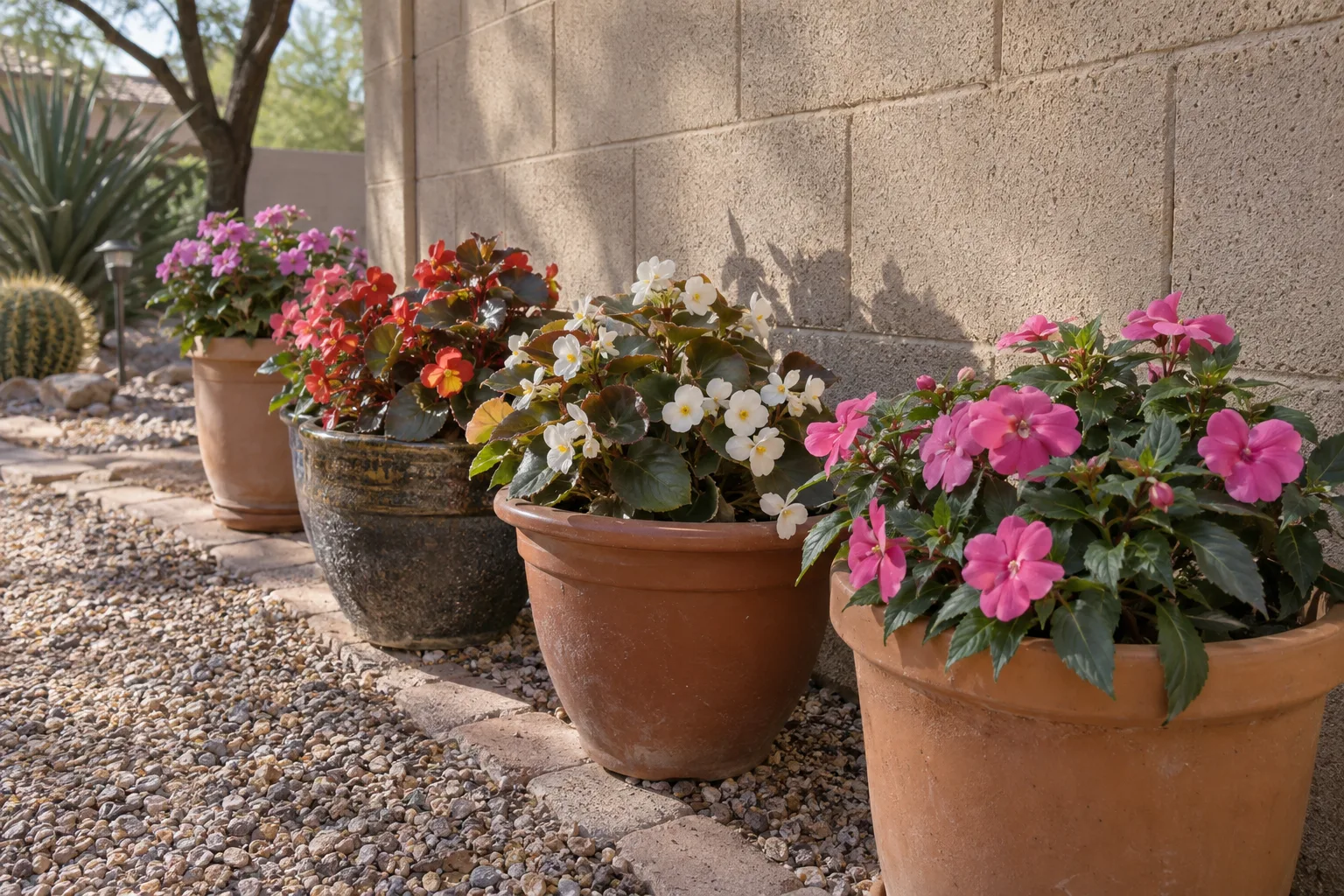
- Map the sun. On a clear day in early April, check each bed at 8 a.m., noon and 4 p.m. and note which spots are in direct sun after noon.
- Move pots first. Containers need no digging, and a rolling caddy lets you shift them as the sun angle changes. Our pottery and planters department is a good place to look for pots with drainage holes.
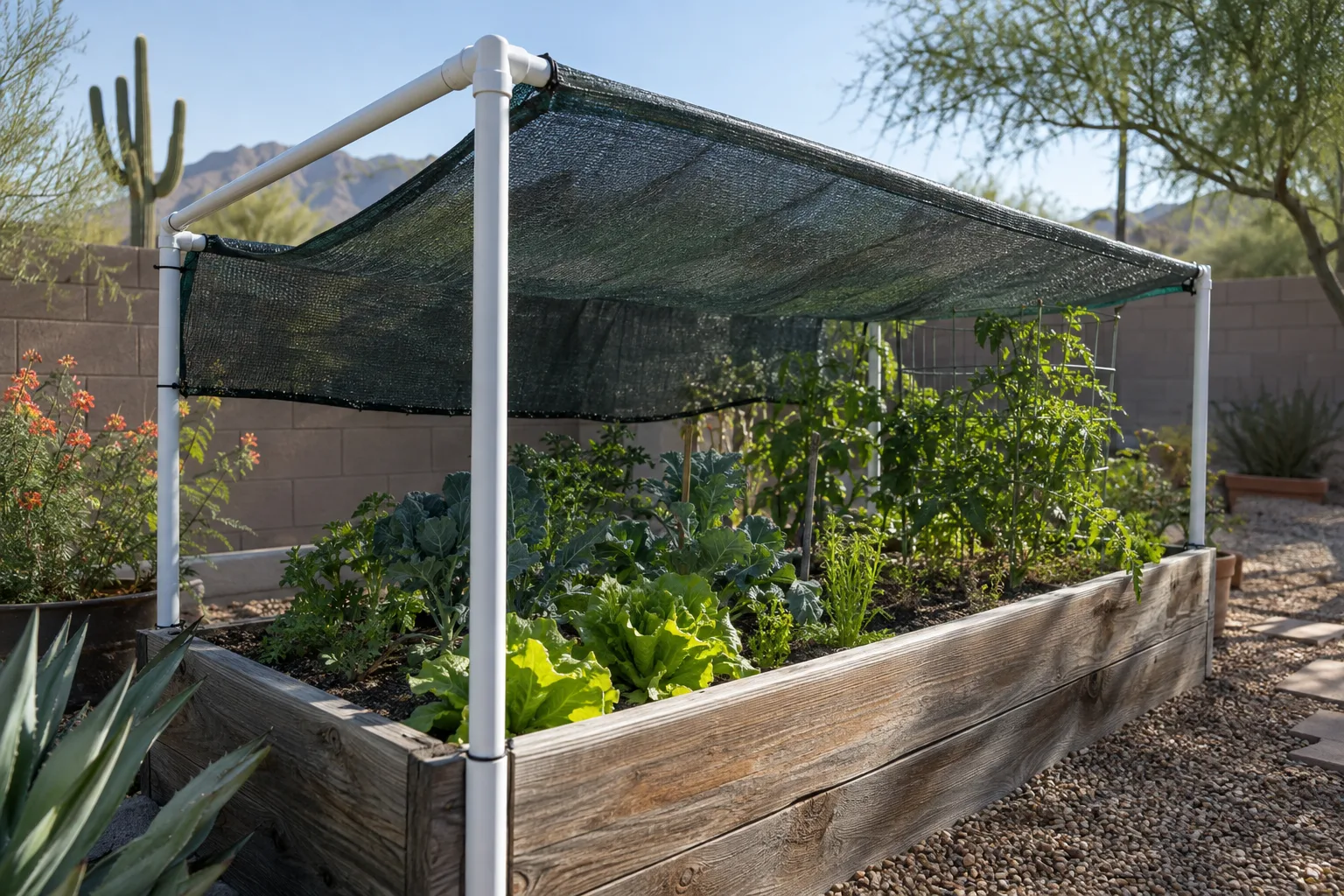
- Hang shade cloth rated 30 to 50% over a frame, a foot or more above the plants, with open sides so air moves through. Use the lighter cloth for herbs and the heavier for ferns and begonias.
- Plan a tree for the long term. A desert willow (Chilopsis linearis) or another pick from our desert trees can shade a bed from the west, but it needs several years to cast useful shade.
Plants that spent winter in full sun adjust better if they get a few days of morning-only light before moving into deep shade.
How should I water and mulch plants in partial shade?
Water by checking the soil rather than the calendar, because shaded soil stays damp longer than soil in full sun. Push a finger 2 inches down, and water only when it feels dry. Native soil here is alkaline and often sits on caliche, which slows drainage, so mix compost into the top 8 to 12 inches of a bed before planting.

Containers dry out quickly in low humidity, so look at them daily once the weather warms. Hard irrigation water leaves salts in pots, and now and then watering until it runs out the bottom helps flush them. Spread 2 to 3 inches of wood chip mulch over beds and keep it off the stems. Our gardening calendars list monthly timing for planting and care.
What shade mistakes cost the most plants?
The most costly mistake is waiting until leaves scorch. By then the damage is done, so assess your plantings in the first week of April, not in May.
Extra water does not make up for missing shade. Once leaves overheat, they struggle however wet the soil is, and soggy roots in a shaded bed invite rot. Another error is laying shade cloth directly on foliage, which traps heat and humidity and invites fungus during the monsoon from roughly July through September. The last is planting against a west or south wall, where reflected heat can overwhelm even a shaded plant. Those spots suit sun-loving desert plants better.
Frequently asked questions
Can I put shade cloth over a vegetable bed in April?
Yes, 30 to 50% shade cloth over a frame works for lettuce, cilantro and basil beds. Install it before the first 95°F afternoons so plants adjust gradually. Keep the cloth a foot or more above the foliage so air moves underneath, because cloth resting on leaves traps heat and humidity and invites fungus during monsoon weather.
Can impatiens survive an Arizona summer?
Sometimes, but it is a gamble. A deeply shaded, north-facing covered patio with steady moisture gives them the best odds, while exposed beds usually fail by June. Most gardeners plant them in fall and early spring for a dependable run, then replace them. If you try summer, trim them back by about a third and fertilize lightly.
Can basil grow through an Arizona summer?
Basil can produce into early summer, and sometimes longer, with afternoon shade and steady watering. Pinch off flower buds so the plant keeps making leaves. Monsoon humidity can bring fungal spotting, so space plants for airflow and water at the soil instead of over the leaves. Growth slows during peak heat above 110°F.
How do I know it is time to move plants into shade?
Watch the forecast. When the 10-day outlook shows afternoon highs of 95°F or more, shade-sensitive plants should already be in place. That usually falls in April, and a warm year can bring it to late March. A few extra days of shade do no harm to a plant that could have handled more sun.
Is it worth arranging shade for these eight plants?
Yes, if you have an east-facing bed, a covered patio or room for a shade frame. In those spots all eight earn their place, and basil, coleus and begonias can keep going well into summer. Skip the effort if your only open space is a full west exposure with no way to block it. Choose sun-loving desert plants there instead, and save lettuce, cilantro and snapdragons for fall planting. Stop by the nursery in Queen Creek and we can help you match plants to your yard’s light.