
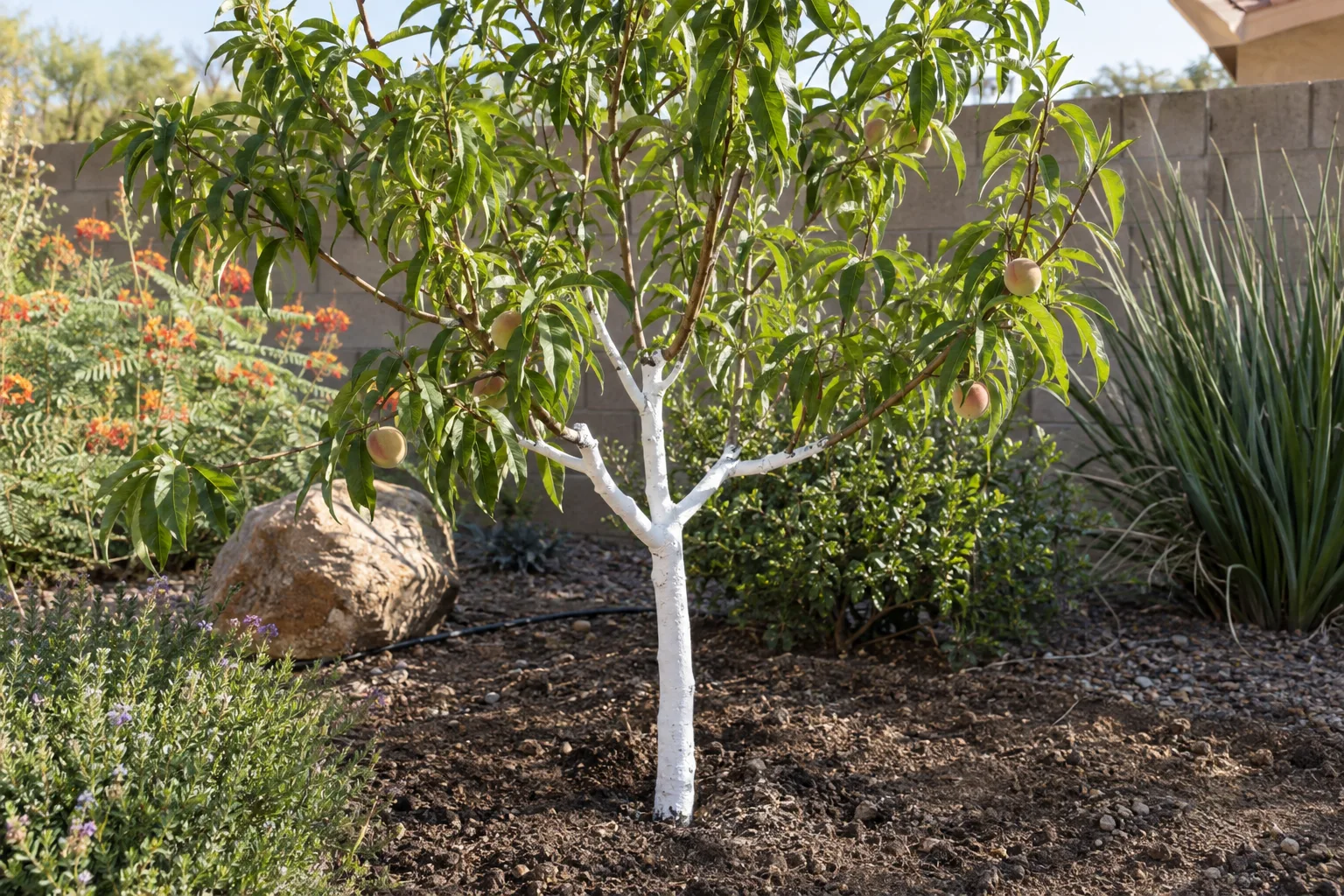
Painting fruit tree trunks with diluted white latex paint protects thin bark from sunscald in the Arizona low desert. Apply it at planting, then check it every spring. A 50/50 mix of white interior latex and water, brushed on from the soil line up, is the standard approach.
Key takeaways
- Mix white interior latex paint and water about 1 to 1, then brush it on from the soil line up through the lower scaffold branches.
- Paint at planting, or before May for trees already in the ground, so bark is covered before summer highs pass 110°F.
- Thin-barked young trees such as peach, plum, apricot, apple and young citrus benefit most.
- Check the coat every spring and touch up any area that looks chalky, thin or peeling.
- Paint reflects heat but does not replace deep watering, mulch, or shade cloth during a tree’s first summer.
What is sunscald and why does it hit fruit trees here?
Sunscald is sun and heat damage that kills the living bark tissue under the surface. In colder regions it shows up in winter. In the low desert it happens in summer, when July afternoons climb above 110°F and direct sun hits the southwest side of a trunk for hours.
Bark in full sun can run many degrees hotter than the air around it. Just beneath the surface sits the cambium, the thin living layer that moves water and nutrients between roots and leaves. Once heat damages it, that section of bark stops working.
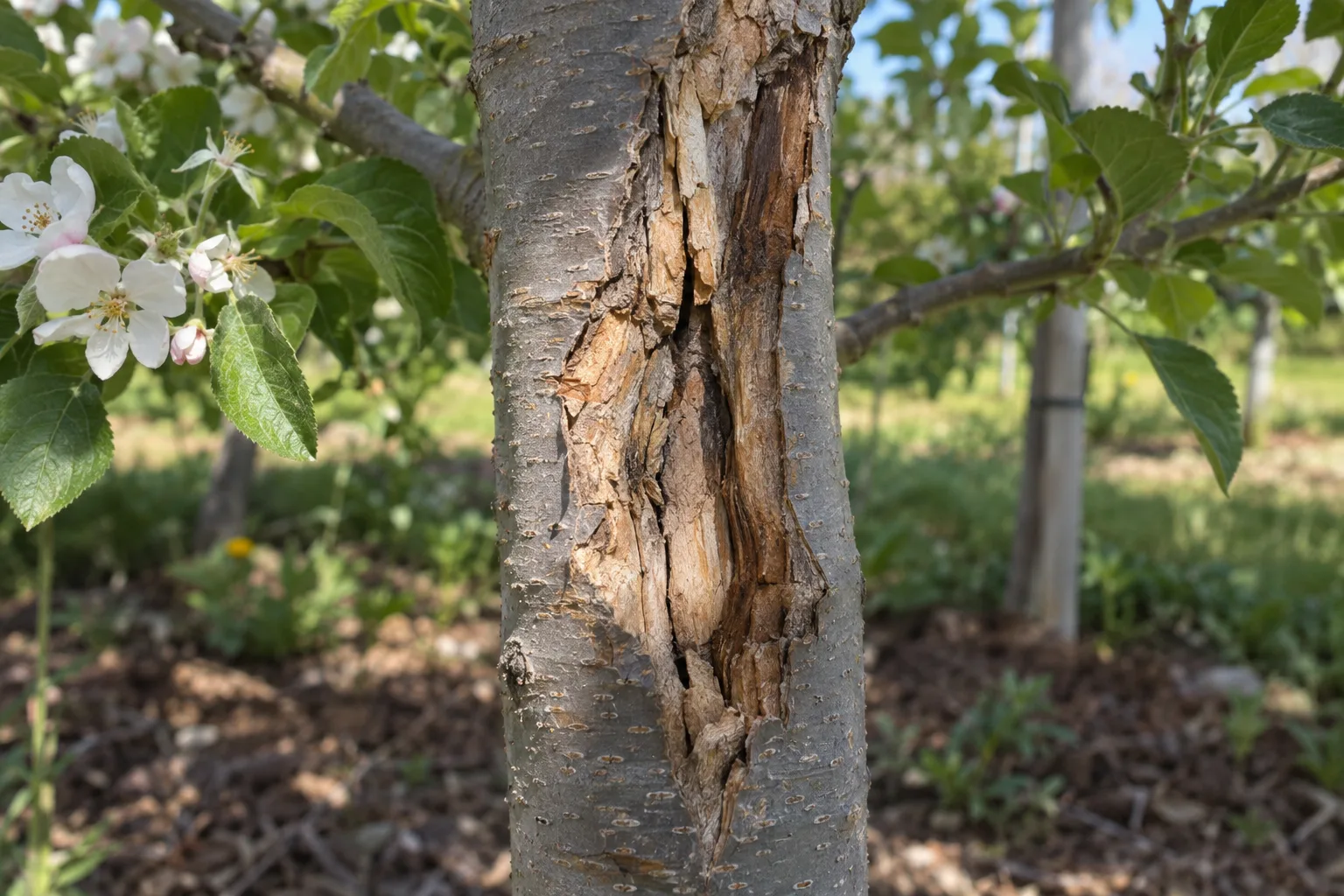
Look for vertical splits, sunken patches that look dry and discolored, and bark that curls away from the wood. Dead areas can become entry points for wood-boring insects and decay.
Young trees are the most exposed because their trunks are thin and their canopies cast little shade. A mature tree can also be caught out. If you prune it hard and open up bark that has always been shaded, that bark has no protection at all.
Which fruit trees need trunk paint?
Young trees with thin, smooth bark need it most, and so does any tree whose trunk or limbs were suddenly exposed by pruning. Most of the trees on our fruit trees page fall somewhere on this list, though availability changes week to week and season to season.
| Tree type | Paint priority | Why |
|---|---|---|
| Peach and nectarine | High | Thin, smooth bark heats quickly in the first few years |
| Plum and apricot | High | Similar thin bark, and open limb structure that lets sun reach the trunk |
| Apple and pear | High when young | Smooth bark and a thin canopy during establishment |
| Citrus, young or recently pruned | Medium to high | Exposed trunks burn on the southwest side |
| Fig | Medium | Tough, but young or newly opened limbs can scald |
| Pomegranate | Lower | Multi-trunk shrubby growth shades itself; single-trunk trees still benefit |
If you are choosing a new citrus tree, our citrus trees page shows the types we commonly carry. Plan to paint the trunk on the day you plant it.
What paint should I use on a fruit tree trunk?
Use white interior latex paint thinned with water to about half strength. Latex is water-based, goes on thin, and lets the bark breathe better than a heavy oil-based coating. White reflects the most sunlight.
Skip oil-based paints. Check the label on exterior paints too, because many contain mildewcides and other additives that are not meant for contact with living bark. Interior latex avoids that question.
Commercial trunk paints and tree whitewash products are also sold. Read the label and avoid anything that dries into a thick, sealed plastic skin. A thin, matte coat is the goal.
Stay with true white. Tan, gray and cream shades absorb more heat, so leftover house paint is a poor substitute.
How do I paint a fruit tree trunk?
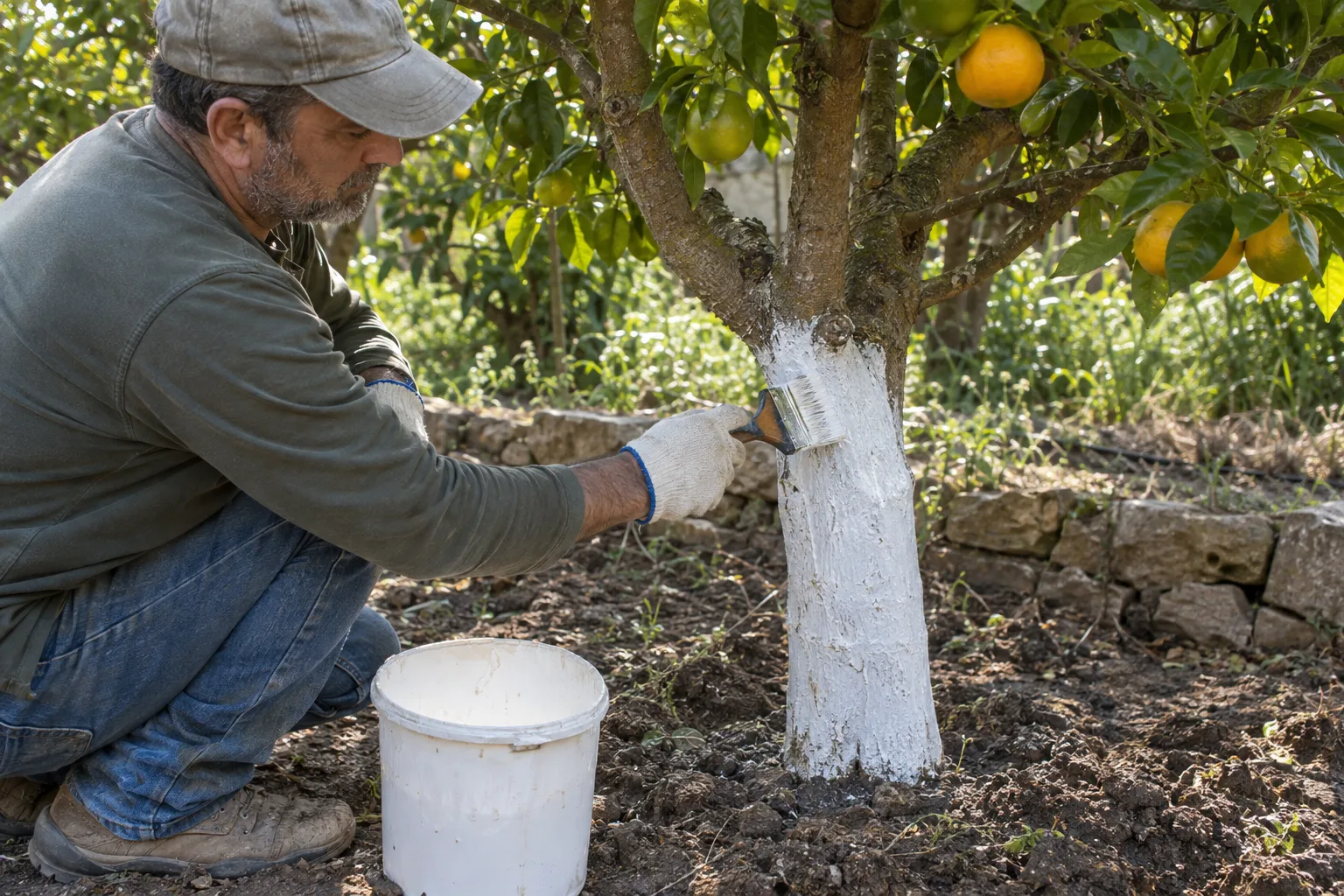
Brush a 1 to 1 mix of white interior latex and water onto the whole trunk, from the soil line up through the lower scaffold branches. The job takes about 20 minutes per tree, and you need only a bucket, a stir stick, a 2 to 3 inch brush and a soft brush for cleaning.
- Pick a dry, mild morning. Paint dries too quickly on hot bark, and working in July afternoon heat is miserable.
- Inspect the trunk first. If you find borer holes, sawdust-like debris, or oozing sap, deal with that before painting over it.
- Brush off loose dirt and flaking dead bark with a soft brush. Leave healthy bark alone.
- Mix one part paint with one part water in a bucket and stir until smooth. It should brush on easily without running off.
- Paint from the soil line upward, covering the full circumference of the trunk and continuing onto the lower sections of the main limbs. Give extra attention to the southwest side.
- Let the coat dry, usually within an hour in dry desert air. Add a second coat if it looks patchy.
- Keep sprinklers and drip emitters off the fresh paint until it is dry.
When should I paint, and how often do I reapply?
Paint on planting day. For trees already in the ground, finish before May so the bark is covered before the hottest weeks of June through August. Fall and winter planting both work, as long as the coat is on well ahead of summer.
Our gardening calendars help you line up planting and care tasks by month. Check the paint every spring. Touch up any area that looks thin, chalky, or separated from the bark, and look again in October after the monsoon, which runs roughly July through September.
Young trees may need a fresh coat each year because UV and temperature swings wear it down. As the canopy fills in over the first few years, the trunk gets more shade, and the need for repainting drops. Newly exposed limbs after pruning get painted right away.
What mistakes make trunk paint fail?
The most common mistake is waiting. A tree planted in January with a plan to paint it “before summer” often goes into July unprotected, and the damage starts in the first heat wave.
Undiluted paint is the second problem. A thick coat can crack and peel through the heat cycles, sometimes pulling live bark with it. Thin it with water and keep the coat light.
Stopping at the trunk leaves the limbs exposed. The first part of each main limb often takes as much afternoon sun as the trunk does, so paint it too.
Some gardeners assume thick bark means a tree no longer needs protection. That holds for the old trunk. It does not hold for a fresh pruning cut or a branch opened up by storm damage, where new bark takes a few seasons to toughen.
Finally, do not paint over active pest damage. Treat the problem first, then paint.
What else protects young fruit trees from summer sun?
Paint works best as one layer of protection. Several other practices lower heat stress on a young tree.
Shade cloth
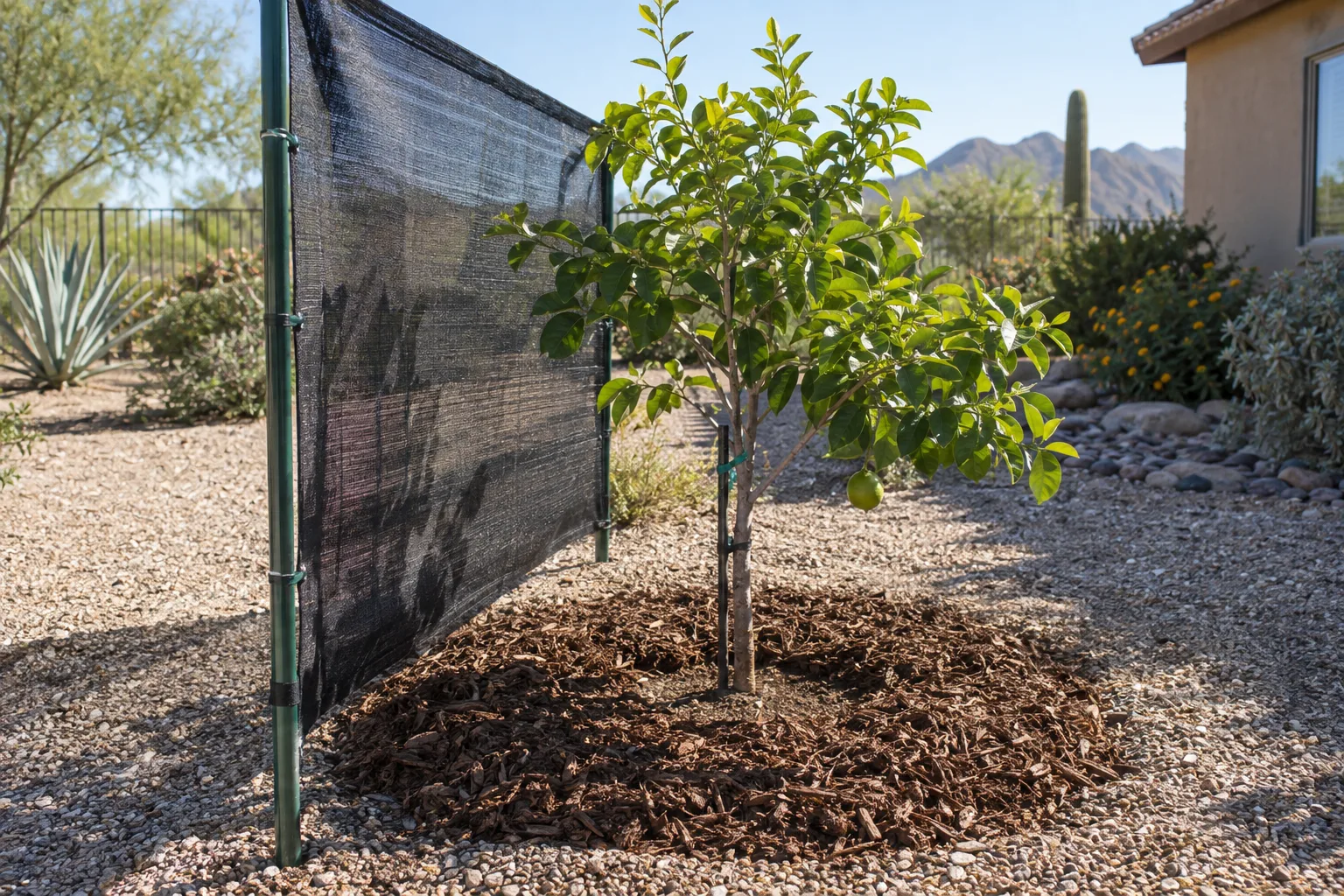
A 30 to 40 percent shade cloth hung on the west side of a newly planted tree through June, July and August cuts the heat load on both trunk and leaves. Take it down in fall.
Mulch
Spread 3 to 4 inches of organic mulch over the root zone and keep it about 6 inches away from the trunk. Mulch slows evaporation from our alkaline, often caliche-heavy soil and keeps roots cooler.
Pruning and watering
Avoid heavy pruning in summer, which exposes shaded bark. Water deeply and less often so roots grow down rather than staying shallow. Our classes and events page lists any upcoming workshops on tree care.
Frequently asked questions
Will monsoon rain wash the paint off?
Dried latex paint holds up through normal watering and most monsoon storms. Heavy rain and strong UV from July through September will fade and chalk it over time, so check the coat in October and touch up thin spots. Paint applied over loose, dusty bark peels sooner than paint on a brushed, dry surface.
Does trunk paint protect against frost?
No, white paint does not protect against frost, because it reflects heat rather than holding it. Our occasional winter frost calls for frost cloth over young citrus and other tender trees on cold nights. Cover the tree before dusk, remove the cover in the morning, and treat paint as your summer protection.
Can I paint a tree that already has sunscald damage?
Yes, painting still helps, though it cannot revive bark that has already died. It shades the surrounding healthy bark and limits further damage while the tree seals the wound. Gently remove loose dead bark, paint up to the wound edge, and watch for borer holes or oozing. Large, deep wounds are worth showing to an arborist.
How high up the trunk should I paint?
Paint from the soil line through the first 12 to 18 inches of each main limb, or higher if the canopy is thin. Young trees often need coverage up to 24 to 36 inches of trunk. Painting a few extra inches costs nothing, while an exposed southwest patch is where damage often begins.
Is painting your fruit trees worth the effort?
Yes, for any young fruit tree in full sun, and for any tree you have just pruned open. A can of white interior latex and 20 minutes per tree is cheap protection for a tree that takes years to bear. You can skip it on mature trees with dense canopy shading the trunk, and on multi-trunk pomegranates that shade themselves. Stop by our nursery in Queen Creek and we will gladly talk through your trees.