Overwatering in March damages Arizona gardens because cool soil stays wet for days, starving roots of oxygen and inviting root rot. Plants waking from winter dormancy need far less water than most irrigation timers deliver by mid-March.
Key takeaways
- March soil can stay wet several days longer than in July, because afternoons are mild and nights can still fall into the 40s.
- Push a screwdriver or wooden dowel 6 to 8 inches into the soil near the drip line before each irrigation, and wait if it comes out damp.
- Water deeply and less often, then raise run times in small steps every two to three weeks through April.
- Wilting in wet soil points to root damage, and more water makes it worse.
- Agave, cacti, rosemary and desert natives need the least water in March, while vegetables and new transplants need the most.
Why is March watering different from summer watering?
Water leaves the soil much more slowly in March than in July, so the same irrigation schedule delivers far more moisture to the roots. Highs usually run in the 70s and 80s, nights can still reach the 40s, and evaporation stays low compared with May or June. Plants are on a different schedule too.
Many are just breaking dormancy and pushing soft new growth from roots that worked slowly all winter. Those roots cannot use extra water yet, and a timer left on a summer program will overshoot badly. Even a winter program can run too often once temperatures climb. Our gardening calendars list what else belongs on the March to-do list.
How does overwatering damage plants in March?
Extra water fills the air spaces in the soil, and roots that cannot get oxygen stop working and start to die. That sets off four problems, and each one shows up later than the watering that caused it.
Root rot and fungal disease
Water molds such as Phytophthora and Pythium are common causes of root rot in wet soil. They destroy the fine feeder roots, and by the time leaves yellow or wilt the infection is often well along. Prevention is far easier than a cure.
Nutrient problems
Alkaline soil already limits how much iron roots can take up. Waterlogged roots absorb less of everything, so yellow leaves with green veins (iron chlorosis) often get worse after a wet stretch. Frequent watering can also flush nitrogen below the root zone. Check drainage first.
Shallow roots
Roots follow moisture. Frequent, light watering keeps them near the surface, and shallow roots struggle when summer highs pass 110°F and the top layer of soil dries within hours. Deep watering at wider intervals encourages roots to reach cooler soil lower down. Plants watered too often in March are often the ones that struggle in July.
Soft growth
Heavy watering combined with spring fertilizer pushes lush, tender growth that sunburns and attracts pests more easily than slower, firmer growth does. It is a slow form of harm, and easy to miss until summer.
Why does Queen Creek soil hold water so long?
Many East Valley yards have clay-heavy or compacted soil, and many sit over caliche, so water drains slowly and collects around the roots. Caliche is a hard, cemented layer of calcium carbonate that water barely passes through. It can sit anywhere from a few inches to a couple of feet below the surface.
Water that reaches caliche has nowhere to go, so it backs up into the root zone. Lots around newer homes are often compacted by construction equipment, which slows drainage further. A quick test helps: dig a hole about a foot deep, fill it with water, and see how long it takes to empty. Standing water the next day signals poor drainage.

Which plants are most at risk from March overwatering?
Plants adapted to dry, fast-draining ground are the most vulnerable, because their roots expect soil to dry out between rains and cannot cope with days of saturation. Several groups stand out.
- Agave and aloe: the crown can rot when it stays wet through cool nights.
- Cacti such as saguaro (Carnegiea gigantea) and barrel cactus (Ferocactus): they store water, and extra irrigation in cool weather can lead to rot.
- Palo verde (Parkinsonia) and other desert trees: frequent shallow watering weakens their root systems.
- Rosemary (Salvia rosmarinus) and lavender (Lavandula): both need sharp drainage, and wet soil can cause stem dieback.
- Bougainvillea (Bougainvillea): heavy watering tends to produce leaves at the expense of flowers.

If you are choosing a desert tree, browse our desert trees, which are varieties we commonly carry, though availability changes week to week and season to season. Give any new planting a few weeks of closer attention, then taper off.
How can I tell if I am overwatering?
Stress symptoms with wet soil point to overwatering, while the same symptoms with dry soil point to drought. Wilting and yellowing look alike either way, so push a screwdriver or wooden dowel 6 to 8 inches down near the drip line and see what comes out. Test at depth.
- Leaves that are limp and pale rather than crisp and brown
- Yellowing that starts on lower or inner leaves
- Soft or dark stems at the base
- A sour or musty smell near the base of the plant
- Algae or moss on the soil around emitters
- Soil that is still wet three days after an irrigation cycle

The surface of clay soil can look dry while the root zone below stays soaked. Always check at depth.
How do I adjust my irrigation for March?
Shorten how often each zone runs, water deeper when it does, and let the soil rather than the calendar decide when the next cycle happens in each bed. Work through these steps.
- Write down how many days each zone runs and for how many minutes.
- Check the soil at root depth before each scheduled cycle, and skip the cycle if it is still damp.
- Put desert plants, citrus, vegetables and lawn on separate zones if you can, since they need different amounts.
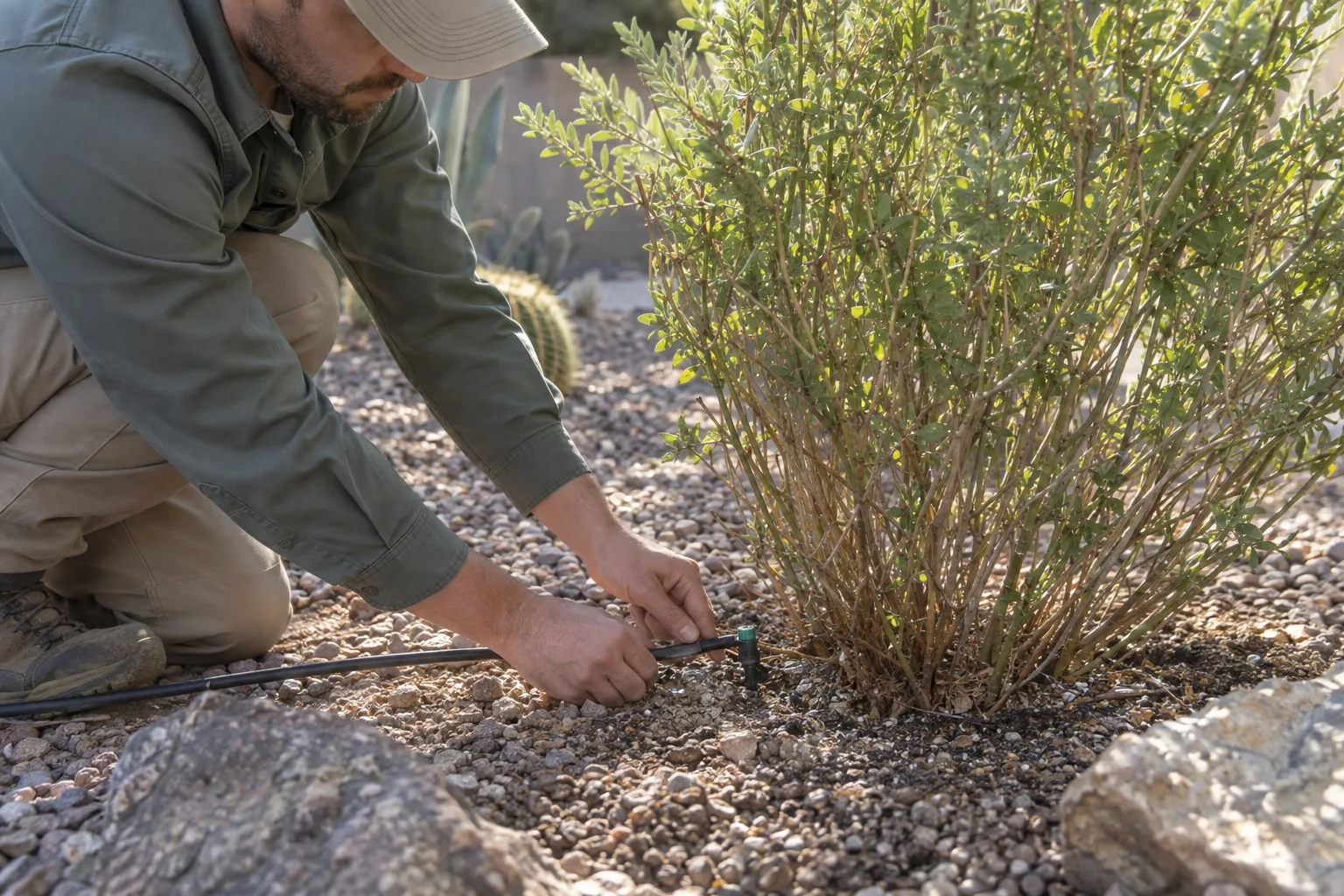
- Run drip zones longer on fewer days so water reaches deeper, rather than running short cycles often.
- Skip a cycle after rain, and add a rain sensor if your controller lacks one.
- Inspect emitters for clogs and leaks, because a leaking emitter can saturate one plant while its neighbors stay dry.
- Raise run times in small steps every two to three weeks through April instead of jumping to a summer schedule.
Potted plants follow the same rule. Choose pottery and planters with drainage holes, and empty saucers after watering.
How often should I water in March?
Established plants usually need water every one to three weeks in March, depending on type, while vegetables and annuals need it every few days. Treat the table as a starting point and let the soil check overrule it, since soil, exposure and plant age all change the answer.
| Plant group | March | Summer |
|---|---|---|
| Established desert trees and shrubs | Every 14 to 21 days | Every 7 to 14 days |
| Cacti and succulents | Every 21 to 30 days | Every 14 to 21 days |
| Citrus and tropical shrubs | Every 7 to 10 days | Every 3 to 5 days |
| Vegetables and annuals | Every 2 to 4 days | Daily |
Vegetables, herbs and annuals sit at the thirsty end of the range, and our herbs, vegetables and berries section shows what suits this season. Compare these intervals with the University of Arizona Cooperative Extension watering guidance for Maricopa County.
What should I do if my plants are already overwatered?
Stop watering and let the soil dry out. Hold off for at least a week, longer for cacti and succulents. If the soil is wet and the plant is wilting, the roots are damaged, and adding water will deepen the problem.
Pull mulch back from the base of shrubs so the soil surface and crown can dry. Cut away any mushy, dark tissue with clean pruners, back to firm, healthy growth. Then water on the new, wider schedule once the root zone has dried.
Fungicides are pesticides, and the right product depends on what is causing the rot. Read and follow the label, and ask before you buy. Bring photos to us or contact us, or call the University of Arizona Cooperative Extension office for Maricopa County. For a tree with widespread dieback, call a certified arborist. Many plants recover once watering is corrected.
Frequently asked questions
Do established desert trees need water in March?
Many established desert trees need little or no extra water in March after a wet winter. After a dry winter, one or two slow, deep soakings across the month are reasonable. Apply the water out at the edge of the canopy, where feeder roots are, and skip any drip schedule that runs on a fixed frequent timer.
Is daily watering ever right in March?
Daily watering fits only a few cases: seeds and seedlings, fresh transplants in containers, and new sod. Even then, check the soil first, because cool nights slow drying. Established trees, shrubs, cacti and lawn almost never need daily water this early in the season.
Do new plants need more water than established ones?
Yes, new plants need more frequent water while roots spread into the surrounding soil. Many trees and shrubs need regular watering through their first one or two summers, even desert natives. Taper the schedule gradually, and keep checking soil at depth.
Can a smart irrigation controller help?
A weather-based controller can help because it adjusts run times to local conditions and cuts back in cool weather. It still depends on correct zones and working emitters. Some water providers offer rebates on these controllers, so check with yours before you buy one.
Should I fertilize a plant that looks overwatered?
No, wait until it recovers. Damaged roots cannot use fertilizer, and extra nutrients can burn them or push soft growth. Hold off until you see new, firm growth and the watering schedule is fixed, then feed according to the product label.
Should you cut back your watering in March?
Most Queen Creek yards should, especially those with clay, caliche or desert plants, because the soil holds water far longer than a summer timer expects. Gardeners with fast-draining sandy soil, vegetable beds or new transplants may need to keep watering often, so test the soil before changing anything. If your plants look healthy and the soil is dry at 6 inches, your schedule is already fine. Visit us at the nursery in Queen Creek and bring a photo of anything that worries you.