

Soft yellow leaves, wilting in wet soil, a mushy base, algae on the soil, early leaf drop, rotted roots and pale new growth are the seven signs of overwatering Arizona plants in spring. Check the soil six inches down before you water again.
Key takeaways
- Yellow leaves that feel soft and limp point to wet roots, while dry, crispy yellow leaves point to thirst.
- Push a screwdriver 6 inches into the soil beside the emitter; if it slides in easily and comes out with dark, damp soil, skip the next watering.
- From February to April, many established desert trees and shrubs need water only every 10 to 21 days.
- When two or more signs show on one plant, stop irrigating for 7 to 10 days and then test the soil again.
- Pull mulch back a few inches from trunks and stems so the base can dry between waterings.
What are the seven signs of overwatering in Arizona plants?
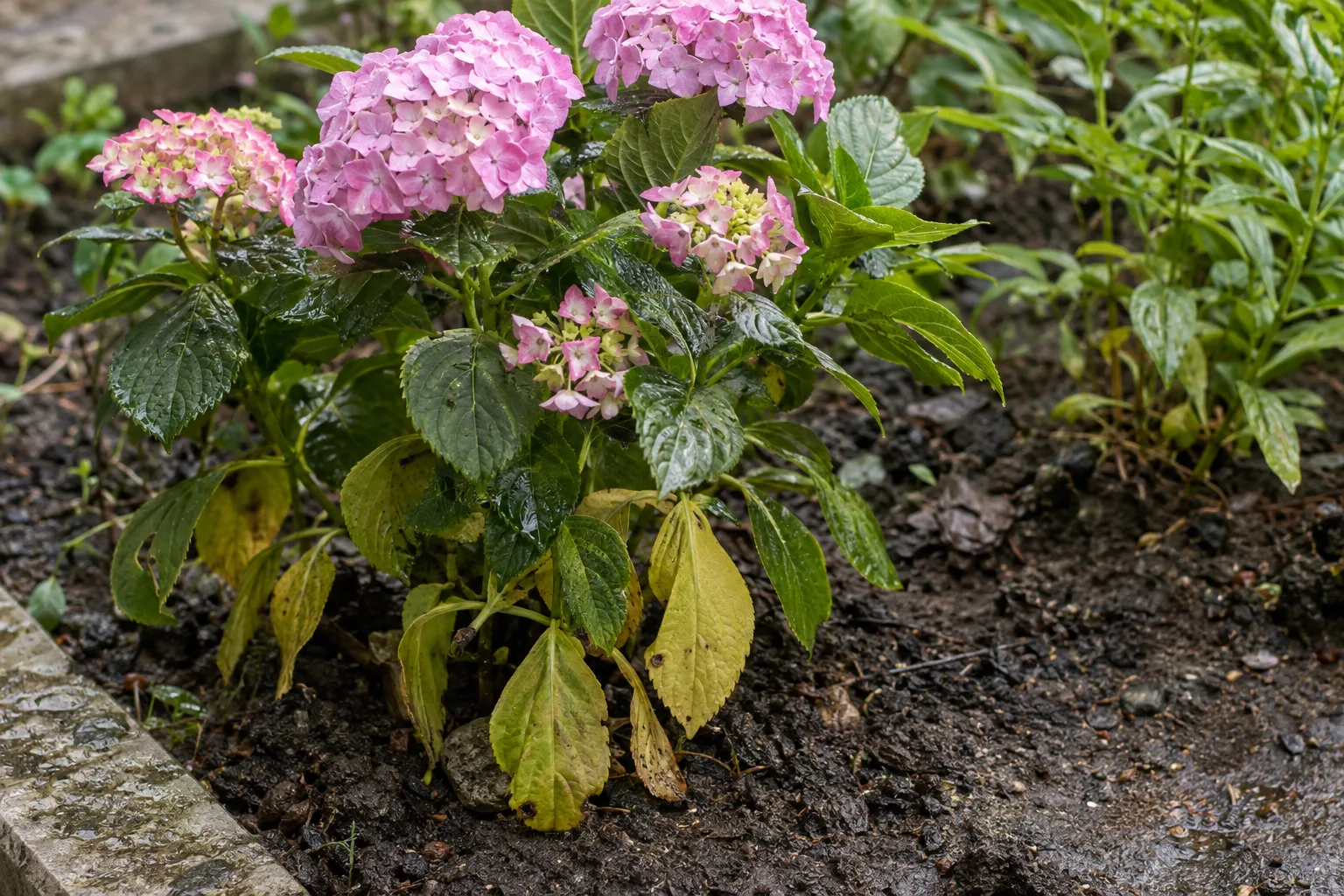
The seven signs are below, and two or three on the same plant make a strong case for too much water. Many of them look like drought, so the texture of the leaves and the moisture of the soil matter more than the color. If you are choosing replacements, our plant selection is a good place to start looking for varieties that suit low-water beds.
1. Yellow leaves that feel soft
Soft, limp yellow leaves, usually on the lower or inner part of the plant, mean the roots are sitting in water. Roots without oxygen stop moving water upward, so the plant looks thirsty while the soil is wet. Drought-stressed leaves feel dry, crispy or papery. On agaves and other succulents, yellow leaves that feel mushy instead of firm are a clear warning.
2. Wilting in wet soil
A drooping plant in damp or soggy soil has damaged roots, and more water will not help. This shows up often on desert-adapted plants such as palo verde (Parkinsonia species), ironwood (Olneya tesota) and brittlebush (Encelia farinosa), which are built for deep soakings followed by long dry spells. Check the soil before you reach for the hose.
3. A mushy or rotting base
Press gently at the base of the stem or trunk, right at the soil line. Healthy tissue feels firm. A base that is soft, spongy or gives under light pressure suggests crown rot, which develops where soil stays wet. Cacti, agaves and aloes are the most vulnerable because they store water in their tissue. A large cactus with a mushy base is rarely saved.

4. Algae, mold or mushrooms on the soil
Green algae, white mold or mushrooms in a desert bed mean the surface stays wet for days at a time. Dry low-desert soil rarely supports them. Look at how often your drip system runs, because daily or every-other-day cycles never let the top layer dry out.
5. Leaves dropping early
Healthy green leaves falling from an evergreen shrub or tree in spring suggest root stress. The plant sheds foliage to reduce what its damaged roots must support, the same response drought triggers. Judge only plants that should be in leaf. Desert willow (Chilopsis linearis) is deciduous and looks bare in winter before it leafs out, so that is normal.
6. Rotted roots
Healthy roots are white or light tan and firm, with a clean smell. Rotted roots are brown or black, soft enough to fall apart in your fingers, and smell sour or musty. You can check a container plant by sliding it out of the pot. In the ground, expose a small section of root near the trunk and look. Damage below ground is often worse than the leaves suggest.
7. Pale, weak new growth
New leaves that come in pale green or yellow with darker green veins point to iron chlorosis. Our alkaline soil already makes iron hard for roots to absorb, and wet, airless soil makes it worse. Many gardeners treat this as a fertilizer problem. Cutting back water often improves mild cases, and a chelated iron product used according to its label can help while the soil dries.
Why do plants get overwatered in spring here?
Spring feels like the time to water more, but cool weather means plants use far less than they will in July. From February to April, daytime highs in the East Valley sit in the 70s and 80s, and the root zone stays wet long after the surface looks dry.
Timers are another cause. A drip schedule set for 110°F summer days and never changed in fall delivers several times what a plant needs in March. Soil adds to the problem. Caliche, the hard calcium layer common in Queen Creek yards, can trap water a foot or two down, and clay drains slowly and holds moisture against roots. Together they keep roots wet.
How do I tell if the soil is too wet?
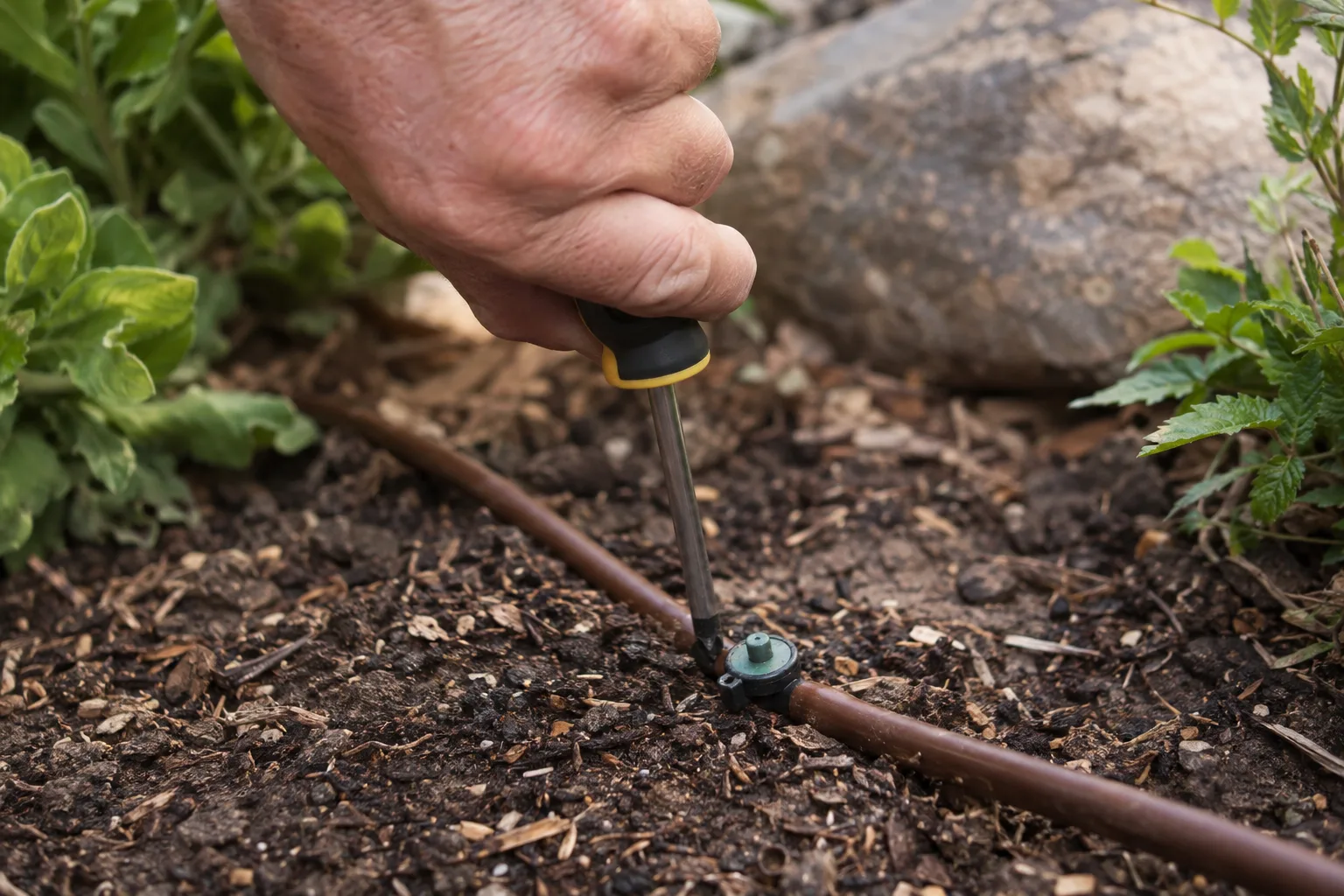
Test the soil at root depth instead of judging by the surface. The easiest tool is a long screwdriver. Push it about 6 inches into the ground near the drip emitter. If it slides in with little effort and comes out with dark, damp soil clinging to it, that zone does not need water yet.
If puddles linger or plants keep declining, check drainage. Dig a hole 18 to 24 inches deep, fill it with water, and see how long it takes to drain. Water still standing after several hours points to caliche or heavy clay below the planting area. Hitting a hard, whitish layer that resists the shovel is another sign.
How do I fix an overwatered plant?
Stop irrigating, let the root zone dry, and restart on a lighter schedule. Recovery is slower than the damage was, so expect to wait.
- Turn off irrigation to the affected plant for 7 to 10 days, even if it still looks droopy.
- Test the soil at 4, 8 and 12 inches with the screwdriver or a moisture meter to see how deep the wet zone goes.
- Pull mulch back from trunks and stems so the base can dry.
- Loosen the top 2 to 3 inches of soil with a hand cultivator, staying away from the main roots.
- Grade the soil so water drains away from the base of the plant.
- Reset the controller to a spring schedule, with fewer cycles than summer.
- Water again only when the soil has dried at root depth, and then water deeply.
- Watch for firmer tissue, better color and new growth over the next 4 to 6 weeks.
A potted plant can be rescued more directly. Slide it out, trim away black or mushy roots with clean pruners, let the root ball air dry for several hours, and repot in fresh cactus mix. Hold off watering for a few days. Make sure the pot has a working drainage hole, and browse our pottery and planters if yours does not.
One common misconception is that a layer of gravel in the bottom of a planting hole improves drainage. Water moves slowly from fine soil into coarse gravel, so it collects above the layer and keeps roots wet. Mix coarse material through the backfill instead.
How often should I water established plants in spring?
Most established desert plants need water every 10 to 30 days in spring, far less often than newly planted ones. Use the table as a starting point and let soil moisture decide. Hot, dry, windy days shorten the interval, and cloudy weeks stretch it.
| Plant type | Spring interval | Note |
|---|---|---|
| Desert trees such as palo verde | Every 14 to 21 days | Water deeply, not often |
| Desert shrubs such as fairy duster | Every 10 to 14 days | Let soil dry between waterings |
| Cacti and succulents | Every 21 to 30 days | Less in cool weather |
| Agaves | Every 30 days or longer | Often need no extra water in spring |
| Citrus trees | Every 7 to 10 days | Use more water than desert natives |
| Vegetable beds | Every 2 to 4 days | Check soil moisture daily as it warms |

Group plants by water need so one drip zone is not serving a palo verde and a citrus tree at the same time. Browse our desert trees for options that suit a low-water zone, and our citrus trees for plants that want more frequent water. These are varieties we commonly carry, although availability changes week to week and season to season.
When should I get help with a struggling plant?
Ask for help if a trunk or large cactus base is soft, more than half the roots look rotted, or the plant keeps declining after a month of corrected watering. Bring clear photos of the whole plant, the leaves and the base, plus a note on how often your system runs.
For a month-by-month view of how watering needs shift, our gardening calendars are a useful reference to keep near your timer.
Frequently asked questions
Can an overwatered plant recover?
Many do, if you catch the problem before most roots have rotted. Stop watering, let the soil dry to root depth, and then water deeply on a lighter schedule. Give the plant 4 to 6 weeks before deciding to replace it. Plants with soft trunks or mostly black roots rarely come back.
Should I cut my drip frequency in half in spring?
Cutting frequency by about half from your summer schedule is a reasonable starting point. Run the system for two weeks, then check the soil with a screwdriver at 6 inches. If it is still wet, reduce again. If plants wilt and the soil is dry, add back one cycle.
Why do potted plants overwater faster than plants in the ground?
A pot holds a fixed volume of soil, so excess water has only the drainage hole as an exit. If the hole is blocked or the pot sits in a full saucer, roots stay submerged. In the ground, water can spread sideways and downward through surrounding soil.
Should I fertilize a plant with yellow leaves?
Hold off until you know the cause. Fertilizer on a plant with damaged, waterlogged roots adds salts and cannot be absorbed well. Fix the moisture first, then feed only if new growth stays pale after the soil has dried and the plant has had several weeks to recover.
Does bougainvillea need dry spells to bloom?
Bougainvillea generally flowers better with some dryness between waterings, while constant moisture tends to push green growth and fewer blooms. Let the top few inches of soil dry before watering. Newly planted bougainvillea needs more regular water until its roots establish.
Is your plant drowning or thirsty?
If the leaves are soft and the soil 6 inches down is wet, it is drowning, so stop watering and let it dry. If the leaves are crispy and the soil is dry at depth, it is thirsty. New transplants and vegetable beds are the exception, since they need frequent water and this advice does not apply to them. Bring your questions and photos to our nursery in Queen Creek, and we will help you sort out which one you have.