

Red bird of paradise, Texas sage, oleander and yellow bells are the four most overplanted Arizona shrubs in East Valley yards. Baja fairy duster, feathery cassia, jojoba and flame acanthus are tough, low-maintenance swaps that offer similar color, screening or bloom with a different look.
Key takeaways
- Swap shrubs in October or November so roots grow through the mild months before summer highs above 110°F.
- Every part of oleander is poisonous, and oleander leaf scorch is a bacterial disease with no known cure.
- Baja fairy duster stays about 3 to 5 feet tall and wide, and it holds its leaves through most winters.
- Feathery cassia covers itself in yellow flowers from late winter into spring, when most yards have little color.
- Jojoba grows slowly to roughly 5 to 8 feet, which makes a dense evergreen screen once it fills in.

Why do the same shrubs show up in so many East Valley yards?
They are easy to find, they grow quickly, and they handle alkaline soil, caliche and reflected heat from block walls. Those are real strengths, and none of these four is a bad plant. The trouble starts when one species lines every block or sits in a spot too small for its mature size.
When a whole street shares one shrub, a single pest or hard frost can hit every yard at once. Mixing in other tough species spreads that risk, and our plant selection is wider than most people expect. These are varieties we commonly carry, but availability changes week to week and season to season.
What is wrong with red bird of paradise, and what can replace it?
Caesalpinia pulcherrima has orange-red flowers that look great against a blue summer sky. It also freezes back to bare sticks in winter frost, and it drops seed that sprouts across gravel beds. The seed pods are considered poisonous if eaten, so use caution around small children and pets.
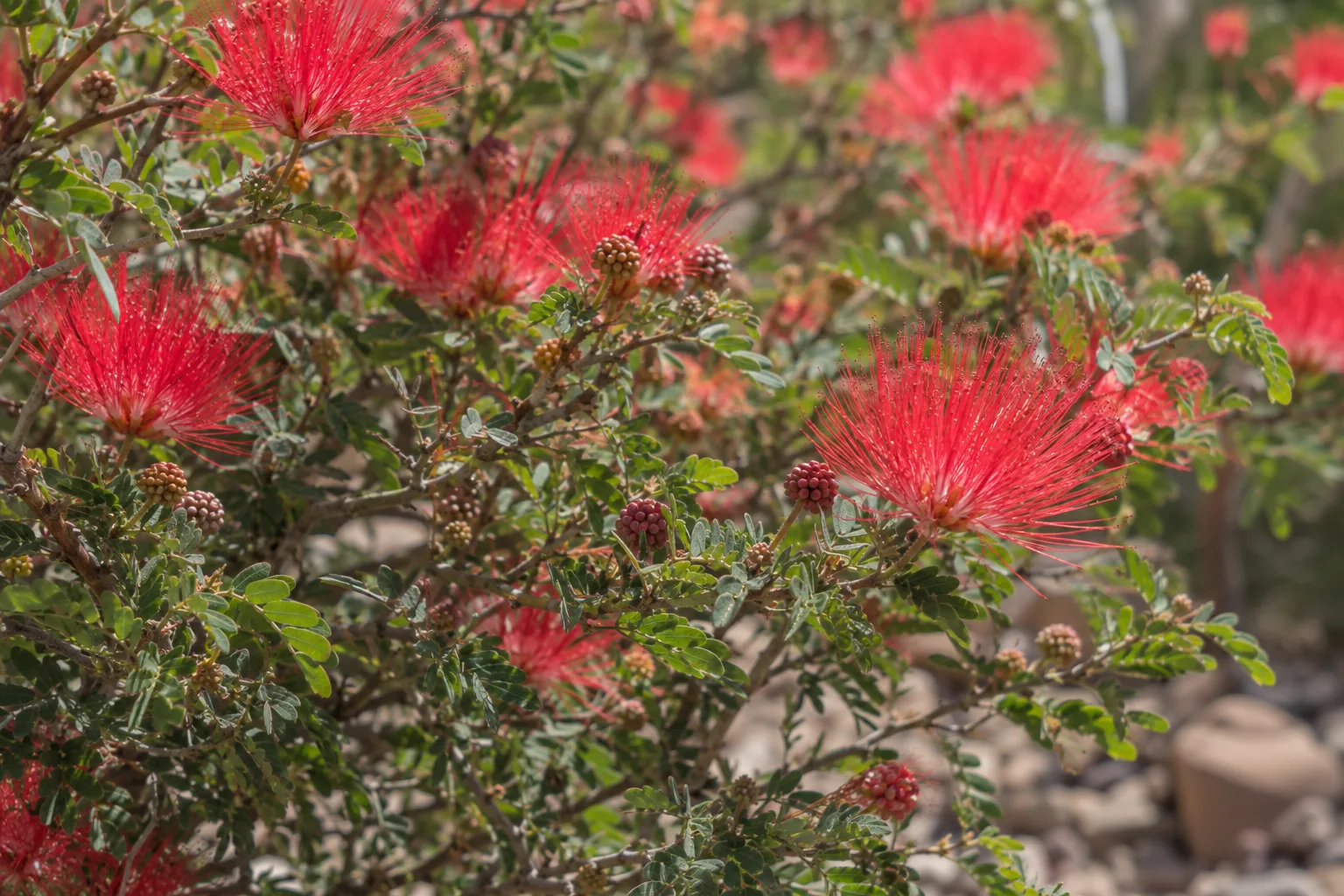
Baja fairy duster (Calliandra californica)
Baja fairy duster grows 3 to 5 feet tall and wide in full sun. Once established it does well with a deep watering about every 7 to 10 days in summer and less in winter. Red powder-puff flowers draw hummingbirds, and the fine, ferny leaves stay on through most winters. The drawback is bloom timing. It flowers heaviest in spring and fall, lightly in midsummer, and a hard frost can burn the tips.
Is Texas sage still worth planting?
Yes, if you give it room. Leucophyllum frutescens grows 5 to 8 feet tall and wide, and it flushes purple after humidity or rain, which often means the July to September monsoon. Problems start when it is sheared into a tight ball. Shearing cuts the arching shape, reduces bloom, and leaves the inside of the plant bare. If your spot is small, a smaller silver-leaved shrub is a better fit.
Feathery cassia (Senna artemisioides)
Feathery cassia reaches 4 to 6 feet tall and wide in full sun. Its fine, silver-green leaves look like Texas sage, and the yellow flowers open from late winter through spring. Established plants usually need a deep soak about every 10 to 14 days in summer. The drawback is upkeep of its shape. It can turn leggy without a light trim after bloom, and it often lives for fewer years than other desert shrubs.

Should I replace my oleander?
Replace it if you have small children or pets, or if your hedge is declining. Every part of Nerium oleander is poisonous, and oleander aphids leave sticky honeydew on leaves and anything beneath them. Plant health authorities such as University of Arizona Cooperative Extension describe oleander leaf scorch as a bacterial disease with no cure. A healthy oleander hedge far from play areas can stay where it is.
Jojoba (Simmondsia chinensis)
Jojoba is a Sonoran Desert native that grows 5 to 8 feet tall in full sun to light shade. Its gray-green, leathery leaves stay on all year, so it works well as a screen along a wall. Established plants do well with a deep soak every 10 to 14 days in summer. The drawback is patience. Growth is slow, and male and female flowers grow on separate plants, so only females produce seed.

Do yellow bells earn their space in a small yard?
Often they do not. Tecoma stans grows fast to 6 to 10 feet, freezes back in a hard frost, and turns leggy and sprawling without regular pruning. Heavy cutting can also reduce flowers. In a large yard with room to spread it still makes a bright, hummingbird-friendly show.
Flame acanthus (Anisacanthus quadrifidus var. wrightii)
Flame acanthus grows 3 to 5 feet tall and wide in full sun. Red-orange tubular flowers open from summer into fall, and hummingbirds visit them. Established plants usually need a deep watering about every 7 to 10 days in summer. The drawback is winter. It drops leaves and can die back to the ground after frost, so it looks bare for a few months before it regrows in spring.
Which swap fits my yard?
Match the shrub to the space, the sun and the job. Start with the mature size, because most replacements fail from being planted too close to a wall or walkway.
| Swap | Replaces | Mature size | Best season | Main drawback |
|---|---|---|---|---|
| Baja fairy duster | Red bird of paradise | 3 to 5 feet | Spring and fall flowers | Frost can burn tips |
| Feathery cassia | Texas sage | 4 to 6 feet | Late winter to spring | Gets leggy, shorter life |
| Jojoba | Oleander | 5 to 8 feet | Evergreen year round | Slow growth |
| Flame acanthus | Yellow bells | 3 to 5 feet | Summer into fall | Bare in winter |
When and how do I replace an established shrub?
Plant in October or November. Roots then have the mild months to spread before summer heat arrives. Our gardening calendars list planting windows by month. The steps below work for all four swaps.
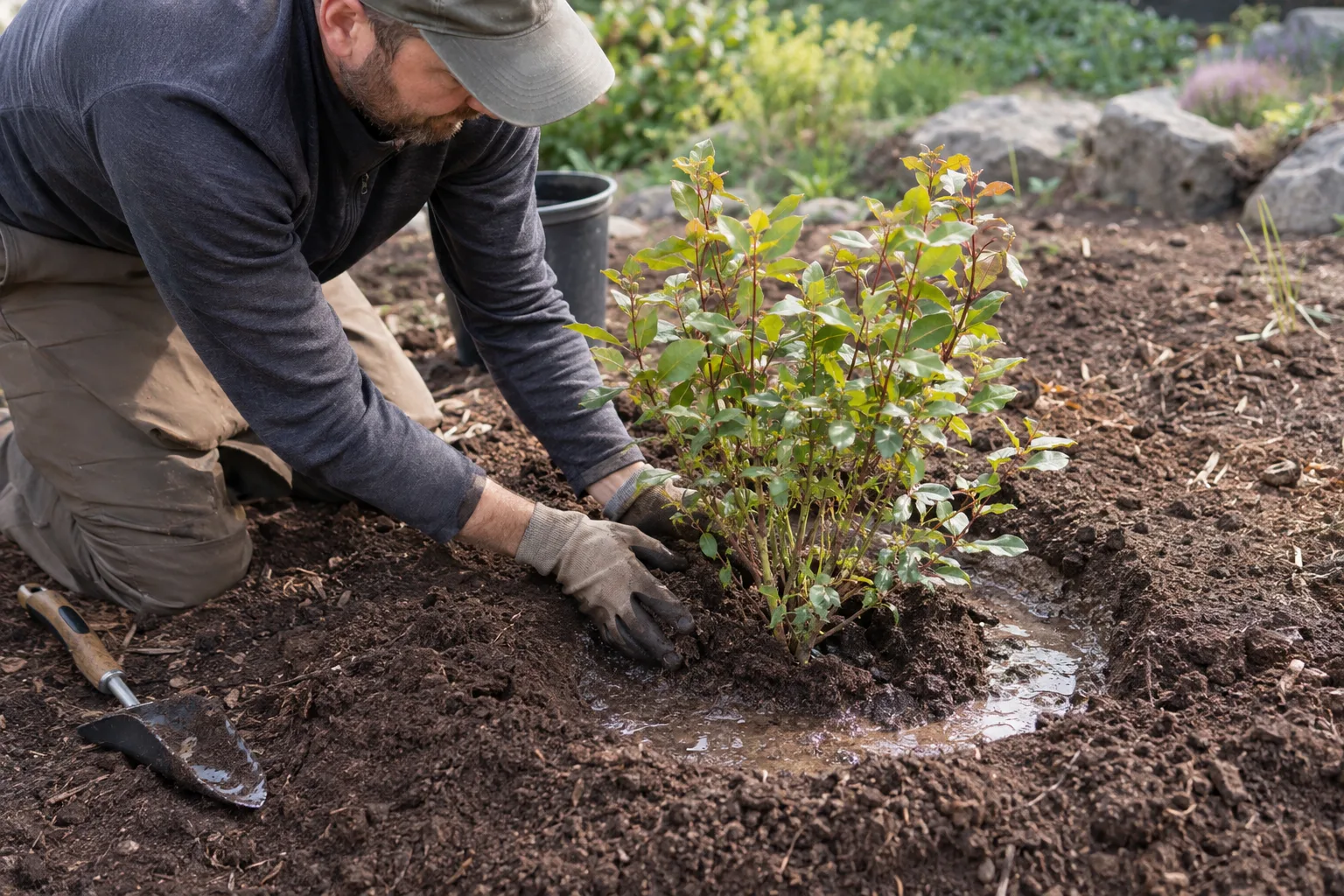
- Cut the old shrub to 6 to 8 inches above the ground, then dig out the root ball.
- Dig the new hole 2 to 3 times wider than the pot and no deeper than the root ball. If you hit caliche, break through it with a digging bar so water can drain.
- Set the crown of the plant at or slightly above the surrounding soil.
- Backfill with the native soil you removed. Heavy amendments in the hole can hold water around roots.
- Build a shallow basin 3 to 4 inches high around the plant and soak it slowly and deeply.
- Spread 2 to 3 inches of mulch, kept a few inches away from the stems.
- Water every few days at first, then stretch the interval as roots spread. Check the soil 4 to 6 inches down before watering again.
Skip fertilizer for the first 60 to 90 days. Planting in the heat of June, setting the crown too deep, and watering a little every day are the most common mistakes.
Frequently asked questions
Can I grow these shrubs in containers?
Baja fairy duster and flame acanthus can grow in large pots. Choose a heavy container with drainage, such as those in our pottery and planters. Potted shrubs dry out far faster than ground plantings in summer, so check them daily once highs pass 100°F. Jojoba prefers the ground.
How much water does a new shrub need in its first summer?
Plan on watering every 2 to 4 days at first, then less often as roots spread. Always check the soil 4 to 6 inches down before adding water. Overwatering causes root rot that looks like drought stress, with wilting and leaf drop. Most of these shrubs cut back to weekly or less by their second summer.
Can I remove an oleander hedge myself?
Yes, with care. Wear gloves, long sleeves and eye protection, because the sap can irritate skin and eyes. Do not burn the cuttings, since smoke from oleander is considered harmful. Ask your city’s green waste program how to dispose of the clippings. A large hedge with deep roots may be easier to remove with a landscaper.
Will my HOA allow these swaps?
That depends on your community’s rules, and we cannot say what yours permits. Many HOAs require approval before changing plants in front yards, so read your CC&Rs first. A short request with the plant name, mature size and a photo gives the architectural committee what it needs to answer.
Where can I learn more about planting for the low desert?
Our classes and events page lists upcoming workshops on planting and care for Arizona yards. Classes are a good way to ask questions about your own soil, sun exposure and watering setup before you buy.
Is it worth replacing your overplanted shrubs?
Replace a shrub if it freezes back every winter, outgrows its spot, drops messy seed, or grows near children or pets, as oleander can. Leave healthy, well-placed plants alone. A Texas sage with room to spread is fine, and a hedge that screens nicely needs no change. If you want an instant formal hedge, jojoba will test your patience. Stop by our nursery in Queen Creek to see these shrubs in person and ask about your yard.
