Oleander (Nerium oleander) grows well in Arizona, but every part of it is poisonous, it needs steady pruning, and leaf scorch disease can kill plants over a few years. Think twice before planting oleander in Arizona if you have kids, pets or livestock nearby.
Key takeaways
- Every part of oleander contains cardiac glycosides, and dried clippings stay toxic for months, so households with children, dogs, cats, horses or poultry carry the most risk.
- Oleander leaf scorch, a bacterial disease spread by sharpshooter insects, has no cure and can decline a shrub over roughly 2 to 5 years.
- A mature hedge reaches 8 to 15 feet tall and wide and needs pruning 2 to 3 times a year, with every clipping bagged.
- Established plants survive on little water, but they fill out and bloom better with a deep soak every 7 to 14 days in summer.
- Texas sage, desert willow, jojoba and yellow bells can screen a yard or add summer color with fewer drawbacks.

Is oleander poisonous to kids, pets and livestock?
Yes. Leaves, stems, flowers, seed pods and sap all contain cardiac glycosides, including oleandrin, which disturb the heart’s rhythm. Poison centers, including the Arizona Poison and Drug Information Center, field oleander calls, and the ASPCA lists it as toxic to dogs, cats and horses.
Drying does not remove the danger. Dried leaves and clippings can stay hazardous for months, so a pile of trimmings beside the house remains a risk long after pruning day. The sap can also irritate skin and eyes, so wear gloves and safety glasses when you cut it.
Never burn oleander clippings, because poison authorities warn that the smoke carries the same compounds. If you think a person or animal has eaten any part of it, call Poison Help at 1-800-222-1222 right away. The risk climbs as the shrub ages and drops more leaves and flowers around its base.
What is oleander leaf scorch, and can it be cured?
Oleander leaf scorch is a bacterial disease with no known cure. The bacterium Xylella fastidiosa clogs the plant’s water-carrying tissue, and sharpshooter insects, including the glassy-winged sharpshooter, carry it from shrub to shrub.
Leaf tips and edges brown first, then whole branches die back. Many infected shrubs decline over a period of several years, and the browning returns each season.

Early symptoms resemble heat or irrigation stress, so they are easy to miss. Extra water does not reverse the browning. Cutting out dead branches tidies the shrub, but we know of no treatment that clears the infection from the plant.
If oleanders around your neighborhood show widespread browning and dieback, a new planting on your property faces higher odds of catching it. A hedge of ten shrubs can mean a lot of money and years of watering invested in plants that may fail.
How much work is a mature oleander hedge?
More than most people expect when they buy a small plant. Left alone, oleander grows 8 to 15 feet tall and wide, opens up in the middle, and collects dead wood inside the canopy.
Most gardeners prune 2 to 3 times a year to keep a hedge dense, and each session produces a large volume of toxic clippings. Those need heavy bags and disposal that follows your city’s or hauler’s green waste rules. Bag them the same day.
The roots are fibrous and spread well in irrigated soil, so keep a planting several feet from walls, sidewalks and irrigation lines. Cut stumps resprout from the roots, meaning removal can take one to two growing seasons of follow-up. If you decide against oleander, our plants page is a good place to start looking at other shrubs.
How much water does oleander need in the East Valley?
Established oleander survives on much less water than most flowering shrubs, but it looks best with a deep soak every 7 to 14 days through the summer. Plants held at the bare minimum look sparse and flower less when highs run above 110°F.
Oleander tolerates our alkaline soil and caliche better than most ornamentals. Drainage is the weak point. In heavy soil over a shallow caliche layer, water can sit during the monsoon (roughly July through September), and roots in saturated ground can rot.
Test a spot before planting by digging a hole 12 to 18 inches deep and filling it with water. If water is still standing several hours later, choose a different plant or a different location, or plant on a mound. Low spots in the yard are the usual trouble.
Which shrubs make a better screen than oleander?
Texas sage, desert willow, jojoba and yellow bells all handle low desert heat and alkaline soil. These are varieties we commonly carry, though availability changes week to week and season to season. No plant is risk-free to chew on, so check the ASPCA plant list if you have pets.
Texas sage (Leucophyllum frutescens)
Texas sage grows 4 to 8 feet tall and wide in full sun with low water. It has silvery foliage and tends to bloom after humid weather. The drawback is slower growth than oleander, and heavy shearing or too much water makes it leggy and cuts flowering.
Desert willow (Chilopsis linearis)
Desert willow reaches roughly 15 to 25 feet tall and 10 to 15 feet wide in full sun, with low water once established. Trumpet-shaped flowers appear from late spring into summer. It drops its leaves in winter and leaves seed pods to sweep up. You can browse the desert trees and the flowering trees pages for related options.

Jojoba (Simmondsia chinensis)
Jojoba forms a dense, rounded shrub about 5 to 10 feet tall and wide. It wants full sun and very little water once established. It looks plain compared with a flowering shrub, and it grows slowly, so a screen takes a few years to fill in.
Yellow bells (Tecoma stans)
Yellow bells grows 6 to 10 feet tall and 6 to 8 feet wide in full sun, with low to moderate water. Yellow trumpet flowers run from late spring into fall. Frost can cut it back in cold winters, and it leaves seed pods around the base.
When does oleander still make sense?
Oleander still works on a large property with no children, pets or livestock, where a crew handles the pruning. A healthy hedge that is already growing in that kind of household can stay in place, since removal costs money and creates a lot of waste.
Compact types such as ‘Petite Pink’ and ‘Petite Salmon’ stay around 4 to 6 feet and cut the pruning load. Their toxicity is the same as the full-size plant. Check your HOA’s plant guidelines and your city’s rules before planting any large shrub.
How do I remove oleander safely?
Plan the job for a cooler month rather than a day above 110°F, and treat every part of the plant as toxic. Our gardening calendars can help you pick a good window for replanting afterward.
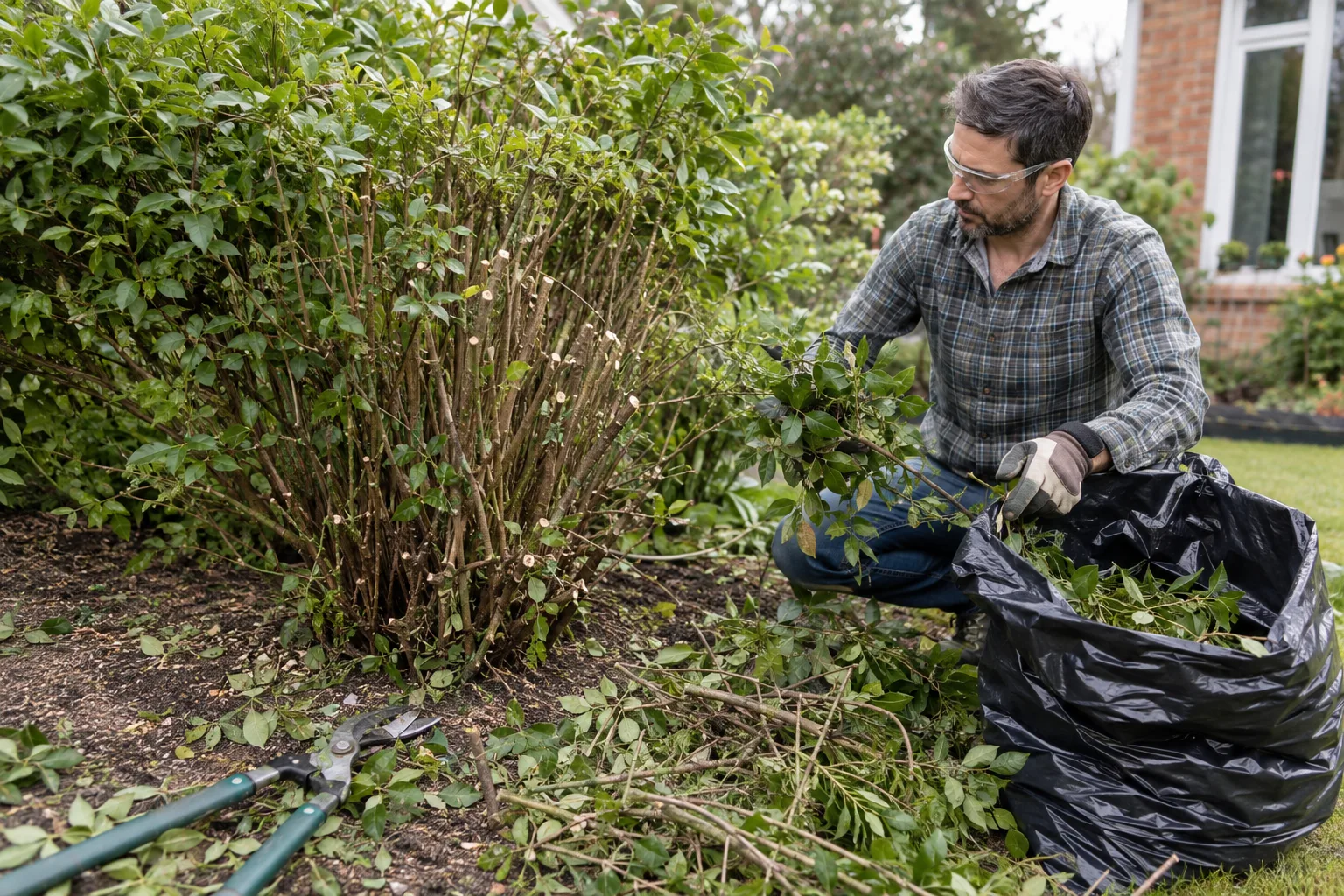
- Put on long sleeves, heavy gloves, safety glasses and a dust mask before you cut.
- Cut the shrub down in sections from the top, so heavy branches do not swing or fall unpredictably.
- Bag all clippings in heavy-duty bags at once, keep them away from children and animals, and never burn them.
- Grind the stump or treat it with a herbicide labeled for the job, following the product label exactly, or hire a licensed professional.
- Check for root sprouts every few weeks and remove them promptly for one to two growing seasons.
- Hire a professional for a large hedge along a wall, because the volume of waste and the sap exposure add up fast.
Dispose of the bags through your city or hauler, and ask them first if oleander has special handling rules. Wash tools and gloves afterward.
Frequently asked questions
Does planting oleander far from the house lower the risk?
Distance lowers daily exposure but does not remove the risk. Leaves and flowers drop, wind and water move them, and children and dogs wander. Pruning still means handling toxic material wherever the shrub grows. A back corner away from play areas and pet runs is safer than a spot beside the patio, but it still needs care.
Are compact oleander varieties safer?
No. Compact types such as ‘Petite Pink’ stay near 4 to 6 feet, which cuts pruning volume, but they carry the same toxins as full-size oleander. We know of no cultivar that is less poisonous. Resistance to leaf scorch is also unproven, so treat any oleander cultivar as susceptible.
How can I tell leaf scorch from heat stress?
Heat stress eases after a deep watering and cooler weather, while leaf scorch keeps advancing. Look for browning that starts at leaf tips and edges, spreads inward, and kills some branches while others stay green. If it returns each season despite good watering and drainage, leaf scorch becomes likely. University of Arizona Cooperative Extension can help confirm it.
What should I do with oleander clippings?
Bag them in heavy-duty bags right away, keep them out of reach of children and animals, and never burn them. Ask your city or trash hauler whether oleander has special green waste rules, since programs differ. Wear gloves and eye protection while cutting, and wash your hands and tools afterward.
What grows fast for privacy without oleander?
Desert willow and yellow bells are among the quicker options, often adding 2 to 4 feet per warm season with regular water in the first years. Both want full sun. Texas sage and jojoba grow more slowly but need less pruning. For a faster screen, pair one quick plant with one slower shrub. Our classes and events page lists upcoming gardening sessions.
Is oleander right for your yard?
Oleander is a sound choice for a large property with no children, pets or livestock, where a crew handles pruning and you accept the leaf scorch risk. It is a poor choice for family yards, or anyone who wants a low-effort hedge, and anyone with horses, chickens or a curious dog should skip it. A healthy hedge you already own can stay if those risks do not apply to your household. Stop by our Queen Creek nursery and we will help you pick a screening shrub that fits your space.