

Ocotillo (Fouquieria splendens) is a smart native plant choice for Arizona gardens with full sun and fast drainage. It needs little water once established, grows 8 to 15 feet tall, and carries red flowers at the cane tips in spring.
Key takeaways
- Give ocotillo at least 6 to 8 hours of direct sun and soil that drains within about an hour.
- Plant it when the soil is warm, from spring after frost danger passes through early fall, and avoid the cold months.
- Water deeply every 7 to 14 days in warm weather during the first year, then cut back sharply.
- Bare canes after a dry spell are normal, and a green layer under the surface of a scratched cane means the plant is alive.
- Leave 4 to 6 feet between ocotillo and any walkway, driveway or play area because the spines are sharp.
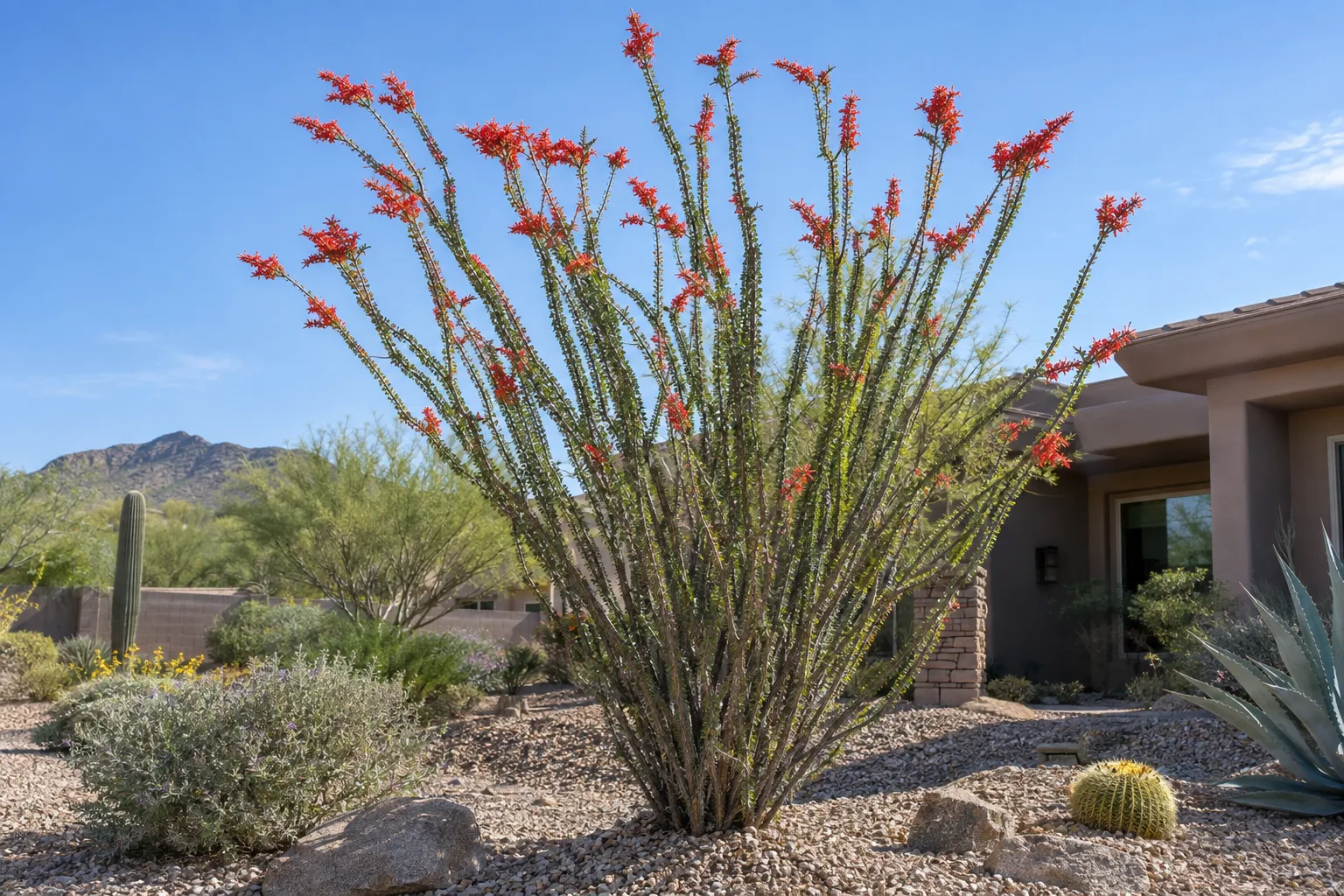
What is ocotillo, and is it a cactus?
Ocotillo is a native desert shrub with long, spiny, unbranched canes that fan out from a single base. A common misconception is that it is a cactus. It belongs to its own family, Fouquieriaceae, and it grows true leaves that appear after rain and drop when the soil dries out.
Mature plants commonly reach 8 to 15 feet, and old specimens can grow taller. Scarlet to orange-red flower clusters open at the cane tips, usually from March through May. Hummingbirds and native bees visit the blooms.
Where does ocotillo grow best in Queen Creek?
Ocotillo grows best in full sun with fast drainage, and Queen Creek’s alkaline, caliche-prone soil suits it better than it suits most ornamentals. The roots spread wide and stay shallow to catch rain before it evaporates, so the plant needs a spot where water never stands.
Avoid low corners, the bottom of a slope and any bed that collects monsoon runoff. Shade slows growth and cuts flowering. Before planting, fill the hole with water and watch it drain. If it is still full after an hour or so, move the plant to higher ground or break through the caliche layer underneath.
If you are building a desert bed around it, our plants department is a good place to look at other sun-loving shrubs and perennials with similar needs.
When should I plant ocotillo in Arizona?
Plant ocotillo when the soil is warm, from spring after the last frost through early fall. Roots establish best in warm ground, and a cold, wet winter is the riskiest time for a new plant. Planting in spring gives the roots months to settle before the first 110°F summer.
Our gardening calendars show what else belongs in the ground each month. Ocotillo availability changes week to week and season to season, so call or stop in to see what is on hand.
Once you have a spot, planting takes a few simple steps:
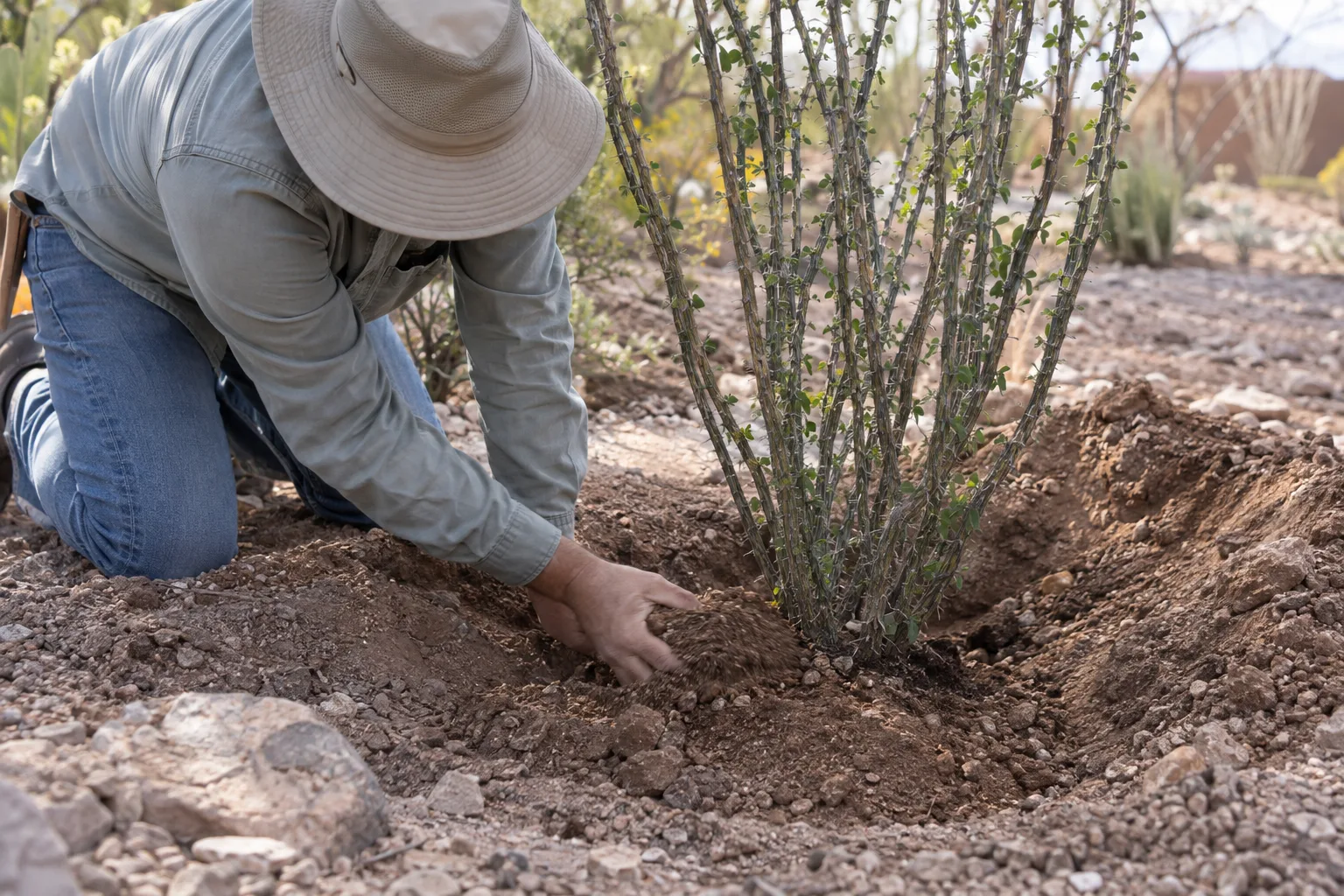
- Dig a hole two to three times as wide as the root ball and no deeper than the root ball.
- Set the base of the plant level with or slightly above the surrounding soil.
- Backfill with the native soil you dug out, without adding compost or potting mix.
- Soak the root zone slowly until moisture reaches roughly 18 to 24 inches deep.
- Stake loosely with soft ties if the canes lean, so they can still flex in wind.
Planting too deep is a frequent cause of failure. A new ocotillo can look like a bundle of dead sticks for weeks, and that is normal while the roots adjust.
How much water does ocotillo need?
Ocotillo needs regular deep watering for its first year and very little after that. Overwatering does more harm than drought, because roots rot in soil that stays wet. Always check the soil about 6 inches down before you water again.
| Season | First year | Established (year 2 and later) |
|---|---|---|
| March to June | Deep water every 7 to 10 days | Optional deep soak about once a month |
| July to September (monsoon) | Every 2 to 3 weeks, skipping after heavy rain | Rain alone in most years, or a soak every 6 to 8 weeks in dry spells |
| October to February | Once a month or less | Rain alone |
Our hard irrigation water leaves mineral salts at the soil surface over time. A slow, deep soak that moves water below the top few inches helps carry those salts down and away from the base of the canes.
Why does my ocotillo have no leaves?
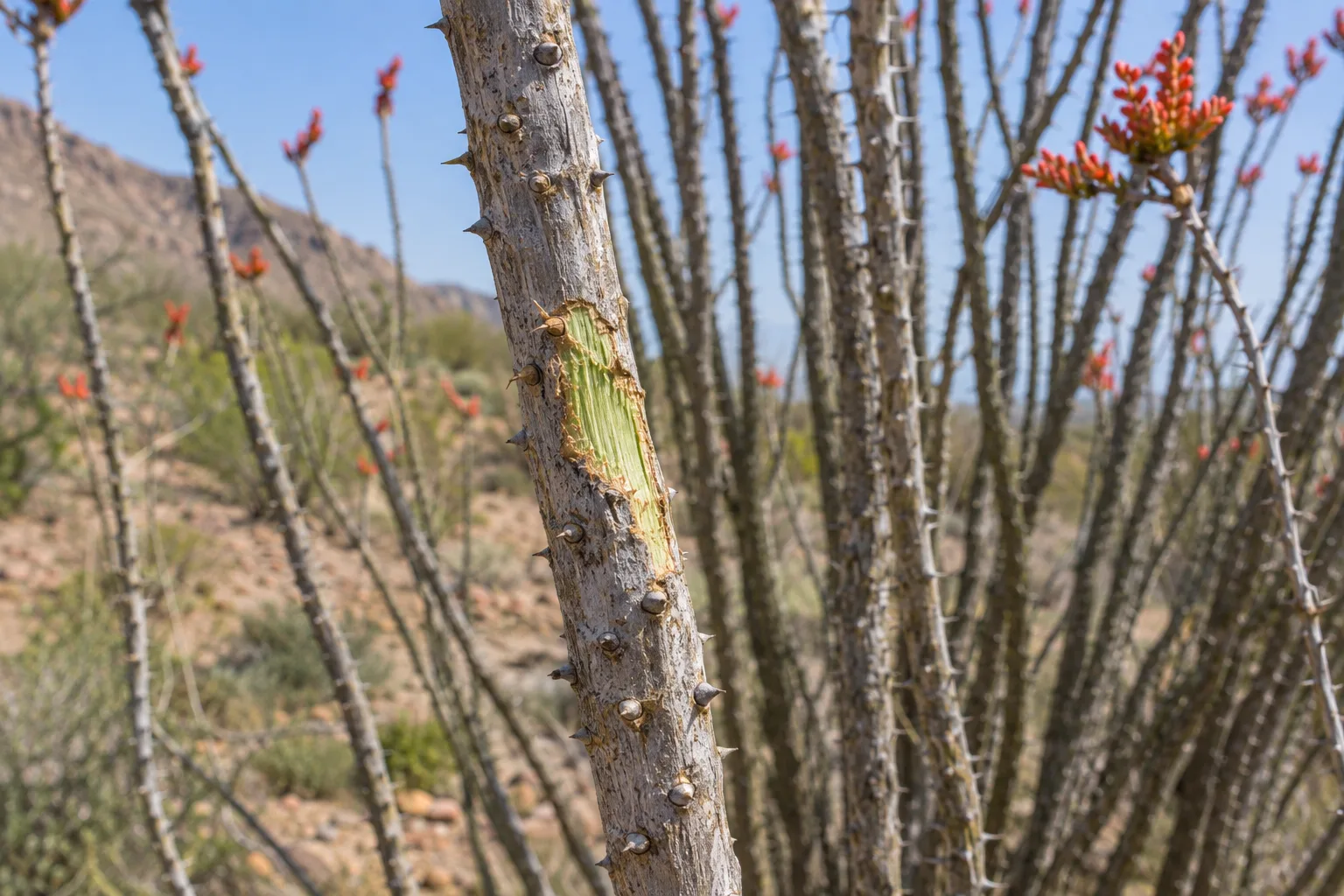
An ocotillo with no leaves is usually just dry, not dead. It is drought-deciduous, meaning it drops its leaves when soil moisture falls and grows a fresh set after rain, often within a few days. The cycle can repeat several times a year.
To check a bare plant, scratch a cane lightly with a fingernail. Green tissue underneath means it is alive. Dry, gray and brittle all the way through means that cane is dead. Soft, brown, mushy canes near the base point to rot from too much water or poor drainage.
What mistakes shorten an ocotillo’s life?
The mistakes that shorten an ocotillo’s life are overwatering, planting in a low or shady spot, and planting too deep. Each one keeps roots wet or starved of light for too long.
- Frequent shallow watering. It keeps the root zone damp and invites rot. Water deeply, then wait.
- Heavy fertilizer. Ocotillo needs little feeding, and a lot of nitrogen pushes soft growth that struggles in summer heat. Skip it, or use a light slow-release feeding in late winter at most.
- Ignoring caliche. A solid layer a foot or so down can hold monsoon water around the roots, so break it up with a digging bar or pick a different spot.
- Planting beside a path. The spines can cause painful punctures, so keep 4 to 6 feet of clearance and wear thick gloves when you handle the canes.
How do I use ocotillo in a yard design?
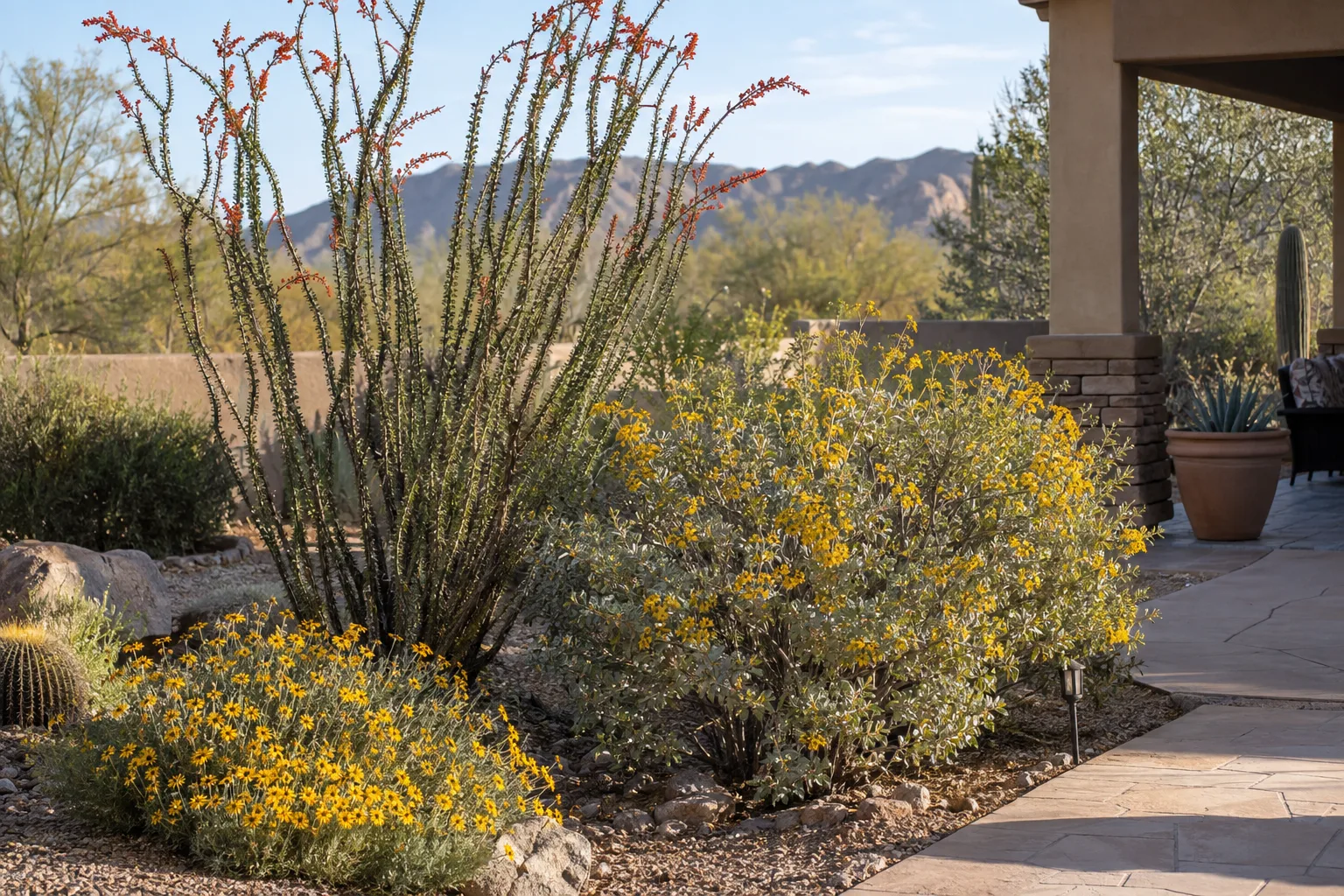
Ocotillo works best as a vertical accent in a gravel bed, courtyard or desert border, where its open canes let lower plants show through. A single plant makes a focal point. A group of three or five in staggered spacing looks more natural.
Pair it with plants that share its sun and water needs, such as brittlebush (Encelia farinosa), desert marigold (Baileya multiradiata) and autumn sage (Salvia greggii). For a canopy behind it, look at our desert trees, such as palo verde (Parkinsonia species), whose spring yellow flowers overlap with ocotillo’s red.
Place it where you can see it from a patio. Costa’s hummingbirds are among the birds that visit the flowers in spring.
Do Arizona plant laws affect buying or moving ocotillo?
Ocotillo is covered by Arizona’s native plant law, which the Arizona Department of Agriculture administers. Native desert plants generally need tags or permits when they are collected, sold or moved, and the rules depend on the plant and the land involved.
If you are buying, ask the seller how the plant was sourced. If you have ocotillo on your property and plan to clear or relocate it, contact the Arizona Department of Agriculture before you start. Your city or HOA may have its own landscaping rules, so check with them as well.
Frequently asked questions
How long does an ocotillo take to establish?
Most ocotillo take about one full year to establish a stable root system. During that time the plant may look sparse, drop leaves or skip flowering. Bloom often becomes dependable by the second or third spring. Judge the plant by new green growth at the cane tips rather than by its first flower show.
Can ocotillo grow in a pot?
Ocotillo can live in a container for a while, but in-ground planting suits it better. Its roots spread wide and the canes grow tall. If you try a pot, choose one 24 to 30 inches across with drainage holes and a fast-draining cactus mix. Browse our pottery and planters to size it.
Does ocotillo need pruning?
Ocotillo needs almost no pruning. Cut only canes that are dry and brittle all the way through, using clean loppers at the base. Skip shearing or shaping, because it ruins the plant’s natural fountain form. Wear thick gloves and eye protection, since the spines are sharp and the canes can spring back.
Why isn’t my ocotillo blooming?
Too little sun and a young or recently planted ocotillo are the usual reasons. The plant wants 6 to 8 hours of direct sun. Overwatering can also weaken it. Established plants in full sun bloom in spring, roughly March through May, and a flush can last only a few weeks, so it is easy to miss.
Can ocotillo handle summer heat above 110°F?
Yes, established ocotillo handles summer highs above 110°F. It drops its leaves to save water and keeps photosynthesizing through green tissue in its canes. A newly planted ocotillo still needs regular deep watering through its first summer, so plant it in spring and not in the hottest weeks.
Is ocotillo right for your yard?
Ocotillo suits a sunny, well-drained spot where you want vertical structure, spring color and very little irrigation once it settles in. It is a poor match for shady yards, low spots that collect monsoon water, narrow strips beside walkways, and play areas for small children, since the spines are sharp. If you want a lush, fast-filling screen, choose a different shrub. Stop by our Queen Creek nursery and ask our staff whether ocotillo is available and where it would fit in your yard.