

Ocotillo in March needs very little: one deep soak if winter was dry, soil that drains, and no pruning of living canes. Do those three things and the plant is set for its spring bloom here in the Arizona low desert.
Key takeaways
- The spring bloom usually opens in late March to April and can run into May in the East Valley.
- Established ocotillo needs one slow, deep soak in March only if winter rain was light. Skip it after a wet winter.
- Do not cut live canes. Flowers form at the cane tips, so every cut removes a flower cluster.
- Water that stays pooled around the base for more than 24 hours points to a drainage problem, often caliche underneath.
- Container plants set out in March need regular water through their first summer, and a first-spring bloom is a bonus rather than a promise.

When does ocotillo bloom in the Arizona low desert?
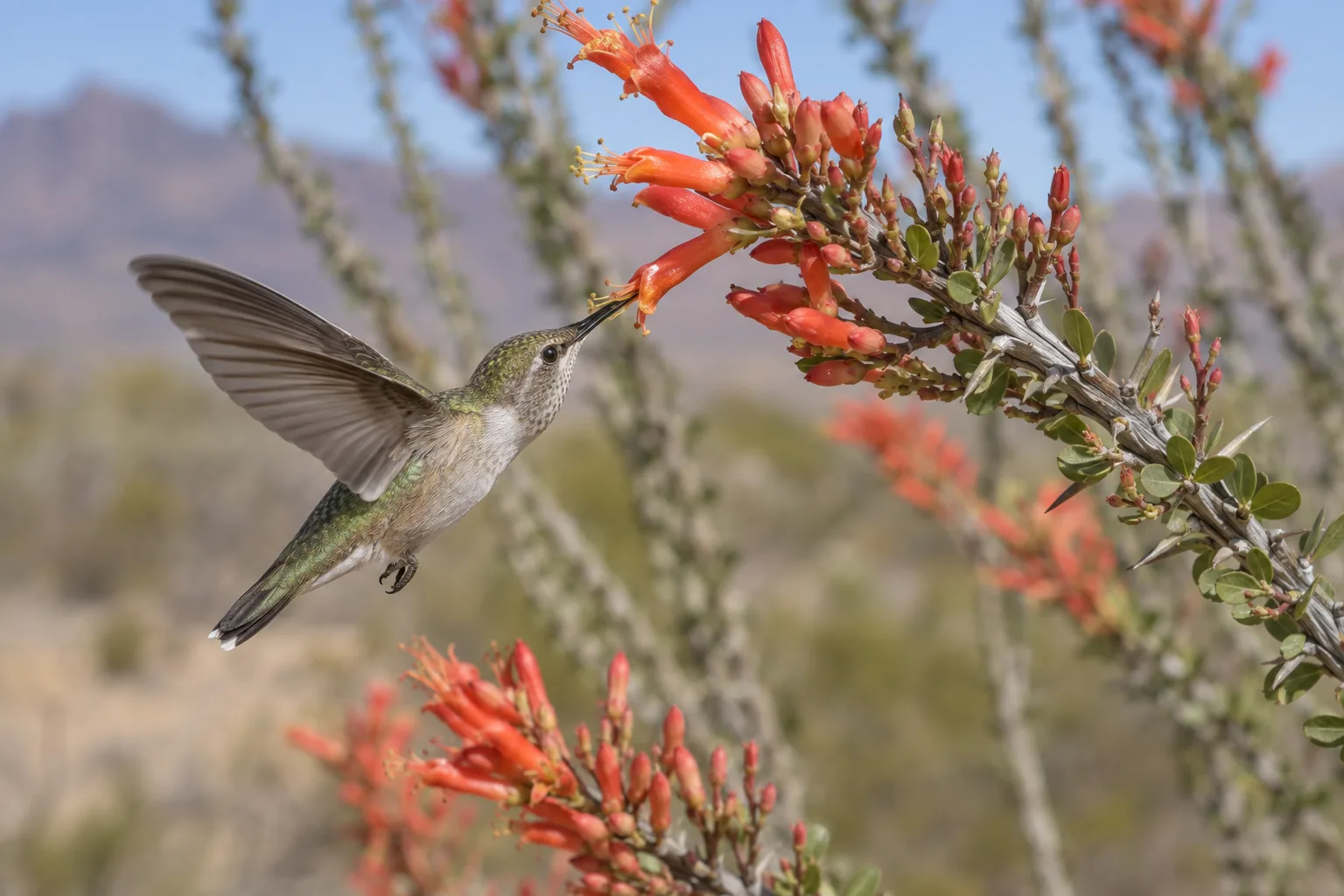
Ocotillo (Fouquieria splendens) usually opens its first flowers between late March and April, and the display can last into May. A cold, dry winter or a wet, mild one can move that start date by a week or two.
The flowers are tubular, red-orange and held in clusters at the very tips of the canes. Hummingbirds visit them often. Ocotillo responds to moisture more than to the calendar, so it grows leaves within days of a good soaking and drops them again when the soil dries out. Bare canes in February are normal. The plant is resting between rains.
If you are shopping for ocotillo or for plants to grow beside it, you can browse our plant selection. These are varieties we commonly carry, though availability changes week to week and season to season.
How much water does ocotillo need in March?
An established ocotillo needs about one slow, deep soak in March if the winter was dry, and nothing extra if we had steady rain. Its roots spread wide and fairly shallow, so water should reach the ground several feet out from the base rather than only at the trunk.
Run a hose at a trickle or let a drip line soak the area until the soil is wet about 12 to 18 inches down. Then leave it alone for several weeks. Overhead sprinklers waste water on bare canes and keep the surface wet, which is the opposite of what this plant wants.
Leaf behavior gives you a cue. Leaves that appear after a soak and hold for a week or more mean the roots are drinking. Leaves that drop within a few days suggest the soil dried out fast or the water never got past the top few inches. Our gardening calendars help you plan watering across the rest of the season.
What soil and drainage does ocotillo need?
Ocotillo needs fast-draining, rocky soil, and it does poorly where water sits around the root crown. In Queen Creek that usually means dealing with caliche, a cement-like mineral layer that can sit a few inches to a few feet below the surface, along with alkaline soil.
Caliche acts like a bathtub floor. During summer monsoon storms, water collects above it and the roots sit wet in 100°F soil, which is how crowns rot. When planting, break through the caliche with a digging bar and backfill with native soil mixed with coarse decomposed granite. Planting the crown an inch or two above the surrounding grade also helps.
To test an existing plant, water slowly for 20 minutes and check the base an hour later. Standing water means slow drainage. Spread an inch of coarse decomposed granite around the plant to improve the surface, and keep it a few inches back from the canes. Hard irrigation water leaves mineral crust over time, so a rock layer is easier to maintain than bare, crusted soil.

Should I prune ocotillo in March?
No. Leave every living cane alone in March. Flower clusters form at the tip of each cane, so cutting a cane removes that cane’s flowers for the season.
The one exception is a cane that is clearly dead. Scratch a small patch of bark with a fingernail or knife. Green underneath means the cane is alive. Tan or brown all the way through means it is dead, and you can cut it off at the base with heavy loppers. Test several spots along the cane, because a cane can be dead at the tip and alive lower down.
Wear thick leather gloves and long sleeves. The spines are hard and sharp, and they stay that way on dead canes. Cut canes do not regrow from the cut end. New canes come from the base of the plant.
Can I plant ocotillo in March?
Yes, March is a workable planting month because soil is warm and daytime highs are still below the 100°F days of early summer. Plant early in the month if you can, so roots can start before the heat arrives.
Container-grown plants with an established root system settle in faster than bare-root plants, which are cut canes with little or no root ball. Bare-root plants are under heavy stress and rarely bloom their first spring. Water new plants on a regular schedule through their first summer, then taper to the deep, infrequent soaks described above.
Pick a spot with full sun and open air, away from walkways, because the spines reach outward as the canes age. If you would like hands-on help with planting, check our classes and events page for workshops.
What should I leave alone in March?
Leave the fertilizer, the pruners and the sprinkler clock alone. Ocotillo evolved in poor, rocky soil and a plant that has been in the ground for three years or more generally needs no feeding at all.
- Fertilizer: A young or struggling plant can take a low-nitrogen desert blend at half the label rate. Lawn fertilizer is too high in nitrogen and pushes cane growth instead of flowers.
- Pruning: Only dead canes come out.
- Frequent shallow watering: Light, regular sprinkles keep the crown damp and train roots toward the surface.
- Mulch against canes: Rock or compost piled against the base holds moisture where you least want it.
Why isn’t my ocotillo blooming?
The usual causes are too little water in the weeks before bloom, too much shade, recent transplanting, or canes that were cut in past years. Check each in that order.
Healthy canes but no flowers
A plant with firm, green-under-the-bark canes that skips flowering most often lacked moisture over winter or sits in partial shade. Ocotillo wants six or more hours of direct sun. Move shade-casting plants or structures if you can, and give a deep soak in a dry March.
Leaves dropping early
Leaf drop after a stretch of dry weather is the plant protecting itself. Water deeply, and new leaves usually follow within a week or two.
Soft or mushy base
A soft, dark base points to rot from poor drainage or overwatering. Stop watering, let the area dry, and fix the drainage. If the rot has spread into the canes, the plant may not recover, and a nursery team member can look at photos or a sample to help you decide.
Frequently asked questions
Does ocotillo need full sun?
Yes, ocotillo does best in full sun, meaning at least six hours of direct light a day. In heavy shade the canes grow thin and flowering drops off. A spot on the south or west side of the yard, away from large trees, usually suits it well.
How often should I water ocotillo in summer?
Established plants usually need a deep soak only every few weeks in summer, and monsoon rain can cover some of that. Because rot is a bigger risk than thirst in July to September, wait until the soil has dried well below the surface before watering again.
Which plants look good beside ocotillo?
Brittlebush, desert marigold, globe mallow and Parry’s penstemon share ocotillo’s need for sun and sharp drainage, and their yellow, apricot and pink flowers contrast with its red-orange. Space them a few feet from the canes. We commonly carry plants like these, but availability changes week to week and season to season.
Can I grow ocotillo in a pot?
You can for a few years if the container is large, heavy and has big drainage holes, but it will not reach the size of a ground-planted specimen. Use a gritty cactus mix and water only when it has dried out. Browse pottery and planters for options.
Should I worry about frost in March?
Rarely. Ocotillo tolerates the light frosts we get in the East Valley, and by March most cold nights are behind us. Brand new leaves are the tenderest part, so a rare late frost may burn them, but the canes themselves usually come through.
Is ocotillo right for your yard?
Ocotillo suits a sunny, well-drained spot where you want a tall, architectural plant that flowers in spring and sits bare or leafy depending on rain. It is a poor match for shady yards, heavy clay that stays wet, or narrow walkways where spines would catch people. If you want leaves and color all year, choose something else. Stop by our nursery in Queen Creek and we will help you pick the right spot.
