
Swiss chard, kale, arugula, bush beans, summer squash, peppers, eggplant and okra are the best vegetables for a low-effort no-till garden in Arizona. They root easily into a compost layer, shade the soil as they grow, and never need digging.
Key takeaways
- Build the bed by layering 4 to 6 inches of compost over wet cardboard, then plant straight into the compost with no digging.
- Set up a new bed in September or October so cool-season greens can go in from October through November.
- Keep 2 to 3 inches of mulch on the bed year round, because bare soil dries out fast and can run far hotter than the air in summer.
- Add 1 to 2 inches of fresh compost between crops instead of turning the soil.
- Match each vegetable to its planting window, since no-till improves the soil but cannot make June a lettuce month.

What is no-till gardening in the Arizona low desert?
No-till gardening means you build a bed up with compost and mulch instead of digging or rototilling it each season. Roots grow into the loose layer on top, while worms, fungi and bacteria slowly blend that material into the soil below.
Native soil in Queen Creek and the East Valley is usually alkaline, often with caliche (a cemented, lime-rich layer) at varying depths. Digging into it mostly brings up more hard, mineral-heavy material. Building above it avoids that fight. After a few seasons the surface layer turns darker and softer, and it holds water longer between irrigations.
Raised beds and large planters follow the same idea. If you prefer a contained bed, our pottery and planters page shows the kinds of containers that can hold a compost-rich growing layer.
When should I start a no-till bed in Queen Creek?
September or October is the best time to start, because the cardboard and compost can settle for 2 to 4 weeks before the main cool-season planting window opens in October. A fall start gives you a full winter of leafy greens to see how the bed behaves before summer arrives.
You can build a bed in late winter, too. Just plant quickly, since highs above 110°F arrive in early summer and young plants need to be established first. Browse our herbs, vegetables and berries department to see what is on offer for the season you are planting in. For month-by-month timing, our gardening calendars are a handy companion.
How do I build a no-till bed over caliche or clay?
You smother the existing ground with cardboard, then pile compost on top and plant into the compost. Your vegetables grow in that new layer, so you never have to break through the caliche below.
- Pick a spot with at least 6 hours of winter sun and easy access to water.
- Cut weeds and grass down to the soil surface. Do not pull or dig them.
- Lay cardboard over the area with edges overlapping by at least 6 inches, after removing tape and staples. Soak it thoroughly.
- Shovel 4 to 6 inches of finished compost over the wet cardboard.
- Spread 2 to 3 inches of wood chips or straw around the planting spots, keeping it off the compost where seeds will go.
- Wait 2 to 4 weeks if you can, then plant transplants into the compost or press seeds into the surface.
Waiting is optional. The bed improves with time, but it will grow vegetables the day you plant it.
Which vegetables grow best in a no-till bed in Arizona?
The best choices have shallow or fibrous roots, handle alkaline soil, and either shade the ground or produce for months. These are varieties we commonly carry, though availability changes week to week and season to season.
Swiss chard (Beta vulgaris subsp. cicla)
Chard reaches 18 to 24 inches tall and wide. It wants full sun in winter, afternoon shade after April, and water every 2 to 3 days in the cool season. You cut the outer leaves and the center keeps producing for months. Roots stay shallow, so a compost layer is plenty. The drawback is heat: once highs hold above 100°F, leaves toughen and the plant slows down.
Kale (Brassica oleracea, Acephala group)
Kale grows 2 to 3 feet tall in full winter sun and wants water every 2 to 3 days. Planted in October or November, it can produce through the cool season. Harvest from the bottom and leave the top growing. Its drawback is bolting, which usually ends the crop as spring warms in April or May.
Arugula (Eruca vesicaria)
Arugula stays 6 to 12 inches tall and grows in sun or light shade. Scatter seed over a thin layer of compost and keep the surface evenly damp until it sprouts. You can harvest in roughly 30 to 40 days. The drawback is speed in both directions: it bolts quickly in warm weather and turns sharply bitter, so sow a little every few weeks.

Bush beans (Phaseolus vulgaris)
Bush beans grow 12 to 24 inches tall in full sun and want water every 2 to 3 days. They need no staking and the dense leaves shade the bed surface. Their roots host bacteria that capture some nitrogen from the air, though the amount they leave behind is modest. The drawback is a narrow window: flowers drop in extreme heat and seeds can rot in cold, wet soil.
Summer squash (Cucurbita pepo)
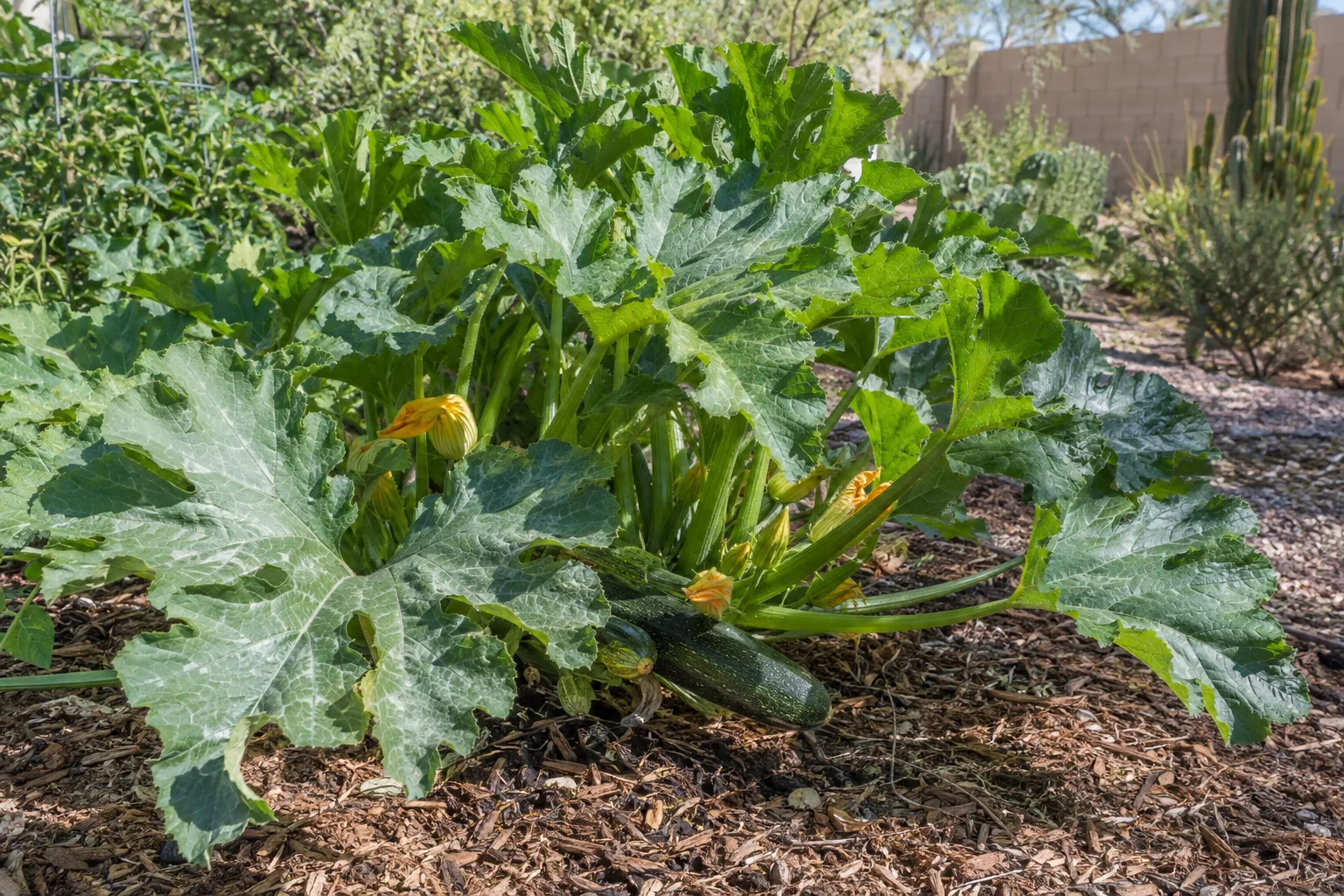
Zucchini and other summer squash form plants 2 to 3 feet tall and 3 to 4 feet wide. They need full sun and deep watering every 2 to 3 days in spring. The wide leaves shade the ground and cut evaporation. One or two plants feed most households. The drawback is space, and fruit set often drops once daytime highs pass about 100°F.
Peppers (Capsicum annuum)
Peppers reach 2 to 3 feet tall and like full sun, with a little afternoon shade in midsummer to prevent sunscald on the fruit. Water every 2 to 4 days. In mild winters a pepper plant can live through more than one season if you cover it on frost nights, and an undisturbed bed suits that. The drawback is frost, which can kill a plant outright.
Eggplant (Solanum melongena)
Eggplant grows 2 to 3 feet tall in full sun and wants water every 2 to 3 days. It handles heat well once settled and keeps producing through the warm months. Wait until the soil has warmed before you plant it. The drawback is a slow start in cool soil, plus tender growth that frost damages easily.
Okra (Abelmoschus esculentus)
Okra grows 4 to 6 feet tall, depending on the variety, and keeps flowering through the hottest weeks of summer. It wants full sun and frequent water while young, then less once established. Seed goes in from April into July. The drawback is a demanding harvest: pods turn woody within a day or two, so you need to pick every 1 to 2 days, and the leaves can irritate bare skin.
When do I plant each vegetable?
Most of these vegetables have two planting windows in the low desert, one in late winter or spring and one in late summer or fall. The table below gives typical ranges for Queen Creek and the East Valley.
| Vegetable | Main planting window | Second window | Days to first harvest |
|---|---|---|---|
| Swiss chard | September to November | February to March | 50 to 60 |
| Kale | October to November | February | 55 to 75 |
| Arugula | October to February | None | 30 to 40 |
| Bush beans | February to March | August to September | 50 to 60 |
| Summer squash | February to March | August | 45 to 55 |
| Peppers | February to April | August | 70 to 90 |
| Eggplant | March to April | August | 65 to 80 |
| Okra | April to July | None | 50 to 60 |
Treat these as starting points, since a late frost or an early heat wave can shift them by a couple of weeks. The University of Arizona Cooperative Extension vegetable planting calendar for Maricopa County gives the full picture for more crops.
How much should I water and mulch a no-till bed?
Most beds need water every 2 to 4 days in the cool season and daily watering in summer once highs pass 105°F, with drip irrigation on a timer delivering it best. Drip puts water at the roots and keeps leaves dry during monsoon humidity, from roughly July through September.
Mulch protects the soil life you are trying to build. Wood chips go around plants at 2 to 3 inches deep and break down slowly. Straw works well around transplants and seed rows. Pull mulch back an inch or two from stems so they stay dry.
Our water is hard, so salts build up at the surface over time. Regular compost and deep, infrequent soaks move those salts down and away from roots.

What mistakes slow down a new no-till bed?
The most common one is a compost layer that is too thin. An inch of compost over hard ground leaves roots reaching into caliche, so start with 4 to 6 inches and top it up each season.
Other slip-ups are easy to avoid:
- Reaching for a shovel when a crop struggles. Add compost and mulch instead, and give the bed another season.
- Using hay as mulch. It often carries weed seed, while straw does not.
- Planting out of season. A no-till bed cannot keep lettuce alive through June heat.
- Piling mulch against stems, which holds moisture there and invites rot.
- Judging the bed after one season. Year one is the slowest, and soil texture usually improves noticeably by the second or third year.
Frequently asked questions
Can I grow carrots and other root crops in a no-till bed?
Short, quick root crops such as radishes and baby carrots do well in a deep, loose compost layer. Long carrots and parsnips need 10 to 12 inches of loose material, which a new bed may not have yet. Start with radishes, and add deeper root crops once the compost layer is thick.
Do I need to add fertilizer to a no-till bed?
Many beds need little fertilizer in the first year when you top-dress with compost each season. Heavy feeders such as peppers and squash may want a balanced organic fertilizer at planting and again mid-season. If new leaves yellow between the veins, alkaline soil may be locking up iron, and a chelated iron product often helps.
How do I handle weeds in a no-till bed?
Thick cardboard and mulch smother most weeds, and the few that blow in are easy to pull from loose compost. Bermuda grass is the exception, since it sends runners under cardboard from the edges. Pull the runners early, and keep a clear border around the bed.
Does no-till work in raised beds?
Yes, and raised beds make it easier because you control the starting mix. Fill the bed with a compost-rich blend, then top-dress between crops instead of digging it out. Wooden or metal sides also keep foot traffic off the soil, which prevents compaction.
Will a no-till bed save water?
It usually lowers water use, because compost-rich soil under mulch loses less moisture to evaporation than bare ground. You will still water often in the low desert, especially for shallow-rooted greens. Drip irrigation on a timer gives the largest savings, and the exact amount varies from yard to yard.
Is a no-till vegetable bed right for your yard?
A no-till bed suits you if you want steady harvests with less digging and are willing to buy compost and mulch up front. It works over caliche, clay or grass, and it keeps improving each year. It is a poor fit if you need food within a few weeks in the middle of summer, or if you only have room for a single pot. Come visit us in Queen Creek and we will help you plan your first bed.