Eight native plants keep an Arizona garden low-maintenance: desert marigold, Parry’s penstemon, desert willow, brittlebush, globe mallow, velvet mesquite, desert spoon and fairy duster. Each handles Queen Creek heat and alkaline soil on little water once established.
Key takeaways
- Plant from October through February so roots settle in before summer highs above 110°F.
- Dig the hole 2 to 3 times wider than the root ball, no deeper, and keep the crown slightly above the surrounding soil.
- Water new plants every few days at first, then taper to every 2 to 3 weeks through the first summer.
- Small natives take about one year to establish, while trees and large shrubs take 2 to 3 years.
- Spread 2 to 3 inches of decomposed granite over the planting area and keep it off the stems.
What makes a native plant low-maintenance in Queen Creek?
A native plant is low-maintenance because it is already adapted to alkaline soil, long dry spells and extreme heat. Once established, most need an occasional deep soak and one trim a year.
Our rainfall runs roughly 8 to 10 inches a year, with about half arriving in monsoon storms between July and September. Native roots reach deep for moisture that lawns and many imported shrubs cannot find. The first year still takes real attention, so low-maintenance describes the years after planting. You can browse our full plant selection to see how these fit with other drought-tolerant choices.
When should I plant natives in the East Valley?
October through February is the best window, because cool soil lets roots grow while the leaves ask for very little water. Spring planting through April works if you commit to regular watering all summer.
Avoid planting between June and September. Soil can run 90°F or warmer in those months, and a new plant loses water faster than a small root system can replace it. Our gardening calendars lay out what to plant in each month.
How do I handle caliche and alkaline soil before planting?
Probe the planting spot with a metal rod or rebar before you dig. Caliche, a hard calcium carbonate layer, sits anywhere from 6 inches to 3 feet down and stops water from draining.
If the rod stops within 12 to 18 inches, break through the layer with a pick or drill a drainage hole through it. Water that pools above caliche rots roots faster than drought does. Our soil usually tests between pH 7.5 and 8.5, which these plants tolerate well. Backfill with the native soil you dug out, perhaps mixed with a little decomposed granite, rather than rich potting mix.
Which native plants work best in a low-maintenance Arizona garden?
These eight cover groundcover color, mid-height shrubs, a structural accent and shade trees. They are varieties we commonly carry, though availability changes week to week and season to season.
Desert marigold (Baileya multiradiata)
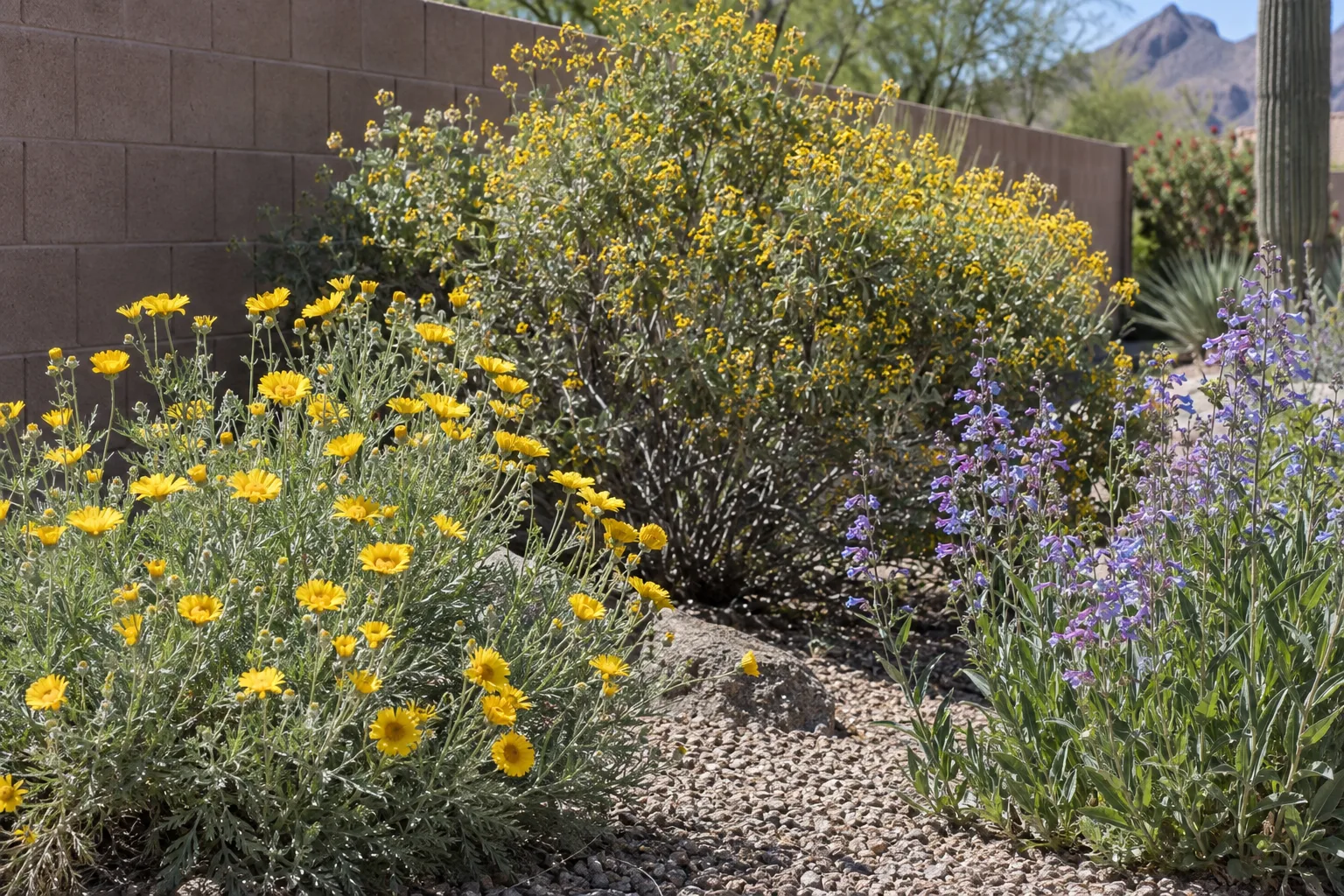
This golden wildflower grows 1 to 2 feet tall and wide and blooms from spring into fall in full sun. Water it deeply every couple of weeks in summer once established. It reseeds freely, which fills gaps in a bed. The drawback is a short lifespan, so expect to rely on those seedlings. It also rots in soil that stays wet after monsoon storms.
Parry’s penstemon (Penstemon parryi)
Hot-pink flower spikes rise 3 to 4 feet above a low rosette from late winter into spring, often starting in February. Hummingbirds visit them. Give it full sun or light afternoon shade and water every 2 to 3 weeks in summer. The drawback is that it looks sparse and tired through the hottest months. Plant it with companions that fill in around it.
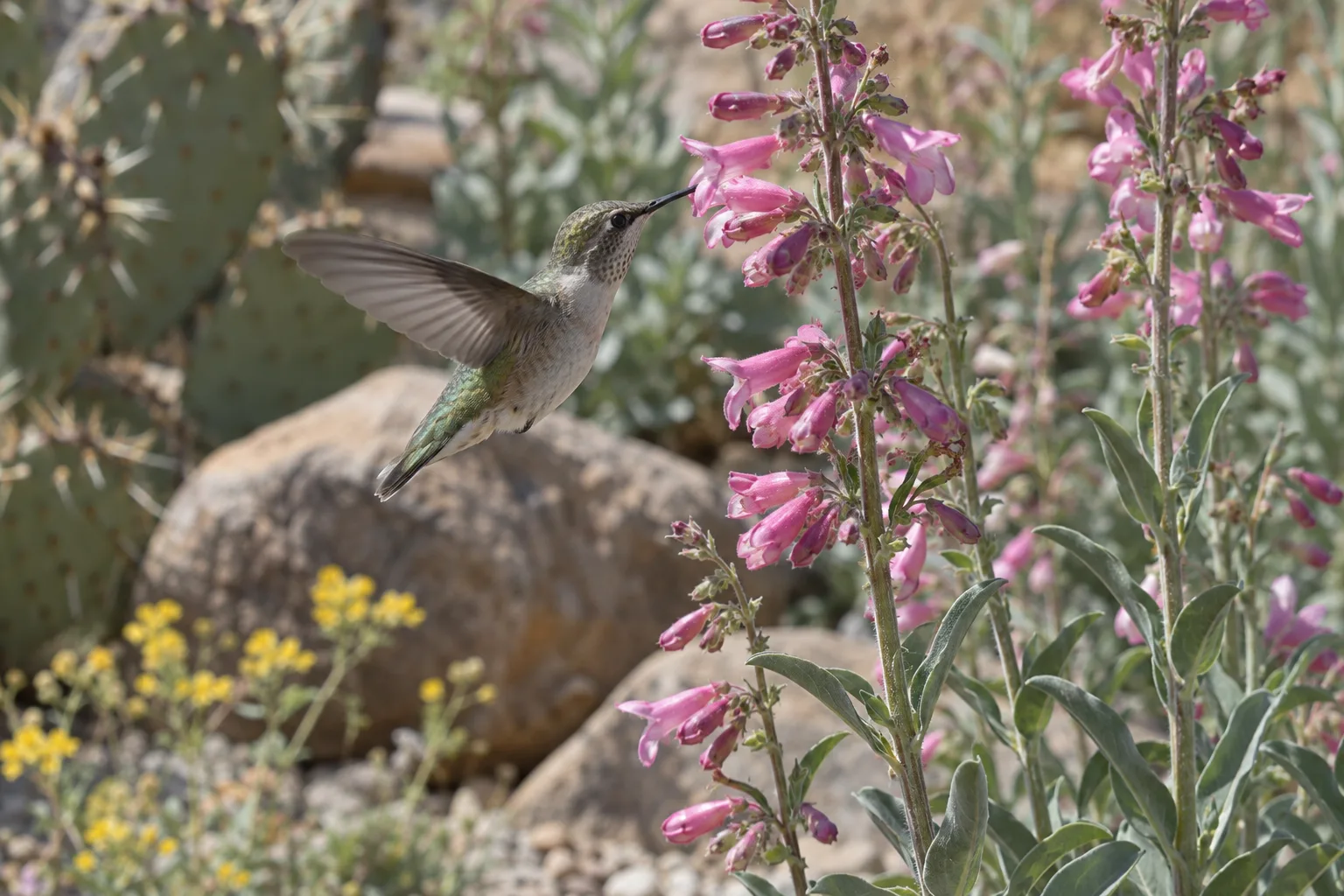
Desert willow (Chilopsis linearis)
This small flowering tree reaches 15 to 25 feet tall and wide, with pink, purple or white trumpet flowers from spring into summer. It wants full sun and a deep soak every 2 to 4 weeks in summer once established. The drawback is mess: it drops narrow leaves in winter and seed pods after bloom. Browse more flowering trees if you want to compare shapes.
Brittlebush (Encelia farinosa)
Brittlebush forms a silvery mound 2 to 4 feet tall and wide, covered in yellow daisy flowers in spring. It needs full sun and a deep drink every 3 to 4 weeks in summer. Plant it on slopes or along block walls. The drawback is that it browns and drops leaves in summer drought, so it looks rough by August before recovering in fall.
Globe mallow (Sphaeralcea ambigua)
This perennial grows 2 to 3 feet tall and wide, with orange, apricot or pink flowers heaviest in spring and again after monsoon rain. It takes full sun and very little water. The drawback is the fine hairs on its leaves and stems, which can irritate skin and eyes. Wear gloves when you prune, and keep it away from play areas.
Velvet mesquite (Prosopis velutina)
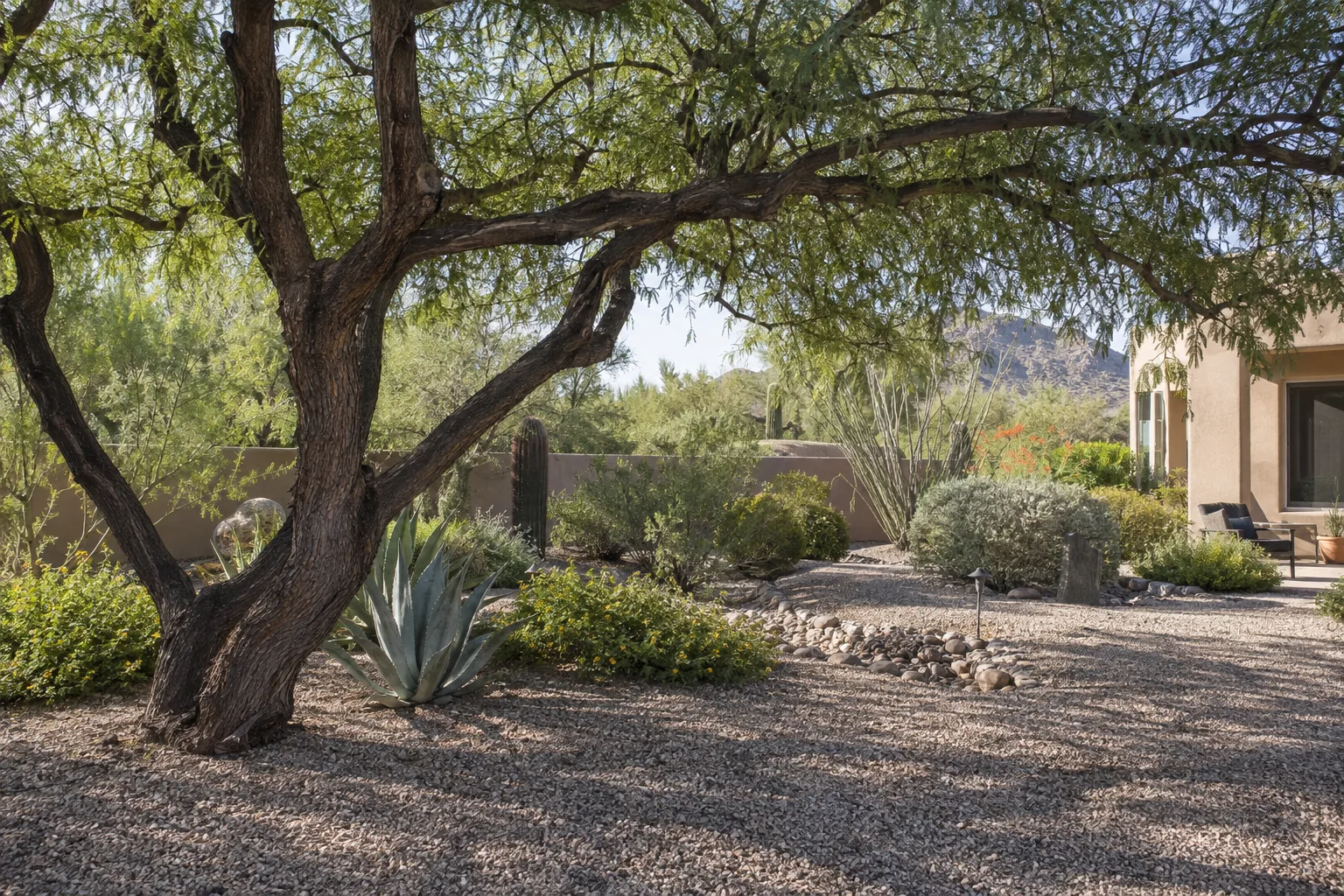
A velvet mesquite grows 20 to 30 feet tall and wide and throws airy shade that lets light through for plants beneath it. It needs full sun and a deep soak every month or so in summer once established. Roots run deep and wide, so site it well away from pipes and foundations. The drawbacks are thorns and a steady fall of leaves and pods. See our full range of desert trees for other shade options.
Desert spoon (Dasylirion wheeleri)
Desert spoon forms a rounded rosette of narrow blue-green leaves, 3 to 4 feet tall and wide, in full sun. It needs a deep soak about once a month in summer once established. A mature plant sends up a flower spike that can reach 10 to 15 feet. The drawback is the serrated leaf edges, which cut skin, so place it away from walkways and seating.
Fairy duster (Calliandra eriophylla)
Fairy duster is a fine-textured shrub 3 to 5 feet tall and wide, with pink powderpuff flowers from late winter into spring. It grows in full sun and needs water every 2 to 4 weeks in summer. Hummingbirds and bees visit the blooms. The drawback is a thin, open shape that can drop leaves in a dry stretch, so it suits natural plantings better than a formal hedge.
How often should I water new native plants?
Water new natives every 3 to 5 days for the first month, weekly for months two and three, then every 2 to 3 weeks through the first summer. Adjust for the weather and the plant.
Soil that drains slowly needs longer gaps between waterings, so push a wooden dowel 6 inches into the soil and wait if it comes out damp. A slow drip at the outer edge of the canopy for 30 minutes or more does better than a quick spray, because water needs to reach 18 to 24 inches deep to pull roots downward. After the first year, most established natives need a deep soak every 2 to 4 weeks in summer and far less in winter. Plants on a drip line with thirsty lantana or annuals end up overwatered or underwatered, so group natives together.
How do I plant a native step by step?
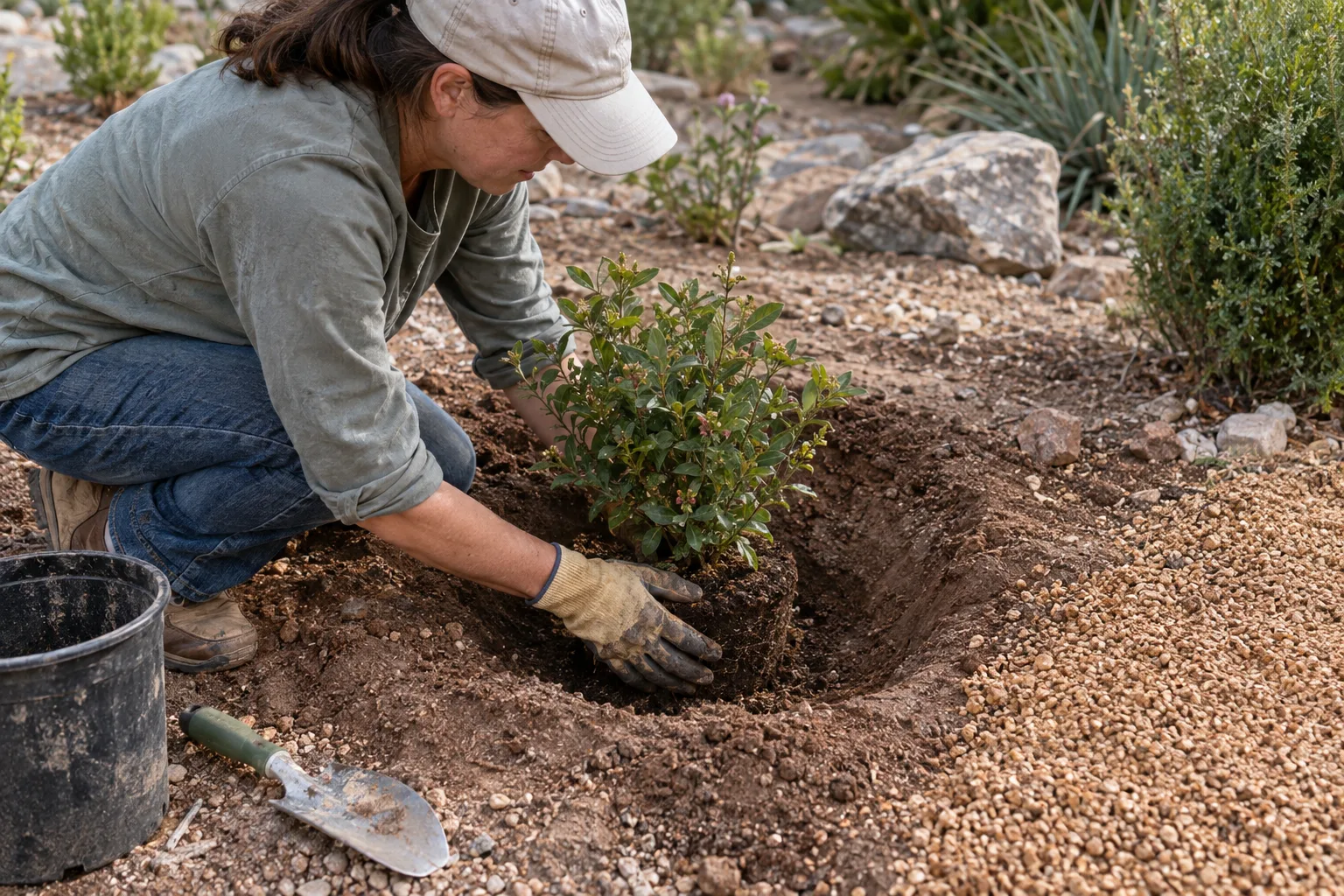
Dig a wide, shallow hole, set the plant high, backfill with native soil and water deeply. The steps below take about 20 minutes per plant once the caliche check is done.
- Probe the spot for caliche and break through or drill a drainage hole if you hit it.
- Dig the hole 2 to 3 times wider than the root ball and no deeper.
- Set the plant so the crown sits slightly above the surrounding soil.
- Backfill with the native soil you removed, then water slowly until the soil settles.
- Build a low earthen basin around the drip line to hold water over the roots.
- Cover the area with 2 to 3 inches of decomposed granite, keeping it off the stems and trunk.
- Follow the tapering watering schedule above through the first summer.
What mistakes shorten the life of a native plant?
Overwatering in poorly draining soil and planting too deep are the two biggest causes of loss. Both lead to crown and root rot.
- Planting too deep. A buried crown rots quickly in monsoon humidity.
- Keeping the same schedule year-round. Water needs drop sharply in winter, and a plant on a summer schedule sits in wet soil for weeks.
- Cutting back hard in summer. Rough-looking foliage shades the crown from reflected heat, so wait until late winter to prune.
- Stopping water too early. Small plants need about a year of regular care, and trees and large shrubs can need 2 to 3 years before they carry themselves through a long dry spell.
- Choosing bright white rock mulch. It bounces heat back onto the leaves, and decomposed granite in a tan or darker tone is gentler.
Frequently asked questions
Can I grow Arizona natives in containers?
Yes, desert marigold and globe mallow do reasonably well in large pots. Containers dry out quickly above 105°F, sometimes needing daily water, and roots cannot go deep. Choose the biggest pot you can manage, use a fast-draining mix, and give it afternoon shade in June and July. Browse our pottery and planters for large sizes.
Do native plants need fertilizer?
Usually not. Natives evolved in lean desert soil, and heavy nitrogen pushes soft growth that suffers in heat and attracts pests. If a plant looks pale or stunted, a light feeding of a low-nitrogen organic fertilizer in early spring is enough. A thin layer of compost in fall improves the soil without that growth spurt.
Are these plants safe around kids and pets?
Several have physical hazards: mesquite has thorns, desert spoon has cutting leaf edges, and globe mallow hairs can irritate skin and eyes. We cannot promise any plant is safe to eat. If you have a pet that chews plants, ask your veterinarian or a poison control service about specific species before planting.
Will native plants survive a frost in Queen Creek?
Mature natives generally handle our occasional winter frosts, which are brief and mild. Young plants are more vulnerable, and cold air settles in low spots of a yard. Cover new plantings with frost cloth on nights forecast near freezing, and keep tender growth from being pruned until the last frost has passed.
Will native plants bring wildlife into my yard?
Yes, especially hummingbirds and native bees. Penstemon, fairy duster and desert willow draw hummingbirds, while globe mallow and desert marigold draw bees. A mature mesquite offers shelter and nesting cover for birds. Expect visitors to increase over a season or two as plants fill in and bloom.
Are native plants the right choice for your yard?
Natives suit most Queen Creek yards, especially if you want color and shade on modest water and will give new plants a careful first year. They are a poor match if you want a lush green lawn look, a formal clipped hedge, or constant tidy bloom. A few have thorns or spines, so think about where children and pets play. If you want help choosing, visit us at the nursery in Queen Creek.