Brittlebush, blackfoot daisy, desert marigold, firecracker penstemon, globe mallow and blue palo verde are native Arizona plants that often show new growth or flowers from late winter into early spring in the East Valley, well ahead of most garden plants.
Key takeaways
- Brittlebush often flushes new leaves within days of a winter rain, and its yellow flowers commonly open from about February into spring.
- Scratch a twig with your thumbnail: green underneath means the plant is alive, so hold off pruning until March or April.
- Plant natives in fall, from October into November, so roots settle in well before summer highs climb above 110°F.
- Once settled, water natives deeply every 2 to 4 weeks in winter, and skip a turn after a soaking rain.
- Skip fertilizer, because high nitrogen pushes soft new growth that a late frost can burn.

Why do native Arizona plants grow in winter?
They grow in winter because cool air, winter rain and mild soil let them build leaves and roots before summer highs above 110°F arrive. Many desert natives are tuned to that narrow window, and some go semi-dormant in summer instead of pushing through the heat.
Roots do much of the early work. Many natives send roots down through caliche cracks to reach subsoil moisture left by December and January rains, and that stored water often fuels the first flush of leaves in February. Our alkaline soil, commonly above pH 7.5, suits plants that evolved in lean, mineral ground.
Which native Arizona plants wake up earliest in the East Valley?
Six natives are reliable early risers in our area, and each profile below lists mature size, sun, water and one drawback you should weigh before planting. These are varieties we commonly carry in our plants department, and availability changes week to week and season to season. Exact timing shifts with each winter’s temperatures and rainfall.
Brittlebush (Encelia farinosa)
Brittlebush grows 3 to 4 feet tall and wide in full sun. Silver-gray leaves often flush within days of a winter rain, and yellow daisy-like flowers commonly open from about February into spring. Once established it needs little water beyond rainfall, though a deep soak every few weeks in a dry winter keeps the foliage from dropping early. The drawback is its summer look, since it sheds leaves in the heat and can appear half dead until fall.
Blackfoot daisy (Melampodium leucanthum)
Blackfoot daisy forms a low mound 6 to 12 inches tall and 1 to 2 feet wide in full sun. White flowers with yellow centers can begin in late winter or early spring and continue in waves for months. It needs very little water once established and wants fast drainage. The drawback is crown rot, which shows up quickly when the soil stays wet around the base.
Desert marigold (Baileya multiradiata)
Desert marigold grows 1 to 2 feet tall and wide in full sun. Gray, woolly leaves form a rosette that adds growth in late winter, and bright yellow flowers follow on tall stems from about March on. It needs little water once settled. The drawback is a short life and a scraggly look when the seed heads dry, although it often reseeds to replace itself.
Firecracker penstemon (Penstemon eatonii)
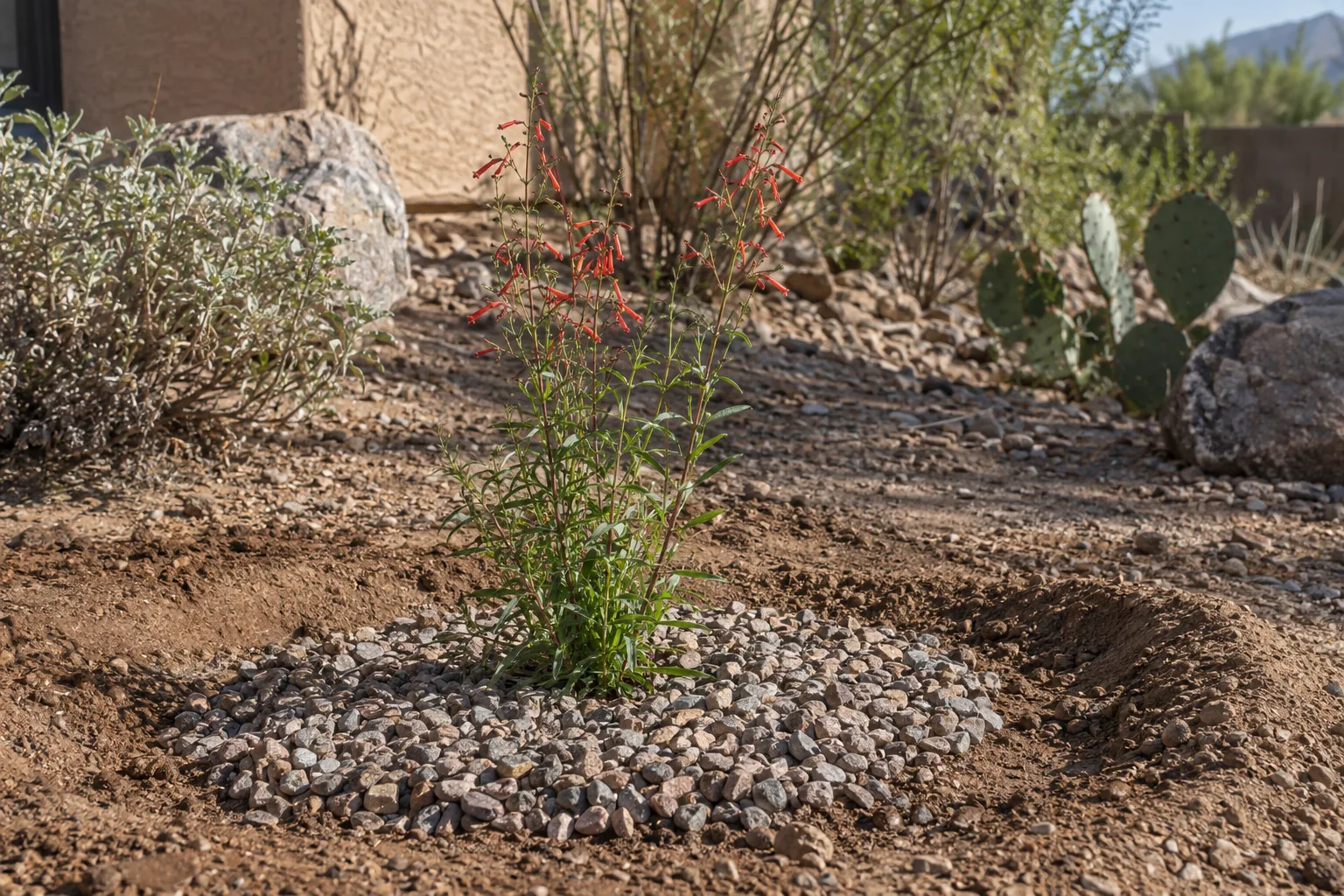
Firecracker penstemon sends red tubular flower spikes 2 to 3 feet tall above a clump 1 to 2 feet wide, usually from March into spring. It wants full sun and an occasional deep watering rather than frequent sprinkles. Hummingbirds visit the flowers. The drawback is a short bloom season and a tendency to decline in heavy or soggy soil.
Globe mallow (Sphaeralcea ambigua)
Globe mallow grows 2 to 3 feet tall and wide in full sun, with orange to coral flowers that can start in late winter and return after rain. It needs little water once established and tolerates our alkaline, rocky soil well. The drawback is a sprawling, ragged shape after bloom, which a light trim in late spring tidies up.
Blue palo verde (Parkinsonia florida)
Blue palo verde is a tree that reaches 20 to 30 feet tall and wide, with blue-green bark that photosynthesizes year-round. Fresh leaflets and a heavy flush of yellow flowers commonly arrive in March to April. It wants full sun and deep, infrequent watering once established. Browse more options in our desert trees department. The drawback is size and litter, since it drops petals and tiny leaflets, and regular summer irrigation can push fast growth that breaks in monsoon winds.

How can I tell if a bare native plant is dead or dormant?
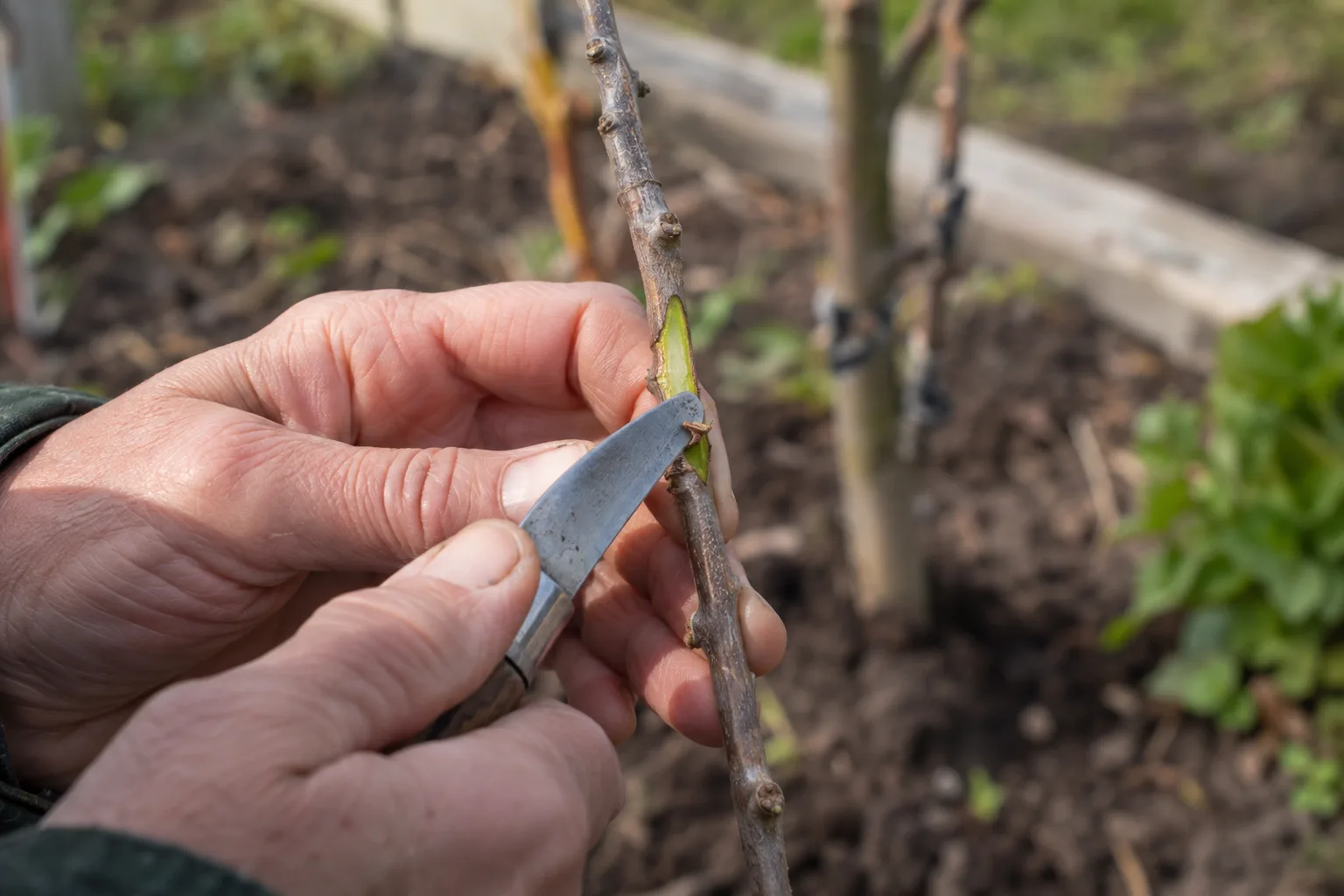
Scratch a small spot on a twig with your thumbnail. Green tissue underneath means the plant is alive. Brown and dry means that branch is dead, so check lower on the stem.
Wait until March or April before pruning anything, since late-leafing natives such as desert willow (Chilopsis linearis) and velvet mesquite (Prosopis velutina) can stay bare well into spring even in a mild winter. Frost-burned tops can shelter the growth below them. Leave them in place until new shoots appear at the base, then cut back to live wood.
When should I plant native Arizona plants so they wake early?
Fall is the best planting window, from October into November, because roots keep growing through winter and the plant is settled before May heat. Fall planting gives roots a head start. Planting later in winter works, but spring plantings face summer with a small root system.
Dig the hole 2 to 3 times as wide as the root ball and no deeper, then break through any caliche layer so water can drain. Set the plant at the same depth it grew in the pot, water it in, and add 2 to 3 inches of gravel or organic mulch, pulled back a few inches from the stems. Our gardening calendars list month-by-month planting windows for the low desert.
How much should I water native plants in late winter?
Water newly planted natives deeply every 7 to 10 days for the first few weeks, then stretch to every 2 to 4 weeks through winter, skipping a turn after a soaking rain. Check the soil 6 to 8 inches down before you water, because the top inch dries long before the roots do.
Established natives often need nothing extra in December through February if rain has fallen. Switch drip timers to a winter schedule, since summer run times overwater cool-season plants. Soggy soil does more harm than dry soil, and blackfoot daisy and penstemon show it first, with yellowing and collapse at the crown. A plant that wilts in the cool morning is asking for water, while afternoon drooping in a warm spell is normal.
Do early-growth natives need frost protection?
Young plants with fresh growth benefit from frost cloth on nights forecast near or below 32°F. Queen Creek has occasional winter frost, mostly in low spots and open areas, and soft new leaves burn first.
Drape the cloth over the plant in the evening, anchor it at the soil line, and remove it in the morning. Cover them at night only. Established brittlebush and globe mallow may lose leaf tips in a hard freeze, but they usually regrow from live wood once warm weather returns, so wait before cutting anything.
What should I leave alone in late winter?
Leave fertilizer, heavy compost and transplanting alone. Natives evolved in lean soil, and a nitrogen boost in February pushes soft stems that a late frost or aphids can damage. Leave the fertilizer on the shelf.
Compost mixed into a planting hole can create a soggy pocket around the roots while the surrounding soil stays dry and hard. Moving a plant after it has started growing also sets back the root activity that fuels the flush, so save transplanting for October through December. Hand-pull cool-season weeds in February before they shade young seedlings.
Frequently asked questions
Can I grow early-blooming natives in pots?
Yes, blackfoot daisy and desert marigold suit pots because they stay under about 2 feet tall. Use a fast-draining cactus-style mix, a container with drainage holes, and a full-sun spot. Water only when the top few inches are dry. Brittlebush and palo verde need ground space to do well.
Will these plants reseed?
Desert marigold and firecracker penstemon often reseed when you leave spent flower stalks standing into late spring. Seedlings appear in bare, gravelly soil the following fall or winter. Thick organic mulch can smother the seed, so leave some open ground. Pull extras you do not want while they are small.
Do they need full sun?
Most of these natives need at least 6 hours of direct sun. In shade they grow leggy and bloom less. A south-facing spot warms soonest and often wakes first, while a west wall adds reflected heat in summer, so give brittlebush and palo verde room to breathe.
Can I plant them in caliche?
Yes, if you break through the caliche so water can drain. Fill the hole with water before planting. If it still stands after 24 hours, choose another spot or plant on a gently raised mound. Check our classes and events page to see what we are teaching.
How long until these natives are established?
Most natives need one to two years of regular watering before they can handle winter and summer on rainfall and occasional deep soaks. Trees such as blue palo verde can take a little longer. Taper the schedule gradually, and watch for wilting in the morning as a sign to water again.
Are early-waking natives right for your yard?
They suit sunny beds with fast-draining soil, where you want color from late winter and can accept a looser, wilder shape. Skip them if you want a tidy evergreen look year-round, if your beds stay wet from lawn overspray, or if you plan to water and fertilize on a weekly schedule. Brittlebush and globe mallow look rough in July. Match the plant to the spot and it needs little help, so stop by our nursery in Queen Creek and we will help you choose for your sun and soil.