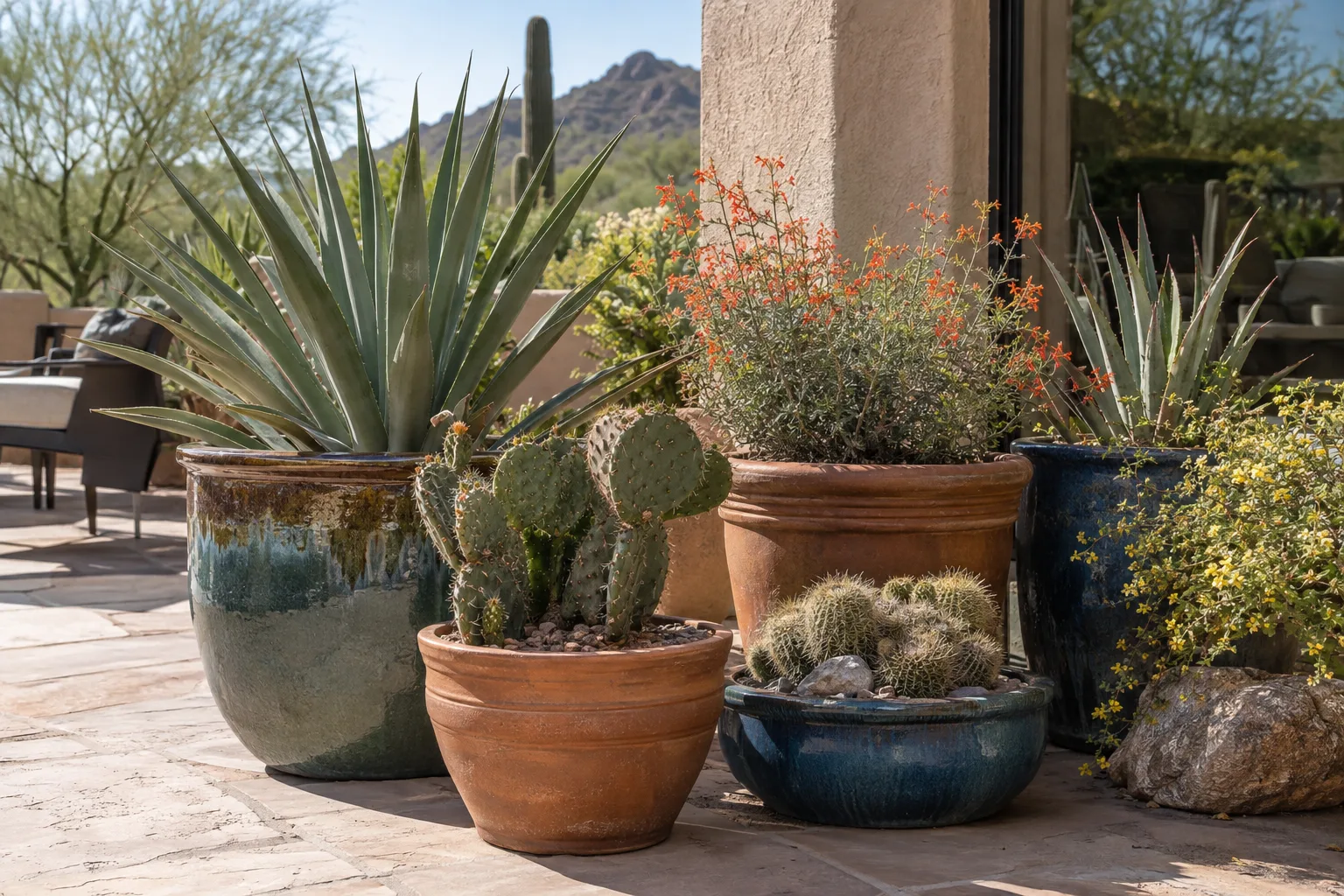
The best native plants for Arizona patio containers are desert marigold, blackfoot daisy, fairy duster, Parry’s penstemon, globe mallow, desert milkweed, Parry’s agave and brittlebush. Plant them from late February to mid April so roots settle before highs pass 105°F.
Key takeaways
- Plant from late February to mid April, or in October and November, so roots fill the pot before highs pass 105°F.
- Choose a pot at least 15 inches wide with drainage holes, in glazed ceramic, thick terracotta or a light color.
- Fill it with about two parts cactus and succulent soil to one part pumice or perlite, and keep the crown at or just above the soil line.
- Water deeply when the top 2 inches of soil are dry, which is roughly every 3 to 5 days in June and every 2 to 3 weeks in winter.
- Feed lightly: half-strength slow-release fertilizer once in late February for bloomers, and none for agave.
When should I plant native plants in containers in Arizona?
Late February to mid April is the best window, and October through November is the second. Highs in the 70s and 80s give roots several weeks to fill a pot before summer temperatures climb above 110°F.
A plant set out in June has to build roots while the pot bakes in the sun, and many stall or fail. Late-winter planting also lines up with the bloom time of fairy duster, Parry’s penstemon and brittlebush, so you see flowers in the first season. The eight plants below are varieties we commonly carry, but availability changes week to week and season to season, so check our plants department before you plan around one.
What pots and soil do native plants need in containers?
Use a pot at least 15 inches wide with drainage holes, filled with a gritty, fast-draining mix. Pots under 12 inches dry out within a day or two once highs pass 105°F. A pot with no drainage holds water that rots desert roots faster than a dry spell would hurt them.
Pot material changes root temperature. Dark plastic and thin metal heat up in direct sun, while glazed ceramic, thick terracotta and light-colored fiberglass stay cooler. Set pots on feet or a stand so air can move underneath instead of letting them sit on hot concrete. Our pottery and planters department is a good place to compare materials and sizes.

For soil, mix about two parts cactus and succulent potting soil with one part pumice or perlite. Skip mixes that contain moisture crystals. Do not add a gravel layer at the bottom, because water collects above it and keeps the roots wet. Set each plant so the crown, where stems meet roots, sits at or just above the soil surface, then water until it runs out the bottom.
Which native plants work best in patio containers?
These eight stay a manageable size in a 15 to 24 inch pot and take full low desert sun. Sizes are typical for container growth and run larger in the ground.
1. Desert marigold (Baileya multiradiata)
Desert marigold forms a mound of silvery, woolly foliage 1 to 2 feet tall and wide, topped with yellow daisy-like flowers from spring through fall. It wants full sun and very little water once established. The drawback is lifespan: it tends to be short-lived and looks sparse between flushes, so expect to replace or reseed it every few years.
2. Blackfoot daisy (Melampodium leucanthum)
Blackfoot daisy stays low, 6 to 12 inches tall and 1 to 2 feet wide, with small white daisies from late winter well into fall. It takes full sun and dry soil. Its drawback is rot. Wet soil during the monsoon can kill it, so keep it in a fast-draining mix and move it out from under gutters and heavy downpours.
3. Fairy duster (Calliandra eriophylla)
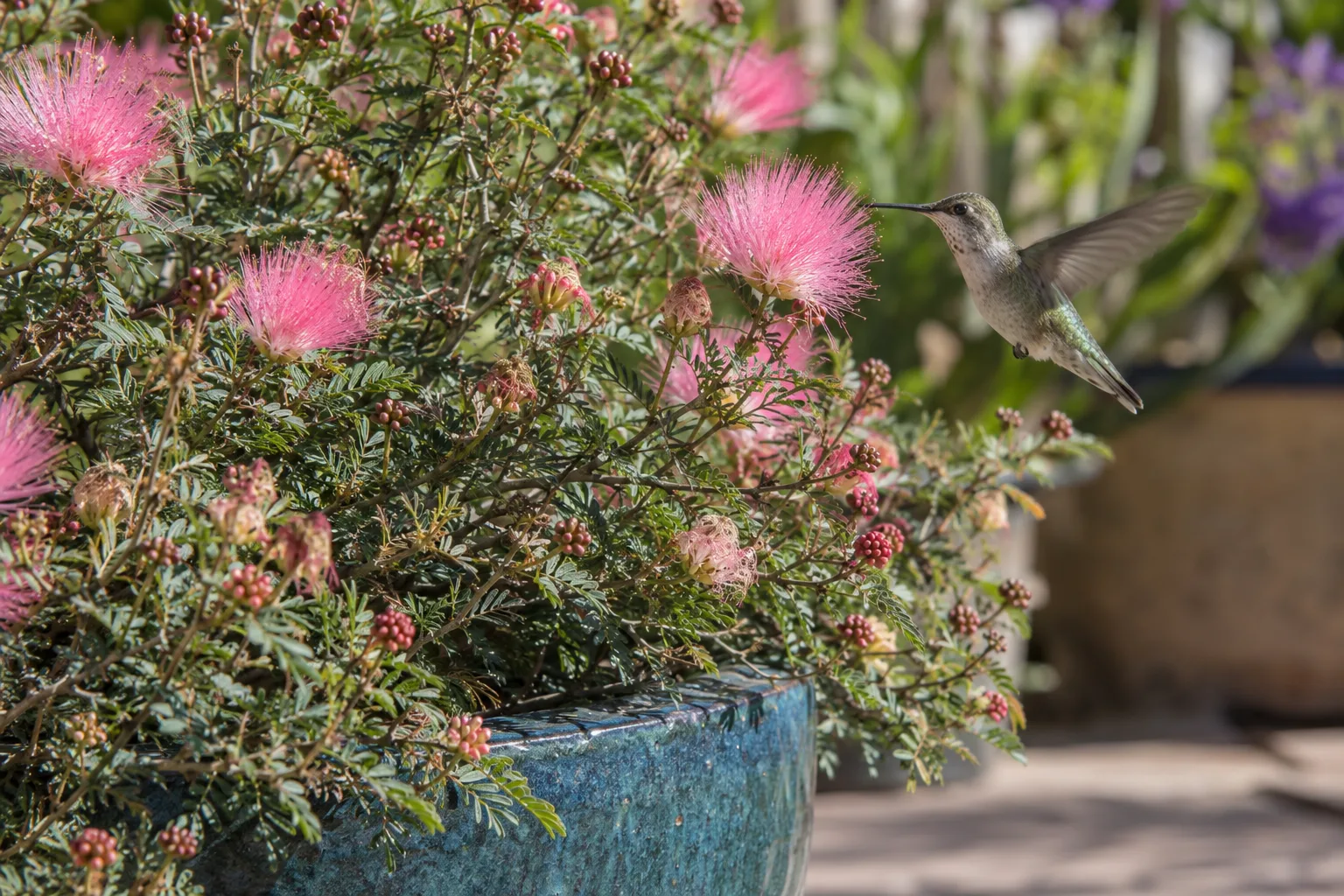
Fairy duster is a fine-textured shrub 2 to 3 feet tall and wide, with pink powderpuff flowers from late winter into spring that hummingbirds visit. It takes full sun to light afternoon shade and little water. The drawback is a thin look: it may drop leaves during dry summer stretches or cold snaps and can look bare for weeks.
4. Parry’s penstemon (Penstemon parryi)
Parry’s penstemon sends up hot pink flower spikes 3 to 4 feet tall in late winter and spring above a low rosette of gray-green leaves. It likes full sun to light afternoon shade and well-drained soil, with moderate water during bloom and less in summer. The drawback is a short show. Flowering lasts several weeks, and the plant is plain afterward.
5. Globe mallow (Sphaeralcea ambigua)
Globe mallow grows 2 to 3 feet tall and wide, with gray-green leaves and apricot to orange flowers from spring into early summer. It takes full sun and tolerates dry spells between waterings. Its drawback is a loose, sprawling habit that gets leggy by midsummer. Cutting it back by about half after the main bloom tidies it up.
6. Desert milkweed (Asclepias subulata)
Desert milkweed makes a clump of slender, nearly leafless gray-green stems 2 to 4 feet tall, with creamy white flowers through much of the warm season. It wants full sun and little water, and monarch and queen butterflies use milkweeds as host plants. Drawbacks are a sparse look, aphids and a milky sap that is toxic if eaten. Keep it away from pets that chew plants, and check the ASPCA plant list or ask your veterinarian.
7. Parry’s agave (Agave parryi)
Parry’s agave forms a tight blue-gray rosette 1 to 2 feet tall and wide, with a dark spine at each leaf tip. It takes full sun to light afternoon shade and needs water only every 2 to 3 weeks in summer once established. The spines are the drawback, so place it away from walkways and seating. The rosette dies after it flowers, usually after many years, though it often leaves pups.
8. Brittlebush (Encelia farinosa)
Brittlebush is a rounded shrub 2 to 3 feet tall and up to 3 feet wide, with silvery leaves and yellow daisy flowers from late winter through spring. It needs full sun and little water. The drawback is a short life and a messy summer, since it drops leaves in drought and its tips can burn in hard frost. Give it a 20-inch or larger pot.
How often should I water native plants in containers?
Water deeply whenever the top 2 inches of soil are dry, and let the pot drain fully. The interval changes with the season, and this table gives starting ranges for a 15 to 20 inch pot in the East Valley.
| Season | Typical highs | Starting interval |
|---|---|---|
| Late February to April | 65 to 95°F | Every 5 to 7 days |
| May to June | 95 to 112°F | Every 3 to 5 days |
| July to September (monsoon) | 100 to 110°F | Every 3 to 5 days, skipping after soaking rain |
| October to November | 75 to 95°F | Every 7 to 10 days |
| December to January | 60 to 70°F | Every 14 to 21 days |
Push a finger into the soil before each watering. Agave and globe mallow can go longer than the table says, while a 12 inch pot in a west-facing spot may need water sooner. Water at the base in early morning. Our gardening calendars list monthly tasks, which helps you adjust as the seasons shift.
Where on the patio should I put native containers?
Put them where they get at least 6 hours of direct sun, and keep pots a foot or more from west- and south-facing walls. Stucco and concrete reflect heat back onto the pot and foliage, so the temperature at the plant can run well above the air temperature.

East-facing patios are the easiest, with strong morning sun and relief by midafternoon. On a west exposure, a shade cloth or pergola that blocks sun from about 2 pm to sunset, June through September, protects penstemon and fairy duster. Agave, desert marigold and blackfoot daisy still prefer open sun. Covered patios suit penstemon, but low light cuts bloom on the sun lovers.
Do native plants need fertilizer in containers?
They need very little. Give flowering plants such as desert marigold, blackfoot daisy and fairy duster a balanced slow-release fertilizer at half the label rate once in late February, and skip it for agave and milkweed. Rich feeding pushes soft, fast growth that burns in summer heat.
Hard irrigation water and alkaline soil add a second concern in pots. Minerals build up as a white crust on the soil surface and the pot rim over several months. Every month or two in summer, water slowly until a generous amount drains out, which flushes some of those salts. If the crust returns quickly, replace the top few inches of mix each spring.
What mistakes kill native plants in containers?
Most losses trace back to a handful of habits. Each one is easy to fix before the plants suffer.
- Planting in June. Roots have little time to establish before highs pass 110°F, so wait until October if you missed spring.
- Watering on a fixed schedule all year. Penstemon, globe mallow and brittlebush slow down in summer and need less than they did in spring.
- Using a pot with no drainage. Set a nursery pot inside the decorative one and empty any water left in the saucer.
- Choosing a small pot. Anything under 12 inches dries out fast and cooks the roots.
- Assuming a native needs no care. Some gardeners expect a native plant to look after itself, but a pot holds far less soil than the ground does, so check moisture weekly and trim spent flower stalks.
Frequently asked questions
Can native plants stay in pots through an Arizona winter?
Yes, all eight can stay outdoors in pots through East Valley winters. Pots lose heat faster than ground soil. On nights forecast near 30°F, move brittlebush and desert milkweed against a south wall or under an eave. Water sparingly in cold weather, because soggy, cold soil can harm roots as much as frost does.
How often should I repot native plants?
Repot every 2 to 3 years, or when roots circle the bottom of the pot or water runs straight through. Do it in late February to March or in October, not in summer. Move up one size, about 2 to 4 inches wider, and keep the crown at the same height as before.
Is autumn sage a native plant?
No, autumn sage (Salvia greggii) is native to Texas and Mexico, not Arizona. It handles the low desert well with afternoon shade in July and August, so it makes a fine companion in a pot. Keep it out of the same container as agave, since it wants more frequent water.
Can I mix native and non-native plants in one pot?
Yes, when the water needs match. Rosemary and lavender share the dry-between-waterings routine of most plants here. Annual flowers such as petunias want water every day or two in warm weather, and they will drown a pot of natives, so give them their own containers.
Will native containers attract hummingbirds and butterflies?
Yes. Fairy duster and Parry’s penstemon bloom in late winter and spring when hummingbirds look for nectar, and native bees visit the daisy-type flowers. Desert milkweed hosts monarch and queen caterpillars. Grouping a few pots together lets the blooms overlap and gives pollinators more to visit.
Are native containers right for your patio?
Yes, if your patio gets 6 or more hours of sun and you want color on a low-water routine. These plants suit a gardener who checks the soil before watering. Skip them if your patio sits in deep shade, if you want a lush tropical look, or if an automatic timer waters every pot daily. Those habits rot desert plants. If you are unsure where to start, visit us in Queen Creek and we will help you choose.