
The best native groundcovers for Arizona gardens in zone 9b are trailing indigo bush, blackfoot daisy, Goodding’s verbena, desert zinnia, desert marigold, angelita daisy and Parry’s penstemon. Each handles full sun, alkaline soil and summer highs above 110°F once its roots are established.
Key takeaways
- Plant from October through March so roots grow through the mild months, and avoid planting from mid-May through September.
- Trailing indigo bush spreads 4 to 8 feet, so one plant covers far more ground than any other plant on this list.
- Space plants at about half their mature spread to get full cover in 2 to 3 growing seasons.
- Fill a test hole with water first: if it is still standing after 12 to 24 hours, break through the caliche or plant on a low mound.
- Mulch 2 to 3 inches deep with decomposed granite and keep it about 2 inches off the stems.

Which native groundcovers grow best in Queen Creek and the East Valley?
Seven natives and near-natives of the Southwest suit our conditions. Queen Creek sits in zone 9b to 10a depending on which map you read, so frost is occasional and summer heat above 110°F decides what survives. These are varieties we commonly carry, and availability changes week to week and season to season, so browse our plant department or ask before you plan a bed around one. Each has one drawback, listed below.
Trailing indigo bush (Dalea greggii)
This is the closest thing to a true spreading groundcover on the list. It stays about 1 foot tall, spreads 4 to 8 feet and roots wherever stems touch the soil. Gray-green foliage looks good all year, and purple flowers open in spring and draw bees. It wants full sun and very little water once established. The drawback is size: it needs room, and the center can turn woody after several years.
Blackfoot daisy (Melampodium leucanthum)
A tidy mound 6 to 12 inches tall and 12 to 18 inches wide, covered in small white daisies with yellow centers from spring into fall when it gets an occasional soak. The narrow leaves are gray-green. It needs full sun and low water. The drawback is short life in wet ground, so drainage matters more for this plant than for the others.
Goodding’s verbena (Glandularia gooddingii)
This Arizona native grows 1 to 2 feet tall and 2 to 3 feet wide, with pink to lavender flower clusters from roughly February to May. It takes full sun and low water, and it reseeds into bare spots nearby. The drawback is that it often turns leggy and thin in midsummer and lives only a few years, so it relies on those seedlings to refill.

Desert zinnia (Zinnia acerosa)
A low mat 6 to 10 inches tall and 12 to 18 inches wide, with small white flowers and yellow centers from spring through fall, heaviest after rain. Narrow leaves give it a fine texture beside coarser shrubs. It needs full sun and very little water. The drawback is slow growth, and it may take two seasons to fill its space.
Desert marigold (Baileya multiradiata)
Silvery foliage forms a mound 1 to 2 feet tall and wide, with yellow flowers held on stems above it, mostly in spring with a second flush in fall. It needs full sun and very little water. The drawback is a short life and ragged spent stems, so cut them back and let it reseed in drifts instead of expecting a tight carpet.
Angelita daisy (Tetraneuris acaulis, also sold as Hymenoxys acaulis)
Grass-like gray-green leaves form a clump 6 to 12 inches tall and wide, topped with bright yellow daisies on short stems. Bloom is heaviest in spring and fall, with scattered flowers between when it gets water. It tolerates full sun to light afternoon shade and needs low water. The drawback is that bloom slows in the hottest weeks and plants may want a bit more water in July.
Parry’s penstemon (Penstemon parryi)
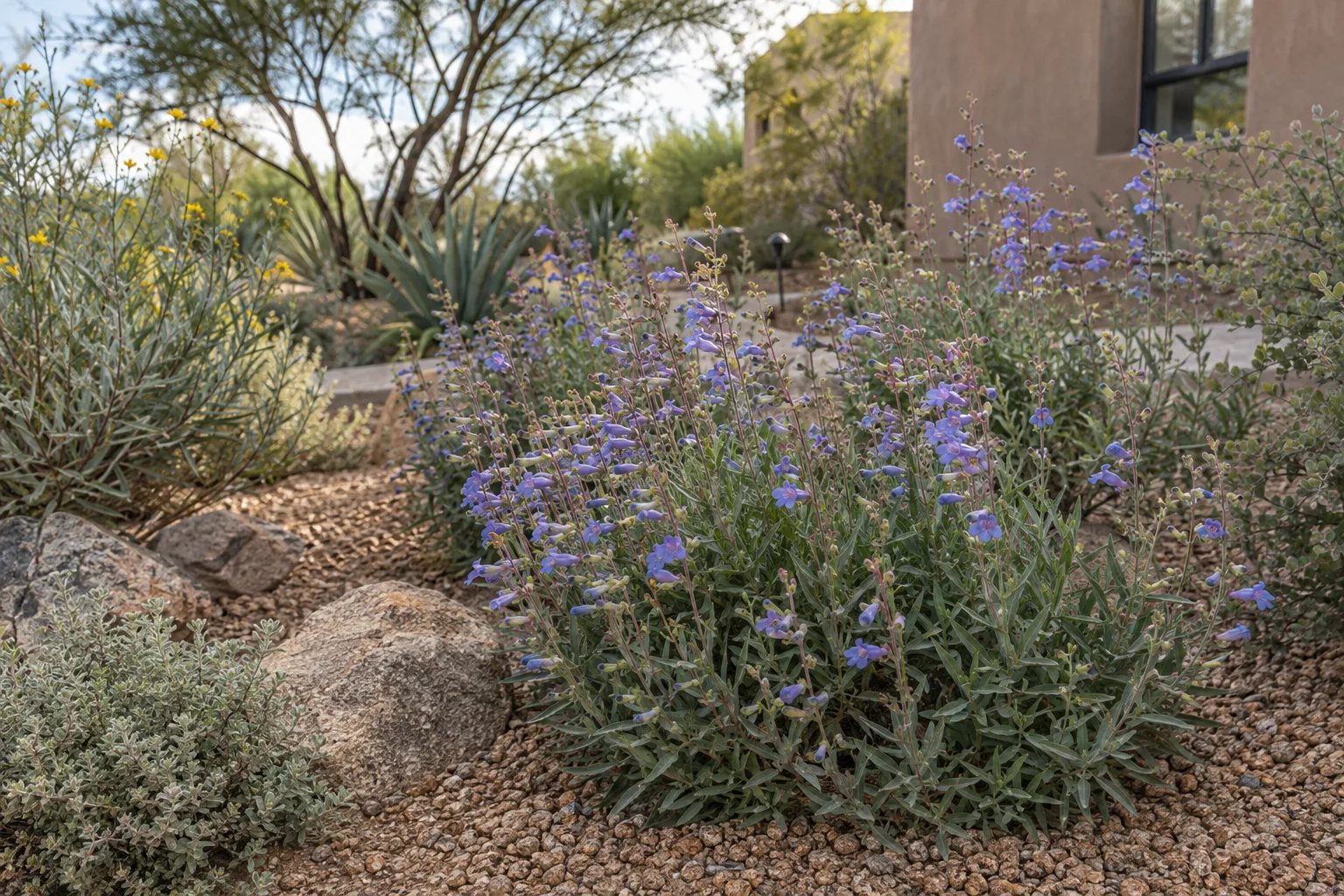
Magenta-pink flower spikes rise 3 to 5 feet above a leaf rosette about 1 to 2 feet wide, usually from March into April. It needs full sun and low water. The drawback is its clumping habit: it leaves gaps between plants, so set it among low spreaders like trailing indigo bush or desert zinnia.
How do the seven native groundcovers compare?
Trailing indigo bush spreads the widest, and desert zinnia and angelita daisy stay the lowest, so a mixed bed usually pairs one wide spreader with several smaller flowering plants. The table lists size, color and bloom for planning. Water needs are for established plants.
| Plant | Height | Spread | Flower color | Main bloom | Water |
|---|---|---|---|---|---|
| Trailing indigo bush | About 1 ft | 4 to 8 ft | Purple | Spring | Very low |
| Blackfoot daisy | 6 to 12 in | 12 to 18 in | White | Spring to fall | Low |
| Goodding’s verbena | 1 to 2 ft | 2 to 3 ft | Pink to lavender | Feb to May | Low |
| Desert zinnia | 6 to 10 in | 12 to 18 in | White | Spring to fall | Very low |
| Desert marigold | 1 to 2 ft | 1 to 2 ft | Yellow | Spring, fall | Very low |
| Angelita daisy | 6 to 12 in | 6 to 12 in | Yellow | Spring, fall | Low |
| Parry’s penstemon | 3 to 5 ft spikes | 1 to 2 ft | Magenta-pink | Mar to Apr | Low |
When should I plant native groundcovers in Arizona?
Plant from October through March, with October and November the best months. Fall planting lets roots grow through the mild winter before the first summer arrives. Early spring planting works if you commit to watering through the first hot season. Planting from mid-May through September puts young plants in 110°F heat before their roots reach below the top foot of soil. Our gardening calendars lay out the planting windows month by month for the low desert.
How do I handle caliche and alkaline soil?
Check drainage before you buy plants, because standing water around the roots is the main way these natives die. Dig one hole about 12 inches deep, fill it with water and watch. If water is still there after 12 to 24 hours, a caliche layer is probably sitting below. Break through it with a digging bar, or plant on a low mound 3 to 4 inches high. Alkaline soil with a pH above 7.5 needs no correction, since these plants are adapted to it. Heavy amendments hold water around the roots, so mix in only a little compost if you add any.
How do I plant native groundcovers step by step?
Prepare the bed, space plants at about half their mature spread, plant at the same depth as the pot, soak deeply and mulch. A plant that spreads 4 feet goes about 2 feet from its neighbor.

- Run the water test described above and fix drainage where needed.
- Clear weeds, grass and their roots from the bed.
- Mark spacing at about half the mature spread of each plant.
- Dig each hole twice as wide as the pot and no deeper, so the top of the root ball sits level with or slightly above the soil.
- Backfill with native soil and firm it gently by hand.
- Build a basin 3 to 4 inches high around each plant and soak it slowly.
- Spread 2 to 3 inches of decomposed granite mulch, keeping it about 2 inches from the stems.
How much water do native groundcovers need?
They need frequent water for the first few weeks, then less each month until they live on rain and occasional soaks. Water every 2 or 3 days for the first two weeks, then weekly through winter when there is no rain, and every 2 to 3 weeks in spring. In the first summer, a deep soak every 7 to 10 days is a reasonable starting point. After one to two years, monsoon rain covers most of the need, and a deep soak every 2 to 4 weeks fills dry gaps in June. A slow soak that wets 12 inches of soil reaches the roots, while daily sprinkling only wets the surface and encourages shallow roots. Too much water rots these plants faster than drought does.
How do I care for native groundcovers after the first year?
Trim lightly once a year, pull weeds young and skip fertilizer. Cut trailing indigo bush and desert marigold back by about one-third in late winter or after bloom to keep the centers from going woody. Pull weeds before they set seed until the plants shade the soil. Nitrogen fertilizer pushes floppy growth that these desert plants do not need. Check our classes and events page for upcoming workshops on low-water gardening.
Frequently asked questions
Can native groundcovers replace a lawn in the East Valley?
Yes, for areas you do not walk on daily. Trailing indigo bush covers large areas with fewer plants, and blackfoot daisy and desert zinnia add flowers between. Expect two seasons of regular watering before cover is dense. A decomposed granite path and a desert tree give the bed structure and shade the house.
Can I walk on native groundcovers?
Occasional light steps are fine for most, but none of these seven tolerates regular foot traffic the way turf does. Stepping stones through the planting protect the crowns. Trailing indigo bush and desert zinnia recover best from brushing, while clumpers like Parry’s penstemon and desert marigold break easily.
Is lantana a native groundcover?
No. Spreading lantana (Lantana montevidensis) comes from South America, so it is left off this list even though it grows well here. For a native spreader with a long bloom season, trailing indigo bush and angelita daisy fill that role with less water once established.
How long until native groundcovers fill in?
Most reach full cover in 2 to 3 growing seasons from a fall planting. Trailing indigo bush is the fastest and can cover several feet in its first year or two with regular water, while desert zinnia is the slowest. Spacing plants at about half their spread shortens the wait, and mulch holds weeds down in the gaps.
Will monsoon storms hurt native groundcovers?
Rain is rarely the problem, but standing water is. Established plants take a July to September monsoon well, and the deep soak helps them. Plants in compacted or caliche-capped soil can rot if water sits around the crowns for days. Mounding the soil 3 to 4 inches and keeping mulch off the stems prevents most losses.
Are native groundcovers right for your yard?
Yes, if you have a sunny bed with good drainage and want flowers with low water use. Pair a wide spreader like trailing indigo bush with a few flowering clumps and let them fill in over two or three seasons. Skip them if you need a lawn for play or pets, if the bed sits in deep shade, or if you want a finished look by the first spring. Visit us in Queen Creek and we can help you match a groundcover to your bed.