Seven native Arizona plants grow well in pots with little water: desert spoon, Parry’s agave, Parry’s penstemon, desert marigold, blackfoot daisy, brittlebush and desert zinnia. Each needs sharp drainage, full sun and a deep soak followed by a dry-down.
Key takeaways
- Use a pot with drainage holes: 10 to 15 gallons suits most shrubby natives, and agave and desert spoon do better in 15 gallons or more.
- Mix cactus or succulent potting soil with about 20 to 30 percent perlite, pumice or decomposed granite.
- Water deeply when the top 2 inches of mix are dry, which in summer is often every 7 to 14 days and in winter every 3 to 4 weeks.
- Give most of these plants 6 or more hours of direct sun, with some relief from reflected afternoon heat when highs pass 110°F.
- Skip fertilizer in the first season, then feed lightly once in early spring if growth looks pale.
Which native Arizona plants do best in pots?
The seven below handle containers well in the low desert. They are varieties we commonly carry, and availability changes week to week and season to season. Sizes are typical in-ground ranges, and a pot usually keeps each plant smaller. Match the plant to a container from our pottery and planters.
Desert spoon (Dasylirion wheeleri)
Desert spoon forms a rounded blue-green rosette of narrow leaves, usually 3 to 4 feet tall and wide in the ground. It grows slowly, so a 15 to 20 gallon pot can hold it for years. It wants full sun and a deep soak every 2 to 3 weeks in summer once established. The drawback is the small hooked teeth along the leaf edges, so keep it away from walkways.
Parry’s agave (Agave parryi)
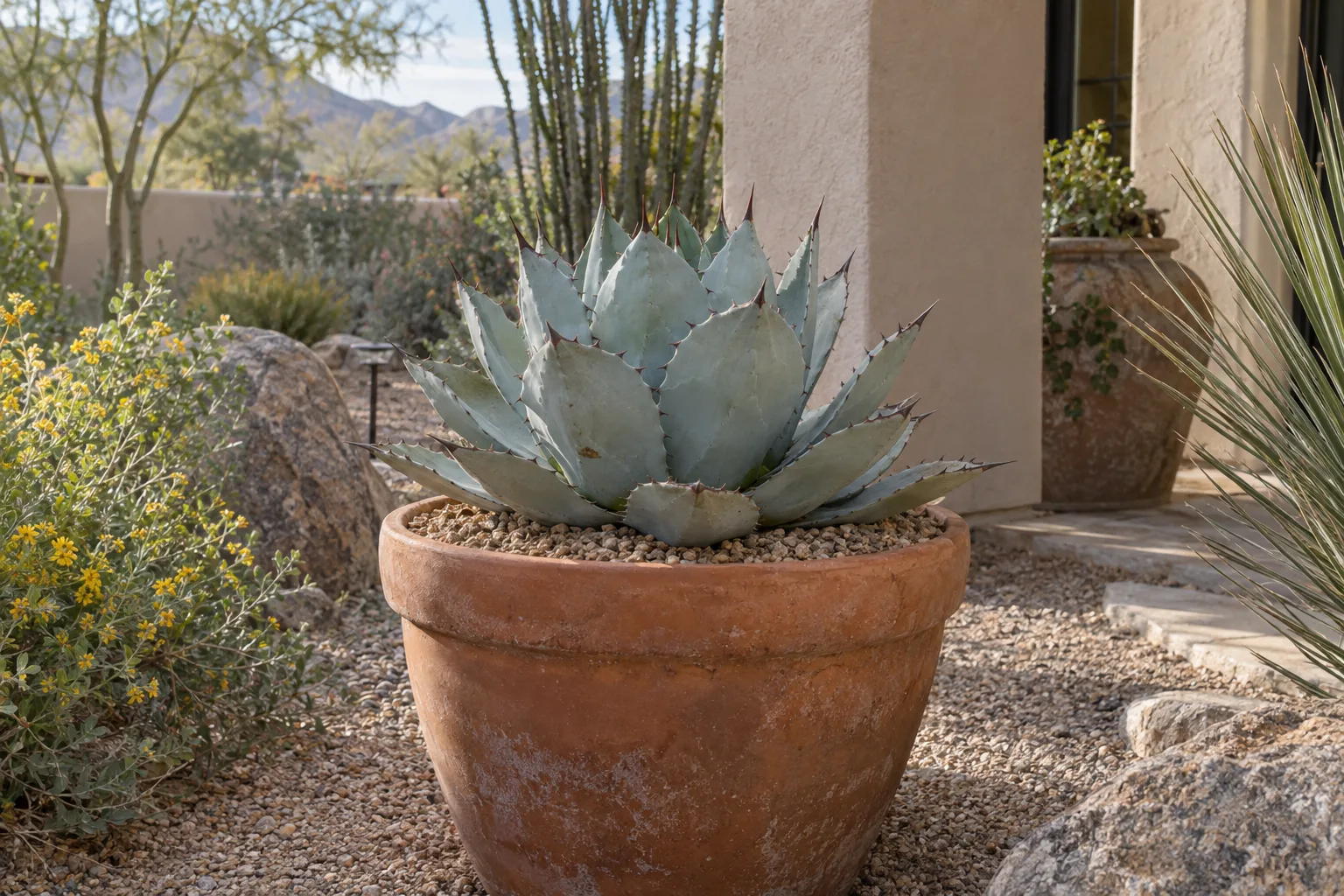
Parry’s agave makes a tight, gray-blue rosette about 2 feet tall and 2 to 3 feet wide. It likes full sun and lean, gritty mix, and it stores water in its leaves. In a pot, expect to water roughly every 10 to 14 days in peak summer and far less in winter. Its drawback is a sharp terminal spine, and each rosette eventually blooms once and then declines.
Parry’s penstemon (Penstemon parryi)
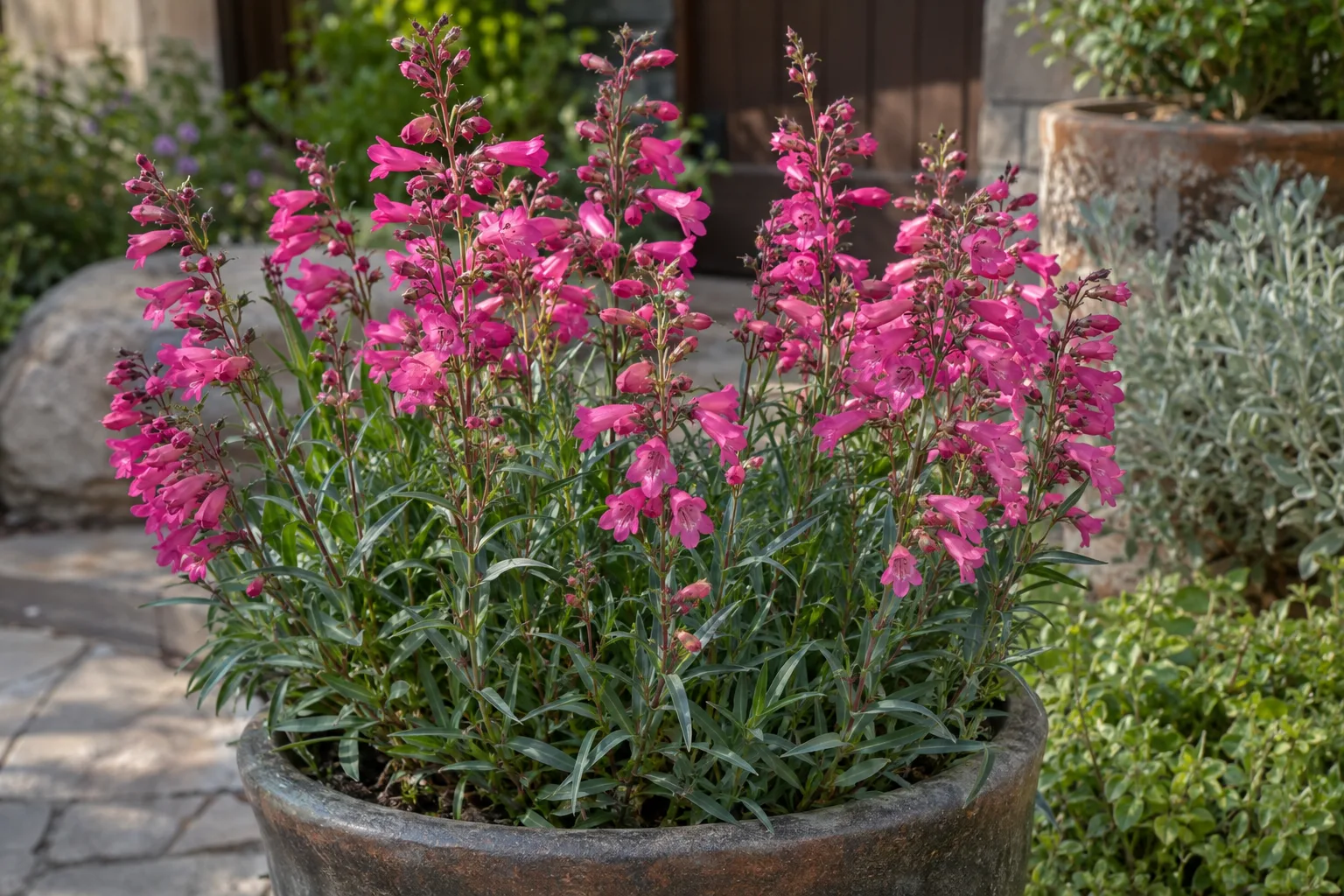
Parry’s penstemon sends up pink flower spikes 3 to 4 feet tall from late winter into spring, and hummingbirds visit them. The leaf clump stays low, usually under 2 feet. It wants full sun, very sharp drainage and little water once the flowers fade. The drawback is that it looks plain through summer, so plan to tuck the pot behind something showier.
Desert marigold (Baileya multiradiata)
Desert marigold is a silvery, short-lived perennial about 1 to 2 feet tall and wide, topped with yellow daisy flowers on long stems. It blooms heavily in spring and often again after rain. Give it full sun and water about every 7 to 10 days in summer. The drawback is that it looks ragged after a big bloom flush, so shear spent stems and let it reseed.
Blackfoot daisy (Melampodium leucanthum)
Blackfoot daisy is a small mound, 6 to 12 inches tall and 1 to 2 feet wide, covered in white daisies with a faint honey scent. It grows in full sun and tolerates alkaline soil and reflected heat. Water sparingly, about every 10 to 14 days in summer. The drawback is that it rots quickly in wet mix, so monsoon weeks call for pot feet and a sharp-draining soil.
Brittlebush (Encelia farinosa)
Brittlebush is a rounded gray-leaved shrub that reaches 2 to 3 feet in a large pot and bursts into yellow flowers from late winter into spring. It needs full sun and very little water once rooted. The drawback is summer leaf drop. It goes bare and brittle in the worst heat, then recovers, so pair it with an evergreen plant if you want year-round cover.
Desert zinnia (Zinnia grandiflora)
Desert zinnia forms a low mat only 6 to 8 inches tall and about 1 foot wide, covered in small yellow flowers from late spring into fall. It likes full sun and sharp drainage, and a soak every 10 to 14 days in summer is a reasonable starting point. The drawback is size. It suits the front of a mixed pot but does little alone in a big container.
What kind of pot and soil do desert natives need?
Use a pot with drainage holes and a fast-draining mix. Soil that stays wet is what kills desert natives in containers. Drill holes into any decorative pot that lacks them.
Terra cotta breathes and dries quickly, which suits agave and blackfoot daisy, though roots near a sun-baked wall can overheat. Glazed ceramic holds moisture longer. Light-colored pots stay cooler than dark ones when summer highs pass 110°F. If you buy resin, look for UV-stabilized versions, because cheap plastic cracks after a few seasons.
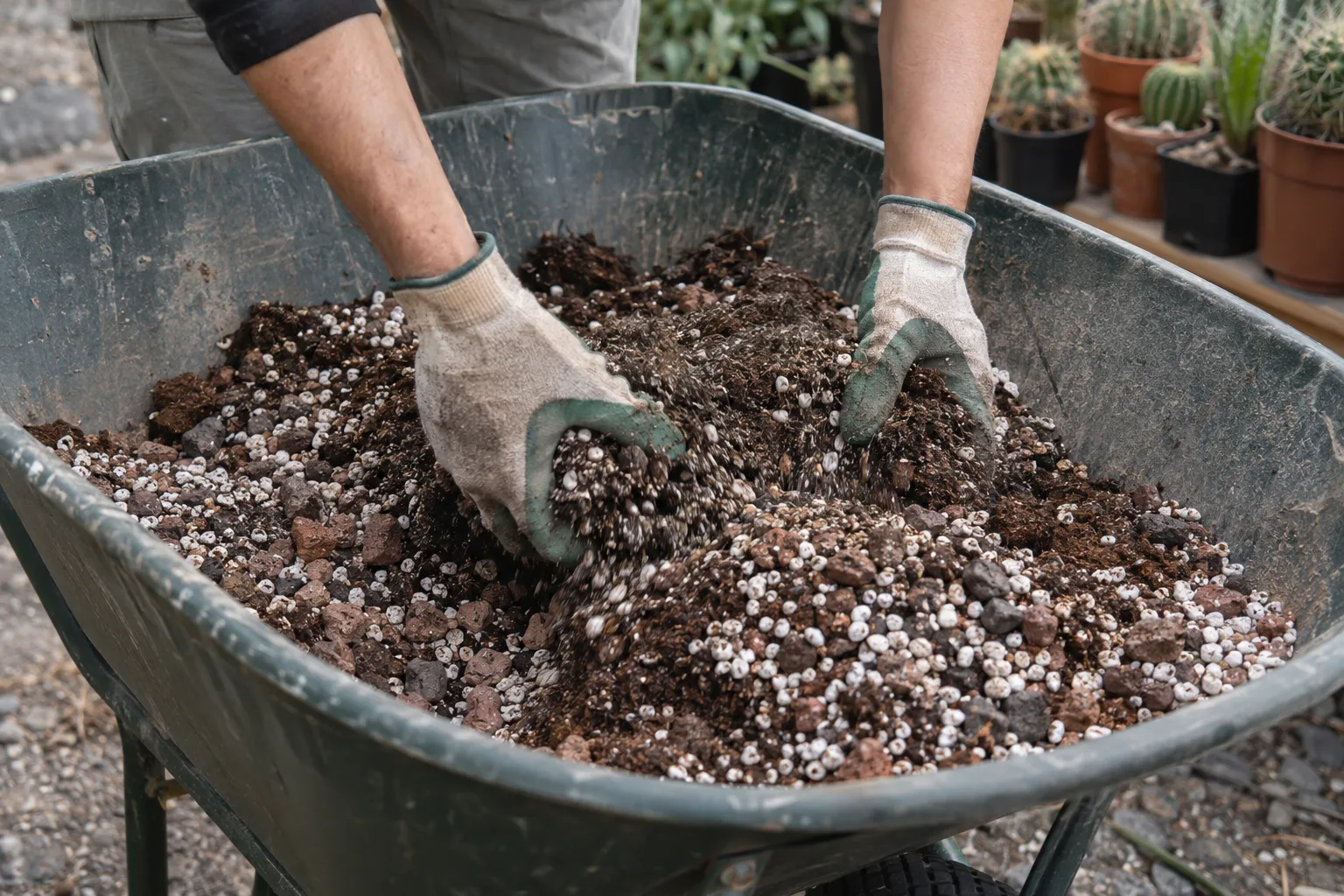
For soil, start with a cactus or succulent mix and blend in 20 to 30 percent perlite, pumice or decomposed granite. Standard potting soil holds too much water. A 1-inch top layer of decomposed granite slows evaporation.
Container growing sidesteps our alkaline soil and caliche, but hard irrigation water can leave white salt crust on the surface over time. Flush the pot with a slow, deep soak now and then so salts wash out the drain holes.
How often should I water potted natives in the low desert?
Water deeply when the top 2 inches of mix are dry. In summer that is often every 7 to 14 days, and in winter every 3 to 4 weeks. Push a finger or a wooden dowel into the pot to check.
Pot size, pot material and sun exposure change the schedule more than the calendar does. A small terra cotta pot against a west wall may need water twice as often as a large glazed pot on an east patio. Monsoon rain counts toward the total from roughly July through September, so skip a watering after a good storm. Dormant plants like Parry’s penstemon want very little water through summer. Our gardening calendars help you track seasonal changes in care.
Where should I put containers on a Queen Creek patio?
East-facing spots with morning sun and afternoon shade suit most of these plants. West and south walls bounce heat back onto the pot, and soil temperatures there can climb well beyond the air temperature.
Most of the flowering natives need 6 or more hours of direct sun to bloom well, so a deeply shaded covered patio will give you leggy growth. Grouping pots together shades the sides of each one and slows drying. Raise pots on feet so water drains freely after monsoon storms.
How do I pot a native plant step by step?
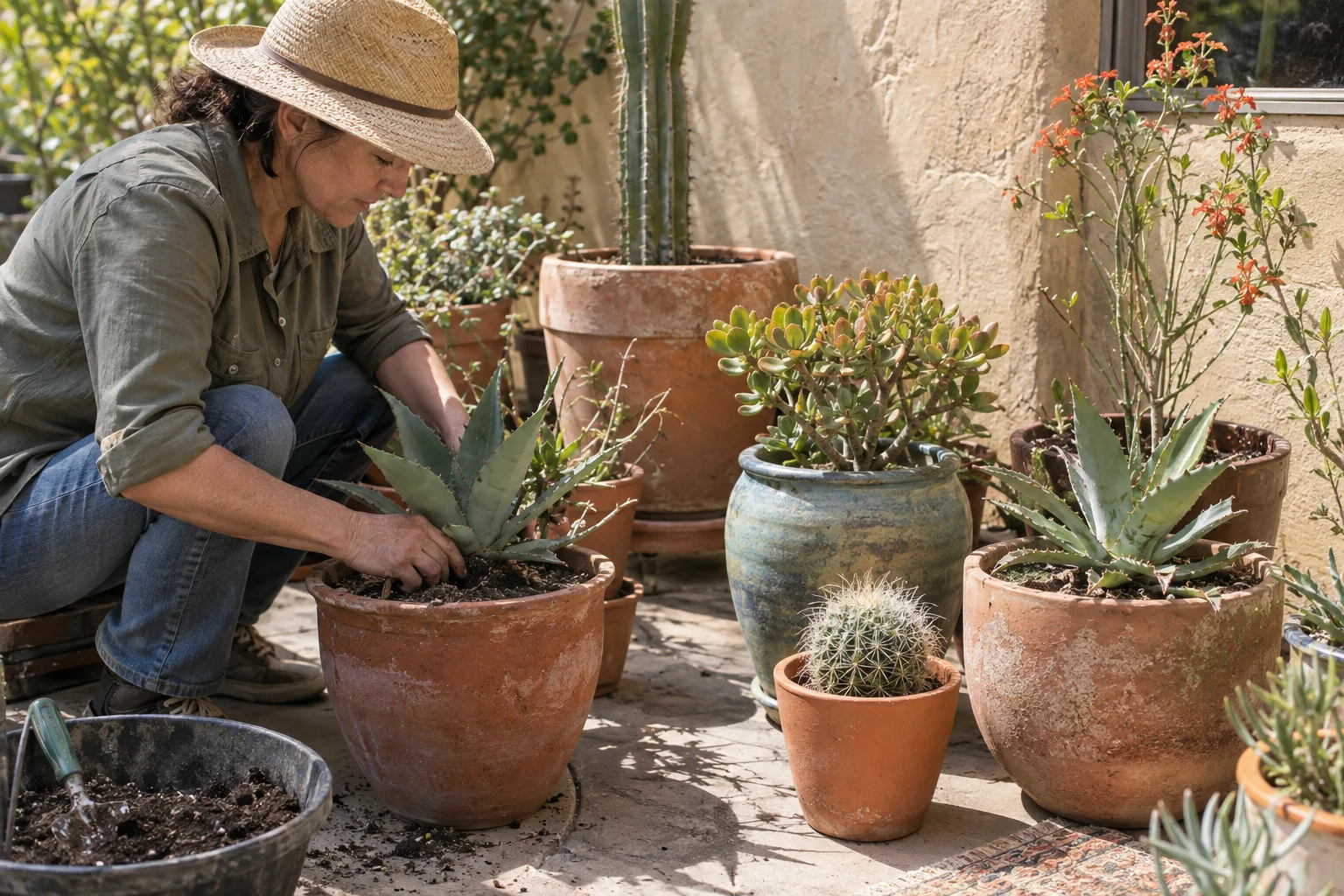
Choose the pot, fill it with gritty mix, set the plant at its original depth and water deeply. The steps are short.
- Pick a container with drainage holes, sized to the plant’s mature width.
- Blend cactus mix with 20 to 30 percent perlite, pumice or decomposed granite.
- Cover the drain holes with a piece of screen or a flat stone so the mix stays put.
- Slide the plant out of its nursery pot and loosen any circling roots with your fingers.
- Set the plant so the top of the root ball sits about 1 inch below the rim, never deeper than it grew before.
- Fill around the roots, press gently, and water slowly until it runs from the bottom.
- Top with a 1-inch layer of decomposed granite or small gravel.
Check the pot often for the first 4 to 6 weeks while the roots settle.
What mistakes kill potted natives?
Overwatering causes most losses. Gardeners carry over the schedule they use for annuals or bougainvillea, and desert natives sit in wet mix and rot at the base. Let the top few inches dry first.
Regular potting soil is the second problem, because it compacts and stays wet. A pot that is too small also fails, since a tiny root mass swings between soggy and bone dry. Moving a plant from shade to full afternoon sun in July can scorch it, so shift it in stages.
If you want hands-on help, check our classes and events for container sessions.
Frequently asked questions
Can potted natives stay outside in winter?
Most can, since frost in the East Valley is occasional and brief. Roots in a pot are exposed on all sides, though, so they chill faster than in the ground. When a freeze is forecast, move small pots under a covered patio or cover the plants overnight. Larger pots hold warmth better.
Do native plants in pots need fertilizer?
Rarely. These plants evolved in lean soil, and rich feeding makes soft growth that suffers in summer heat. If a plant looks pale after a full season, apply a half-strength low-nitrogen fertilizer once in early spring. Skip feeding in summer and winter, when growth slows.
Can I plant several natives in one pot?
Yes, if they share sun and water needs. Desert zinnia, blackfoot daisy and desert marigold make a good low trio in a wide pot. Do not pair a plant that wants regular moisture with an agave, because one of them will always be stressed. Leave a few inches between plants for roots.
Will these plants bloom in summer?
Some will. Desert zinnia can keep flowering into the heat, and desert marigold often blooms again after rain. Brittlebush and Parry’s penstemon bloom in late winter and spring, then rest. For a summer-flowering mix, browse our plant selection for additional low-water choices.
How do I protect pots during monsoon storms?
Raise pots on feet so water leaves quickly, and tip or move the ones that collect runoff from a roof. Sharp-draining mix matters most here. After several days of cloud and rain, hold off watering until the top 2 inches dry out.
Are native plants in pots right for your patio?
They suit a sunny patio, entry or balcony where you want color and form on a light watering routine. Pick two or three and group them. They are a poor fit for a shaded spot with under 4 hours of sun, or for anyone who wants a lush tropical look and a daily water timer. If that is you, other plants will serve better. Stop by the nursery in Queen Creek and we will help you match plants to pots.