

In Arizona, mulch new plants once the first deep watering has drained, usually 7 to 14 days after planting in fall and winter and 5 to 7 days in spring heat. Keep it back from the trunk or stem so the crown stays dry.
Key takeaways
- Wait 7 to 14 days after planting in fall and winter, and 5 to 7 days in spring, before spreading mulch.
- Spread 3 to 4 inches of organic mulch around trees and 1.5 to 2 inches around small perennials.
- Leave a gap of about 3 to 6 inches between mulch and a tree trunk, and 1 to 2 inches around small plants.
- Probe the planting area with a long screwdriver first. Caliche that stops it within 18 inches slows drainage and raises rot risk.
- Use wood chips around trees, shrubs and vegetables, and decomposed granite around cactus and succulents.

When should I mulch a new plant in the Arizona low desert?
Mulch after the first deep watering has drained and the soil surface has begun to dry, which usually takes 7 to 14 days in fall and winter and 5 to 7 days in spring. The wait shrinks as the weather heats up because the risk changes, from wet crowns in cool weather to scorched roots in hot weather.
| Planting window | Wait before mulching | Main risk |
|---|---|---|
| Fall and winter | 7 to 14 days | Wet crown and rot in cool, slow-drying soil |
| Spring (March to May) | 5 to 7 days | Rising heat on shallow new roots |
| Summer | Once the surface dries, 1 to 2 days after a soak or rain | Hot soil above 110°F air temperatures, plus monsoon humidity |
Summer is the exception. Bare soil in direct sun can run far hotter than the air above it, so a plant set out in May cannot wait as long as one set out in November. Planting in the right window makes mulch timing much easier, and our gardening calendars lay out the months. If you are still choosing what to plant, browse our plant departments for shrubs, perennials and desert favorites.
Why not mulch right at planting time?
Fresh mulch over saturated soil holds water against a crown whose roots are still small, and that constant wet contact is how crown and trunk rot begins. Most plants need a week or two of normal drying after the planting soak. Waiting costs very little.
Caliche changes the math. This cemented, chalky layer often sits within the top foot or two of our soil, and water that cannot drain through it pools around roots even in a dry climate. Before planting, push a long screwdriver or a length of rebar into the planting area. If it stops hard within 18 inches, break through the layer with a pick or auger, or plant on a gentle mound, before any mulch goes down.
Which mulch works best for new plants in Queen Creek?
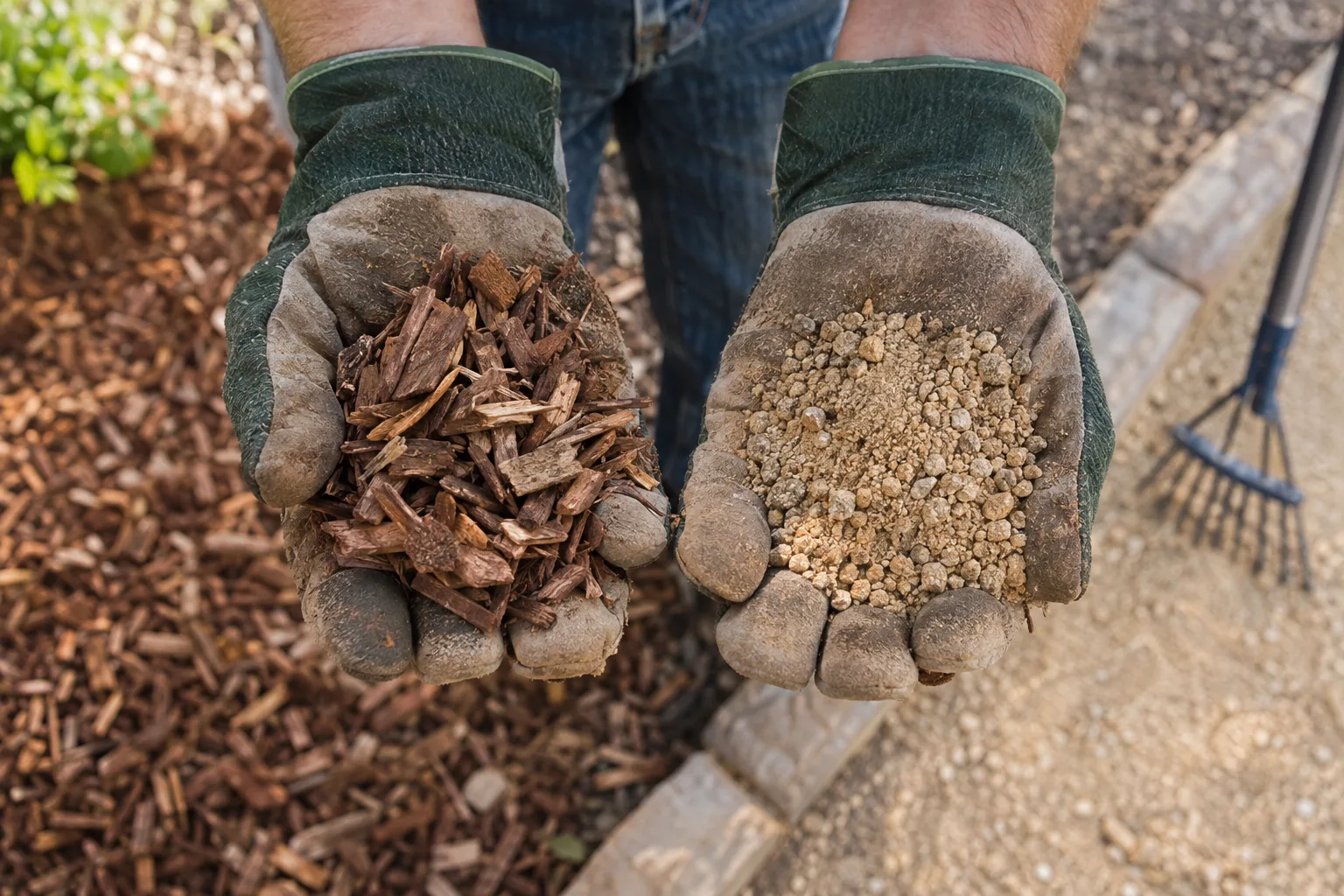
Organic mulch such as wood chips or shredded bark works best around new trees, shrubs and perennials. It cools the soil, slows evaporation and breaks down over a couple of years, adding organic matter to our alkaline, often compacted ground. Chips from desert trees such as mesquite and palo verde are a good fit.
Straw suits vegetable beds, though it breaks down faster and can mat after monsoon rain. Our herbs, vegetables and berries department is a good place to start if you are planning a bed. Avoid thick layers of fresh grass clippings, which mat down and heat up as they decompose, and skip rubber mulch, which holds heat in direct sun.
Decomposed granite and gravel do not break down and do nothing for soil. They are a good choice around established desert plants and around cactus and succulents, which need fast drainage. For new transplants that need cooler roots during their first year or two, organic mulch usually does more.
How do I mulch a new plant step by step?
You need a long screwdriver or rebar for probing, a rake, a hose or drip line, and enough wood chips or shredded bark to cover the root zone. Work in this order.
- Probe the planting area for caliche and deal with any hard layer before you plant.
- Plant, then water deeply enough to settle the soil around the root ball. With drip irrigation, run it long enough to wet the soil 12 to 18 inches deep.
- Wait for the interval in the table above. If the plant wilts badly in heat, mulch sooner to shade the soil.
- Pull weeds and clear debris from the area, because mulch laid over weeds makes them harder to remove later.
- Spread the mulch to the depth that suits the plant (see the next section).
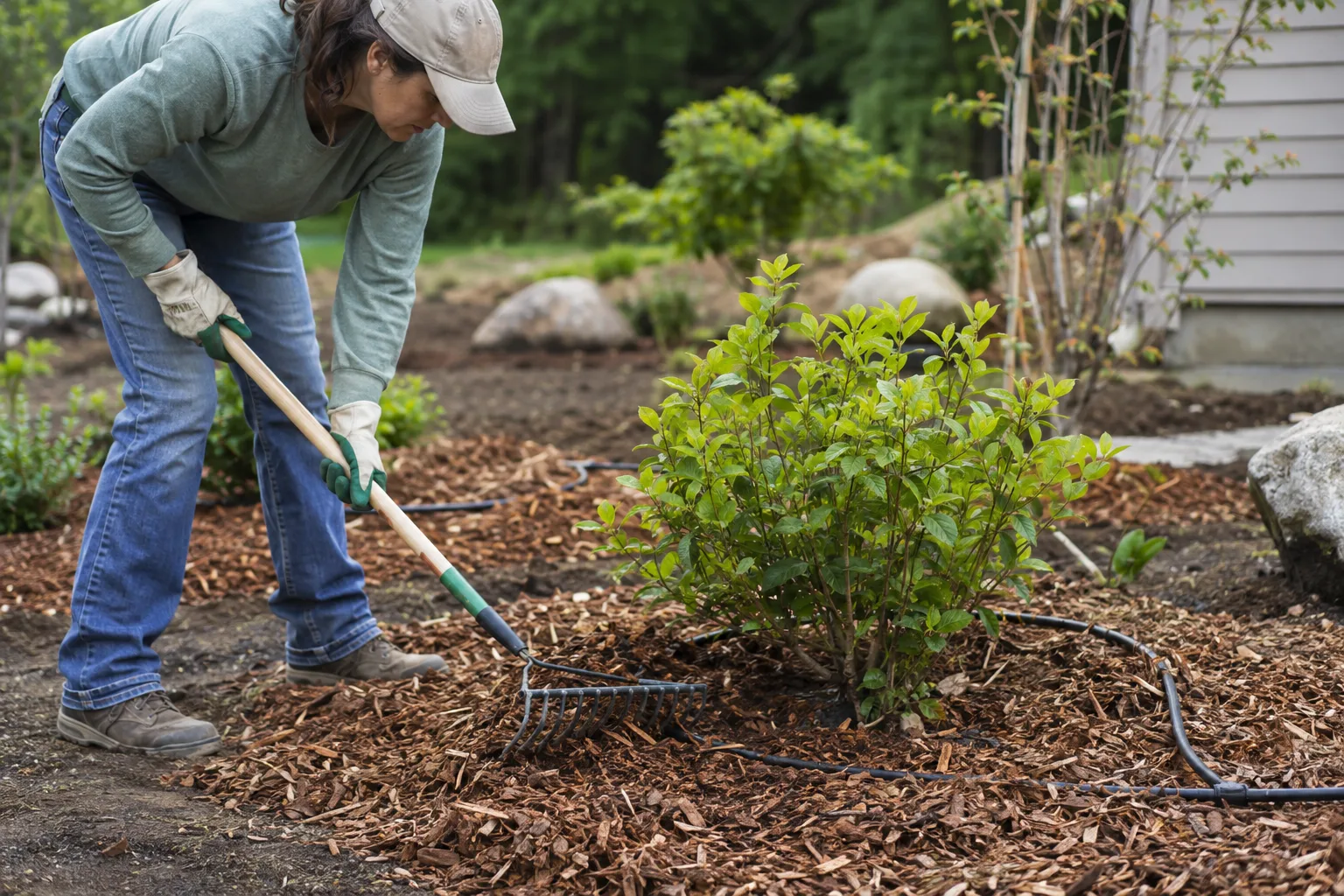
- Pull the mulch back from the trunk or stem so the crown stays exposed to air.
- Extend the ring toward the drip line of a tree, or as wide as is practical, since most feeder roots spread well past the trunk.
How deep and how wide should the mulch ring be?
Use 3 to 4 inches around trees, 2 to 3 inches around shrubs and 1.5 to 2 inches around small perennials and groundcovers. Deeper than 4 inches can starve the soil surface of air. Thin layers lose their cooling effect.
Width matters as much as depth. For a tree, a ring that reaches the drip line covers the shallow roots that take up most of the water. Citrus trees have shallow feeder roots and respond especially well to a wide ring of chips. These are varieties we commonly carry in our citrus trees department, though availability changes week to week and season to season. Leave a gap of about 3 to 6 inches at a tree trunk and 1 to 2 inches at a small plant’s stem.
Which mulching mistakes damage new roots?
The most damaging mistakes involve piling mulch against stems and mulching at the wrong moment.
- Building a mulch volcano against the trunk. It holds moisture on the bark, which invites rot and decay, and it is worst in monsoon humidity from roughly July through September.
- Mulching saturated soil right after planting.
- Using organic mulch around cactus, agave and aloe, which rot when their base stays damp.
- Leaving a thin layer for years. Chips pack down and break down, and a layer of an inch or less gives little protection from summer heat.
- Piling mulch against a house foundation or wooden structures. Keep it back several inches and ask a pest control professional what gap they recommend.

How does mulch change watering?
Mulch slows evaporation, so soil under it stays moist longer and you can usually water less often than you would on bare ground. How much less depends on the plant, the season and your soil, so check the soil instead of following a fixed schedule.
Push a finger or a moisture probe through the mulch and 3 to 4 inches into the soil before you water. Moist soil there means you can wait. New gardeners sometimes overwater because dry-looking chips on top suggest dry soil underneath.
Place drip emitters at the edge of the root ball, not at the trunk, and move them outward as the plant grows. That encourages roots to spread into the mulched zone. Our classes and events are worth checking for hands-on help with irrigation and planting.
Frequently asked questions
Can I use wood chips from a tree trimming crew?
Yes, chips from a local tree crew work well as mulch for trees, shrubs and perennials. They are a mix of wood, bark and leaf, so they break down at different rates. Skip chips from trees that were diseased, and let very fresh, steaming piles cool before spreading them near young plants. Spread them 3 to 4 inches deep and keep them off the stems.
Should I mulch around cactus and succulents?
Use decomposed granite or coarse gravel around cactus, agave and aloe, not wood chips. These plants want fast drainage and a dry crown, and a moisture-holding organic layer against the base raises the risk of rot, especially when monsoon humidity arrives from roughly July through September. Pull any mulch slightly back from the plant’s base.
Can I spread mulch over drip emitters?
Yes, drip lines and emitters work fine under 2 to 4 inches of mulch, and the mulch shades the tubing from summer sun. Check emitters a few times each season by pulling the mulch aside to confirm water is reaching the soil, since a clogged emitter is hard to spot from above. Move emitters outward as the plant grows so water lands at the edge of the root zone.
How often should I add mulch?
Add mulch once a year, usually in fall, to bring the layer back to 3 inches around trees and shrubs. Wood chips settle and break down over roughly 1 to 3 years in our dry climate, and a layer that has packed down to an inch or less gives little insulation. Rake the old layer loose first so water and air can still reach the soil.
Do I need landscape fabric under mulch?
No, landscape fabric under organic mulch is optional and often causes trouble. It keeps wood chips from feeding the soil as they break down, and weeds root into the mulch layer on top of it anyway. After a few years the fabric tangles with roots and is hard to remove. Pull weeds before mulching and a 2 to 4 inch layer will suppress most new ones.
Is mulching new plants worth the effort in Queen Creek?
Yes for most yards. A 2 to 4 inch ring of wood chips, set down after the first soak has drained and held back from the stem, protects young roots from heat, slows evaporation and improves soil. Skip organic mulch around cactus and succulents, which want gravel and fast drainage. Skip it where caliche blocks drainage until you have dealt with the layer, because mulch will only hold more water over a pooled root zone. Visit us at the nursery in Queen Creek and we will help you pick a mulch for your planting.