
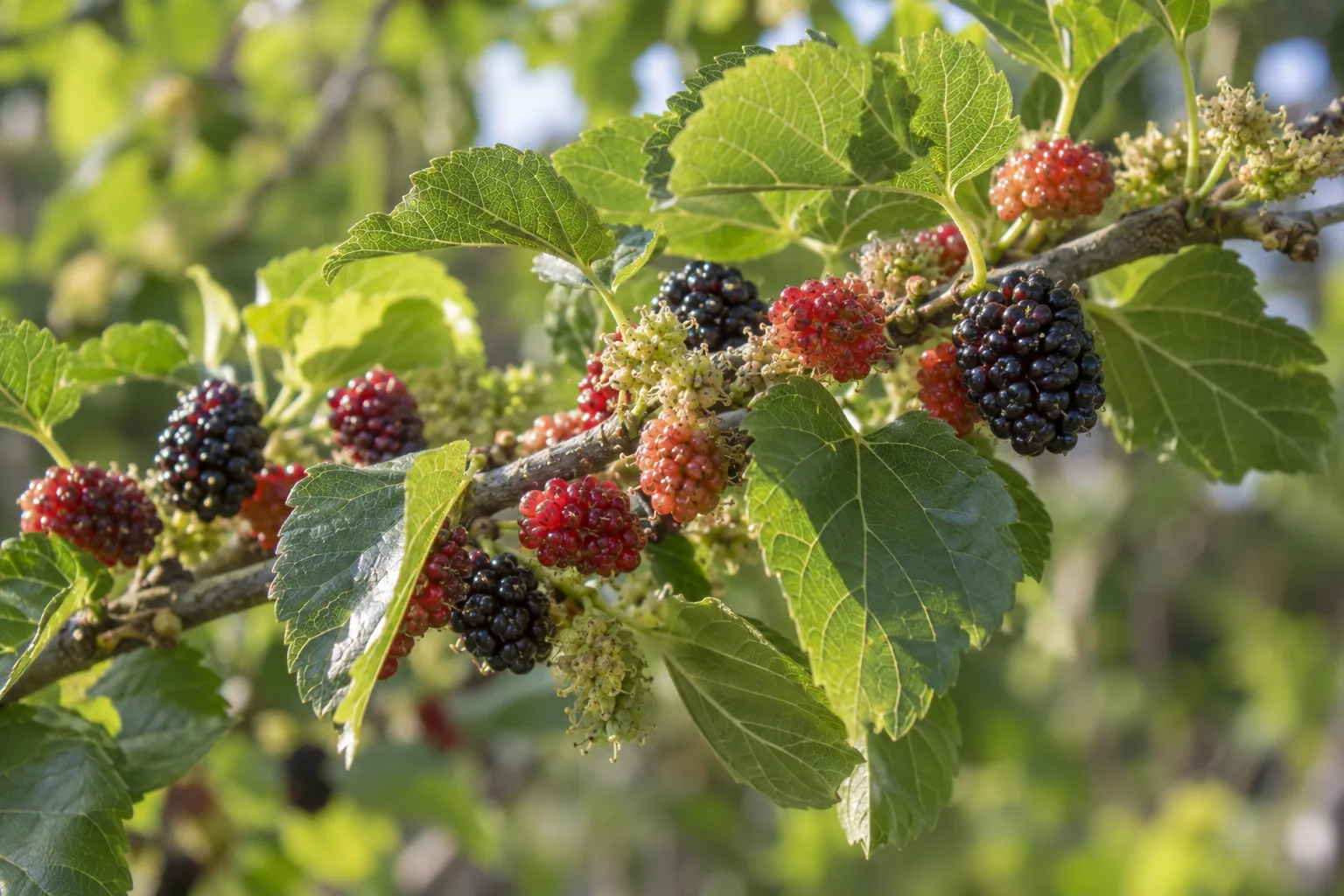
In April, mulberry trees in Arizona need deep watering, a modest low-nitrogen feeding, light thinning and a weekly pest check. Fruit ripens from April into May here, so early-month care decides how many berries hold and size up.
Key takeaways
- Water deeply about every 7 to 10 days in April, wetting the soil 18 to 24 inches down.
- Skip high-nitrogen fertilizer. If the tree has not been fed this year, use a balanced fruit tree product at the drip line.
- Thin no more than 10 to 15 percent of the canopy, and only dead wood, crossing branches and water sprouts.
- Spread 3 to 4 inches of wood chip mulch before highs reach 100°F, kept several inches from the trunk.
- Net the tree before berries darken, because birds find ripening fruit fast.
How much water does a mulberry tree need in April?
A mature mulberry needs a deep soak about every 7 to 10 days in April, enough to wet the soil 18 to 24 inches down. Like most fruit trees in the low desert, it does better with deep, infrequent water than with short daily sprinkles.
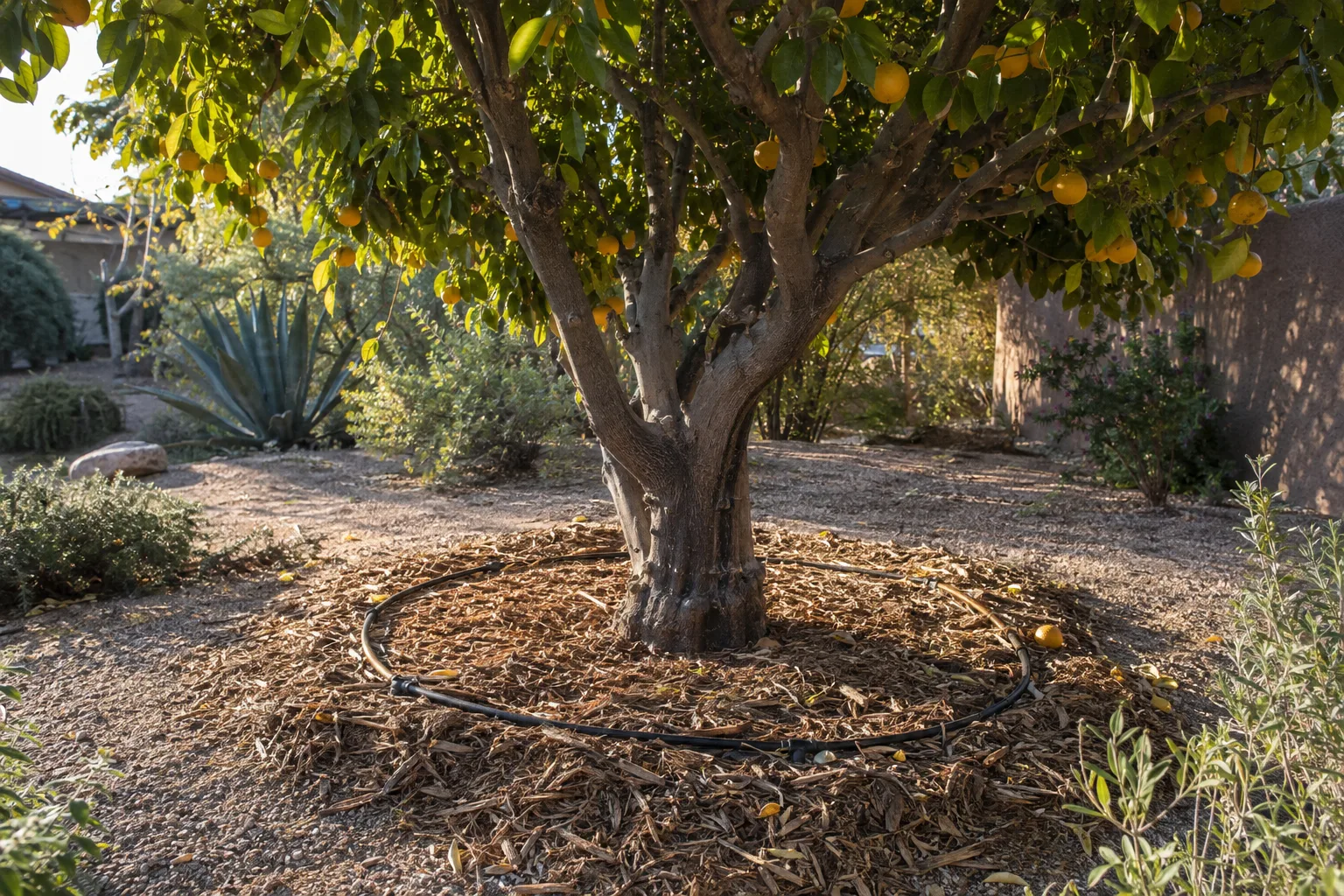
The feeder roots of an established tree reach well past the drip line, so a hose left at the trunk wets only a small share of them. Run a soaker hose or drip emitters in a ring at the edge of the canopy and a little beyond it. Sandy soil may need the shorter interval. Caliche and heavy clay drain slowly and hold water longer, so probe the soil before you irrigate again.
Push a long screwdriver or soil probe into the ground a day after watering. If it slides in easily to 18 inches or more, the soak was deep enough. If it stops at 6 inches, run the water longer next time.
Mulch helps the soak last. Spread 3 to 4 inches of wood chips over the root zone and pull them back several inches from the trunk so the bark stays dry.
Should I fertilize my mulberry in April?
Only lightly, and only if the tree has not been fed since winter. A balanced fruit tree fertilizer applied at the drip line and watered in is enough, following the rate on the label.
Mulberries are vigorous trees, and one with dark green leaves and a foot or more of new growth may need no extra feeding at all. Heavy nitrogen in April pushes soft new leaves while the fruit is setting, and soft growth draws aphids. Save nitrogen-heavy feeding for late winter, before the tree leafs out.
Why are my mulberry leaves yellow with green veins?
Yellow leaf tissue with green veins is usually iron chlorosis, which shows up when alkaline soil ties up iron the tree needs. Queen Creek soil often tests between pH 7.5 and 8.5, and hard irrigation water can push it higher over the years.
Chelated iron applied as a soil drench around the drip line gives the quickest response, and new growth often greens up within a few weeks. Elemental sulfur lowers soil pH, but it works over months, so it is a long-term step. Compost helps too. If the whole tree yellows and the soil stays soggy, suspect poor drainage over a nutrient problem. Follow every product label.
Can I prune a mulberry in April?
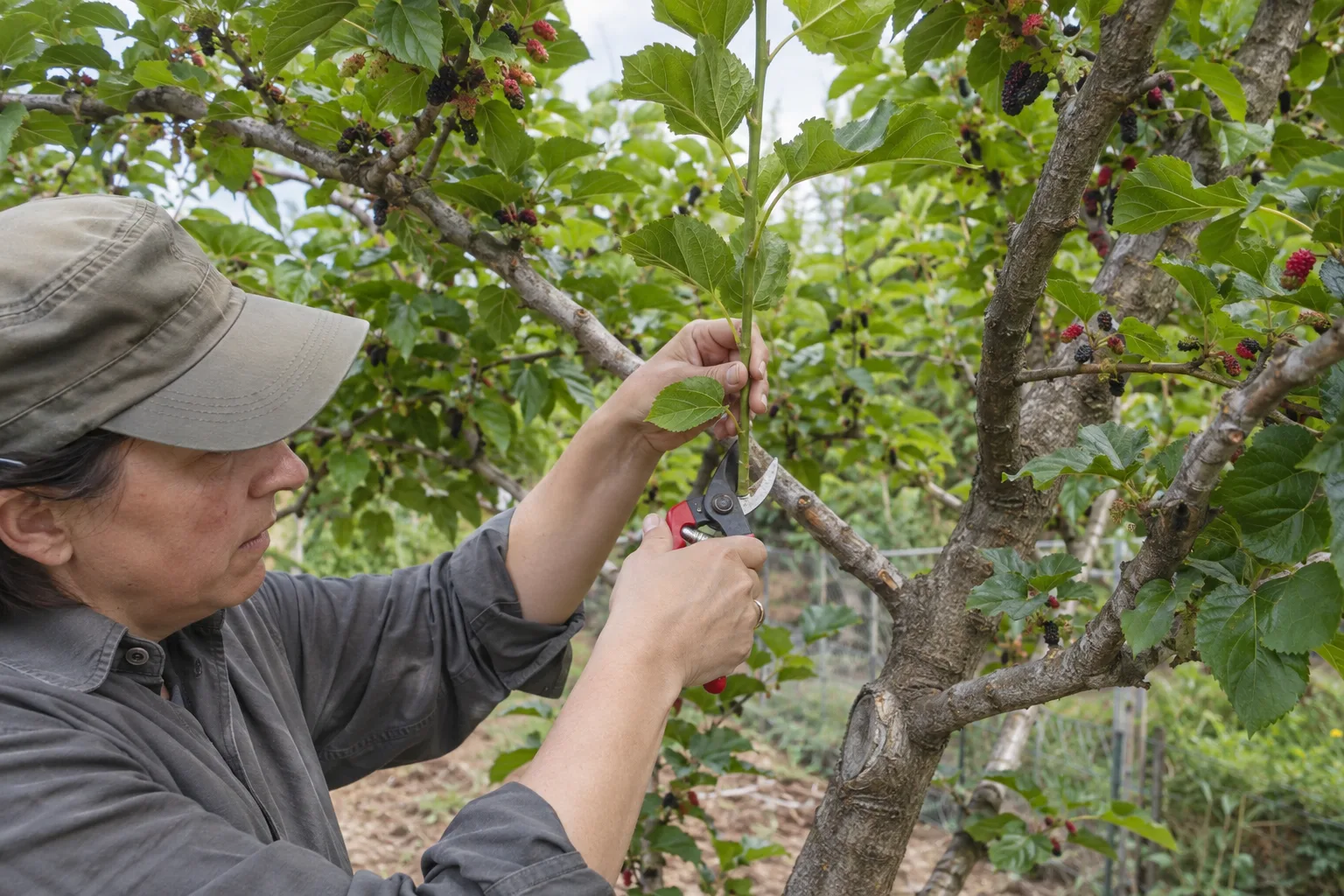
Yes, but keep it light. Remove dead wood, crossing branches and straight-up water sprouts, and stop at roughly 10 to 15 percent of the canopy.
A dense interior shades fruiting wood, and berries in shade ripen slowly and stay small. Opening the center lets in light and air. Heavy shaping belongs in winter while the tree is dormant, so leave big cuts alone now. Cutting a large limb in April removes developing fruit and exposes bark to strong sun. Look at our classes and events page for upcoming workshops.
Which pests show up on mulberry trees in April?
Aphids and scale insects are the two to watch for. Check the undersides of leaves and the tips of new growth once a week.
Aphids gather on tender growth and leave sticky honeydew behind. A strong spray of water from the hose knocks most colonies off. Scale looks like small, hard bumps on bark and twigs. If you use insecticidal soap or horticultural oil, read the label first for mixing rates and temperature limits, since oils can burn leaves in heat. Spray in the early morning, and do not treat open fruit clusters you plan to eat soon.
What should I leave alone in April?
Leave heavy pruning, high-nitrogen feeding and new tree planting for another season. Each one pulls the tree’s energy away from fruit or adds stress just before summer.
Planting a young mulberry in April means its roots must establish while highs climb toward 100°F, and fall is a kinder time for planting trees in the low desert. Do not pick red or pale berries early either, because they stay tart and will not sweeten off the tree. The monsoon arrives around July, and by then the berry harvest is long over, so no extra rescue watering is needed for fruit in summer.
What is a good April routine for a mulberry tree?
A four-week routine keeps the jobs in order. Our gardening calendars list the other monthly tasks to fit around it.
| Week | Jobs |
|---|---|
| Week 1 | Light prune, check leaf color, refresh mulch |
| Week 2 | Deep soak, apply fertilizer if needed and water it in |
| Week 3 | Pest check on new growth, hose off aphids |
| Week 4 | Deep soak, install bird netting before berries darken |
How do I know when mulberries are ripe?
Ripe mulberries are fully dark for their variety and come off the stem with almost no pull. Red or pale berries are not ready.
Fruit ripens unevenly, so expect to pick every 2 to 3 days over several weeks. Spread a clean sheet under the tree and shake a branch gently so ripe berries drop. Refrigerate them within an hour or two and eat them within a few days, or freeze them for longer storage. Ripe berries stain concrete, pavers and cars, so think about where the branches hang before the fruit falls.

Frequently asked questions
Why is my mulberry flowering but setting little fruit?
The usual causes are a late frost during bloom, water stress, or a tree that is male or a fruitless type. A frost near 32°F can kill open flowers. Keep soil evenly moist through bloom, and check the variety tag or ask a nursery if you are unsure what you planted.
Do I need two mulberry trees to get fruit?
Usually no. Most fruiting mulberries sold for home yards are self-fertile or wind-pollinated, so one tree can set fruit. The exception is a male tree, which makes pollen and no berries. If your tree has flowered for years without fruit, a male is a likely reason.
Will heat make the berries drop?
It can. Very hot days and dry soil can shrivel berries and cause them to drop before ripening. Deep watering and mulch reduce the risk. In the East Valley the harvest generally winds down by late May or early June, once triple-digit days settle in.
Can I grow a mulberry in a pot?
A dwarf type can live in a large container for a few years. Choose a pot with drainage holes and expect to water more often as temperatures rise. Pots heat up in full sun, so move it to afternoon shade by summer. Eventually, planting it in the ground gives better yields.
Do I need to thin the berries?
No. Mulberries bear many small fruits in clusters, and hand-thinning them is neither practical nor useful. Your effort is better spent on deep watering and opening up the canopy, which affect berry size and sweetness far more than removing fruit.
Is a mulberry the right fruit tree for your yard?
A mulberry suits you if you have room for a large tree, enjoy picking fruit by the handful and can live with some staining. It grows fast, handles heat and bears early. It is a poor match for a small patio, a tidy pool deck or anyone who wants no fallen fruit. For that situation, consider other deciduous trees for shade. Visit us at the nursery in Queen Creek and we will help you pick a tree that fits your space.