

The March garden tasks that matter most in Arizona are checking irrigation, planting warm-season vegetables and color, pruning frost damage, feeding citrus, mulching, pulling weeds and scouting for pests. Finish them before highs regularly pass 95°F in late April or May.
Key takeaways
- Raise drip run times 20 to 30 percent over winter settings, and run every zone by hand to find clogged emitters.
- Direct sow beans, squash, cucumbers and corn in March, and plant tomato transplants only in early March.
- Prune frost-killed growth back to green wood, but wait to prune spring bloomers like Texas mountain laurel until the flowers fade.
- Spread 3 to 4 inches of organic mulch and keep it several inches away from every trunk.
- Pull puncturevine and other weeds while they are small, and check citrus new growth for aphids once a week.

Why does March matter so much in the Arizona low desert?
March is the last easy month to plant and prepare before summer heat arrives. Soil is warming, daytime highs across the East Valley usually sit in the 70s and low 80s, and plants are leaving winter dormancy with new roots ready to grow. By late April or May, highs regularly pass 95°F, and summer brings stretches above 110°F. Planning ahead pays off.
Frost is not always finished by early March in Queen Creek and San Tan Valley. Low spots can still dip near freezing on clear nights, so keep frost cloth handy until nights stay above roughly 40°F. Our gardening calendars lay out the work month by month if you want a wider view of the year.
How should I change my irrigation in March?
Raise your run times in small steps from winter settings and inspect every emitter. Plants coming out of dormancy use more water each week, and a controller still on December settings leaves them short as temperatures climb.
Hard water leaves mineral deposits that clog emitters over time, and a blocked one can leave a shrub or young tree dry for weeks before the leaves show it. Task 1 is a walk through every zone while the system runs.
- Look for cracked, chewed or displaced drip line.
- Watch each emitter for steady flow, and replace any that drip weakly or spray sideways.
- Move emitters outward toward the edge of the canopy on trees as they grow, rather than leaving them at the trunk.
- Switch the controller’s seasonal adjustment from winter to spring and add roughly 20 to 30 percent to run times.

As a rough starting point, established desert shrubs usually need a deep soak every 7 to 14 days in March, citrus every 7 to 10 days, and anything planted within the last year every 2 to 3 days at first, tapering as new growth appears. Soil type shifts these numbers a lot. Push a trowel into the soil before adding time.
What should I plant in March?
Warm-season vegetables and summer color go in now, while soil is warming and roots have six to eight weeks to settle before the heat. The University of Arizona Cooperative Extension vegetable planting calendar for Maricopa County gives the exact window for each crop.
Task 2: Plant warm-season vegetables
Direct sow bush beans, squash, cucumbers and corn, and set out basil transplants. Tomato transplants are a last-chance planting in early March, because fruit set slows once nights stay warm. Work 2 to 3 inches of compost into the top 8 to 10 inches of the bed first, which helps drainage in clay and moisture holding in sandy soil. Our herbs, vegetables and berries department covers varieties we commonly carry, though availability changes week to week and season to season.
Task 3: Plant summer color
Swap out winter pansies and snapdragons for heat lovers such as Zinnia elegans and Portulaca grandiflora. Both want full sun and bloom through much of the summer with regular water. You can browse annual flowers and foliage that we commonly carry, again with availability that shifts through the season. Perennials like lantana (Lantana camara) and desert willow (Chilopsis linearis) also settle in well now. Bougainvillea can go in too, once the forecast shows no frost.

When should I prune and fertilize in March?
Prune frost-damaged growth once new leaves show where live wood starts, and feed citrus and flowering shrubs as growth begins. Wait for green before you cut.
Task 4: Prune frost damage
Cut dead, brown or frost-killed stems back to green wood with clean, sharp bypass pruners. Yellow bells (Tecoma stans) can be cut back by about one-third to one-half, and leggy bougainvillea tolerates a hard shaping as temperatures warm. Spring bloomers such as Texas mountain laurel (Dermatophyllum secundiflorum) should wait until after flowering, since pruning now removes this year’s bloom.
Task 5: Feed citrus and flowering shrubs
Apply a slow-release citrus fertilizer at the label rate for your tree’s size, and water it in well. Our alkaline soil locks up iron, so yellow leaves with green veins are common on citrus trees, and a chelated iron product made for high-pH soil is the usual fix. Flowering shrubs like lantana need only a light feeding. Read the label before you pour.
How do I mulch and control weeds in March?
Pull weeds while they are small, then cover bare soil with 3 to 4 inches of organic mulch. Mulch keeps roots cooler, slows evaporation and blocks the light weed seedlings need to grow.
Task 6: Mulch
Use shredded wood, bark or composted material around trees, shrubs and vegetable beds. Pull it back several inches from every trunk and stem so the bark stays dry, and extend the ring toward the drip line on trees, where feeder roots are active. Decomposed granite and rock absorb and radiate heat and add nothing to the soil as they sit, so organic mulch is the better choice around plants that struggle in summer.
Task 7: Pull weeds
Puncturevine (goathead), spurge and Bermuda grass sprout as the soil warms. Pull them before they set seed, because a single puncturevine plant can drop a large number of seeds in one season. Bag anything that has gone to seed rather than composting it. If you choose a herbicide or pre-emergent product, follow the label exactly; hand-pulling and mulch handle most home beds.
What pests should I look for in March?
Check citrus, roses and new vegetable transplants once a week for early pest signs. Populations slow in winter and build quickly as days warm.
Task 8: Scout weekly
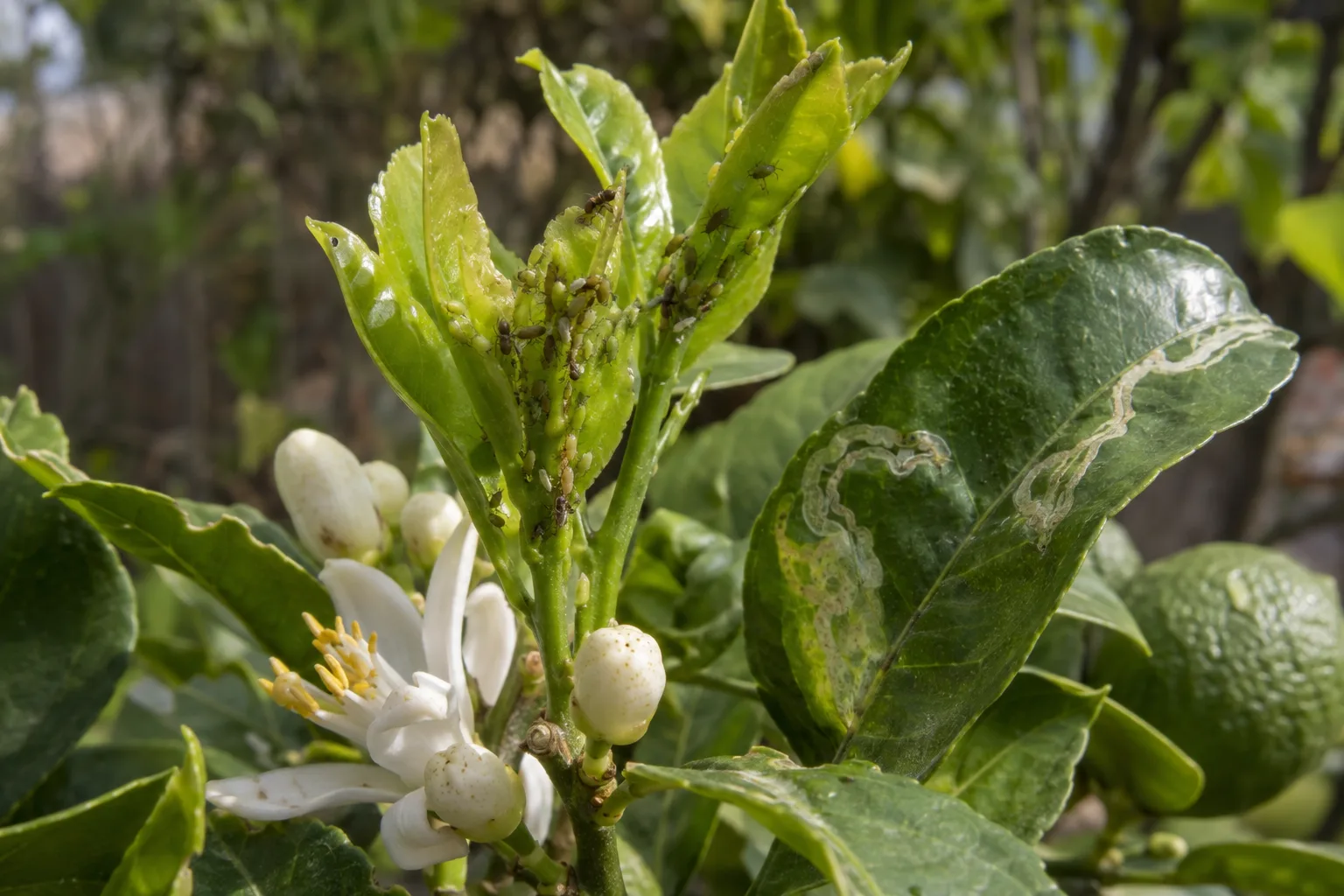
On citrus, look at new growth for aphid colonies, at leaves for the silvery, winding tunnels of citrus leafminer, and at stems for crusty scale bumps. Roses can show aphids and powdery mildew, and oleanders may carry bright yellow aphids on new shoots. Whiteflies show up on tomato and pepper transplants as the weather warms. A strong spray of water knocks back light aphid infestations, and insecticidal soap is an option if you follow the label.
What should I leave alone in March?
Leave native trees, spring bloomers and finished cool-season crops to their own schedules. Native desert trees such as palo verde and mesquite rarely need fertilizer in native soil, and extra water and feeding push soft growth they do not need.
Skip pruning spring bloomers until the flowers fade. Pull cool-season vegetables as they finish rather than nursing them along, and replace them with warm-season crops. Resist planting tomatoes late in the month, since fruit set slows as heat builds.
Frequently asked questions
Is March too late to plant a citrus tree in the Arizona low desert?
No, March is a good month to plant citrus here. Soil is warm enough for roots to grow and air temperatures are still mild. Plant by the end of April at the latest so roots establish before summer. Dig the hole two to three times as wide as the root ball, keep the trunk flare above the soil line, and water deeply.
Can I still plant cool-season vegetables in March?
Only fast leaf crops, and only with shade. Lettuce, spinach, broccoli and cauliflower bolt or turn bitter once highs stay above roughly 85°F, which happens in the second half of March in many East Valley yards. Pull finished plants and replace them with warm-season crops. A spot with afternoon shade stretches lettuce a couple of extra weeks.
Can I plant bougainvillea in March?
Yes, once the forecast shows no frost. Bougainvillea is frost tender and roots best in warm soil, so a late cold night can set it back. Plant it in full sun, water deeply but infrequently after the first few weeks, and keep frost cloth ready until nights stay above about 40°F.
How do I plant in caliche?
Test drainage first by filling the planting hole with water and timing how fast it drains. If water is still standing after a day, break through the caliche layer with a digging bar or choose a raised bed. Dig the hole wider than deep, and plant slightly high so water drains away from the trunk.
How deep should I water new shrubs?
Aim to wet the soil 18 to 24 inches deep for shrubs, and deeper for trees. Deep, less frequent soaks push roots downward, away from the hot surface, while shallow daily sprinkling keeps roots near the top. Check depth by pushing a long screwdriver into the soil a few hours after watering; it slides easily where the soil is wet.
Is a March garden push worth it for a busy household?
Yes, if you can spare one or two weekend mornings. Checking irrigation, mulching and planting a few warm-season crops takes a few hours and saves much more work in July. If your yard is mostly established native trees and cacti, you can skip the planting and feeding and just check your irrigation. Renters who cannot change the irrigation or soil may find a few pots enough. Stop by our nursery in Queen Creek and we will help you sort out your list.
