
In the Arizona low desert, a March trim suits lantana, bougainvillea, autumn sage, Mexican bush sage and deer grass. Hold off on palo verde, citrus, brittlebush and cacti, which are blooming or need their leaves for shade.
Key takeaways
- Wait for nights that stay above 40°F, usually by mid-March in Queen Creek, before making hard cuts.
- Cut lantana to 8 to 12 inches and deer grass to 4 to 6 inches above the ground.
- Take autumn sage back by one-third to one-half, and cut frost-burned bougainvillea tips back to green wood.
- Leave palo verde unpruned until the yellow flowers drop, usually in May.
- Citrus, brittlebush, cacti and succulents need only dead-wood cleanup in March.
When is the right time to prune in the Queen Creek area?
Mid-March is the safest window for hard cuts, once nighttime lows stay above 40°F. In the East Valley the last frost usually passes between late February and early March, but a cold night can still arrive after that, especially in low spots.
Pruning pushes soft new growth, and a late frost burns it. Frost-damaged tops that you leave in place through early March also shade the crown of the plant from the next cold night. Our gardening calendars help you line up the rest of the season’s chores.
The other thing to know before any cut is whether the plant blooms on old wood or new wood. Plants that flower on new growth benefit from a hard cutback. Plants that carry buds formed last fall or winter lose their flowers when you cut now.
Which 5 plants benefit from a March trim?
Lantana, bougainvillea, autumn sage, Mexican bush sage and deer grass all flower on new growth or regrow cleanly from the base. These are varieties we commonly carry, though availability changes week to week and season to season. You can browse our full plant selection for others that follow the same rules.
Lantana (Lantana camara)
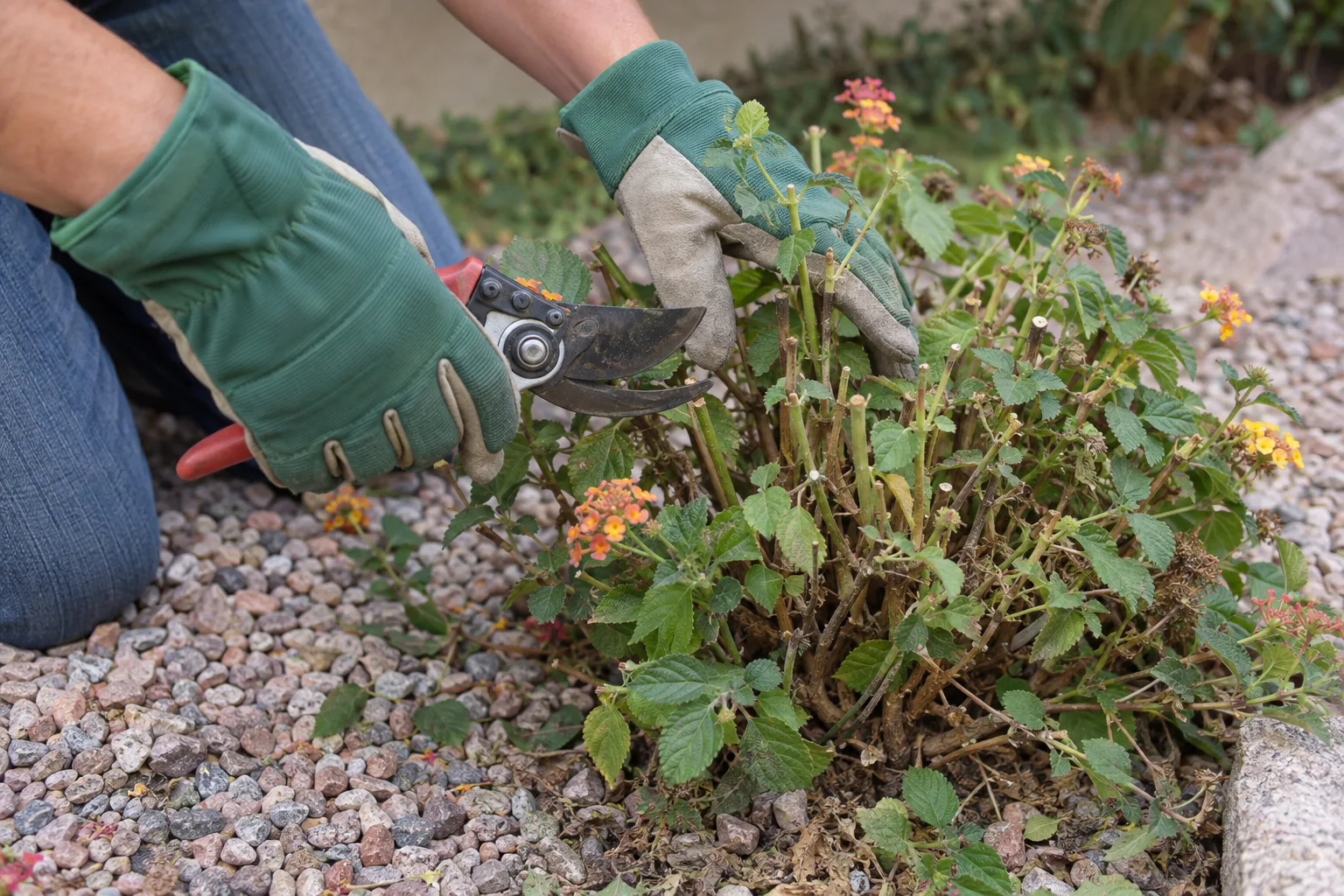
Cut lantana back to 8 to 12 inches from the ground. It blooms on new growth, so a hard reset gives you a compact, flower-covered plant from spring into fall. Mature size runs from a foot or two tall for trailing types to 4 to 6 feet for upright ones. It wants full sun and little water once established. The drawback is that it turns woody and sprawling if you skip the yearly cutback. Trailing types go faster with hedge shears than hand pruners.
Bougainvillea (Bougainvillea hybrids)
Remove frost-burned tips, then shape the plant and cut back to the main structural branches if it has outgrown its space. Bougainvillea flowers on new wood, so fresh growth means more color. It reaches 10 feet or more, needs full sun, and takes little water once established. The drawback is the thorns. Wear heavy gloves and long sleeves. Finish the job before the heat arrives in late spring, because cutting in hot weather stresses the plant.

Autumn sage (Salvia greggii)
Cut autumn sage back by one-third to one-half in early to mid-March. This removes dead wood, opens the center to airflow and sets up a long bloom run in red, pink, coral or white. Expect a mound 2 to 3 feet tall and wide in full sun or light afternoon shade, with low to moderate water. The drawback is a bare, woody base on neglected plants. Cut into the leafy upper portion and avoid bare old stems, which often do not resprout.
Mexican bush sage (Salvia leucantha)
Shear Mexican bush sage back to roughly 8 to 12 inches from the ground, since it blooms on new growth in late summer and fall. Plants reach 3 to 4 feet tall and often wider, in full sun with low to moderate water. The drawback is how ragged it looks after a cold winter, with stems that go brown and floppy. That untidy look is the signal to cut.
Deer grass (Muhlenbergia rigens)
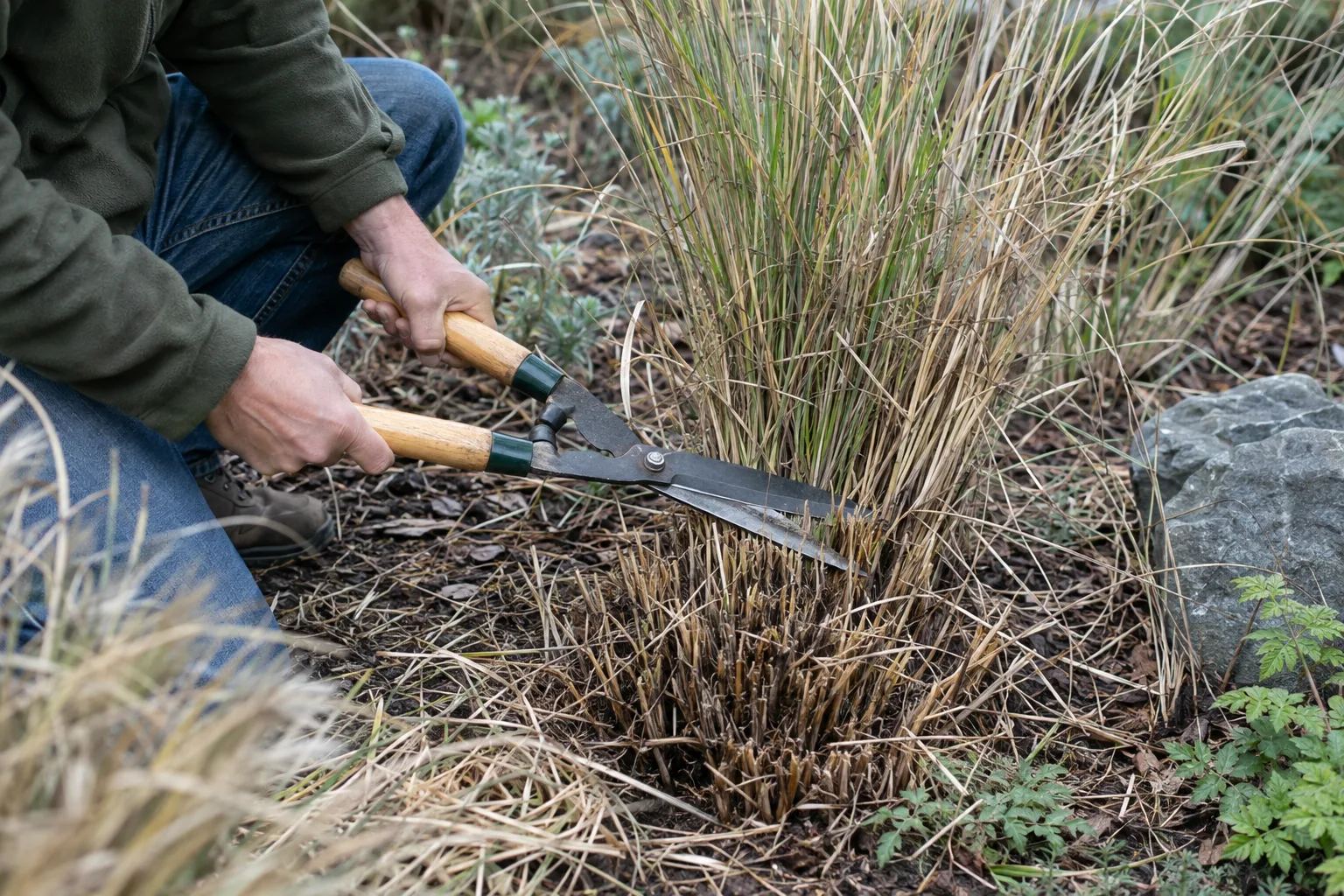
Cut deer grass to 4 to 6 inches above the ground before new blades emerge. Hedge shears or an electric trimmer handle big clumps. Mature clumps reach 3 to 4 feet tall and wide in full sun, with moderate water. The drawback is the dead, tangled center that builds up if you skip a year. Cutting in summer or fall weakens the crown, so March is the time.
Which 4 plants should I leave alone in March?
Palo verde, citrus, brittlebush, and cacti and succulents are better left uncut this month. Each is either flowering, setting fruit or relying on its canopy for protection from the sun.
Palo verde (Parkinsonia species)
Palo verde carries its flower buds on last year’s small branches, so pruning in March removes the yellow spring show. Wait until the flowers drop, typically by May, then remove crossing, dead or hazardous limbs. You will find these and other options under our desert trees. A limb that is a safety hazard is the one exception, so cut only that and nothing more.
Citrus (Citrus species)
Citrus needs little pruning, and March is not the month for shaping it. The leaf canopy shades the trunk and main limbs from summer sun above 110°F, and bark that loses that cover can sunburn. Remove only dead twigs and suckers that sprout below the graft. Our citrus trees page covers the types we grow for East Valley yards.
Brittlebush (Encelia farinosa)
Brittlebush is usually in bloom in March, with yellow daisy flowers above silvery foliage. Cutting now removes those flowers for nothing. Let it finish, then trim lightly to tidy the shape. It tolerates heat, reflected sun and very little water. A hard cut is rarely needed, and the plant looks better when you leave its natural mound.

Cacti and succulents
Cacti and succulents are best left alone in March. Many are budding or flowering, and a cut surface needs time to dry and callous before it can resist rot. Agave pups are easier to remove in fall, once the heat has passed. Damaged saguaro arms or an overgrown prickly pear deserve a closer look before you cut, so bring a photo to the nursery.
How do I cut back plants in March, step by step?
Start with dead wood, then move to the plants that flower on new growth, and stop at the ones on the skip list. Six steps cover most yards.
- Walk the yard and note which plants are blooming, budding or putting on new leaves. Mark those to skip.
- Clean and sharpen your tools. Bypass hand pruners handle stems up to about three-quarters of an inch, loppers go to about an inch and a half, and hedge shears work on grasses and groundcovers.
- Remove clearly dead stems first. This is safe at any time of year.
- Cut lantana, Mexican bush sage and deer grass to the heights given above.
- Take autumn sage back by one-third to one-half, cutting just above a leaf node or an outward-facing bud.
- Shape bougainvillea and bag the clippings. Do not compost any diseased material.
If you would like to watch cuts being made, check our classes and events for upcoming sessions.
How do I tell whether a stem is dead or dormant?
Scratch the bark with a fingernail. Green and slightly moist tissue underneath means the stem is alive, while brown and dry tissue all the way through means it is dead.
Work from the tip toward the base, because the lower stems are often alive when the tips have burned. Give plants until mid-March before you decide, since warm weather brings out growth on living wood. A dead stem snaps cleanly and feels brittle. Bougainvillea in particular can look lifeless after a cold winter and still recover.
What should I do with each plant this month?
| Plant | March action | Amount to cut | Reason |
|---|---|---|---|
| Lantana | Trim | To 8 to 12 inches | Blooms on new growth |
| Bougainvillea | Trim | Dead tips, then shape | Blooms on new wood |
| Autumn sage | Trim | One-third to one-half | Removes dead wood, opens airflow |
| Mexican bush sage | Trim | To 8 to 12 inches | Blooms on new growth |
| Deer grass | Trim | To 4 to 6 inches | Clears old blades before regrowth |
| Palo verde | Skip | None until bloom ends | Buds on last year’s wood |
| Citrus | Skip | Dead twigs and suckers only | Canopy shades the bark |
| Brittlebush | Skip | None until bloom ends | In flower in March |
| Cacti and succulents | Skip | None | Cuts need time to callous |
Frequently asked questions
Is early March too soon to prune?
In many East Valley yards it is, if nights below 40°F are still in the forecast. Pruning triggers tender new growth that a cold snap burns. Check the ten-day forecast and wait for a stretch of mild nights. Low-lying spots in Queen Creek and San Tan Valley often stay colder longer than higher ground.
Should I fertilize after a March trim?
A light feeding is reasonable once new growth appears. Use a balanced fertilizer at the label rate and water it in. Heavy nitrogen pushes soft, fast growth that attracts pests and suffers in summer heat. Plants in alkaline soil and caliche generally respond better to modest, regular feeding than to one large dose.
Can I lightly shape a palo verde in March?
It is better to wait. The flowers sit on the same small branches you would remove for shaping, so even light cuts reduce the bloom. The show lasts only a few weeks in spring. Waiting until the petals drop costs very little time and keeps the tree’s best feature intact.
What if frost is forecast after I prune?
Cover the plant before dusk with frost cloth or an old bedsheet and remove it the next morning. Do not use plastic that touches the leaves. Leave any burned new growth in place until the cold risk is past, then trim it back to healthy tissue.
Do I need to water more after pruning?
No, keep your normal watering schedule. A pruned plant has less leaf area, so it uses less water than before the cut. Water deeply at the drip line rather than more often. Overwatering a freshly cut shrub in cool March soil can lead to root rot.
Should you prune everything in March or wait?
Cut the five plants above, wait on the other four, and your yard will look better by April. Skip the trim if a plant is flowering, if frost is still possible, or if you are unsure what you are looking at. A photo of the plant helps us tell you what to do. Stop by the nursery in Queen Creek and bring one with you.