

The most useful March garden tasks in Arizona are checking for frost damage, improving soil, adjusting irrigation, pruning tender shrubs, and planting warm-season crops and trees. Doing them in that order gives new roots a few mild weeks before summer heat arrives.
Key takeaways
- Prune frost-damaged shrubs in March only after the last cold nights have passed and new growth shows where living green wood begins.
- Plant trees and large shrubs early in March so roots get roughly two months of mild weather before highs pass 100°F.
- Transplant tomatoes and peppers, and seed beans, squash, cucumbers and melons, during March, using the Maricopa County planting calendar for exact windows.
- Raise irrigation in small steps through the month, and check soil moisture 4 to 6 inches down before adding more water.
- Hold fertilizer until you see new growth, and skip it on native desert plants such as palo verde.

What should I do first in the garden in March?
Walk the yard, tag frost damage, and test your irrigation before you buy a single plant. Those two checks show you what needs pruning and what needs repair. Brown or mushy leaves on tender plants such as lantana, bougainvillea and citrus mark where winter cold did its work, but leave the pruners alone until new growth shows where living tissue begins.
Cold air settles in low spots, so yards near washes or open fields in Queen Creek and San Tan Valley can still see a frosty morning in early March. Check the forecast first. If you want a planning aid for the rest of the year, our gardening calendars page is a good place to look for seasonal timing.
Next, run each drip zone while you stand beside it. Look for emitters that have stopped dripping, risers that spray sideways, and new plants with no emitter of their own. Hard water leaves mineral deposits that clog emitters over time, and replacing a clogged one takes only a few minutes.
How do I prepare Queen Creek soil for March planting?
Loosen the soil, mix compost into beds, and check drainage before you plant trees. Most East Valley yards have alkaline soil, often with a pH between 7.5 and 8.5, and many have a layer of caliche, a cemented calcium carbonate layer, sitting anywhere from a few inches to a couple of feet down. Both affect how you plant.
For vegetable and flower beds, work 2 to 4 inches of compost into the top 8 to 12 inches of soil. Choose a compost that is low in salt, since our irrigation water already adds salts over time. For individual trees and shrubs, backfill with the native soil you dug out instead of rich potting mix, so roots grow outward into the surrounding ground instead of circling inside the hole.
How do I check for caliche?
Dig the hole where the tree will go, fill it with water, let it drain, and fill it again. If water is still standing the next day, caliche or dense clay is blocking drainage. Break through the layer with a digging bar, or plant on a low mound so the root ball sits above the wet zone. Drainage matters most for trees, because a root ball sitting in monsoon runoff can rot within weeks.
How much should I water in March?
Water a little more each week as temperatures climb, and let soil moisture guide you instead of the calendar. Push a screwdriver or wooden dowel 4 to 6 inches into the soil. If it slides in easily and comes out damp, wait. If it meets hard, dry soil, water.
New plantings in their first year need more frequent watering than established ones, because their roots occupy a small area. Established desert trees and shrubs do best with deep, infrequent soaks that reach well below the top few inches of soil. Raise your controller’s seasonal adjustment in small steps through March and April, instead of one big jump when the first hot week arrives. Soggy soil also kills roots.
Plants in pots dry out fastest, and on a windy March afternoon they can need water every day.
What can I prune in March, and what should wait?
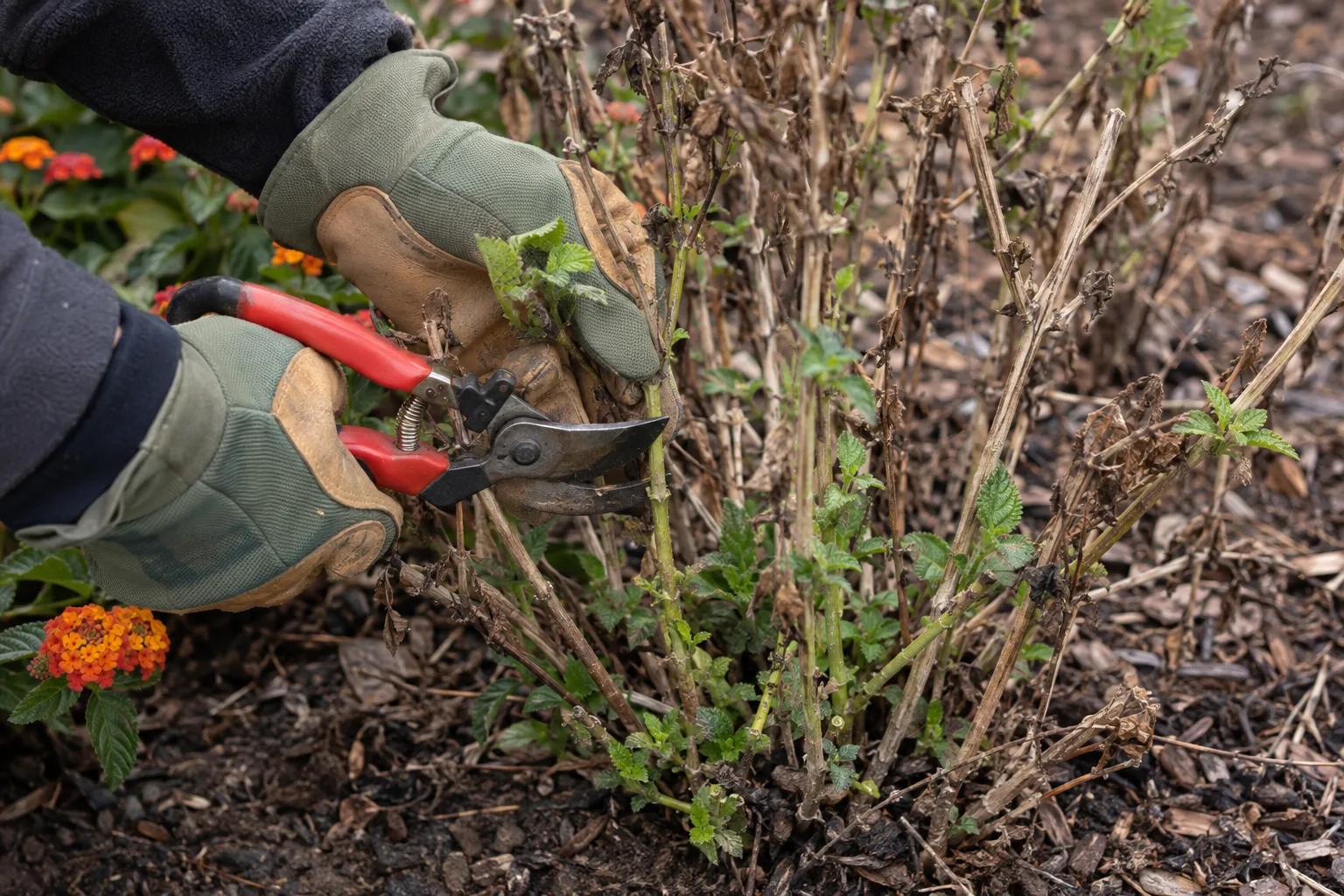
Prune frost-damaged shrubs once the risk of more frost has passed, and hold off on anything about to bloom. Cutting too early exposes new growth to another cold night, while cutting too late wastes weeks of the growing season. The table covers common choices.
| Plant | March action | What to avoid |
|---|---|---|
| Lantana | Cut frozen stems back to about 6 to 12 inches from the ground | Cutting before the last frost has passed |
| Bougainvillea | Remove dead canes back to green wood and shape lightly | Cutting back healthy wood more than needed |
| Red bird of paradise | Cut frozen stems to living wood once new growth shows | Cutting before growth shows where living wood ends |
| Citrus | Remove dead wood once new growth shows | Thinning the canopy, which shades the trunk and fruit from sun |
| Agave and yucca | Trim dead lower leaves and spent flower stalks | Cutting into the central growing point |
| Palo verde and desert willow | Light shaping, preferably after bloom | Heavy pruning before flowering |
Spring-blooming trees flower on a schedule, and heavy pruning before bloom removes the buds. Wait until flowering finishes, then shape lightly.
Which vegetables and herbs can I plant in March?
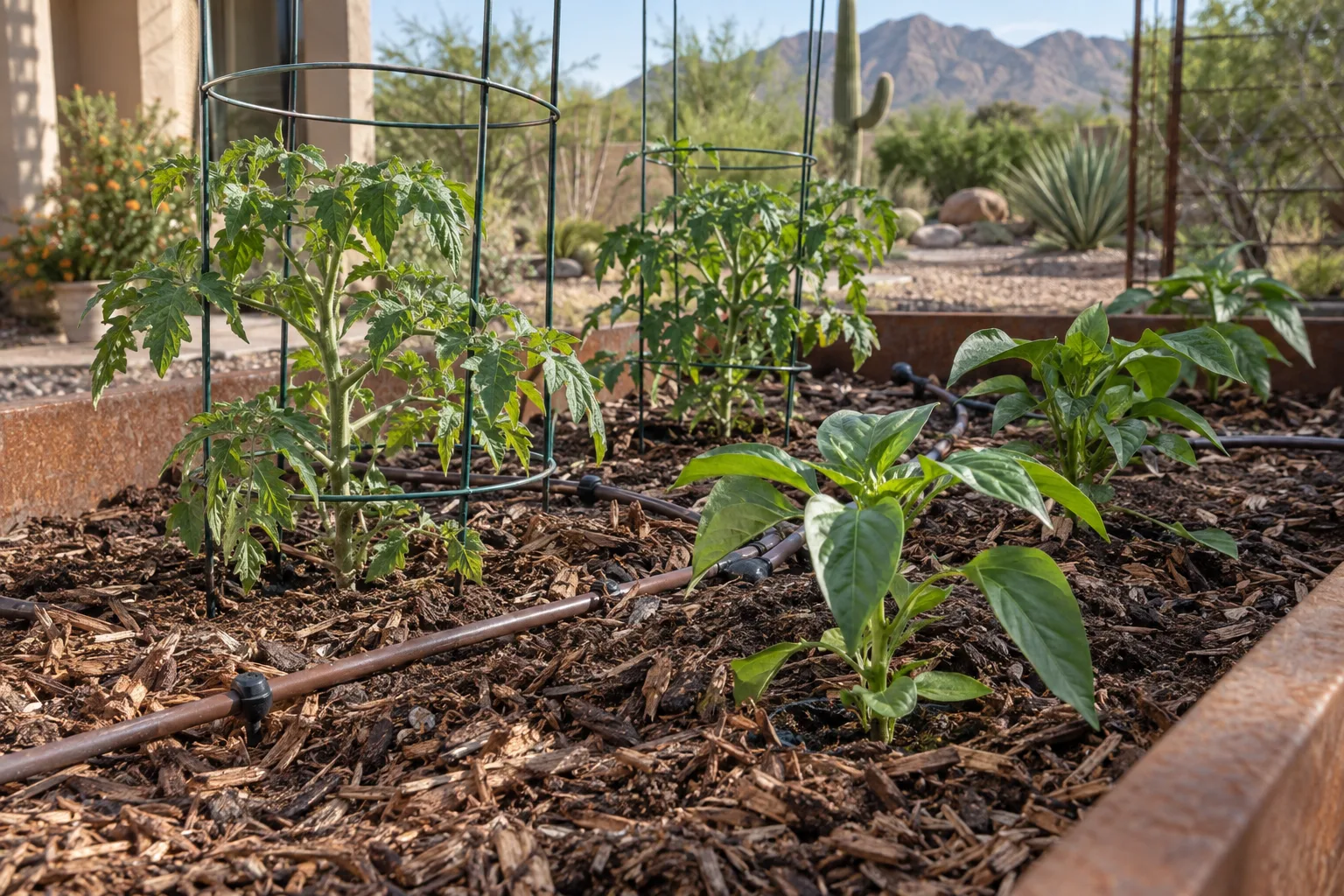
Transplant tomatoes and peppers, and seed beans, summer squash, cucumbers and melons, during March. The University of Arizona Cooperative Extension vegetable planting calendar for Maricopa County gives exact windows for each crop. Warm-season crops need time to flower and set fruit before summer highs stall them, which usually happens by late May or early June.
Choose tomato varieties labeled for heat or with a shorter time to harvest. Tomato blossoms often drop when daytime highs pass about 90°F and nights stay above 75°F, so earlier planting gives you more fruit before that point. We commonly carry a mix of tomato, pepper and herb starts through the season, though availability changes week to week and season to season. You can browse our herbs, vegetables and berries department to see what is on offer.
Plant basil and oregano once nights stay reliably warm. Cilantro and parsley bolt as days heat up, so harvest them heavily now. Spread 2 to 3 inches of straw or wood chip mulch over vegetable beds to keep roots cooler and slow evaporation.
Which trees, shrubs and flowers should go in during March?
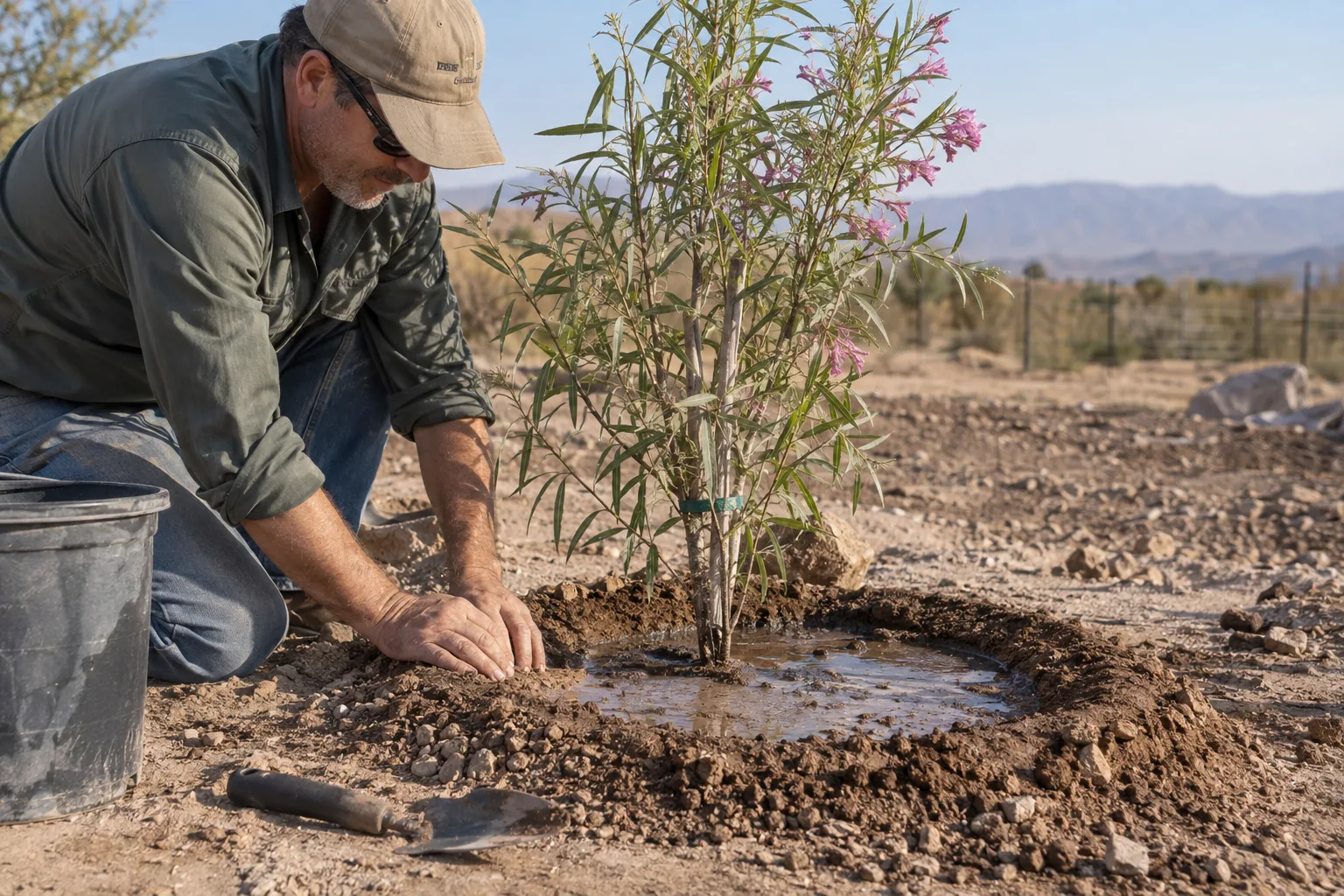
Early March is a good time to plant trees and large shrubs, because roots grow in mild weather before 100°F highs arrive. Dig the hole 2 to 3 times as wide as the root ball and no deeper. Set the top of the root ball slightly above the surrounding grade, and build a low basin around the plant to hold water. Tease or score any circling roots before planting.
Desert-adapted trees such as desert willow (Chilopsis linearis) and velvet mesquite (Prosopis velutina) suit this timing, and you can browse our desert trees to compare shapes and sizes. Citrus planted in March also has weeks to settle in before summer, and our citrus trees page shows the types we grow. Young citrus is frost-tender, so cover it on any cold night.
For low color, angelita daisy (Tetraneuris acaulis), red bird of paradise (Caesalpinia pulcherrima), desert marigold (Baileya multiradiata) and blackfoot daisy (Melampodium leucanthum) are varieties we commonly carry, though availability changes week to week and season to season. Each suits full sun and alkaline soil.
Wait until nights stay above about 55°F before planting warm-season annuals, then check our annual flowers and foliage for seasonal color.
Should I fertilize in March?
Fertilize only plants that are showing new growth, and use a slow-release product at the label rate. Feeding dormant or frost-damaged plants pushes tender growth that a late cold night can burn. Citrus, palms and roses often respond to a spring feeding. Natives rarely need it.
Palo verde, brittlebush and saguaro are adapted to low-fertility desert soil, and extra nitrogen tends to push fast, soft growth. Alkaline soil can also lock up iron, so a citrus tree with yellow leaves and green veins may need a chelated iron product more than extra nitrogen.
Frequently asked questions
Is it too late to overseed a lawn in March?
Yes, March is too late to overseed with ryegrass, which goes down in fall. Bermuda lawns green up on their own as soil warms, and seeding bare Bermuda patches generally works better in late spring when soil stays warm. Until then, water and mow normally and wait for the lawn to fill in before deciding on patches.
Why do my citrus leaves have yellow color with green veins?
That pattern is usually iron chlorosis, which is common in our alkaline soil. The roots cannot take up iron even when it is present. A chelated iron product applied to the root zone and watered in often improves new leaves within several weeks. Overwatering and poor drainage cause similar yellowing, so check soil moisture before adding anything.
Should I pull back gravel before adding compost?
Yes, pull the gravel aside before amending a bed. Compost mixed into a gravel-covered area ends up full of stones, and a gravel layer sitting on amended soil can change how water moves. Amend and plant first, then spread a thin layer of gravel back, keeping it a few inches from trunks and stems.
Do container plants need different care in March?
Yes, pots dry out faster than ground soil as days warm, so check them every day or two. Water until it runs out of the drainage hole, which also flushes salts left by hard water. Light-colored pots stay cooler in sun. You can browse our pottery and planters for options with drainage holes.
Is the danger of frost over by March in Queen Creek?
Mostly, but a cold night in early March is still possible in low spots across the East Valley. Average last frost dates fall from late January to February for much of the Phoenix metro area, and later in cold pockets. Watch the forecast for lows near freezing before planting anything tender, and keep frost cloth handy.
Is it worth doing all of these March tasks?
Yes for most yards, because March is the last stretch of mild weather for planting and repairs. If you plan to spend summer away with no irrigation, hold off on new plants until fall. If your yard is mostly established native plants, you may need only an irrigation check and light cleanup. Everyone else gains from starting with soil and water, then adding plants. Stop by the nursery in Queen Creek and talk through your March plans with us.
