March is the month to plant warm-season vegetables and heat-tolerant color, feed citrus, cut back frost damage and tune your drip lines before summer. This March checklist for Arizona low desert gardens covers each task in the order it should happen.
Key takeaways
- Set out tomato, pepper and eggplant transplants from early to mid March, and stake tomatoes the day you plant them.
- Mix 2 to 3 inches of compost into vegetable and color beds, and dig tree holes two to three times as wide as the root ball but no deeper.
- Wait for new growth before cutting back frost-damaged lantana and bougainvillea, since a cold night in early March is still possible.
- Check drip lines and emitters before you plant, then water new transplants every day or two for the first 2 weeks.
- Apply pre-emergent to gravel and lawn areas early in the month, following the label, to cut down summer weeds.
When is it safe to plant after the last frost in Queen Creek?
Most East Valley yards are past the last frost by late February or early March, but Queen Creek runs a few degrees cooler on clear nights than central Phoenix, so keep frost cloth handy through mid March. Check the overnight forecast before you set out anything tender, and wait a few days if lows are headed toward 35°F.
Soil temperature matters as much as air temperature. It usually reaches the mid 60s°F in early March and keeps climbing, and that is the range warm-season roots need to grow. Spring here is short. A plant set out in early March has roughly 10 to 12 weeks to root before highs push past 100°F, and tomatoes drop blossoms once daytime highs stay above about 95°F.
For crop-by-crop dates, the University of Arizona Cooperative Extension vegetable planting calendar for Maricopa County lists planting windows, and our gardening calendars show what to do in the months before and after March.
How do I prepare Queen Creek soil before planting?
Work 2 to 3 inches of compost into the top 8 to 12 inches of vegetable and flower beds, and leave desert-adapted shrub areas mostly alone. Our native soil is alkaline (often pH 7.5 to 8.5) and clayey, and caliche, a cemented calcium carbonate layer, can sit 6 to 18 inches down.
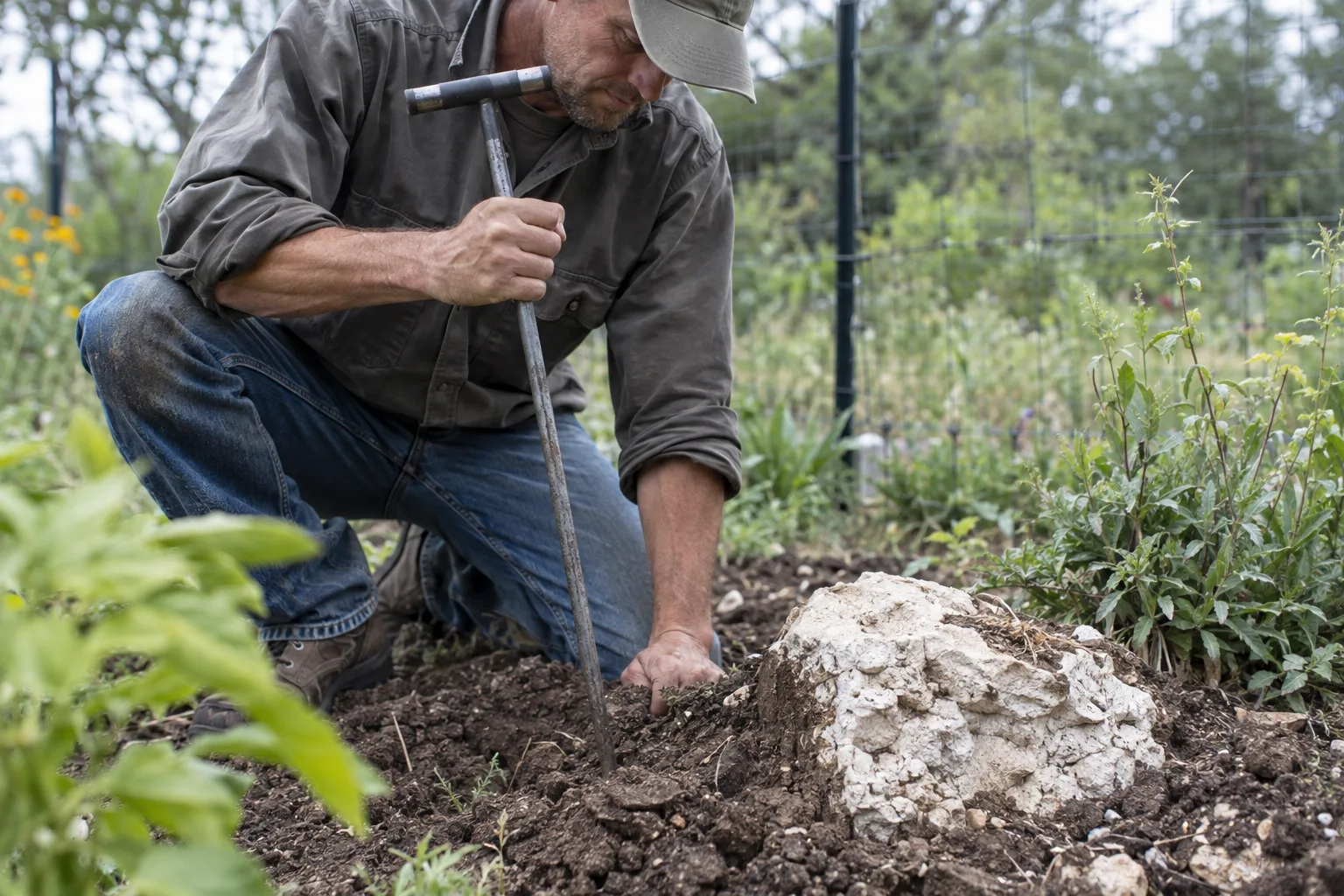
Probe any new planting spot with a metal rod before you dig. If the rod stops short at 12 to 18 inches, break through the caliche with a digging bar so water can drain, because a hole sitting on solid caliche fills like a bowl and rots roots. Dig tree and shrub holes two to three times as wide as the root ball and only as deep as the root ball.
Many gardeners add sand to clay soil to loosen it. Small amounts of sand in clay make a denser, harder mix, so compost or other organic matter is the better amendment. Hard irrigation water leaves salts behind. An occasional deep soak moves them below the root zone.
What should I plant in March?
Plant warm-season vegetables, herbs, summer color and heat-adapted shrubs from early to mid March. The plants below are varieties we commonly carry, though availability changes week to week and season to season.
Vegetables
Tomatoes, peppers and eggplant go in as transplants, since seed started in March will not reach planting size before the heat arrives. Squash, cucumbers, melons and bush beans can be direct seeded into warm soil, and beans sprout in roughly 7 to 10 days. Lettuce, spinach and broccoli transplants can still go in during the first week or two of March, but they bolt once highs hold above 85°F.
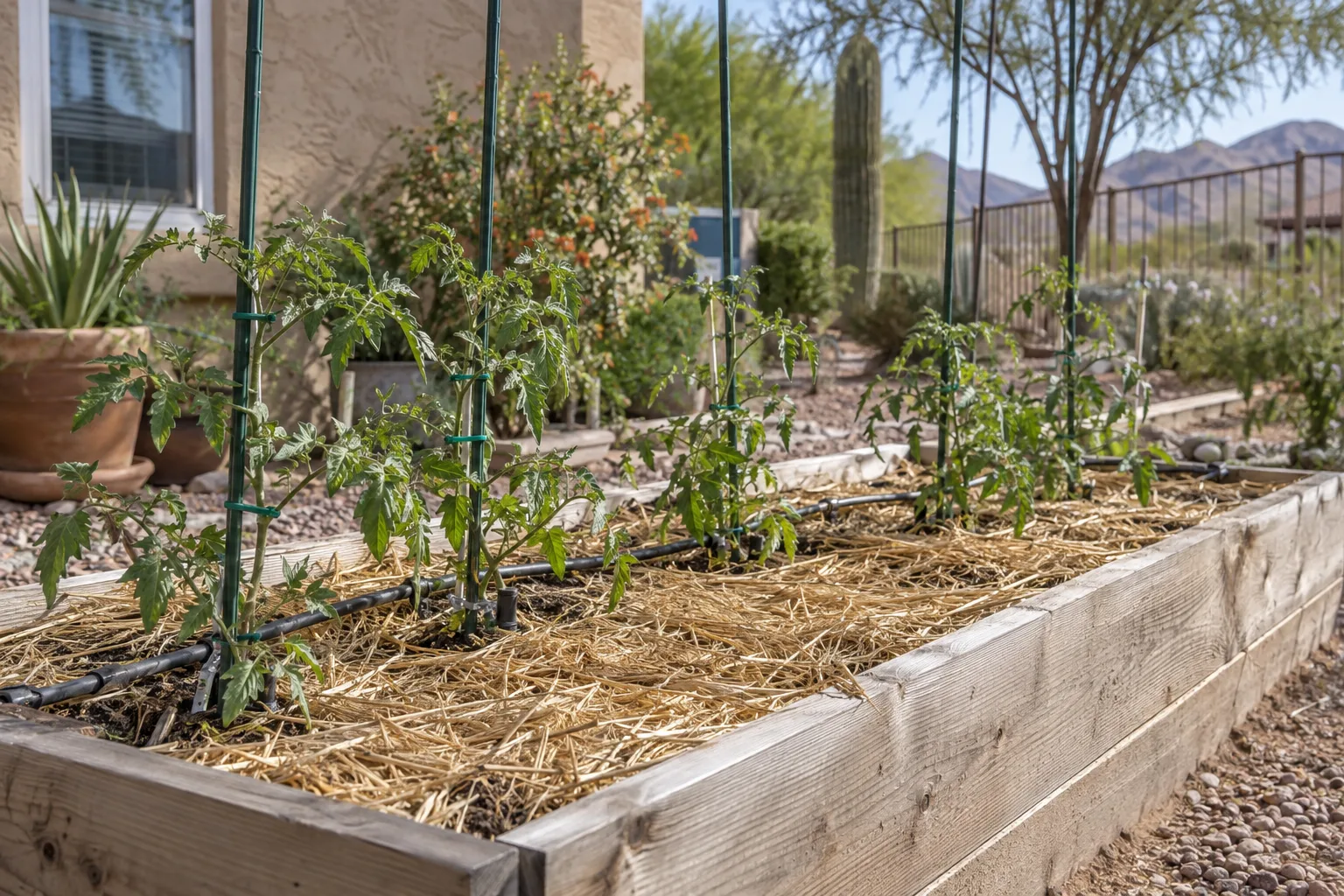
Space tomatoes about 3 feet apart. Stake or cage them at planting, because driving a stake later damages roots. Cherry tomato types tend to keep setting fruit longer into warm weather than large slicers. Browse our herbs, vegetables and berries to see what is in season.
Herbs
Basil, rosemary, thyme and oregano all transplant well in March. Give basil a spot with afternoon shade from taller plants, which stretches its season into May.
Color and shrubs
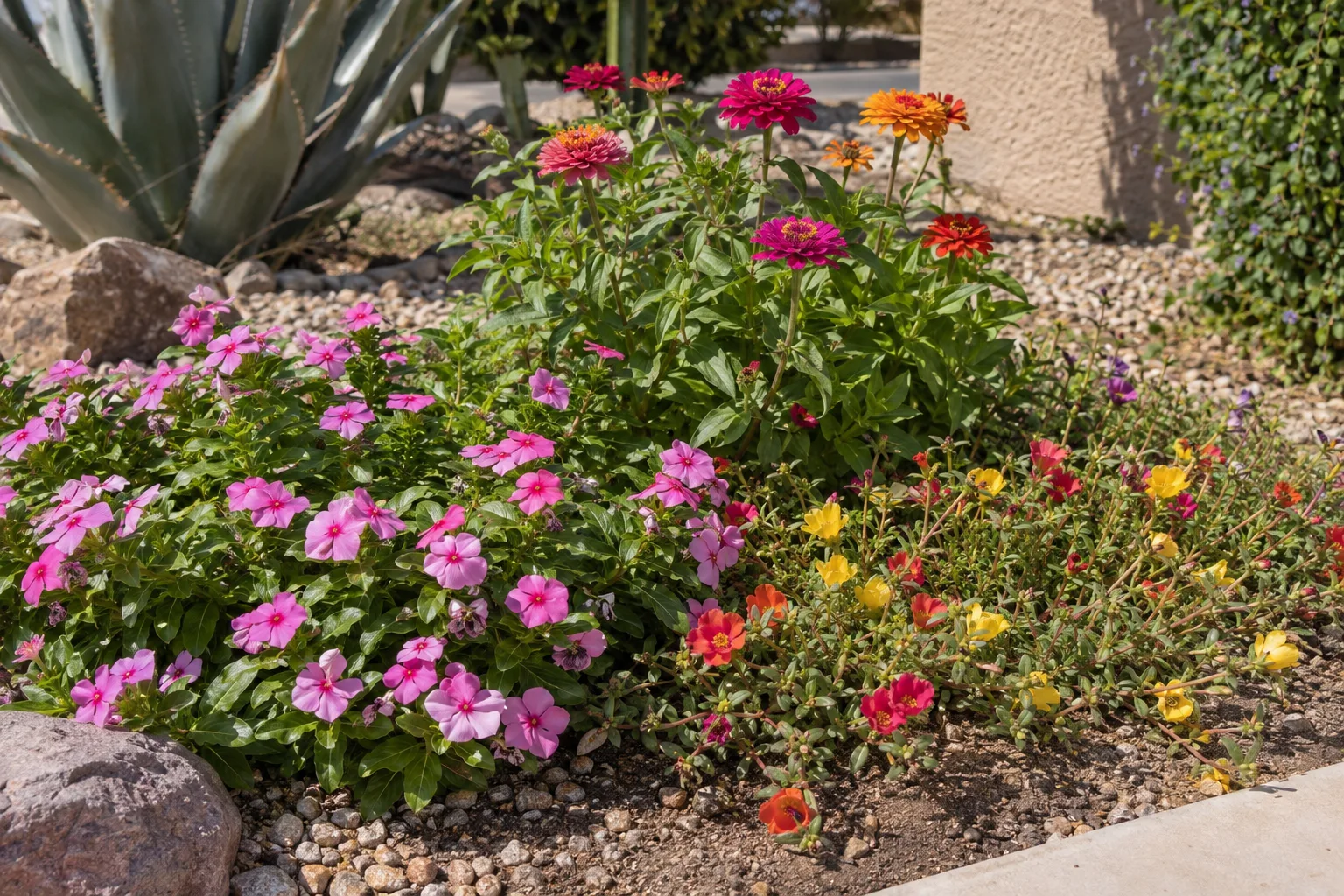
Vinca, zinnia and portulaca handle summer heat once they are rooted, so plant them in March and look through our annual flowers and foliage for color. Texas sage (Leucophyllum frutescens) and lantana (Lantana camara) root well in warming soil, and desert willow (Chilopsis linearis) is a native tree for full sun that you can find among our desert trees. Bougainvillea is frost tender, so plant it in late March or April, once nights stay well above freezing.
How should I change my watering in March?
Water a little more often as days lengthen, but add water in steps rather than jumping to a summer schedule. Overwatering is a common cause of plant loss here, and soggy soil over caliche is the usual setting.
- New transplants: every day or two for the first 2 weeks, until new leaf growth shows.
- Vegetable beds on drip: about every 2 to 3 days, checking the soil 2 inches down first.
- Established trees and shrubs: a deep soak about every 2 to 3 weeks that reaches 2 to 3 feet down, shortening the interval in April and May.
Run every zone before you plant and look for cracked lines, clogged emitters and uneven spray. Drip delivers water to the roots and keeps leaves dry, which cuts down fungal problems on tomatoes and squash. Check the soil, not the calendar.
Spread 3 to 4 inches of straw around vegetables and wood chips around trees and shrubs. Keep mulch 2 to 3 inches away from stems and trunks so the bark stays dry.
What should I feed and prune in March?
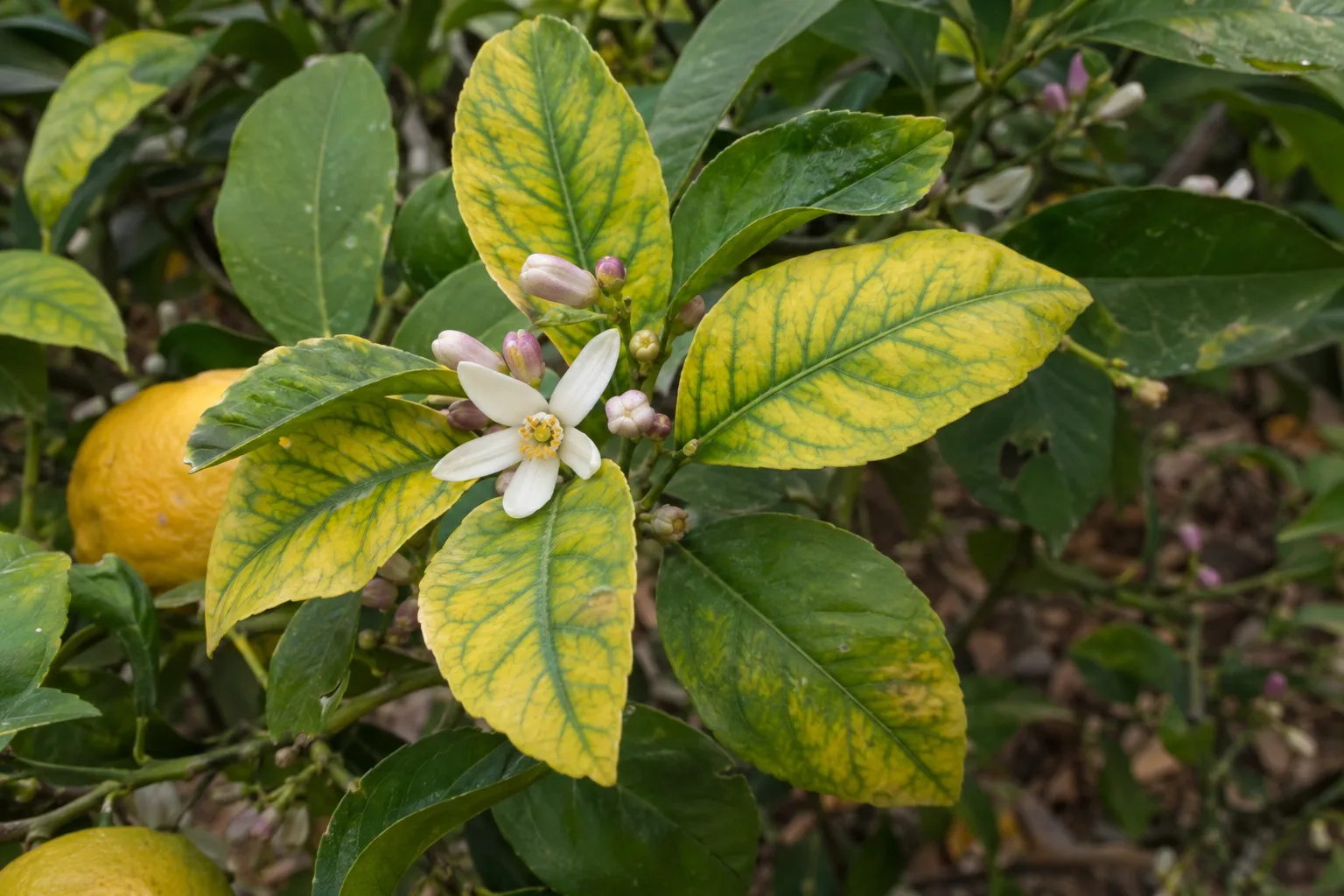
Feed citrus with a citrus fertilizer that includes iron and zinc, and hold off pruning frost-damaged plants until new growth shows. Fertilizer for citrus trees is usually applied from late February through March. Follow the label for your tree’s size and water it in deeply.
Our alkaline soil locks up iron, so new leaves that turn yellow between green veins point to iron chlorosis. Fertilizer with iron helps, and so does keeping water and mulch consistent.
Native desert plants need little. Palo verde (Parkinsonia species) and mesquite (Prosopis species) do well with no fertilizer, and heavy nitrogen pushes soft growth that burns in summer heat and draws aphids.
Wait for buds to break on lantana, bougainvillea and ruellia, then cut back to live wood. The new growth shows you where the plant is still alive. Remove frost-browned palm fronds once the last frost chance has passed. Hold structural pruning of palo verde and mesquite until after the spring bloom, and hire a certified arborist for large, established trees.
What should I do about lawns and weeds in March?
Apply a pre-emergent early in March to gravel and lawn areas if you want fewer summer weeds, and follow the product label exactly. Pre-emergents stop seeds from sprouting, so they must go down before weeds appear, and they do not belong in vegetable beds. In food gardens, a thick layer of straw does the weed control.
If your Bermuda lawn was overseeded with ryegrass, stop feeding the ryegrass and let it fade on its own. Bermuda wakes up when soil temperatures hold near 65°F, and scalping is best saved for when it is clearly greening, often in April. Keep mowing at about 2 inches in the meantime.
Walk your beds weekly. Aphids on new growth wash off with a strong stream of water. For anything stronger, read the label and check University of Arizona Cooperative Extension guidance first.
What does a week-by-week March schedule look like?
Four weeks is enough to work through everything above if you take the tasks in this order.
| Week | Tasks |
|---|---|
| Week 1 | Walk every bed, repair drip lines, probe for caliche, add compost, apply pre-emergent, feed citrus |
| Week 2 | Pull bolting cool-season crops, mulch beds, plant herbs, keep frost cloth ready |
| Week 3 | Plant tomatoes, peppers and eggplant, stake at planting, seed beans and squash, add summer color |
| Week 4 | Prune frost damage once new growth shows, set up shade cloth frames, audit irrigation, scout for pests |
Frequently asked questions
Should I start vegetables from seed or buy transplants in March?
Buy transplants for tomatoes, peppers and eggplant, because seeds started in March will not reach planting size before the heat arrives. Direct seed beans, squash, cucumbers and melons into warm soil, where they sprout in about a week or two. Check the seed packet for the soil temperature each crop needs before you sow.
What should I do if frost is forecast after I plant?
Cover tender plants with frost cloth or an old sheet in the evening and remove it by mid morning. Water the soil the day before, since moist soil holds more heat overnight than dry soil. Plastic touching the leaves can transfer cold, so prop any cover up on stakes.
Is March a good time to plant a citrus tree?
Yes, once frost risk has passed, because the roots get several weeks of moderate weather before summer. Plant with the top of the root ball level with or slightly above the soil, and water often enough to keep the root ball moist for the first few weeks. Protect the trunk from afternoon sun.
When do tomatoes need shade cloth?
Once highs stay above 90 to 95°F, usually in late April or May, tomatoes benefit from 30 to 40 percent shade cloth on the west side. Build the frame in late March so it is ready. Tomatoes tend to drop blossoms when days stay above about 95°F or nights stay above about 75°F.
Should I plant a new shade tree in March or wait until fall?
Fall is the easier choice for most trees because roots get a full cool season before summer. March planting works for heat-adapted trees if you commit to deep, regular watering through the first summer. Skip March for any spot where you have not broken through shallow caliche.
Is a March planting push right for your yard?
It is if you have a sunny bed, working irrigation and time to water new plants every day or two for the first 2 weeks. If you travel for weeks in April or have no drip system, wait until fall for trees and shrubs and put in only a few containers of vegetables. Start with soil and irrigation, then add plants as your schedule allows. Come by the nursery in Queen Creek and talk through your yard with us.