
The best flowers to plant in Arizona in March are petunias, marigolds, zinnias, vinca and gaillardia. Hold impatiens, pansies, lobelia and delphinium until fall. March plantings get roughly eight to ten weeks of mild weather to root and bloom before low desert heat arrives.
Key takeaways
- Plant petunias, marigolds, zinnias and gaillardia from early to mid March, and add vinca in late March or April once nights stay above roughly 55°F.
- Hold impatiens, pansies, lobelia and delphinium until October or November, because daytime highs above roughly 85 to 90°F shorten their bloom or end them.
- Work 2 to 3 inches of compost into the bed, then mulch about 2 inches deep and keep the mulch off the stems.
- Water new transplants every 2 to 3 days for the first two weeks, then stretch the interval as roots establish and highs climb.
- Most March plantings bloom from April into May or June, and by late May highs near 100°F end petunias and slow other annuals.
Which flowers can I plant in Arizona in March?
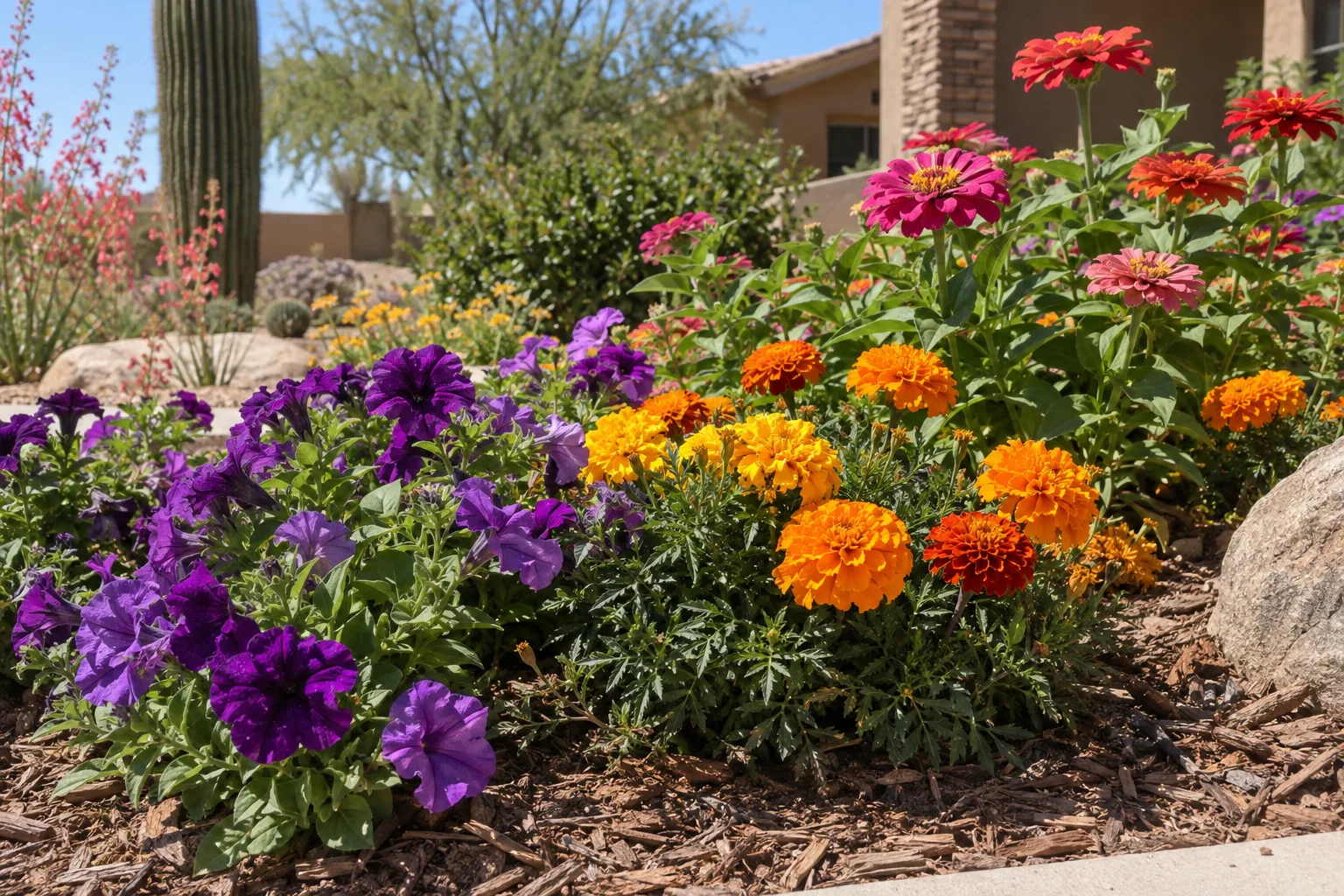
Petunias, marigolds, zinnias, vinca and gaillardia all root quickly in March soil and keep blooming as the weather warms. These are plants we commonly carry in spring, but availability changes week to week and season to season, so check our annual flowers and foliage department for what is in. Frost nights can still show up in early March in Queen Creek, so check the forecast before planting tender transplants. Cover them if a cold night is coming.
Petunias (Petunia × hybrida)
Petunias reach 8 to 12 inches tall and spread 12 to 24 inches, with trailing types going wider. They want full sun, plus afternoon shade in a west-facing bed, and moderate water. Bloom runs from March into May as highs climb from the 70s to the 90s. The drawback is heat, because most petunias fade once highs sit near 95 to 100°F. Plan on spring color only.
Marigolds (Tagetes species)
African marigolds grow 2 to 3 feet tall, while French types stay 6 to 12 inches and suit borders and pots. Both want full sun and low to moderate water. Transplants set out in early March bloom through April and May. The drawback is spider mites in hot, dry weather, which show up as fine webbing and speckled leaves on the underside of the foliage.
Zinnias (Zinnia elegans)
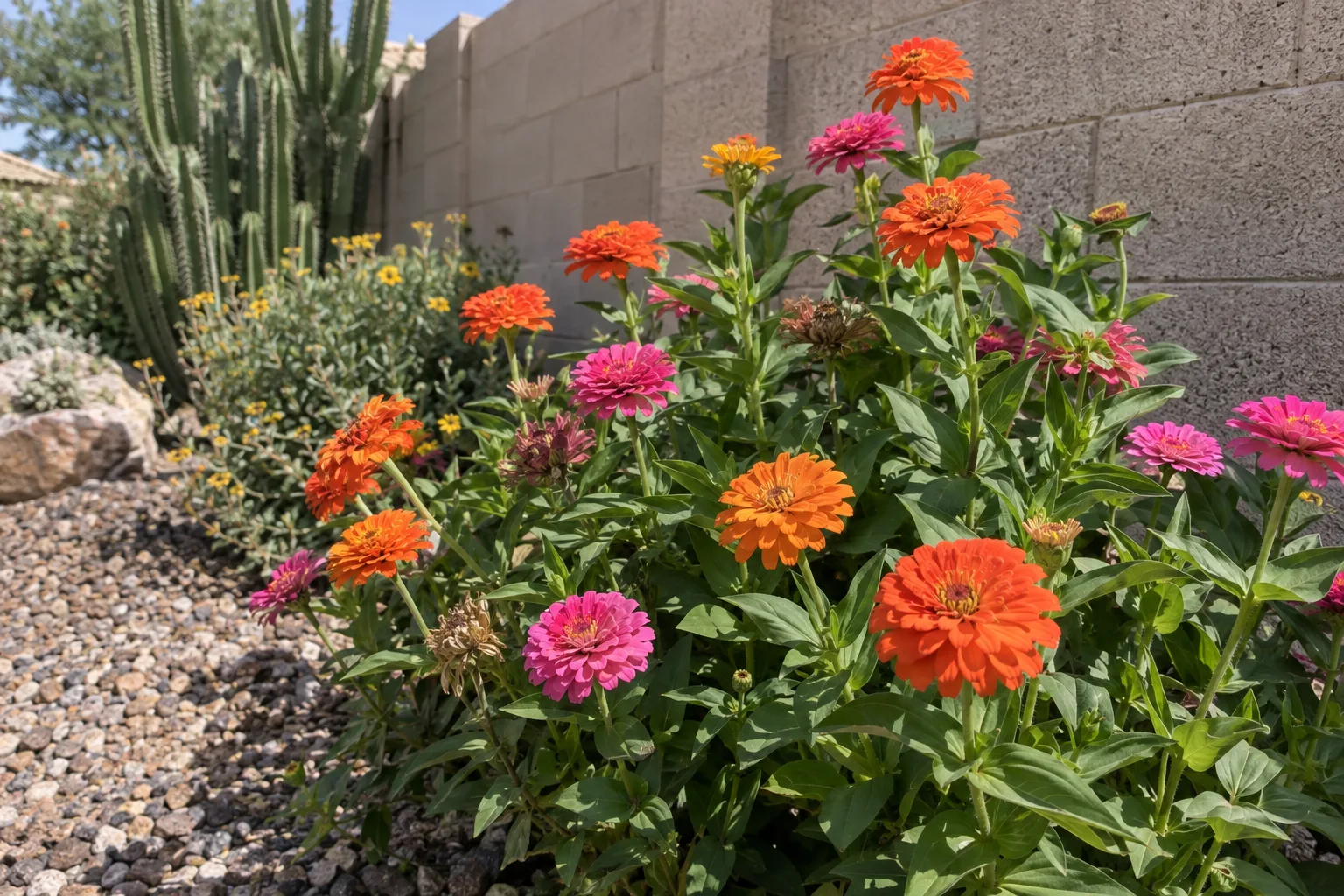
Zinnias range from 1 to 3 feet tall depending on the series, and they want full sun, well-drained soil and moderate water. Water at the base of the plant, since wet leaves invite powdery mildew, especially in monsoon humidity. Compact, mildew-resistant series are the better choice for low desert beds. The drawback is that plants look tired in peak summer heat.
Vinca (Catharanthus roseus)
Vinca grows 8 to 18 inches tall, handles reflected heat from block walls and pavement, and needs little water once established. It comes in pink, red, white, coral and bicolor. The drawback is cold soil, which stalls it and can lead to rot. Waiting until late March or April, when nights stay above roughly 55°F, gives better results than planting the first warm weekend.
Gaillardia (Gaillardia species and hybrids)
Blanket flower makes red and yellow daisy-like blooms on plants 1 to 2 feet tall and wide. It wants full sun, takes low water once established, and draws pollinators. Some types come back as short-lived perennials. The drawback is a leggy look by midsummer, so shear it back by about a third after the main flush and deadhead through spring.
Which flowers should I hold until fall?
Hold impatiens, pansies, lobelia and delphinium until October or November. All four are cool-season flowers, and they can still look healthy in March, which is the misconception to watch for. A full, green plant in a pot says little about how it will handle the 90°F afternoons of late April. A bed planted with them in March often needs replacing within weeks.
Impatiens (Impatiens walleriana)
Impatiens want shade and steady moisture. Heat above 100°F usually finishes them even in a shaded spot, so a March planting buys a few weeks of bloom at best. Plant them in October for fall and winter color in a protected bed.
Pansies (Viola × wittrockiana)
Pansies are a November through February flower here. Once highs hold above the low 80s they stretch, stop blooming and die back. If you planted them in the fall, enjoy them through March and plan the next flowers for that space.

Lobelia (Lobelia erinus)
Trailing lobelia has small blue and purple flowers and wants part shade. Planted in March it gives perhaps three to four weeks of bloom before April heat sends it downhill. October and November planting gives it months of color through winter and early spring.
Delphinium (Delphinium hybrids)
Delphiniums send up tall spires, often 2 to 4 feet, in blue, purple and white. They want cool soil and mild air, so the planting window is October to December. A March planting meets rising heat before roots are settled, and the plants often fail to bloom well.
How do the planting windows compare?
The windows below run from the earliest sensible planting to the last one before heat takes over. Our gardening calendars carry the same idea month by month, which helps when you plan beyond spring.
| Flower | Planting window | Sun | Heat tolerance |
|---|---|---|---|
| Petunias | February to April | Full sun | Medium to high |
| Marigolds | March to May | Full sun | High |
| Zinnias | March to June | Full sun | Very high |
| Vinca | Late March to June | Full sun | Very high |
| Gaillardia | March to May, September to October | Full sun | Very high |
| Impatiens | October to November | Shade | Low |
| Pansies | November to February | Full sun to part shade | Low |
| Lobelia | October to February | Part shade | Low |
| Delphinium | October to December | Full sun | Low |
How should I prepare a flower bed in March?
Loosen the soil, mix in compost and mulch after planting. Queen Creek soil is alkaline, often with a pH of 7.5 to 8.5, and caliche (a hard, white layer of calcium carbonate) can sit 12 to 18 inches down and block drainage. If a shovel stops on solid caliche, break through it with a pick or build a raised bed. Hard irrigation water also leaves salts behind, so deep, occasional watering helps carry them below the roots.
- Loosen the top 8 to 10 inches of soil.
- Mix in 2 to 3 inches of compost.
- Set each plant at the same depth it grew in its pot, with the crown level with the soil.
- Soak the planting area so water reaches about 6 inches deep.
- Spread about 2 inches of mulch, keeping it off the stems.
Test drainage first by filling a 12-inch hole with water, letting it drain, and filling it again. Standing water after several hours points to poor drainage.
How often should I water new flowers in March?
Water new transplants every 2 to 3 days for the first two weeks, then every 3 to 4 days while highs stay in the 75 to 85°F range. By late April, with highs near 95°F, plan on every other day for beds and daily for pots. Push a finger 2 inches into the soil, and water when it feels dry at that depth. Early morning is the best time.
Feed lightly. Wait until you see new growth, about two weeks after planting, then use a balanced slow-release fertilizer or a bloom formula. Heavy nitrogen pushes leaves at the expense of flowers.
Should I plant March flowers in pots or in the ground?
Either works, and pots give you more control. You can move them out of afternoon sun in May, and you skip the caliche entirely. The tradeoff is water, because small pots in full sun can dry out daily by late April and sometimes twice a day in June. Use potting mix rather than garden soil, and make sure every pot has drainage holes.
Petunias, marigolds and vinca all do well in containers. Terracotta or light-colored pots keep roots cooler than dark ones, which can absorb a lot of heat. Browse our pottery and planters for options.

What should I leave alone in March?
Leave frost-damaged shrubs unpruned until the danger of frost has passed, because the damaged growth protects the tissue beneath it. Skip heavy nitrogen fertilizer, and skip replanting cool-season flowers in beds that will bake by May. Frost can still arrive in early March, so wait on pruning until you are confident the cold nights are behind you.
If you want color that returns each year, add shrubs and perennials such as lantana (Lantana hybrids), autumn sage (Salvia greggii) and yellow bells (Tecoma stans). They take little water once established. Look through our full plant selection for these and others.
Frequently asked questions
Can I direct sow zinnia seed in March?
Yes, zinnia seed germinates quickly in warm soil. Sow seeds about 1/4 inch deep in prepared soil, keep the top inch moist for the first 7 to 10 days, and thin seedlings to 6 to 12 inches apart depending on the variety. Flowers usually open in about six to eight weeks.
Can I still plant snapdragons or alyssum in March?
You can, but expect a short run. Both are cool-season flowers that fade as highs pass the 80s, so a March planting gives a few weeks of bloom rather than a full season. They work as a quick stopgap, otherwise save the space for the warm-season group above.
Which flowers planted in spring last through summer?
Vinca, zinnias, portulaca (Portulaca grandiflora) and celosia (Celosia argentea) are the usual picks for carrying through summer with regular water. Lantana and autumn sage also keep going and rebloom after the heat eases. Most other annuals are finished by June and get replaced in fall.
Do March flowers need shade cloth in May?
West-facing beds often benefit from light shade cloth, or from afternoon shade cast by a wall or tree, once highs near 100°F arrive. Petunias and marigolds hold color longer with afternoon relief. Set the support posts early so you can drape the cloth quickly when the first hot week shows up.
Should I deadhead flowers planted in March?
Yes, removing spent blooms keeps petunias, marigolds, zinnias and gaillardia flowering longer. Pinch or snip just above a set of leaves once or twice a week during peak bloom. Plants that set seed shift their energy from flowers to seed, so blooms taper off sooner.
Is a March flower bed worth planting in Queen Creek?
Yes, if your bed gets six or more hours of sun and you can water every few days through April. The five flowers above give color from April into May or June for modest work. Skip it if the bed sits against an all-day west wall and you plan to travel in May, because the heat will outrun the plants. In that case wait for October and plant the cool-season group. Come visit us in Queen Creek and we will help you match flowers to your bed.