
Eight desert-adapted plants make the best container plants that rarely need watering in Arizona: agave, golden barrel, prickly pear, red yucca, ponytail palm, aloe, blue chalksticks and desert rose. Once established, most go a week or more between deep waterings, even in summer.
Key takeaways
- In summer, most of these eight need a deep soak about every 1 to 3 weeks once established, and every 3 to 6 weeks or less in winter.
- Pots dry faster than ground soil, so choose a large, light-colored pot with a drainage hole.
- Blend about one-third to one-half pumice or perlite into cactus and succulent mix for fast drainage.
- Ponytail palm, aloe vera, blue chalksticks and desert rose need protection on frost nights, and desert rose needs it when nights drop into the 40s.
- Repot in March to April or late September to October, and avoid June through August.
Can any container plant go without water in the low desert?
No container plant goes without water in Arizona, but these eight can wait a week or more between deep soaks once their roots are established. A pot exposes soil to heat on every side, so it dries far faster than the same plant in the ground.
Summer highs above 110°F can push the soil in a dark pot well past the air temperature. Plants that store water in thick leaves, flat pads or a swollen trunk base (called a caudex) cope with that far better than thirsty annuals do. Newly potted plants are the exception. Plan on watering them more often for the first several months while roots fill the pot.
What pot and soil keep watering to a minimum?
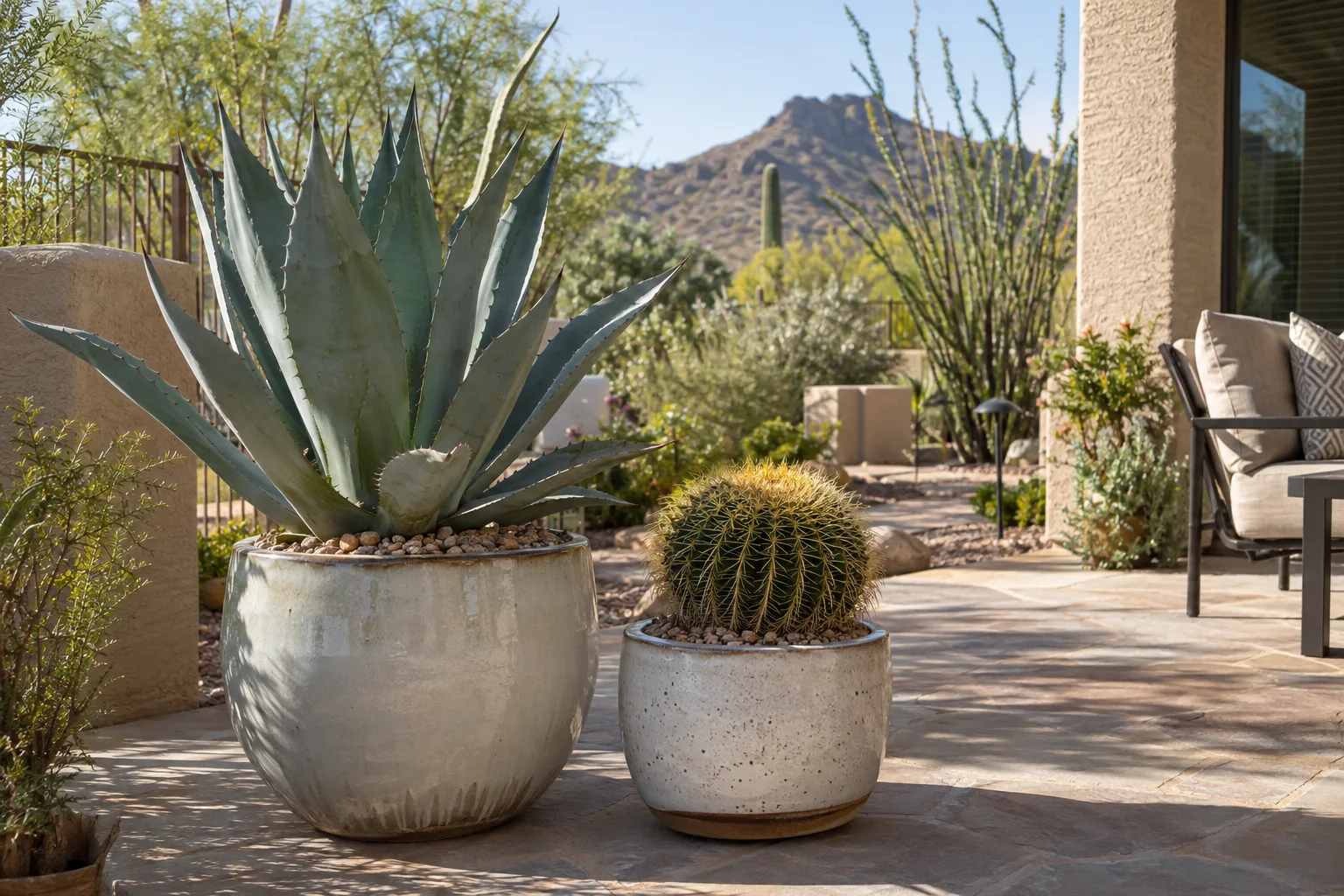
A large, light-colored pot with a drainage hole and a fast-draining mix keeps watering to a minimum. Bigger pots hold more soil, which warms and dries more slowly than the soil in a small pot, and pale glazed ceramic or resin reflects heat better than black plastic. Browse our pottery and planters for shapes and colors that suit a sunny patio.
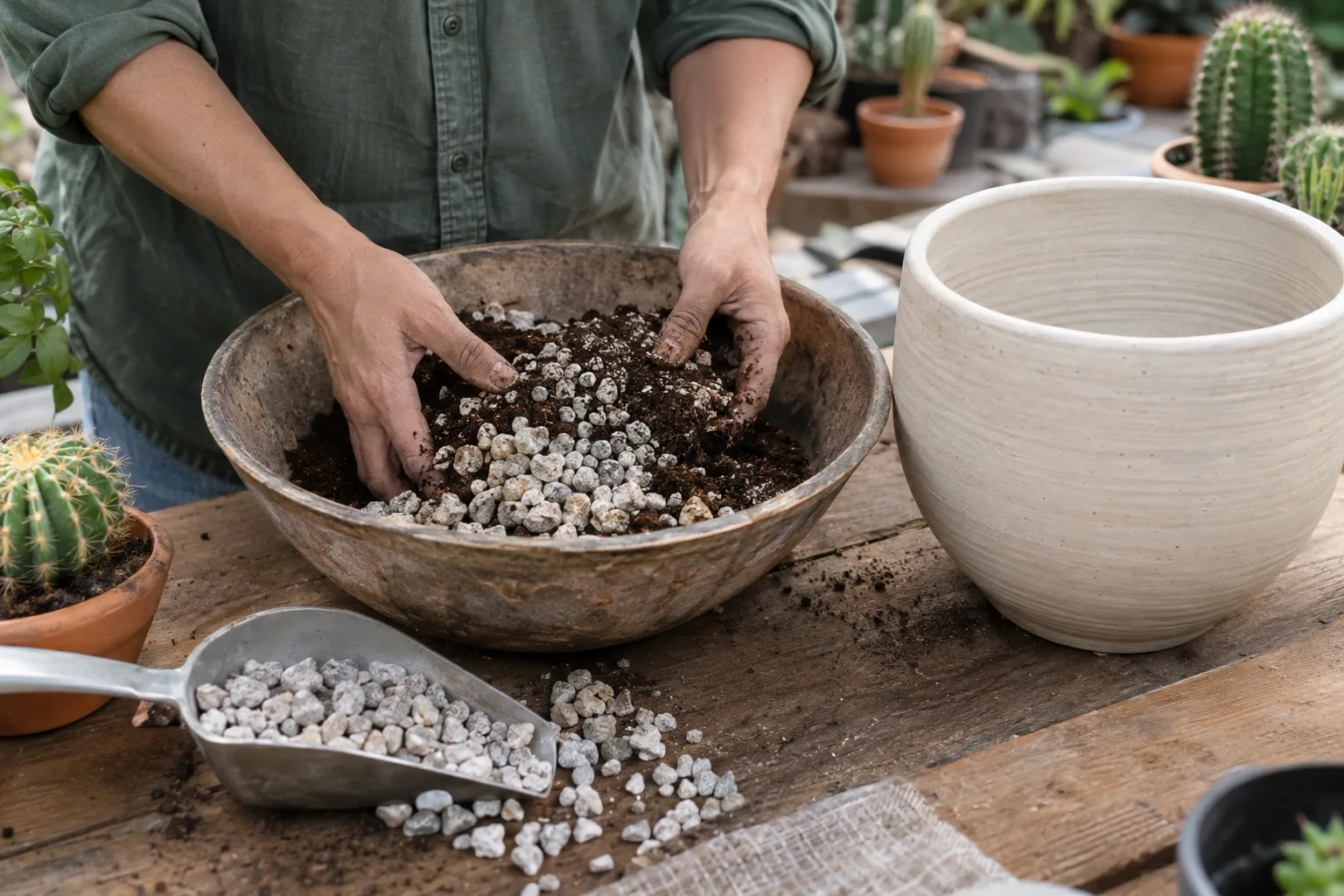
For soil, use a cactus and succulent mix and blend in coarse pumice or perlite, roughly one-third to one-half of the total. Skip mixes labeled as moisture-retaining. Terracotta breathes and dries quickly, so it suits plants that like to stay dry but needs more frequent watering. Lift pots on feet or small bricks so water drains freely and hot pavers do not bake the base.
Hard water leaves a white crust on the soil surface and pot rim over time. Every few months, run a slow soak through the pot until water flows from the bottom to flush built-up salts.
Which container plants need the least water in Arizona?
These eight are varieties we commonly carry in our plant department, though availability changes week to week and season to season. Each is listed with its mature size, light needs, typical watering once established, and one honest drawback.
Blue agave (Agave tequilana)
Blue agave forms a rosette of stiff blue-gray leaves. In the ground it can reach 5 to 6 feet tall and wider, while in a large pot it grows more slowly and stays smaller. It wants full sun and soil that never stays wet. Established plants usually manage on a deep soak every 1 to 2 weeks in summer and every 3 to 4 weeks in winter. The drawback is size and spines. The leaf tips are sharp, so keep it away from walkways, and ask us about smaller agave species if your patio is tight.
Golden barrel cactus (Echinocactus grusonii)
Golden barrel is a rounded, ribbed cactus covered in yellow spines. It reaches roughly 2 to 3 feet tall and wide, but very slowly, and it wants full sun. Water deeply every 1 to 2 weeks in summer and every 4 to 6 weeks or less in winter. Yellow flowers can appear at the crown in late spring or summer. The drawback is slow growth, and the skin can scar in a hard freeze, so cover it on frost nights.
Engelmann prickly pear (Opuntia engelmannii)
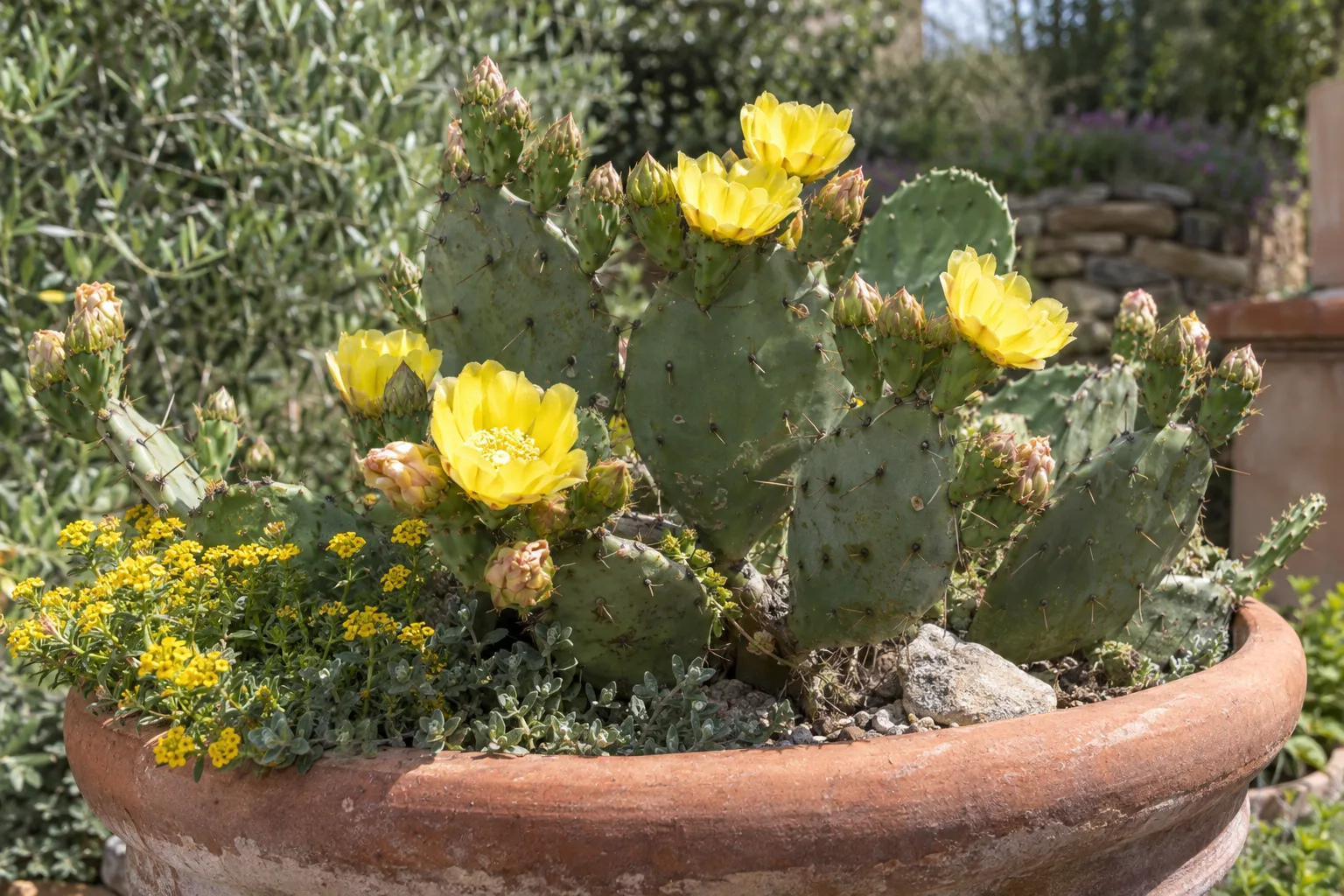
Prickly pear is a Sonoran Desert native with flat pads that store water. In the ground it can reach 4 to 5 feet tall and 6 feet wide, so in a pot expect a smaller plant or prune pads to keep it in bounds. It wants full sun and water every 2 to 3 weeks in summer, then monthly or less in winter. Yellow to orange flowers open in spring, followed by red fruit. The drawback is the glochids, tiny barbs that lodge in skin. Wear thick gloves when handling it.
Red yucca (Hesperaloe parviflora)
Red yucca is an evergreen clump of narrow, grass-like leaves with coral-pink flower stalks that rise 4 to 5 feet in spring and summer. The clump itself reaches about 3 to 4 feet tall and wide. It does best in full sun, with a deep soak every 1 to 2 weeks in summer and every 3 to 4 weeks in winter. It handles frost well. The drawback is the spread. It needs a roomy pot, and you will want to cut spent bloom stalks back to the base.
Ponytail palm (Beaucarnea recurvata)
Despite the name, ponytail palm is a succulent related to agaves. Its swollen trunk base stores water, and long leaves arch from the top like a fountain. In a container it grows slowly to roughly 3 to 6 feet over many years. It likes bright light, but give it morning sun and afternoon shade during its first summer to avoid scorched leaf tips. Water every 2 to 3 weeks in summer and monthly or less in winter. The drawback is frost tenderness, so move it under cover when nights approach freezing.
Aloe vera (Aloe vera)
Aloe vera is a clumping succulent with fleshy gray-green leaves, usually 1 to 2 feet tall and wide, that produces pups around the base. It does well with morning sun and afternoon shade in summer, because full low-desert sun can turn the leaves orange or brown. Water every 1 to 2 weeks in summer and every 3 to 4 weeks in winter. The drawback is cold. Frost damages the leaves, so cover or move the pot when temperatures near freezing.
Blue chalksticks (Curio talinoides var. mandraliscae)
Blue chalksticks, also sold as Senecio mandraliscae, is a low succulent with upright blue-gray fingers, about 8 to 12 inches tall and spreading to around 2 feet. It spills nicely over a pot edge and pairs well with taller plants. Give it morning sun with afternoon shade, and water every 1 to 2 weeks in summer and every 3 to 4 weeks in winter. The drawback is brittle stems that scorch in west-facing sun and snap when bumped.
Desert rose (Adenium obesum)
Desert rose has a swollen, sculptural caudex and trumpet flowers in pink, red or white from spring into fall. In a pot it usually stays about 2 to 4 feet tall. It wants full sun and a deep soak every 1 to 2 weeks in summer, and little or none while it sits leafless in winter. The drawback is cold sensitivity, so protect it when nights drop into the 40s. Its sap is considered toxic, so wear gloves and keep pets and children away.
How often should I water each plant?
Water established plants deeply, then wait until the top 2 to 3 inches of soil are dry before watering again. The ranges below are starting points, and the pot size, exposure and weather change them.
| Plant | Summer watering | Winter watering | Cold note |
|---|---|---|---|
| Blue agave | Every 1 to 2 weeks | Every 3 to 4 weeks | Handles light frost |
| Golden barrel cactus | Every 1 to 2 weeks | Every 4 to 6 weeks or less | Cover in a hard freeze |
| Prickly pear | Every 2 to 3 weeks | Monthly or less | Cold hardy |
| Red yucca | Every 1 to 2 weeks | Every 3 to 4 weeks | Cold hardy |
| Ponytail palm | Every 2 to 3 weeks | Monthly or less | Protect near freezing |
| Aloe vera | Every 1 to 2 weeks | Every 3 to 4 weeks | Protect near freezing |
| Blue chalksticks | Every 1 to 2 weeks | Every 3 to 4 weeks | Protect in hard frost |
| Desert rose | Every 1 to 2 weeks | Little or none when leafless | Protect when nights drop into the 40s |
Water slowly until liquid runs out of the drainage hole, so the whole root ball gets wet. A quick sprinkle only wets the top inch and encourages shallow roots. During the monsoon, from roughly July through September, rain and humidity can soak a pot for days, so check the soil before you water. Empty any saucers after storms.
Where should I put pots, and what should I avoid?
Put agave, golden barrel, prickly pear and red yucca in the sunniest spots, and give aloe, ponytail palm and blue chalksticks morning sun with afternoon shade. White stucco and light pavers bounce heat back onto pots, so pull containers 12 to 18 inches away from a west or south wall.
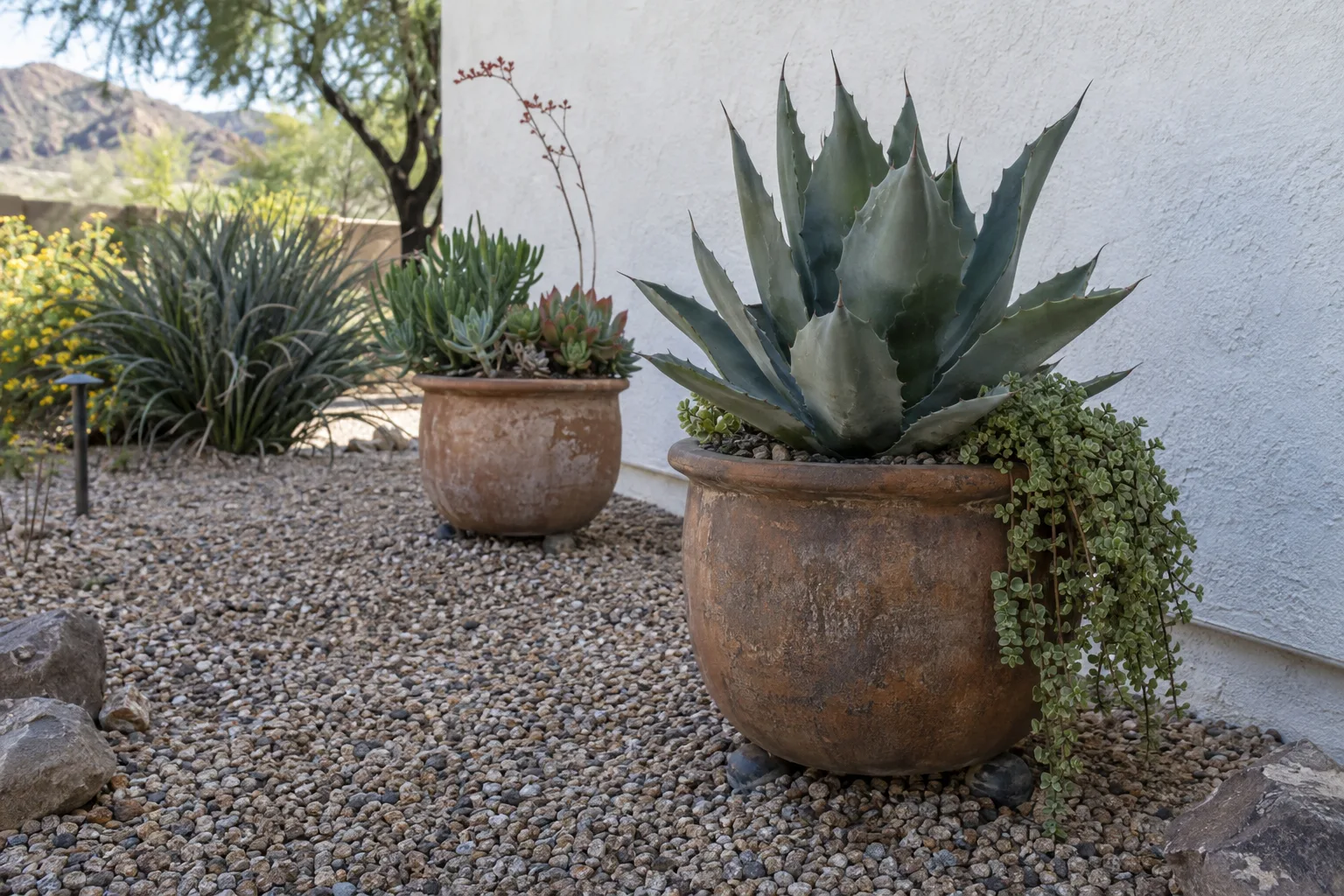
Plants moved from shade into full sun can burn in a day or two. Shift them over 1 to 2 weeks, adding a few hours of sun at a time. Our classes and events page lists any workshops on container planting.
- Watering on a fixed calendar instead of checking the soil is the most common cause of rot.
- Repotting in June through August stresses roots when soil is hottest.
- Small black pots in full sun overheat roots quickly.
- Saucers left full of water keep the base of the pot soggy.
Frequently asked questions
Can I leave these pots alone for a week in summer?
Yes for most of them, if they are established and watered deeply just before you leave. Agave, golden barrel, prickly pear, red yucca and ponytail palm usually handle 7 to 10 days. Desert rose and blue chalksticks are likelier to show stress, so move them into light shade or add a small drip emitter on a timer.
Can I grow these plants indoors?
Most do poorly indoors because window glass cuts light intensity and the plants stretch and weaken. Aloe vera and ponytail palm tolerate a bright window best, but all eight prefer strong outdoor light. For lower-light rooms, look through our houseplants, which suit indoor conditions better.
When should I repot them?
Repot in March through April, or again from late September to October, when temperatures are mild. Avoid June through August, because transplant stress combined with heat can kill roots. Desert rose is best repotted in spring as it leaves dormancy. See our gardening calendars for month-by-month timing.
Are these plants safe around pets and children?
Not entirely, because spines, barbs and sap are the main hazards. Prickly pear glochids and agave tips injure skin, desert rose sap is considered toxic, and the ASPCA lists aloe vera as toxic to dogs and cats. Keep pots out of reach of curious pets, and ask your vet or Poison Control about any specific plant.
Do they need fertilizer?
Light feeding in spring is enough for most. A diluted cactus and succulent fertilizer, or a small amount of slow-release product in March or April, supports steady growth. Skip feeding in the hottest weeks of summer and during winter dormancy, when roots take up little. Heavy feeding pushes soft growth that scorches easily.
Are low-water container plants right for your patio?
Yes, if your patio gets several hours of sun and you can use a pot with drainage. These eight suit gardeners who water deeply and then leave the plants alone. They are a poor match if you want lush tropical foliage, like a daily watering routine, or have a deeply shaded porch, since most stretch and decline without strong light. Choose spiny and sap-producing plants carefully around pets and toddlers. Stop by our Queen Creek nursery to see what is available and talk through the right plant for your spot.