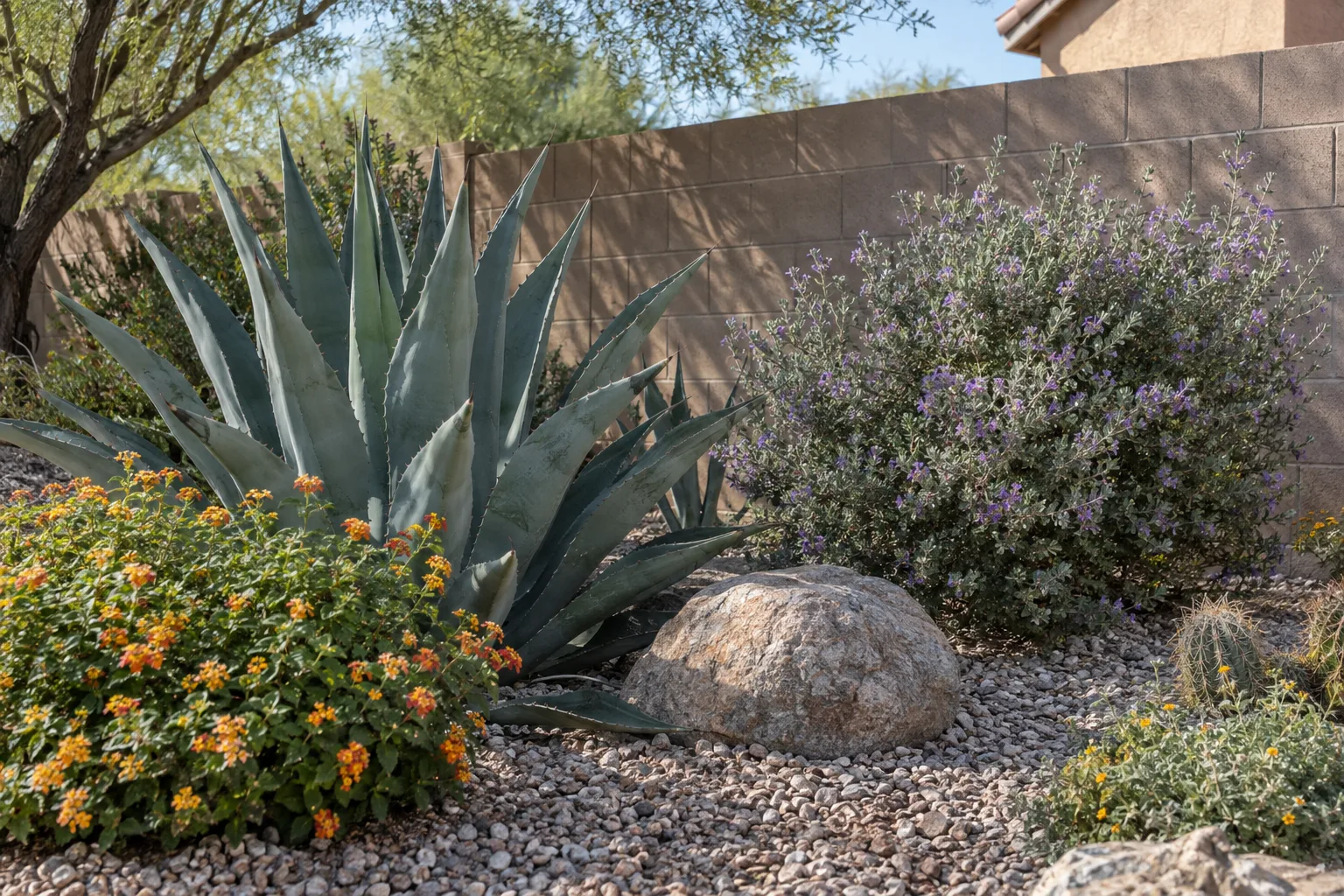
The most reliable low-maintenance plants for Arizona yards are desert natives and arid-climate shrubs such as Desert Museum palo verde, lantana, red bird of paradise, agave and Texas sage. Once established, they handle 110°F heat, alkaline soil and infrequent watering.
Key takeaways
- Plant in fall (October and November) or early spring (February to April) so roots establish before the summer highs above 110°F.
- Expect 1 to 2 years of regular watering for shrubs and 2 to 3 years for trees before you cut back to deep, infrequent irrigation.
- Dig the hole 2 to 3 times as wide as the root ball but no deeper, and keep the crown at or slightly above soil level.
- Overwatering and shearing shrubs into balls cause more trouble than heat does for most of these plants.
- Every plant on this list has a drawback, such as frost damage, spines or litter, so match it to the spot.
What makes a plant low-maintenance in the low desert?
A low-maintenance plant is one adapted to our heat, alkaline soil and limited rainfall, so it needs little more than occasional deep watering and a yearly trim. Plants from the Sonoran Desert and similar dry regions already carry those adaptations.
Soil pH here often runs above 7.5, and caliche (a hard calcium carbonate layer) can sit anywhere from a few inches to several feet down. Plants that need rich, acidic, evenly moist soil fight those conditions every day, no matter how good your irrigation is. Choosing the right plant for the spot does more for your workload than any fertilizer or gadget.
Low-maintenance never means no maintenance. Plan on a few small jobs at the right times of year.
Which eight plants hold up best in Queen Creek yards?
These eight cover shade, color, structure and ground-level interest. They are varieties we commonly carry in our plant department, though availability changes week to week and season to season, so check with us before you plan a full design.
Desert Museum palo verde (Parkinsonia ‘Desert Museum’)
This is a hybrid palo verde with a spreading, green-barked canopy that fills with yellow flowers in spring. It reaches roughly 20 to 30 feet tall with a similar spread, wants full sun, and needs deep watering every 2 to 3 weeks in summer once established. Its drawback is size and mess: it drops petals and tiny leaflets, and branches can break in strong monsoon wind, so give it room away from pools and roofs. You can browse more shade options in our desert trees.
Lantana (Lantana camara and Lantana montevidensis)
Lantana blooms from spring into fall in yellow, orange, pink, red or purple, and butterflies visit it often. Plants range from 1 to 4 feet tall and 3 to 6 feet wide, take full sun, and need water about every 7 to 14 days in summer after the first season. It freezes back in a hard frost and regrows from the base, so wait until new growth shows in late winter before cutting back. Its main drawback is toxicity. The berries are considered poisonous if eaten, so think twice if small children or dogs roam your yard.
Red bird of paradise (Caesalpinia pulcherrima)
Orange and red flower clusters appear from late spring through the hottest months, when many yards look tired. It grows 6 to 10 feet tall and wide in full sun and wants water about every 10 to 14 days in summer once established. Frost can kill the top growth in a cold winter, though it often resprouts in spring. The seed pods are toxic if eaten, which is its honest drawback for families with curious kids or pets.
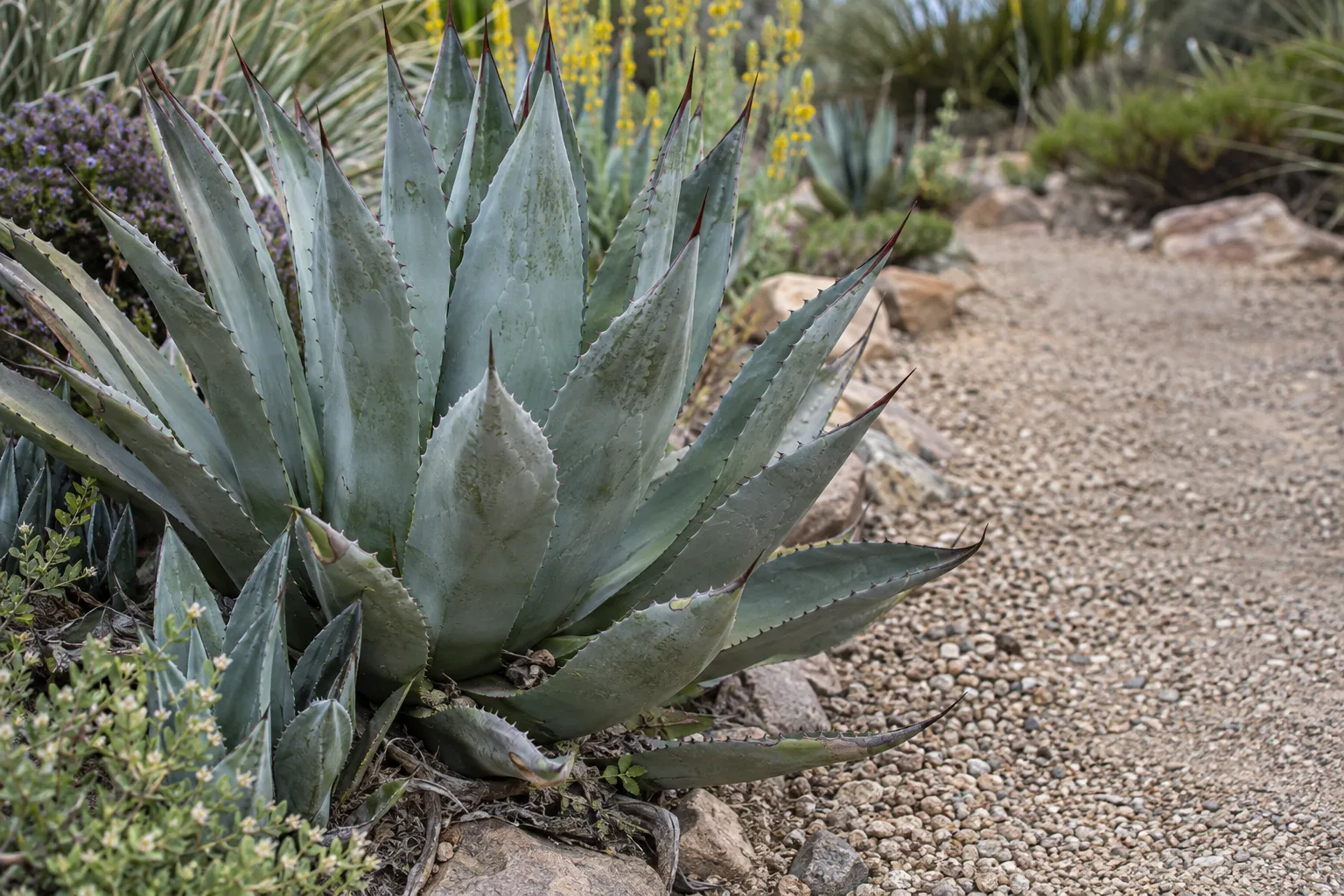
Agave (Agave species)
Agaves give you bold, sculptural form in every season. Sizes vary widely, from the compact Queen Victoria agave (Agave victoriae-reginae) at about 1 foot tall to American agave (Agave americana) at 5 to 6 feet or more across. All want full sun to light afternoon shade, and established plants need water roughly once a month in summer. The drawbacks are sharp spines, which call for placement well away from walkways, and the fact that most agaves bloom once and then die, usually leaving pups behind.
Bougainvillea (Bougainvillea hybrids)
Bougainvillea covers a block wall in magenta, orange, red or white. Depending on the variety it grows 8 to 15 feet or more, needs full sun, and flowers best when watered deeply every 10 to 14 days in summer rather than constantly. Frost below 32°F burns it, so a south or west wall gives useful protection. It has thorns and drops colorful bracts constantly, so keep it away from pool decks.
Texas sage (Leucophyllum frutescens and relatives)
Silver-gray foliage and lavender, purple or white blooms make this a favorite after summer humidity or monsoon storms. Mature size runs 4 to 8 feet depending on the variety, in full sun, with deep watering every 2 to 3 weeks in summer. Overwatering is the main cause of failure, since wet roots rot quickly. Shearing it into a ball removes flowering wood, so prune by hand and lightly.
Brittlebush (Encelia farinosa)
This Sonoran Desert native forms a rounded mound of silvery leaves topped with yellow daisies in spring. It stays about 3 to 4 feet tall and wide, wants full sun and sharp drainage, and needs water only every 2 to 4 weeks once established. In dry summers it drops leaves and looks scruffy, and individual plants can decline after several years, so plan to replace or reseed.
Desert marigold (Baileya multiradiata)
A low clump of gray-green leaves sends up bright yellow flowers for months, often starting in spring. It reaches about 1 to 2 feet tall and wide in full sun and wants water every 2 to 3 weeks in summer. It is short-lived and looks ragged after a heavy bloom, though it often reseeds into gravel and open soil.
How do I prepare Queen Creek soil for these plants?
Plant in the native soil, break up any caliche beneath the hole, and skip heavy amendments. Rich pockets of potting mix surrounded by hard soil hold water like a bathtub, and roots rot.
To check drainage, dig a hole about 18 inches deep, fill it with water and see how long it takes to empty. If water is still standing after several hours, you likely have caliche or heavy clay, and you should break through it with a digging bar or auger, or plant on a low mound. Backfill with the soil you removed, perhaps mixed with a modest amount of compost. Hard irrigation water also builds up salts over time, so deep soakings that move salts below the roots help more than frequent light sprinkles.
When is the best time to plant in the East Valley?
Fall, from October through November, is the best planting window, and February through April is a close second. Soil is still warm in fall, so roots grow while the air cools.
Avoid June through August if you can, because new plants lose water faster than their young roots can supply it. If you must plant in summer, provide afternoon shade and check moisture daily. Plant frost-tender choices such as bougainvillea in spring so they get a full season of growth before their first winter. Our gardening calendars lay out timing by month.
- Water the plant in its container the day before.
- Dig 2 to 3 times as wide as the root ball, and no deeper.
- Set the plant so the crown sits at or slightly above the surrounding soil.
- Backfill with native soil and press gently to remove air pockets.
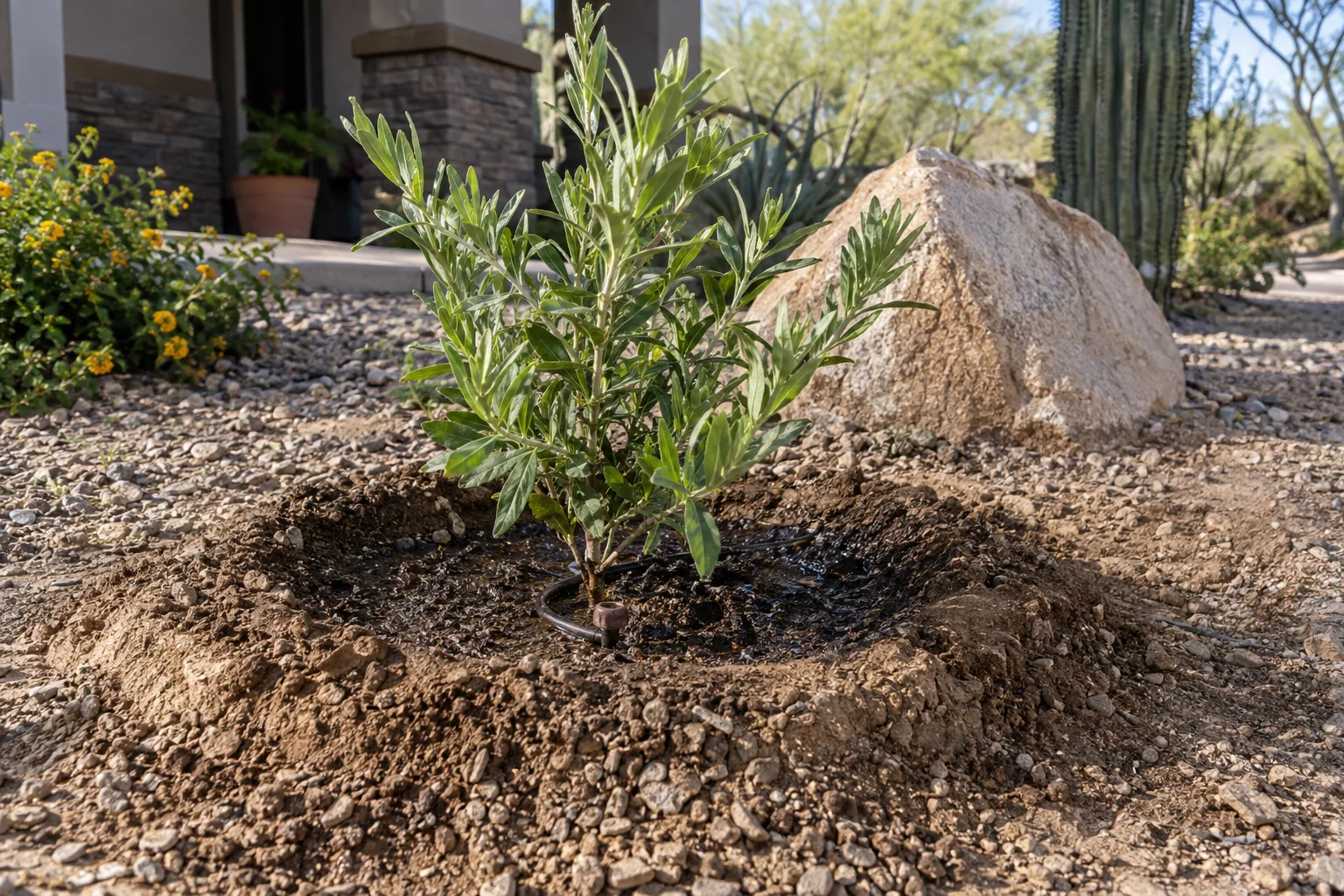
- Build a berm 4 to 6 inches high at the drip line to hold water.
- Water deeply, then spread 2 to 3 inches of mulch or decomposed granite, keeping it off the crown.
How often should I water established desert plants?
After establishment, water deeply and infrequently, usually every 1 to 4 weeks in summer depending on the plant. Deep soaking pushes roots down, where soil stays cooler and moister than the surface.
During establishment, expect to water two or three times a week in the first summer and taper from there. Soil, sun exposure and container size all change the schedule, so check the soil 4 to 6 inches down before watering again. If it is still damp, wait. Treat the numbers below as starting ranges, not rules.
| Plant | Mature summer watering | Winter watering |
|---|---|---|
| Desert Museum palo verde | Every 2 to 3 weeks | Monthly or less |
| Lantana | Every 7 to 14 days | Every 3 to 4 weeks |
| Red bird of paradise | Every 10 to 14 days | Every 3 to 4 weeks |
| Agave | About monthly | Every 6 to 8 weeks |
| Bougainvillea | Every 10 to 14 days | Every 3 to 4 weeks |
| Texas sage | Every 2 to 3 weeks | Monthly |
| Brittlebush | Every 2 to 4 weeks | Every 4 to 6 weeks |
| Desert marigold | Every 2 to 3 weeks | Every 4 to 6 weeks |
What maintenance do these plants still need?
Each needs a yearly trim, a check of the drip system and a little frost protection. That adds up to a few hours a year for most yards.
Cut back frost-damaged lantana and red bird of paradise in late winter once new growth appears, usually around late February to March. Remove dead flower stalks from agaves and desert marigold as they finish. Prune Texas sage lightly after a bloom cycle with hand pruners. Fertilize sparingly, if at all, since lush growth is more prone to heat and frost damage. If leaves yellow between green veins, the cause is often iron chlorosis from alkaline soil, and a chelated iron product made for that purpose can help.
Frequently asked questions
Can I grow these plants in containers?
Lantana, agave, desert marigold and bougainvillea all grow in large pots with good drainage. Containers dry out faster in summer, so check moisture often and choose a light-colored pot to reduce heat. Palo verde and red bird of paradise grow too large for most pots. See our pottery and planters for options.
Which plants are safest around pets and children?
None of these is risk free. Lantana berries and red bird of paradise pods are considered toxic if eaten, and agave spines and bougainvillea thorns cause injuries. The ASPCA and Poison Control publish toxicity lists, and a vet can advise on your pet. Keep spiny plants away from play areas.
How far apart should I space them?
Use the mature width, not the nursery pot size. Plan roughly 3 to 6 feet for lantana, 6 to 10 feet for red bird of paradise and Texas sage, and 15 to 25 feet from structures for a palo verde. Crowded plants need constant pruning and compete for water.
Do they need protection in winter?
Lantana, red bird of paradise and bougainvillea can be damaged when temperatures fall to freezing or below. Cover them with frost cloth on cold nights, and wait to prune until new growth appears. Palo verde, Texas sage, brittlebush and agave are usually fine in a typical East Valley winter.
Will these bring butterflies and hummingbirds?
Lantana and red bird of paradise draw both, and Texas sage and desert marigold attract bees and other pollinators. Reduce spraying so insects can feed safely. Native-style plantings often develop more wildlife activity over a couple of seasons.
Is a low-maintenance desert yard right for you?
For most Queen Creek homeowners, yes. These plants cut watering, trimming and replacement, and they bloom through the heat. They do not suit anyone who wants a lush, deep-green lawn look, or who will not accept some litter, spines and winter cleanup. If you also want shade or flowering trees, explore our flowering trees. Stop by our Queen Creek nursery and we will help you match these plants to your yard.