
The best low-maintenance garden ideas for Arizona’s dry climate pair rock, drought-tolerant plants and drip irrigation to cut watering and trimming. This guide covers ten that suit Queen Creek yards, from xeriscape beds to wildflower strips.
Key takeaways
- Group plants by water need and put them on drip irrigation, so the weekly chore is a quick emitter check.
- Plant in October through November or late February through March, so roots settle before summer highs above 110°F.
- Water deeply through the first full summer; most established desert shrubs then need far less.
- Spread 2 to 3 inches of mulch or decomposed granite over bare soil to hold moisture and slow weeds.
- Leave each plant its mature width, because crowding is the most common cause of extra pruning.

What makes a garden low-maintenance in the Arizona low desert?
A low-maintenance garden here uses plants suited to alkaline soil, summer highs above 110°F and dry air, watered by drip and covered with mulch or rock. Those choices remove most of the weekly work.
Queen Creek yards often sit over caliche, a hard calcium layer that slows drainage, and our irrigation water is hard. Plants adapted to those conditions need much less coaxing than a lawn or a tropical shrub. Choosing the right plant matters more than any amount of fertilizer later.
You can browse our full plant selection for shrubs, perennials and accents that suit these ideas. The varieties named below are ones we commonly carry, though availability changes week to week and season to season.
Which low-maintenance garden ideas work with rock and gravel?
Five of the ten ideas lean on rock, gravel or decomposed granite to cover the soil, which cuts weeding and keeps moisture in the root zone. They suit front yards, side yards and anywhere you want a tidy, structured look.
1. Classic desert xeriscape
Xeriscape means grouping drought-tolerant plants by water need and watering them with drip. A layered bed might use a small tree such as blue palo verde (Parkinsonia florida, 15 to 25 feet tall, full sun, low water once established), a mid-height shrub, and a groundcover such as blackfoot daisy (Melampodium leucanthum, about 1 foot tall). The drawback is patience. Plants look small for the first year or two, and the bed fills in slowly.
2. Dry riverbed
A dry riverbed is a shallow channel of river rock and boulders that carries monsoon runoff away from walls and low spots. Mix rock sizes, from fist-sized cobble to a few large boulders, so the channel looks natural. Plant desert spoon (Dasylirion wheeleri, 3 to 5 feet tall, full sun, very low water) along the banks. The drawback is layout: the channel needs a gentle, consistent slope, and wrong grading pools water instead of moving it.
3. Cactus and succulent garden
Cacti and succulents store water in their tissue, so established plants often go two to four weeks between summer waterings. Combine upright forms, rounded barrel cactus (Ferocactus species), spreading prickly pear (Opuntia species) and rosettes such as Parry’s agave (Agave parryi, 2 to 3 feet tall, full sun). Plan for spines. Wear thick gloves and keep these plants away from walkways and play areas.

4. Decomposed granite bed with accent plants
Decomposed granite, or DG, is crushed rock that packs firmly and comes in tan, rust and gray tones. A 2 to 3 inch layer over smoothed soil suppresses many weeds and stays put in wind. Pair it with brittlebush (Encelia farinosa, 3 to 4 feet tall, full sun, low water) and deer grass (Muhlenbergia rigens, 3 to 4 feet tall). DG reflects heat onto nearby plants and walls, so it runs hotter than bark mulch.
5. Gravel courtyard with pots
A small gravel courtyard with large pots gives you a garden that takes ten minutes to maintain. Fill containers with agave, aloe or a single bold shrub, and set them on drip or water by hand. Look at pottery and planters sized for the plant’s mature width. The drawback is heat. Dark pots on south or west walls can bake roots, so choose lighter colors or add shade.
Which low-maintenance ideas add color, shade and food?
The other five ideas bring in flowers, shade and edibles while keeping the work light. Each needs more planning than rock alone, but still far less than a lawn or a vegetable plot.
6. Native wildflower strip
A wildflower strip works well along a fence, a block wall or the edge of a patio. Broadcast seed of Mexican gold poppy (Eschscholzia californica subsp. mexicana), globe mallow (Sphaeralcea ambigua) and desert marigold (Baileya multiradiata) in October through November, and the strip blooms through late winter and spring. If fall rain is light, keep the seedbed lightly moist until seedlings emerge. The drawback is the tired look after bloom, when plants go to seed and turn brown.
7. Flowering shrub border
A row of flowering shrubs gives color with only occasional shaping. Texas sage (Leucophyllum frutescens, 4 to 8 feet tall, full sun, low water) often blooms after humid monsoon weather. Chuparosa (Justicia californica, 3 to 5 feet tall, full sun) flowers in late winter and spring and draws hummingbirds. Both shrubs get leggy and open if you water them too often, so keep irrigation on the dry side.
8. Shade corner under a desert tree
A tree on the west or south side of the house shades walls and patios during summer afternoons. Our desert trees include mesquite and palo verde types that handle heat and alkaline soil. Underneath, shade-tolerant plants such as autumn sage (Salvia greggii, 2 to 3 feet tall) get relief from afternoon sun. Expect leaf and pod drop, and allow for the roots and eventual width of the tree.
9. Desert pollinator garden
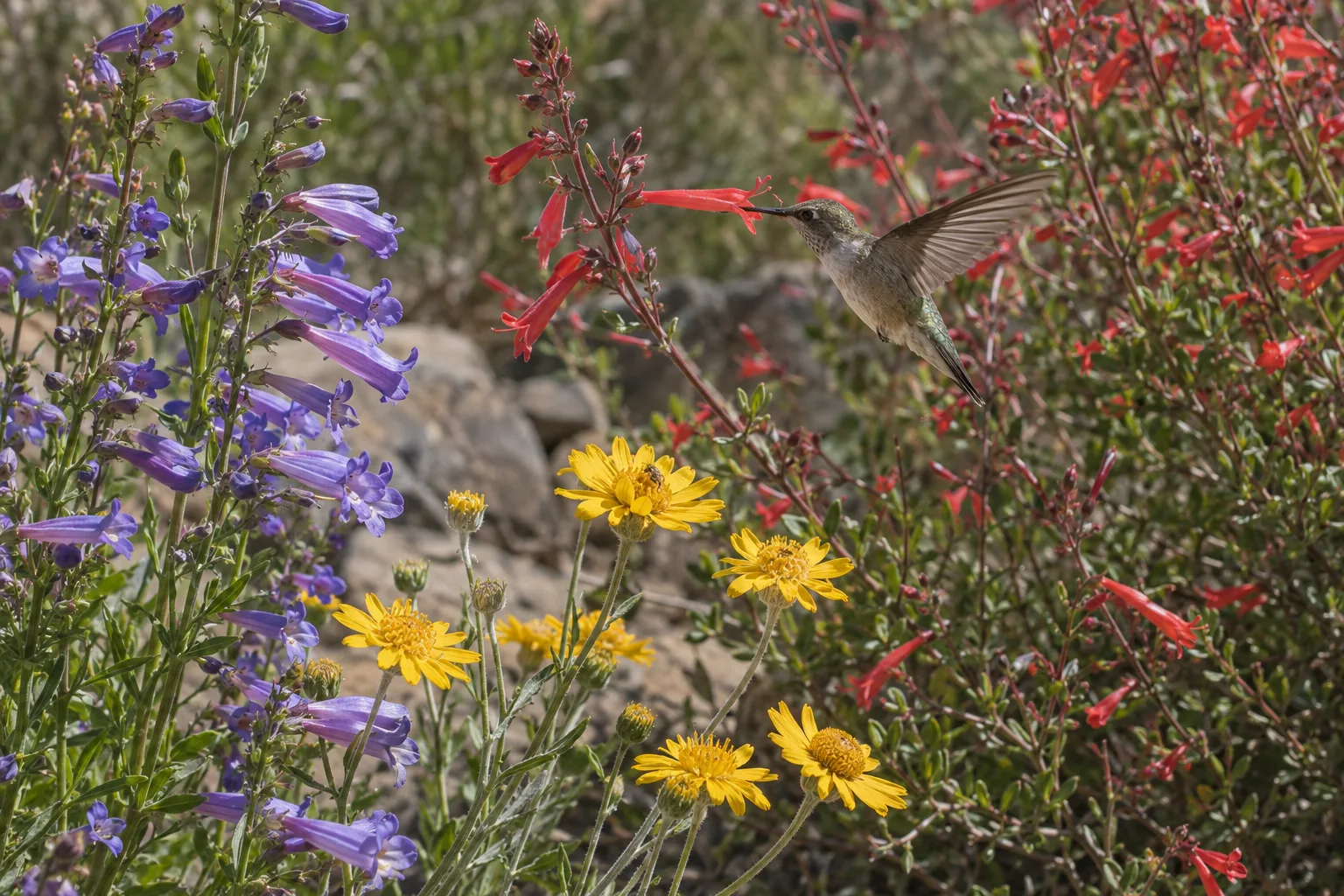
Plant in drifts of three to five of the same plant, because bees and hummingbirds find a mass of one flower more easily than scattered singles. Good choices include Parry’s penstemon (Penstemon parryi, 2 to 4 feet tall, spring bloom), desert marigold and chuparosa. Leave some seed heads standing after bloom for birds. The drawback is that a pollinator planting looks informal, which some neighborhoods and gardeners find too loose.
10. Low-water edible corner
Some edibles tolerate dry conditions better than most vegetables. Mexican oregano (Poliomintha longiflora, 2 to 3 feet tall), pomegranate (Punica granatum, 8 to 12 feet tall) and jujube (Ziziphus jujuba, 15 to 25 feet tall) need less water once established than a typical vegetable bed. Browse our herbs, vegetables and berries for seasonal options. Vegetables still need regular water, so the University of Arizona Cooperative Extension publishes a vegetable planting calendar for Maricopa County. Fruit trees drop fruit that needs picking up.
When is the best time to plant a low-maintenance garden in Arizona?
The best windows are October through November and late February through March. Cooler soil and air let roots grow before the stress of summer, so plants arrive at their first July with a working root system.
Planting in summer is possible for hardy plants like agave and cactus, but new roots dry out quickly when highs pass 110°F. If you must plant in summer, plan on shade cloth, deeper and more frequent watering, and early morning planting. For month-by-month timing, see our gardening calendars.
Wildflower seed follows its own schedule, sown in fall so winter cool triggers germination. Trees and large shrubs benefit most from fall planting.
How do I water a low-maintenance garden here?
Put every plant on drip irrigation and water deeply and less often. A long, slow soak sends roots down, while short daily sprinkles keep them shallow and make plants dependent on you.
New plants need water often, sometimes every few days in summer, tapering off as roots spread. Established desert shrubs usually go a week or two between summer waterings and three to four weeks in winter, though soil, exposure and plant type change that. Cacti and agave can go longer. Adjust the timer at least in spring and fall, and again if monsoon rain arrives.
Check emitters each spring, since clogs from hard water are common. Lines can also be chewed by rodents or cracked by sun, so walk the system once a month in summer and look for dry spots or soggy ones.
How do I start a low-maintenance garden step by step?
Start with one area, finish it properly and expand later. A well-built 100 square foot bed will do better than a half-finished yard.
- Pick the planting window (October to November or late February to March).
- Outline the bed and group plants by water need and mature width.
- Dig through or around caliche so the planting hole drains. Dig the hole two to three times wider than the root ball, but no deeper.
- Lay the drip mainline and emitters before or as you plant.
- Set each plant so the crown sits at or slightly above soil level.
- Water in deeply on planting day.
- Spread 2 to 3 inches of mulch or decomposed granite, keeping it a few inches from trunks and stems.

Skip heavy soil amendments for desert plants. They prefer lean soil, and rich amendments can hold water around the crown.
Frequently asked questions
How long do desert plants take to establish?
Most small shrubs and perennials are established after one full summer, when roots are wide enough to cope with less frequent watering. Trees often take two to three years. Keep to a regular watering schedule until then, even for plants that will later survive on very little.
Will a low-maintenance garden look bare?
It looks sparse at first, because young plants are small and set at their mature spacing. Layer heights and textures, mix evergreen shrubs with seasonal bloomers, and add mulch or rock for structure. Most beds look full by the second or third year.
Can I have color in every season?
Yes, if you stagger bloom times. Poppies, brittlebush and chuparosa carry late winter and spring, desert marigold blooms across several seasons, and Texas sage and autumn sage add color later in the year. Choose a few reliable plants for each season.
Do low-maintenance gardens need pruning?
Most need light shaping once or twice a year, usually after bloom or in late winter. Avoid shearing shrubs into balls, which removes flowers and weakens shape. Give plants room to reach full width, and pruning shrinks to a small job.
Can I keep part of my lawn?
Yes. Keep a smaller patch of turf where kids or pets play, and put it on a separate irrigation valve from the desert beds. That way the lawn gets its frequent watering and the drought-tolerant plants get the deep, infrequent soaks they need.
Which low-maintenance garden idea is right for your yard?
For the least work, choose a xeriscape bed, a gravel courtyard with pots or a decomposed granite bed. For color, add a flowering shrub border or a wildflower strip. Shade corners and edible patches take more planning but pay off in cooler patios and fresh herbs. If you want a lush, tropical look or a large play lawn, expect to water more and trim more. Come by the nursery in Queen Creek and we will help you match plants to your space.