A low-maintenance front yard in Arizona rests on four choices: gravel at the right depth, defined edges, drip irrigation, and plants sized for their mature space. Get those right and the yard needs only light seasonal care.
Key takeaways
- Plant trees and shrubs in October and November so roots spread through the mild winter before summer highs above 110°F.
- Spread decomposed granite 2 to 3 inches deep and keep it a few inches back from trunks and plant crowns.
- Put drip emitters at the drip line of each tree, and water established plants deeply but less often.
- Space every plant for its mature width, because crowding is a frequent reason a desert yard turns into a pruning chore.
- Ask your HOA and your town about rules and permits before you build walls, change drainage or swap plant types.

When should I build a low-maintenance front yard in Arizona?
Plant in October and November, with February and March as the second choice. Cool soil and mild air give roots several months to spread through the native soil before the first summer arrives, when highs climb above 110°F and new plants lose water faster than shallow roots can replace it. Hardscape such as pavers, edging and boulders can go in whenever the weather allows. Our gardening calendars show what to do in each month.
Summer planting is possible, but new roots are shallow and need close attention. Fall is easier.
What do I need to check before I start?
Spend a week watching the yard, then confirm your HOA and permit rules. Note which walls get hot afternoon sun, since south and west exposures reflect heat onto nearby plants. Dig a test hole about 18 inches deep and fill it with water; if it still holds water the next day, caliche or compacted clay is slowing drainage, and you will need to break through it or plant on a slight mound. Drainage matters.
Watch where monsoon runoff travels, too. Storms from July through September can drop heavy rain in a short time, and a shallow berm or swale can steer that water toward plants and away from the foundation.
Rules vary by community. Many HOAs set limits on plant coverage, rock color and plant types, and towns and cities may require permits for retaining walls or changes that alter drainage. We cannot say what your HOA or town allows, so ask both before you buy materials, and call Arizona 811 before any digging.
For the build itself you need decomposed granite, edging, a few boulders if you want them, drip tubing and emitters, a digging bar for caliche, and a shovel. Plan the plants first, because their mature size sets the spacing for everything else. Our plants department shows the kinds of shrubs, perennials and accents that suit the low desert.
Which hardscape features need the least upkeep?
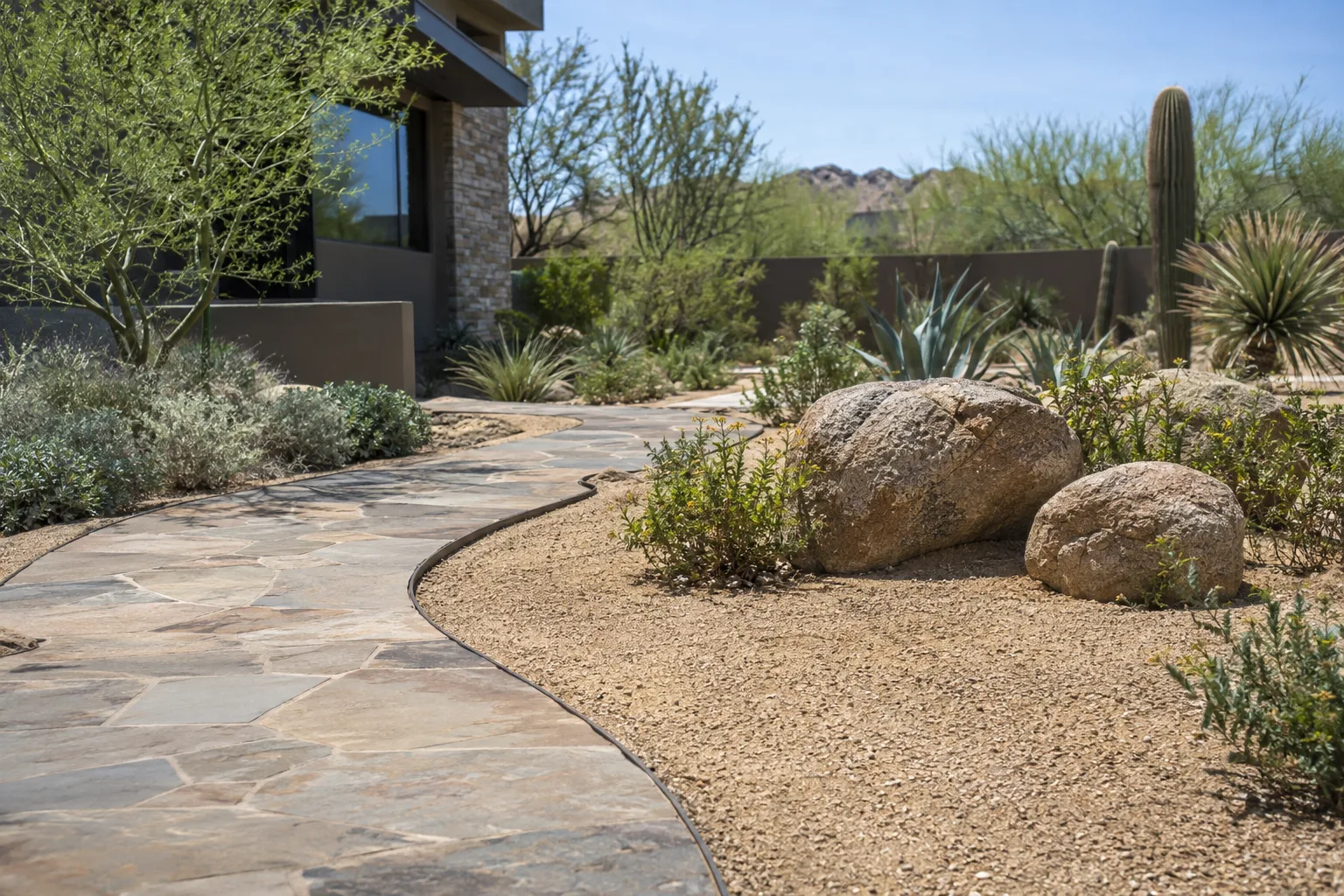
Steel edging, flagstone or paver paths, decomposed granite and boulders ask for almost nothing once installed. They also give the yard a finished shape while the plants are still small.
Paths and edging
Flagstone and concrete pavers both hold up in the low desert, and individual pieces can be reset if one settles. Dark stone on a south or west facing path absorbs enough heat to be uncomfortable underfoot in summer, so lighter tones are the safer choice there. Steel edging is thin, bends around curves and keeps gravel out of planting beds without regular attention.
Decomposed granite
Decomposed granite, usually called DG, comes in tan, gold and brown shades. Spread it 2 to 3 inches deep and keep it a few inches back from trunks and plant crowns, because wet gravel piled against stems invites rot. Many installers lay weed barrier fabric underneath. Leave the fabric out of areas where you want desert marigold or other wildflowers to reseed.
Boulders and pots
Boulders need no water, pruning or feeding. Group three in different sizes rather than lining them up, and set each one partway into the soil so it looks like it was always there. A large pot or planter holding a single agave or cactus gives you a focal point you can move later.
Which plants suit a low-maintenance front yard?
Pick plants adapted to the low desert and sized for the space they will fill at maturity. These are varieties we commonly carry, though availability changes week to week and season to season.
Color and groundcover
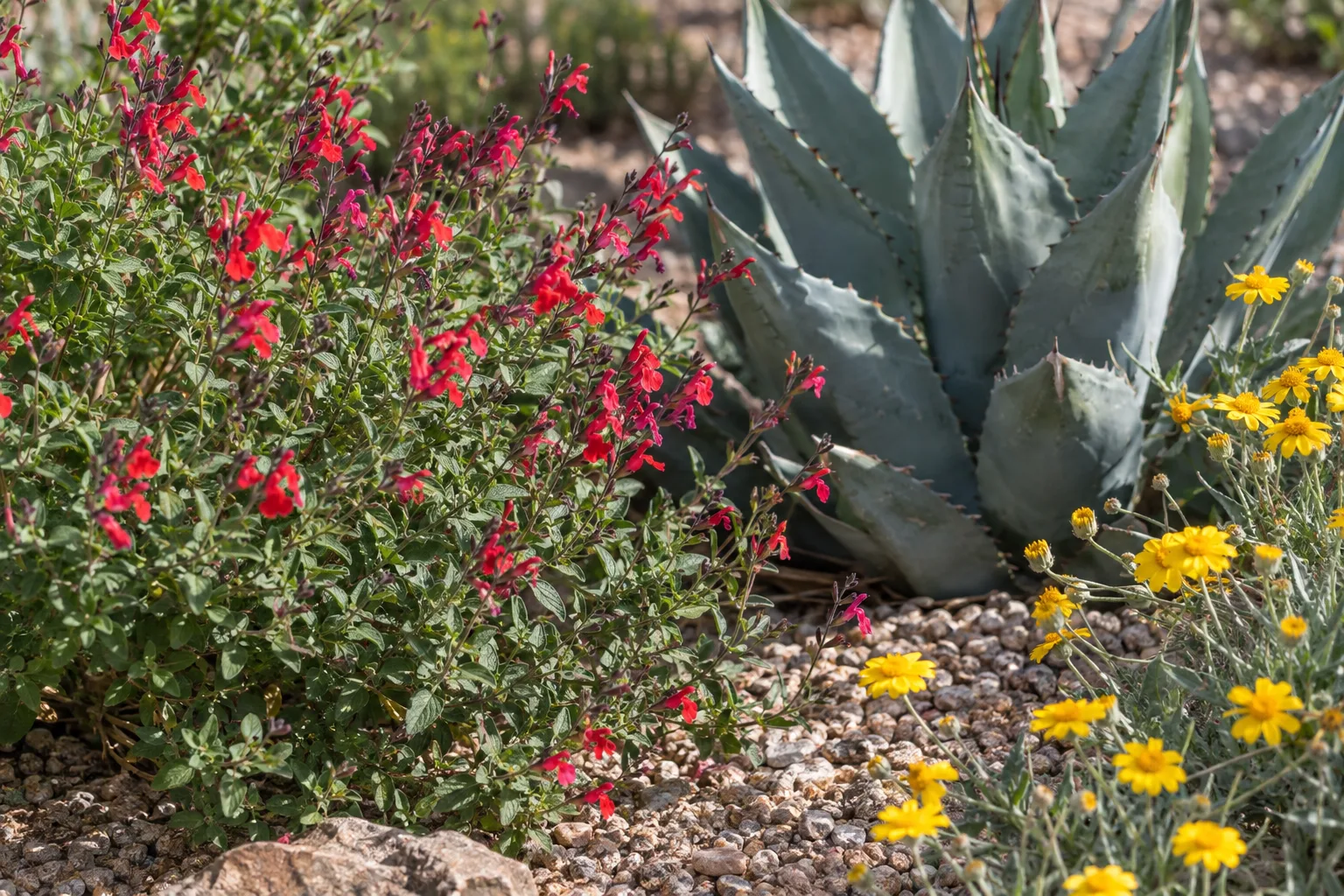
Desert marigold (Baileya multiradiata) grows about 1 to 2 feet tall with yellow flowers from spring into fall and reseeds lightly. It looks ragged after a bloom flush until you shear off the spent stems. Autumn sage (Salvia greggii) reaches 2 to 3 feet, blooms in spring and fall in red, pink or white, and handles reflected heat from walls. Cut it back by about a third in late winter to keep it from turning woody.
Red bird of paradise (Caesalpinia pulcherrima) grows 6 to 10 feet tall and flowers orange and red through summer heat. Frost can freeze it to the ground in a Queen Creek winter, and it usually resprouts in spring, so wait until March or later before cutting out damage.
Structure
Ocotillo (Fouquieria splendens) sends up spiny wands 10 to 20 feet tall and shows red flower tips in spring. It grows slowly and needs regular water until established, then little. Agave (Agave americana) forms a bold rosette up to about 6 feet tall and 8 feet wide, and its leaf tips are sharp, so keep it away from walkways and driveways.
Shade
A tree on the west side of the house cuts afternoon heat on the wall. Desert Museum palo verde (Parkinsonia ‘Desert Museum’) grows 20 to 30 feet tall and wide, flowers yellow in spring, and has thorns. It also drops petals and small leaflets that you will sweep up. You can compare other shade choices among our desert trees, and leave generous room, since a tree set 5 feet from a wall will crowd it.
How do I build the yard step by step?
Work from the ground up: layout, drainage, hardscape, irrigation, plants, then gravel.
- Sketch the yard, mark sun and shade, and note where water runs during storms. Call Arizona 811 before you dig.
- Remove lawn or weeds completely. Dig out Bermuda grass runners and roots instead of tilling them in, or they will resprout through the gravel.
- Grade so water moves away from the house, and break through caliche at each planting spot.
- Set pavers, edging and boulders before any plants go in, since heavy stone is easier to place in open ground.
- Lay drip lines and place emitters at each planting spot, with trees getting several emitters around the drip line.
- Plant in the native soil with the top of the root ball slightly above grade, and water each plant in well.
- Spread DG 2 to 3 inches deep, pulled back from stems and trunks.
- Set the controller to water new plants every few days for the first several weeks, then stretch the interval as roots establish.
How often should I water a low-maintenance front yard?
Water established plants deeply and infrequently, then stretch the interval in winter. The ranges below are starting points to adjust for soil, exposure and plant size.
| Plant type | Summer | Winter |
|---|---|---|
| Established desert trees | Every 10 to 14 days, deep soak | Every 3 to 4 weeks |
| Shrubs and perennials | Every 7 to 10 days | Every 2 to 3 weeks |
| Cactus and agave | Every 2 to 3 weeks | Every 4 to 6 weeks, or rain only |

Put emitters at the drip line, where the canopy ends, because feeder roots spread outward from the trunk. Add emitters as a tree grows. Our hard water leaves mineral deposits that can clog emitters, so watch each one run a couple of times a year.
A smart controller that skips cycles after monsoon rain can trim water use. Some water providers also offer turf removal or irrigation rebates, so ask yours. Our classes and events page lists workshops when they are scheduled.
What mistakes create extra work in a front yard?
Most extra work traces back to a few choices made during design and planting.
- Crowding plants. Tags list mature width, so follow it even when the gaps look empty in the first seasons.
- Piling gravel against trunks and crowns, which holds moisture on bark and invites rot.
- Giving a large tree one emitter at the trunk instead of several at the drip line.
- Planting into undisturbed caliche, where water collects and roots sit wet.
- Choosing plants for how they look in a pot, then setting tender ones in full west sun.
Each of these is cheap to avoid on installation day. Fixing them later costs more in labor and replacement plants, and a tree that has circled its roots in caliche is hard to rescue.
Frequently asked questions
Will a desert front yard look good in summer?
Yes, if the design relies on structure as well as flowers. Boulders, agaves, steel edging and gravel look the same in July as in April, and summer bloomers such as red bird of paradise add color through the heat. Spring bloomers rest by then, so mix plants with different bloom windows to keep something in color most of the year.
How do I keep weeds out of gravel?
Pull weeds when the soil is damp after irrigation or a monsoon storm, before they set seed. Roots slide out of loose soil more easily then. A weed barrier fabric under the gravel slows germination from below, but windblown seed still sprouts on top. If you use a pre-emergent herbicide, follow the product label for timing and safety.
Can I get a rebate for removing grass?
Possibly, since some water providers offer turf removal or irrigation rebates, but programs and amounts change. Contact your water provider before you tear anything out, because some programs require approval or an inspection before work starts. Ask what counts as qualifying landscaping, and keep photos and receipts in case the program asks for them.
How much pruning does a desert front yard need?
Most plants need light pruning once or twice a year. Cut autumn sage back in late winter, remove frost damage on red bird of paradise after the last frost threat has passed, and shear spent desert marigold stems. Trees and cactus need little beyond removing dead or crossing branches. Heavy pruning in summer exposes tissue to sunburn.
Do I need to amend the soil?
Usually not. Most desert-adapted plants do best in native soil, and a hole filled with rich amended soil can hold water around roots while the surrounding caliche or clay drains slowly. Loosen the soil around the planting hole, break through hardpan, and top with gravel. Check each plant tag for exceptions.
Is a low-maintenance front yard right for you?
Yes, if you want a yard that looks good with modest seasonal care and low water use. It suits homeowners ready to spend a weekend or two on setup and willing to wait while desert plants grow. It will disappoint anyone who wants a lush green lawn or a yard that never needs attention, since weeds, pruning and irrigation checks never disappear entirely. Check HOA rules first if your community limits rock or plant choices. Visit us in Queen Creek and talk through your yard with our staff.