
The best low-maintenance border plants for Arizona gardens are blackfoot daisy, desert marigold, lantana, red yucca, autumn sage, globe mallow, angelita daisy and compact Texas ranger. Each handles alkaline soil and summer highs above 110°F once established.
Key takeaways
- Plant borders from mid-September through October or from late February through March, and avoid June through August.
- Set each crown about 1 inch above the surrounding soil so water never pools against the stem.
- Skip heavy compost and fertilizer for most of these plants; lean soil keeps them compact.
- Established plants usually need a deep soak every 7 to 14 days in summer, and far less in winter.
- Cut lantana and autumn sage back in late February, after the last frost risk has passed.

What makes a good border plant for the low desert?
A good border plant handles summer highs above 110°F, alkaline soil with a pH of roughly 7.5 to 8.5, and uneven watering without declining. Heat reflected off block walls and pavement can add 15 degrees or more to a south or west bed, so the plant has to tolerate that as well.
Many East Valley yards also sit on caliche, a cement-like mineral layer that blocks drainage and holds water around roots. Drainage matters most. Anything that needs acidic soil, weekly feeding or daily water will cost you time and money here, while the plants below grow well in lean, fast-draining ground and bloom through much of the year.
Which low-maintenance border plants work best in Arizona?
These eight cover the front, middle and back of a border. They are varieties we commonly carry, though availability changes week to week and season to season, so browse our plant department or ask us what is on the benches. Sizes below are typical mature ranges.
1. Blackfoot daisy (Melampodium leucanthum)
Blackfoot daisy forms a tidy mound about 8 to 12 inches tall and 12 to 18 inches wide, covered in white flowers with yellow centers for much of the year. It wants full sun and very sharp drainage, and it takes little water once established. The drawback is that rich, amended soil or frequent watering makes it flop and decline.
2. Desert marigold (Baileya multiradiata)
Desert marigold is a Sonoran Desert native with silvery foliage and bright yellow flowers on tall stems. Expect roughly 12 to 18 inches tall and about as wide, in full sun with low water. It reseeds freely. Clip spent flower stalks before the seed sets if you want to keep it in its place. Short-lived plants are normal, so let a few seedlings fill in.
3. Lantana (Lantana camara and Lantana montevidensis)
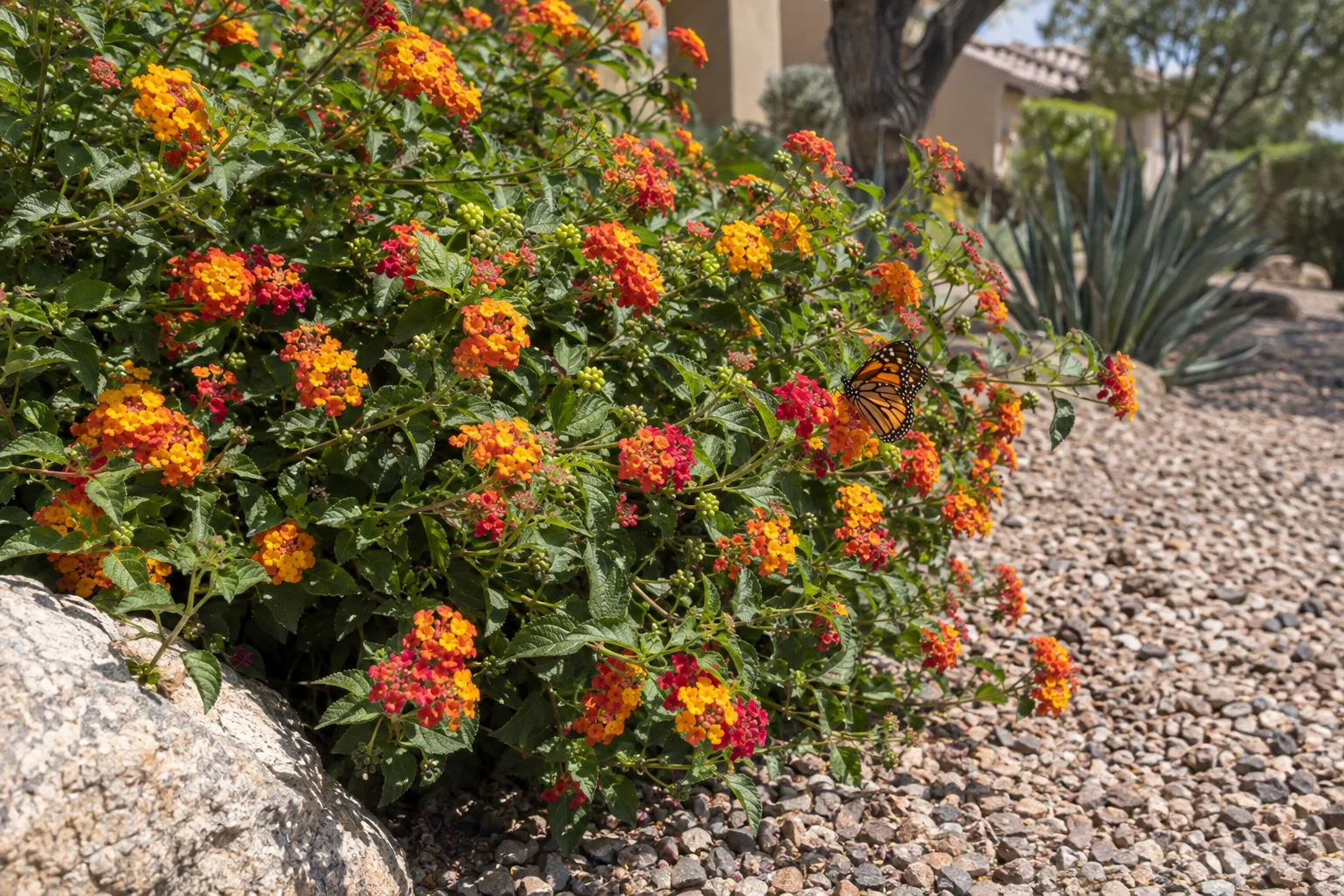
Lantana blooms from spring until frost, handles reflected heat well and draws butterflies. Trailing types stay about 1 to 2 feet tall and spread 3 to 6 feet, while shrub types reach 3 to 4 feet. Give it full sun and a deep soak every week or so in summer. The drawback is toxic berries, covered in the FAQ below.
4. Red yucca (Hesperaloe parviflora)
Red yucca is not a true yucca. It forms a clump of grass-like leaves about 2 to 3 feet tall and wide, and sends up tall stalks of coral to red flowers that hummingbirds visit, usually from spring into early summer. It needs full sun and little water once established. The drawback is that the flower stalks look ragged after they brown and need to be cut out.
5. Autumn sage (Salvia greggii)
Autumn sage is a woody perennial, about 2 to 3 feet tall and wide, that blooms in red, pink, salmon or white from spring into fall. It likes full sun with some relief from hot afternoon reflected heat, and moderate to low water once established. It looks leggy if you skip the late February trim, and a bed against a hot west wall can scorch it.
6. Globe mallow (Sphaeralcea ambigua)
Globe mallow is a native perennial with gray-green leaves and apricot-orange flowers, mainly in spring with a second flush after summer rains. It reaches about 2 to 4 feet tall and 2 to 3 feet wide in full sun, with low water. The leaf hairs can irritate skin, so wear gloves when you cut it back, and expect a loose, airy shape instead of a tight mound.
7. Angelita daisy (Tetraneuris acaulis)
Angelita daisy makes a neat mound of narrow, fine-textured leaves under 12 inches tall and about 12 to 18 inches wide, with yellow daisies through most of the year, including mild winter stretches. It likes full sun and moderate water. It suits the front edge of a bed and repeats well as a unifying element. It can rot in soggy soil, so give it good drainage.
8. Texas ranger (Leucophyllum frutescens)
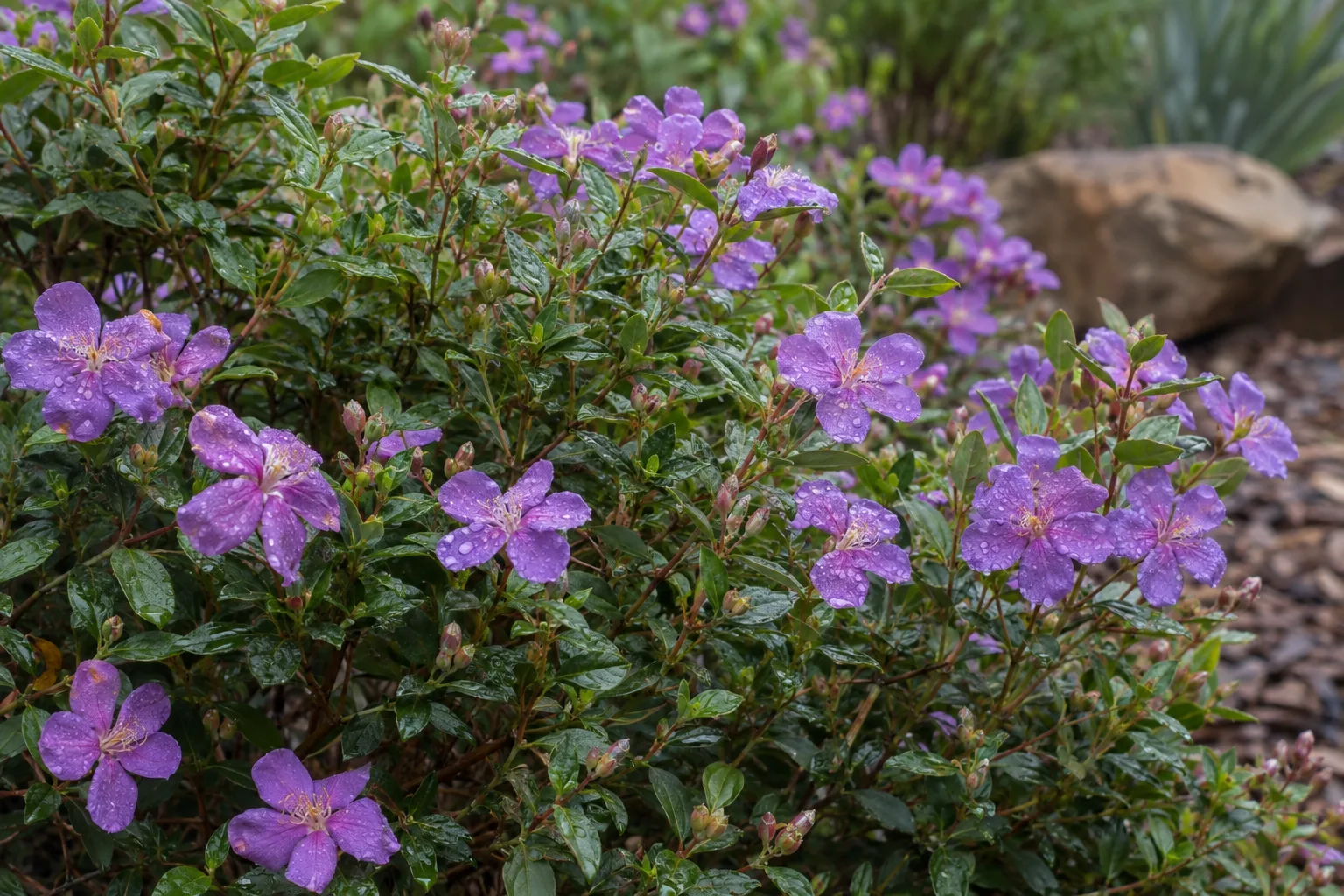
Texas ranger, also called cenizo, is a silver-leafed shrub that bursts into lavender-purple bloom after humid weather or monsoon storms. Standard plants grow 5 to 8 feet tall, so choose a compact variety if you want 3 to 4 feet for the back of a border. It needs full sun, sharp drainage and little water. Fertilizer and heavy shearing both ruin its shape.
How do I layer plants into a border that looks planned?
Layer by height, repeat colors at intervals and contrast textures. Plant the tallest in back, the mid-height plants in the center and the low mounds along the front edge, so each one shows and gets the sun it wants.
- Front (under 12 inches): blackfoot daisy, angelita daisy, trailing lantana.
- Middle (12 to 36 inches): desert marigold, autumn sage, globe mallow, red yucca.
- Back (3 feet and taller): compact Texas ranger and shrub-type lantana.
Repeat one plant two or three times along the border so the eye reads a pattern. Fine, grassy red yucca looks good beside the rounded silver form of Texas ranger. If you want winter and spring color between permanent plants, our annual flowers and foliage can fill gaps.
How do I prepare the soil and plant a border in Queen Creek?
Dig a test hole 18 to 24 inches deep first to find out whether caliche is hiding below the surface. Most of these plants want native soil with good drainage, not a rich amendment mix.
If you hit caliche, break through it with a digging bar or build the bed up a few inches so water drains away from the roots. Plant in the fall or late winter, when roots can settle in before extreme heat. Our gardening calendars show what else belongs in each month.
- Mark the bed outline with a hose or chalk, then lay the pots out in place before digging.
- Dig each hole twice as wide as the root ball and no deeper than the root ball.
- Loosen circling roots with your fingers or make a few shallow vertical cuts.
- Set the crown about 1 inch above the surrounding soil and backfill with native soil.
- Build a low basin of soil around each plant and soak it slowly and deeply.
- Spread 2 to 3 inches of decomposed granite or gravel, keeping it off the crowns.
- Water new plants often at first, then taper to deep, weekly soaks through the first summer.

The most common mistakes are planting too deep, adding rich compost to a desert-adapted plant and giving frequent shallow sips of water. All three invite root rot, especially when monsoon storms add water on top of a regular irrigation schedule.
How often should I water established border plants?
Established plants do best with deep, infrequent soaks that follow the season. Water runs out of plant tolerance quickly in summer and almost not at all in winter, so adjust the timer each season instead of leaving it fixed for the year.
| Season | Typical interval | Notes |
|---|---|---|
| Winter (December to February) | Every 2 to 4 weeks | Growth slows; wet soil in cold weather invites rot. |
| Spring (March to May) | Every 7 to 14 days | Increase as temperatures climb. |
| Early summer (June to early July) | Every 5 to 10 days | Hottest, driest stretch; soak deeply. |
| Monsoon (July to September) | Adjust to rainfall | Skip irrigation after a soaking storm. |
| Fall (October to November) | Every 10 to 14 days | Good time to plant and recover. |
New plants need more water for their first 60 to 90 days, whatever the season. Hard Queen Creek water leaves salts behind, so an occasional slow, deep soak helps flush them below the root zone.
When should I prune and fertilize low-maintenance border plants?
Prune in late February, once frost risk has mostly passed, and fertilize little or not at all. Most plants on this list bloom better and hold a better shape when left lean.
Cut lantana back hard, to about 6 to 12 inches, to clear frost-damaged stems and renew growth. Trim autumn sage by about a third at the same time. Shear globe mallow and desert marigold lightly after a bloom flush to encourage another. Remove red yucca flower stalks once they brown. Remove only dead wood from Texas ranger.
If you feed anything, use a light dose of slow-release fertilizer in March on lantana and autumn sage, at half the label rate. Leave Texas ranger, blackfoot daisy and globe mallow unfed.
Frequently asked questions
How long until these plants can handle drought?
Most need about one full year in the ground. During that first year the roots are still growing outward and downward, so they need regular deep watering, especially through the first summer. After that you can stretch the interval gradually and watch for wilting or leaf drop as a signal to water sooner than planned.
Can they handle a hot block wall?
Texas ranger, lantana, desert marigold and blackfoot daisy tolerate reflected heat best. Autumn sage and globe mallow often look better with some afternoon relief, so an east-facing wall suits them. Whatever you plant against a west or south wall, give it extra water for the first summer and mulch the soil to keep roots cooler.
Are any of these plants toxic to pets or children?
Lantana is the one to watch, because its berries are listed as toxic to dogs, cats and people by the ASPCA. Globe mallow leaf hairs can irritate skin. If pets or small children roam the yard, place lantana away from play areas and check each plant on the ASPCA list or with your vet.
Will these plants grow in pots?
Lantana, angelita daisy, autumn sage and blackfoot daisy can work in containers with excellent drainage. Pots dry out fast in July and August, sometimes needing daily water, and dark pots can overheat roots. Texas ranger and red yucca outgrow most containers over time. Browse our pottery and planters for pots with large drainage holes.
Are low-maintenance border plants right for your yard?
They suit most sunny East Valley yards, especially if you want color across the year, modest water bills and few weekends spent pruning. They are a poor match if you want a lush, evenly green border or a formal clipped hedge, or if the bed stays wet after irrigation or storms and cannot be raised or regraded. Plan on a first summer of careful watering. Visit us in Queen Creek and we will help you match plants to your sun, soil and wall.