

The best lazy gardening hacks for Arizona cut work at the source: mulch your beds, run drip irrigation on a timer, choose desert-adapted plants, and plant in fall. Each one trades an hour or two of setup for weeks of saved effort.
Key takeaways
- Spread 3 to 4 inches of organic mulch over planting beds and keep it a few inches back from trunks and stems.
- Put drip irrigation on a timer and reset the schedule four times a year, once per season.
- Push a screwdriver or moisture meter 4 to 6 inches into the soil before you water.
- Plant trees and shrubs in early fall so roots settle in before summer highs above 110°F.
- Desert-adapted plants usually need little or no fertilizer once established.
How do I cut watering time in an Arizona yard?
Four changes do most of the work: mulch, drip irrigation, a timer you reset each season, and a quick soil check before you water. Together they turn watering from a daily chore into a few minutes of seasonal adjustment.
Hack 1: Mulch every bed 3 to 4 inches deep
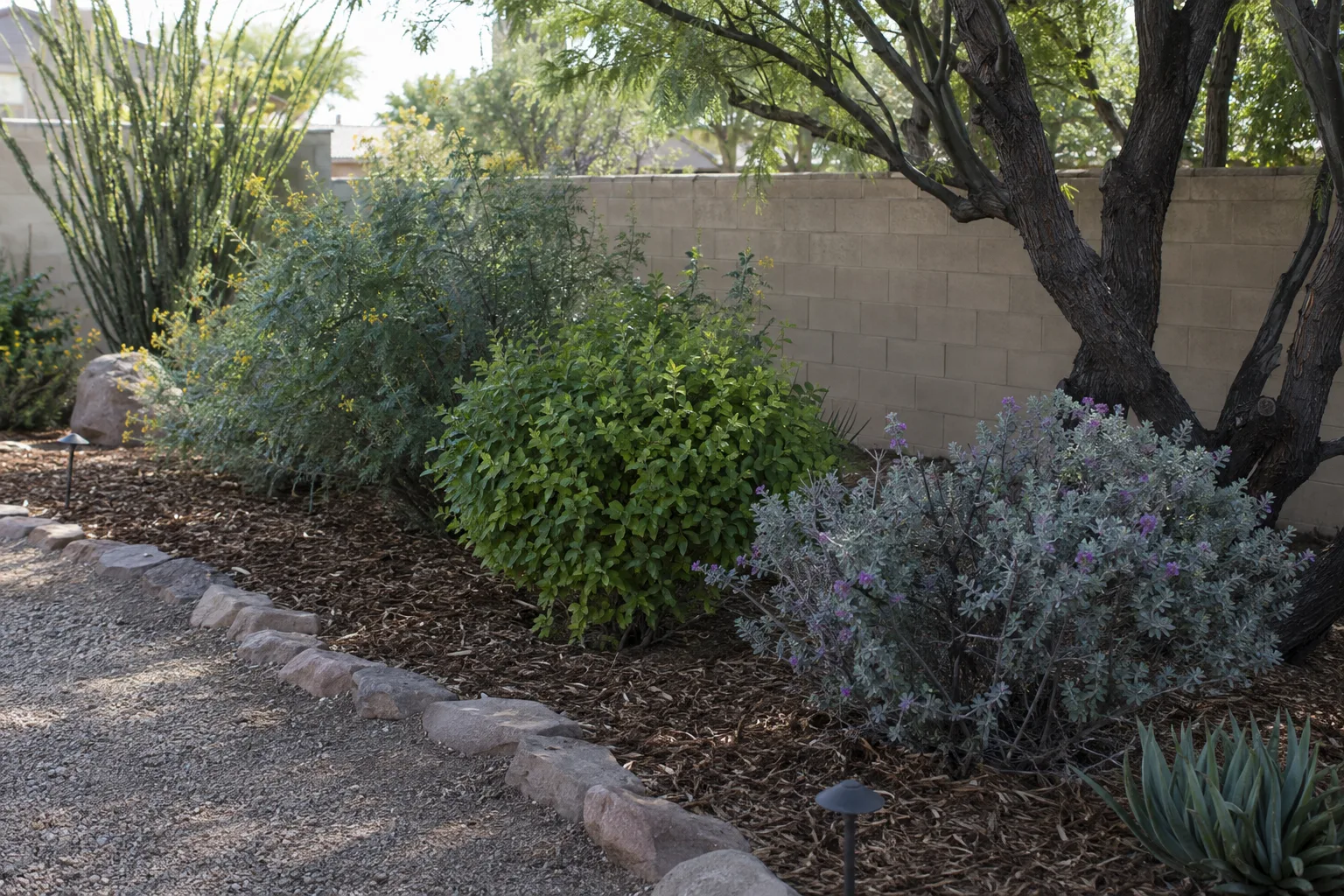
A 3 to 4 inch layer of shredded bark or wood chips slows evaporation, keeps roots cooler and blocks many weed seeds from sprouting. Bare soil on a July afternoon can run far hotter than the air above it, and mulch shades it. Keep the layer a few inches back from trunks and stems so the crown stays dry.
Organic mulch breaks down, so plan to top it off about once a year. Decomposed granite suits cactus, agave and other plants that want dry crowns. It lasts for years but adds nothing to the soil.
Hack 2: Put drip irrigation on a timer
Drip lines deliver water slowly at the roots, so less is lost to evaporation and runoff than with a sprinkler or a hose. A basic setup has a timer at the hose bib, 1/2 inch tubing as the main line, 1/4 inch tubing to each plant, and pressure-compensating emitters rated at 1 to 2 gallons per hour. Lay the main line before you plant when you can, because tubing is much easier to run across bare ground.

Hack 3: Reset the timer at the start of each season
A timer set in spring and left alone overwaters in winter and underwaters in July. Plants in the low desert use far less water in January than in the summer months above 110°F. Change the schedule four times a year, or use the seasonal percentage setting that many timers include. Set a phone reminder.
The monsoon, roughly July through September, adds a wrinkle. After a good storm, skip a cycle and check the soil first. Hard water leaves mineral buildup that can clog emitters, so look at each one every few months and replace any that have stopped dripping.
Hack 4: Check the soil before you water
Push a screwdriver or a soil moisture meter 4 to 6 inches into the ground, and wait a day or two if the soil feels damp. Overwatering kills plants here too, especially in winter and in heavy, slow-draining soil where roots sit wet and rot. A meter takes the guessing out of it.
Which plants need the least care in the low desert?
Plants that evolved for heat, alkaline soil and little rain need the least care. Choosing them saves more time than any gadget, because you stop fighting the site. You can browse our full plant selection to match a plant to each spot in your yard.
Hack 5: Choose desert-adapted plants
These are varieties we commonly carry, and availability changes week to week and season to season. Each has one drawback worth knowing before you buy.
- Texas sage (Leucophyllum frutescens) is an evergreen shrub with silvery leaves that tends to flower after humid weather or rain. Shearing it into a tight ball removes much of the bloom.
- Desert willow (Chilopsis linearis) is a small, fast-growing tree with trumpet-shaped flowers through the warm months. It drops leaves in winter and litters seed pods. See more in our desert trees.
- Red bird of paradise (Caesalpinia pulcherrima) blooms through summer in full sun and reflected heat. A hard frost can freeze it to the ground, and it usually regrows in spring.
- Palo verde (Parkinsonia species) has green bark and yellow spring flowers and needs little water once established. It sheds small leaves, twigs and blossoms.
- Agave (Agave species) stores water in its leaves and asks for almost nothing. Its spines are sharp, so keep it back from walkways.

Hack 6: Go light on fertilizer for natives
Desert-adapted plants evolved in lean soil, and heavy feeding pushes soft, fast growth that needs more pruning and handles heat poorly. Most need little or no fertilizer once they are established. Citrus trees are the exception because they are heavy feeders, so keep them on their own schedule and follow the product label.
How do I handle caliche without digging all day?
Open the caliche once, at planting, and put shallow-rooted or fussy plants in a raised bed or container instead. Caliche is a cemented layer of calcium carbonate under many East Valley yards, and it blocks both drainage and roots.
Hack 7: Break through the layer at planting time
Dig the hole 2 to 3 times wider than the root ball and no deeper than it. If you hit a hard white layer, break through it with a digging bar or a rented hammer drill so water can drain. Then fill the hole with water and come back the next day. Standing water means the plant would sit in a bathtub, so open the hole further before planting.
Hack 8: Grow vegetables and herbs above the problem
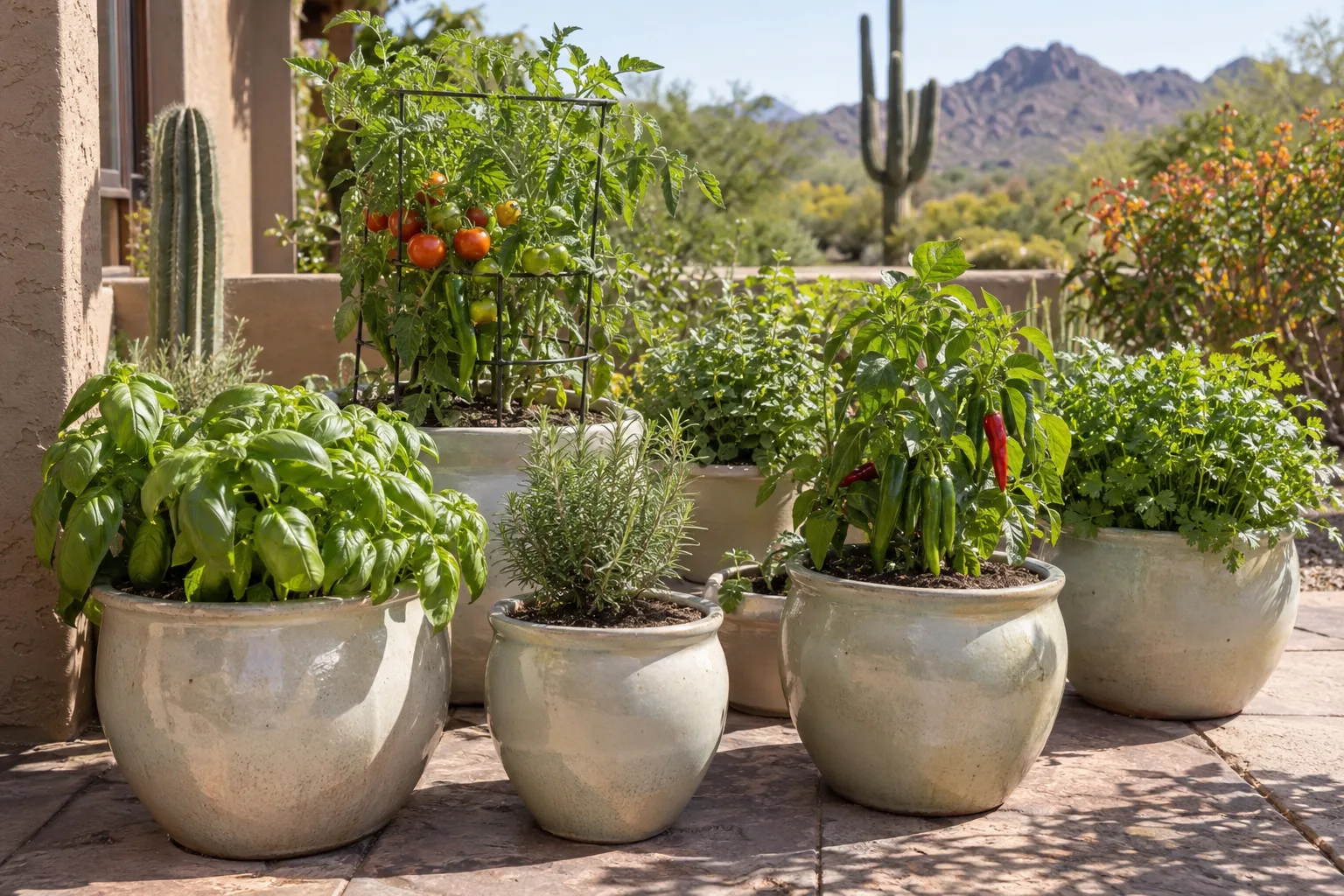
Raised beds and large containers skip the soil problem. Fill them with a quality potting or raised-bed mix and you control drainage and fertility from day one. In summer, a large, light-colored pot holds moisture longer and keeps roots cooler than a small dark one. Our pottery and planters come in many sizes and materials. Cluster pots so one drip line can serve several.
How do I keep weeds down without weekend work?
Cover the soil, crowd the gaps and pull weeds while they are small. Weeds need bare ground and light, and you can take away both.
Hack 9: Mulch, space plants closely and pull early
Mulch covers the bare soil, and plants spaced close enough to shade the ground between them leave little room for seedlings. A weed pulled at 2 inches comes out in seconds. The same weed at 12 inches, with a taproot, can take minutes and leave root pieces behind. Pull early.
Weeds jump after monsoon storms. Take a 10 minute walk through your beds the week after a big rain, and pull when the soil is damp from rain or irrigation so roots slide out whole.
When is the laziest time to plant in Arizona?
Early fall is the laziest time to plant trees, shrubs and perennials in the low desert. Roots grow through the mild months, and the plant faces its first summer already settled.
Hack 10: Plant in fall and let winter do the rooting
Fall planting, from about October through November, gives roots months of mild weather before the first run of days above 110°F. Spring works for warm-season plants once frost risk has passed, though they get only a few months before summer. Try to avoid planting from June through August.
Vegetables follow their own windows. The University of Arizona Cooperative Extension publishes a vegetable planting calendar for Maricopa County, and our gardening calendars are a good month-by-month check. For the plants themselves, see our herbs, vegetables and berries.

What mistakes make a low-maintenance yard more work?
A few habits quietly undo the savings from everything above.
- Setting the timer once and never changing it, so plants are overwatered in winter and stressed in summer.
- Piling mulch against trunks and stems, which holds moisture on the bark and invites rot.
- Putting a thirsty plant in a west-facing spot with reflected heat from a wall or driveway.
- Filling small, dark pots for a summer patio, where roots overheat and dry out within a day.
Frequently asked questions
Do I need landscape fabric under gravel?
Landscape fabric slows weeds for a few years at most. Dust, leaf litter and wind-blown seed collect on top of the gravel, weeds root in that layer, and the fabric makes pulling them and later digging messier. Many gardeners skip it and rely on a thicker layer of mulch and closely spaced plants.
How much should I water during the monsoon?
Water less, and let the soil decide. Storms from roughly July through September can supply enough moisture to skip one or more drip cycles, though short showers wet only the top inch or so. Push a screwdriver 4 to 6 inches down after a storm and run the timer only if that depth is dry.
Can I leave my yard alone during a summer trip?
Yes, if your drip irrigation runs on a working timer and you test it before you leave. Check that every emitter is dripping, put pots on the same line or move them into shade, and ask a neighbor to look in after a week. Containers dry fastest, so they fail first.
How long do new plants need extra water?
Most new trees and shrubs need regular watering for the first one to two years, and large trees often take longer. Established plants send roots well past the original root ball and need far less. Move emitters outward as the plant grows, and cut back only after you see steady new growth.
How often should I prune low-maintenance shrubs?
Most need light shaping once or twice a year. Remove dead or crossing branches and keep the natural form instead of shearing into a ball, which cuts flowering on shrubs such as Texas sage. Red bird of paradise is often cut back in late winter or early spring, once new growth shows after frost damage.
Which lazy gardening hack should I start with?
Start with mulch and a drip timer. Together they cover the two biggest time sinks, watering and weeding, and most yards can finish both in a weekend. Fall planting and desert-adapted plants pay off next. Skip the drip system if your whole garden is a few pots on a patio, since a watering can and a daily glance may suit you fine. If you are unsure what fits your yard, stop by our nursery in Queen Creek and talk it through with us.
