
A lavender front door works well in Arizona when you choose a slightly gray, medium shade, test it in afternoon sun, and use satin or semi-gloss exterior paint. Silver-leaved plants beside it carry the color into the yard.
Key takeaways
- Choose a medium, slightly gray lavender. Pale tints can wash out to near white at midday, and red-leaning shades can turn pink in late afternoon light.
- Test a large swatch on the door itself at morning, noon and late afternoon before you buy a full gallon.
- Paint from about October through April, with the door in shade and the air temperature inside the range printed on the paint can.
- Use 100% acrylic exterior paint in satin or semi-gloss. A west or south door will fade sooner than a shaded one.
- Plant Spanish lavender in fall or early spring in fast-draining soil, because wet roots during the monsoon are the usual cause of losses here.

Why does a lavender door suit a desert home?
It suits a desert home because a cool violet balances the warm tans, creams and terracotta of stucco and stone. Against walls that read yellow or orange in afternoon light, lavender looks calm and distinct. A mid-tone lavender also absorbs far less heat than a charcoal or black door.
The color pairs well with plants that already grow in low desert yards. Silver foliage and purple blooms from desert-adapted shrubs and perennials repeat the door color at ground level, so the entry looks planned. Light changes the color through the day. Morning sun cools it, and late sun warms it, sometimes toward pink.
Which lavender shade works best in Arizona sun?
A medium, slightly gray lavender is the safest choice, because strong sun bleaches pale tints and exaggerates the red in warmer violets. Here is how the main options behave.
- Pale lilac: Looks soft on sandy stucco in shade but can read almost white on a door that gets full sun.
- Medium blue-violet: Holds its character through most of the day and suits both warm and cool walls.
- Lavender-gray: Shifts toward silver in bright light and suits contemporary homes with clean lines.
- Deep plum-lavender: Looks dramatic on white or light gray walls, though it can feel heavy next to dark stone or lots of wood.
Test the color on the real door, or on a large piece of white board propped against it, and look at it at three times of day. A paint chip under store lighting tells you very little about how the color behaves on a west-facing door at 4 p.m. in July.
When is the best time to paint a front door in Arizona?
The best window runs from about October through April, in the morning, while the door is still in shade. Paint applied to a hot surface dries too fast, which leaves brush marks and weak adhesion.
A door in direct sun can be many degrees hotter than the air, and summer highs here pass 110°F. Read the application temperature range on your paint can and follow it. If you are planting at the same time, our gardening calendars show which months suit which jobs in the low desert. Fall happens to be good for both.
How do I paint a lavender front door?
Prepare the surface thoroughly, prime it, and apply two thin coats of satin or semi-gloss exterior paint. Thin coats cure harder and last longer than one thick coat. Work through these steps in order.
- Wash the door with mild detergent to remove dust and grime, then let it dry completely.
- Sand glossy areas, fill dents and cracks, and wipe away the dust.
- Apply an exterior primer suited to your door material, whether wood, steel or fiberglass.
- Brush or roll the first thin coat of lavender in the shade, in the morning.
- Wait the recoat time listed on the can, then apply the second thin coat.
- Leave the door open or ajar until the paint cures enough that it will not stick to the weatherstripping, following the label.
Choose 100% acrylic exterior paint with UV resistance. Satin and semi-gloss form a harder film than flat paint and wipe clean after dusty monsoon storms, which run roughly July through September. Keep a small jar of leftover paint for touching up chips before they spread.
Which plants look good beside a lavender door?
Silver foliage and purple or yellow flowers look best, and the five plants below fit that pattern. These are varieties we commonly carry, though availability changes week to week and season to season. Sizes are typical for mature plants and vary by variety and by how you prune.
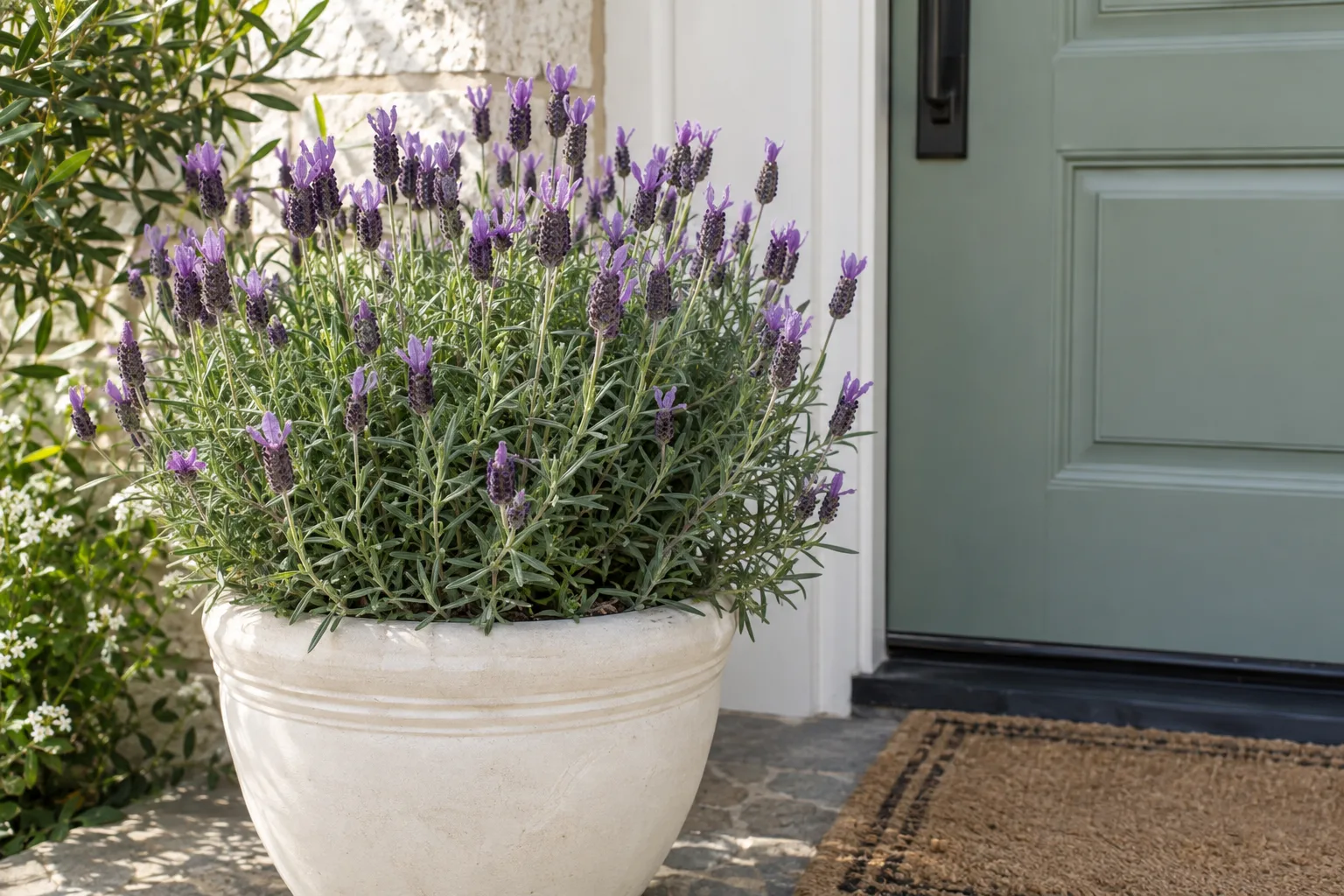
Spanish lavender (Lavandula stoechas)
It grows about 2 to 3 feet tall and wide, wants full sun, and needs little water once established. It blooms from late winter into spring. The drawback is short life: lavender in the low desert often declines after a few years, especially if summer monsoon moisture sits around the roots, so plant it in gravelly, fast-draining soil or a pot.
Russian sage (Perovskia atriplicifolia)
It reaches 3 to 4 feet tall and about as wide, takes full sun, and needs low water once established. Silver stems carry violet-blue flowers in summer, after lavender has slowed down. It can look rangy and open by late summer, and a hard cutback in late winter keeps it tidy.
Desert ruellia (Ruellia peninsularis)
It grows 2 to 3 feet tall and wide in full sun to light afternoon shade, with low to moderate water. Purple trumpet flowers repeat the door color over a long season. Frost can burn it back in cold winters, so plant it where a wall or overhang offers some protection.
Angelita daisy (Tetraneuris acaulis)
This low mound stays about 6 to 12 inches tall and a foot or so wide. It wants full sun and low water. Bright yellow flowers sit against fine, grassy foliage and look good as a border along a walk to the door. It is small, so it needs several plants for impact.
Desert marigold (Baileya multiradiata)
It grows 1 to 2 feet tall and wide in full sun with low water. Silvery foliage holds yellow flowers on tall stems over a long season, and yellow is the color opposite violet on the wheel. It is short-lived, though it often reseeds itself if you leave bare soil nearby.
Keeping entryway plants alive in reflected heat
Entry plants face heat from the door, walls and paving as well as from the sky. Walkway and paver surfaces in summer can run far hotter than the air, and that heat bakes roots in shallow pots.
Use light-colored pottery and planters that reflect heat, choose large sizes that hold moisture longer, and raise them slightly off the paving on pot feet. A 2-inch layer of gravel on the soil surface slows evaporation and keeps stems dry. Water deeply in the early morning, and run drip irrigation on a timer so the entry does not depend on your memory.

Plant in fall or early spring so roots establish before summer. Skip fertilizer in peak summer, since it pushes tender growth that burns. Lavender prefers lean soil, and our alkaline, caliche-prone ground suits it better than rich amended beds if drainage is good.

What mistakes spoil a lavender entryway?
Most problems come from skipping the test, painting in the wrong conditions, or giving lavender too much water. Watch for these.
- Choosing from a paint chip without testing in afternoon light.
- Painting a hot door in direct midday sun.
- Using flat paint, which marks easily and weathers faster than satin or semi-gloss.
- Planting English lavender (Lavandula angustifolia), which struggles in low desert summers, instead of Spanish lavender or heat-tolerant hybrids.
- Watering lavender on the same schedule as thirsty annuals.
- Crowding five or six species into a few feet, which pulls attention away from the door.
Frequently asked questions
Will a lavender door fade in the Arizona sun?
It can fade over several years, and west and south doors fade fastest. A 100% acrylic exterior paint with UV resistance, in satin or semi-gloss, slows that down. Ask the paint manufacturer about expected life and whether a clear topcoat is compatible before adding one. Keep leftover paint for touch-ups.
What hardware looks best on a lavender door?
Brushed nickel and satin silver echo silver plant foliage and suit most lavender shades. Matte black gives a crisp, modern contrast on lighter lavenders. Oil-rubbed or aged bronze warms deeper plum shades and fits Spanish Colonial styles. Match the finish across the handle, hinges and house numbers so the door reads as one design.
What outdoor lighting makes lavender look best at night?
Warm white bulbs around 2700 to 3000K bring out the red-violet in lavender and keep it looking rich. Cool white bulbs at 4000K or higher push it toward blue-gray and can make it look flat. Wall sconces on both sides of the door, plus one low uplight on a plant, give an even glow.
Which wall colors go with a lavender door?
Warm neutrals work best: sandy beige, cream, warm gray and pale terracotta. White stucco makes lavender stand out sharply. Cool blue-gray walls can compete with the door, so hold your swatch against the wall and trim together before you commit to a shade.
Do lavender plants bloom all year?
No. Spanish lavender blooms mainly from late winter through spring, with a lighter flush sometimes in fall. Russian sage covers summer, and desert ruellia blooms over a long season. Pairing them keeps purple in the entry for most of the year, though a few weeks of rest in peak summer is normal.
Is a lavender front door right for your home?
Yes, if your door gets some shade or you accept touching it up every few years. Lavender suits warm stucco, silver plants and a gardener who will test a swatch first. Skip it if you want zero repainting on a full-sun west door, or if you will not give lavender fast-draining soil and restrained watering. Come see the silver and purple plants in person at our nursery in Queen Creek.