

Pansies, snapdragons, alyssum, petunias, dianthus and calendula are easy-care flowers for an Arizona garden in late winter. Plant them from mid-January through February in the low desert, and most will bloom into April or May.
Key takeaways
- Set out transplants from mid-January through February for color in February through April.
- Pansies, snapdragons, alyssum, dianthus and calendula tolerate light frost into the upper 20s°F, while petunias need cover below about 32°F.
- Loosen the bed 12 inches deep and mix 2 to 3 inches of compost into the top 6 inches before planting.
- Water when the top inch of soil is dry, usually every 2 to 4 days in cool weather.
- Expect 8 to 12 weeks of color before highs in the 80s start to fade the blooms.
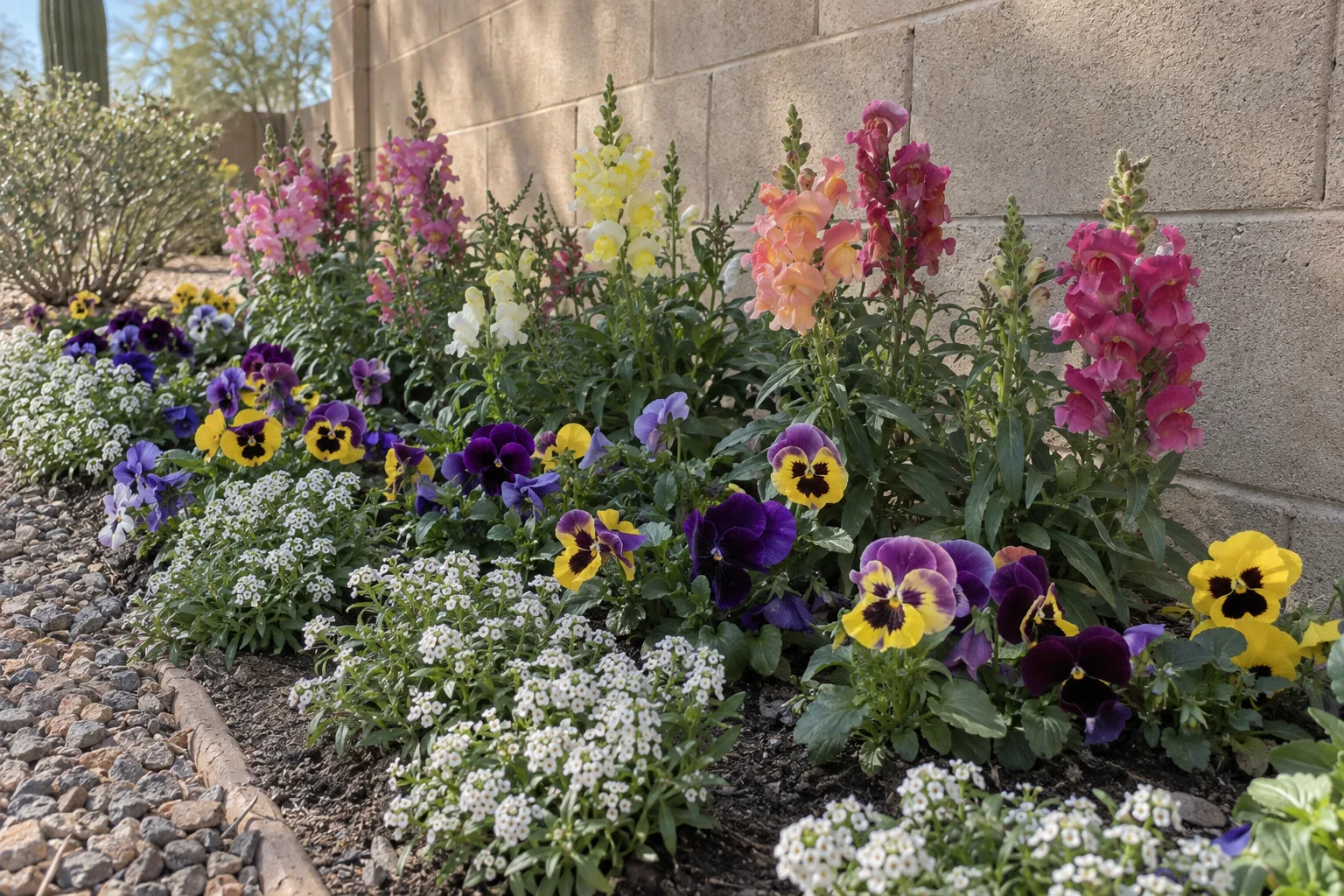
When should I plant flowers in late winter in Arizona?
Plant transplants from mid-January through February, when East Valley daytime highs commonly sit in the 60s and 70s. Cool-season annuals usually take 3 to 5 weeks to reach first bloom, so a late January planting gives you color in February and March. The soil is cool but workable, which suits young roots.
Buy transplants for the fastest results. You can browse color in our annual flowers and foliage department, and our gardening calendars show what else belongs in the ground each month. The varieties below are ones we commonly carry, and availability changes week to week and season to season.
Which easy-care flowers grow best in the low desert in late winter?
Six dependable choices are pansies, snapdragons, alyssum, petunias, dianthus and calendula. Each handles the East Valley’s cool months with modest care, and each has one drawback worth knowing before you buy.
Pansies (Viola x wittrockiana)
Pansies reach 6 to 9 inches tall and spread 8 to 12 inches. They bloom best in full sun to light afternoon shade and shrug off light frost. Water when the top inch of soil dries. The drawback is a short season, since they decline once daytime highs stay in the 80s, often by April.
Snapdragons (Antirrhinum majus)
Snapdragons range from 8 inches to about 3 feet tall depending on the variety, and they want 6 or more hours of direct sun. They like even moisture but not soggy soil. Pinching the center stem on young transplants encourages branching. Tall types can flop in spring wind and may need staking.
Sweet alyssum (Lobularia maritima)
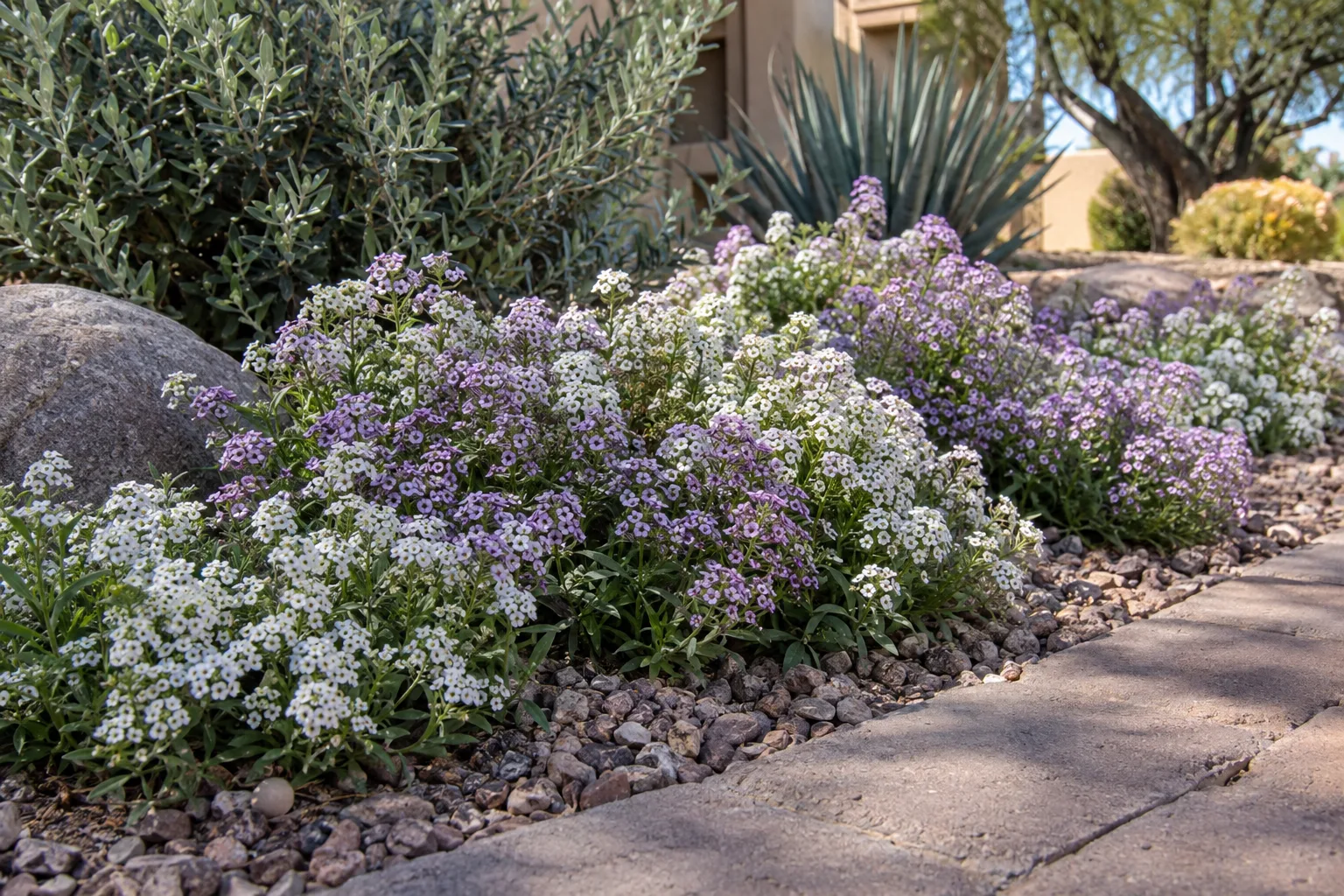
Alyssum stays 4 to 8 inches tall and spreads 10 to 18 inches, which makes it a good edging plant. It takes full sun to light shade and moderate water once established. Its drawback is enthusiastic self-sowing, so seedlings may appear in places you did not plan. It also slows down when the weather warms.
Petunias (Petunia x hybrida)
Petunias grow 6 to 12 inches tall, and spreading types cover 18 to 36 inches. They need full sun, regular water and regular feeding to keep flowering. They are frost tender, so plant in mid to late February or keep frost cloth ready. By April heat they usually turn leggy and need a trim.
Dianthus (Dianthus species)
Dianthus forms neat mounds 6 to 12 inches tall with gray-green foliage and flowers in pink, red and white. It wants full sun and moderate water. Drainage matters, because soggy soil rots the crown. The drawback is slow establishment compared with pansies, so give it a few weeks before judging it.
Calendula (Calendula officinalis)
Calendula grows 12 to 24 inches tall with bright orange and yellow flowers. It needs full sun, moderate water and tolerates light frost. You can sow it from seed or set out transplants. It fades as the weather warms, usually by April, and it self-sows if you leave spent flowers on the plant.
How do I prepare alkaline soil and caliche for flowers?
Loosen the bed 12 inches deep and mix 2 to 3 inches of compost into the top 6 inches. Most Queen Creek soil is alkaline, often with a pH above 7.5, and many yards have caliche, a hard calcium carbonate layer that slows drainage. Roots rot where water sits.
Test drainage before planting by digging a hole 12 inches deep, filling it with water and watching how long it takes to empty. If water still stands after several hours, break up the caliche or plant in a raised bed. Go light on fertilizer at planting, since heavy nitrogen in cool weather pushes leaves over blooms. Our classes and events page lists upcoming workshops if you want hands-on help with soil.
How do I plant a bed of winter flowers?
Set each transplant so the top of the root ball sits level with the soil, then water slowly and deeply. The steps below work for all six flowers.
- Choose a spot with at least 6 hours of direct sun. Pansies and alyssum tolerate light afternoon shade.
- Work compost into the bed and rake it smooth.
- Set the pots on the bed to check spacing, roughly 8 to 12 inches apart for most of these.
- Plant with the root ball level with the soil surface, and do not bury the stems.
- Water slowly until the whole root zone is moist, which settles soil around the roots.
- Add a 1 to 2 inch layer of mulch and pull it back from the stems.

Planting too deep is a common mistake. So is wetting the foliage on cool evenings, which invites powdery mildew.
How often should I water and feed late-winter flowers?
Water when the top inch of soil feels dry, which is usually every 2 to 4 days in cool weather. Push a finger into the soil near the plant to check. Summer watering habits cause overwatering now, and soggy soil at highs in the 60s and 70s invites root rot.
Drip irrigation delivers water slowly and keeps leaves dry, so it suits these plants better than overhead sprinklers. Feed with a diluted liquid bloom fertilizer every 2 to 4 weeks through peak bloom, following the label. Hard water leaves salts behind, so a deep soaking now and then helps carry them below the roots.
What should I do when a freeze is forecast?
Cover beds with frost cloth the evening a freeze is forecast, and remove it the next morning once temperatures climb above freezing. A freeze can still arrive into late February and, occasionally, early March. Petunias are the most tender of the six.
Drape the cloth loosely over the plants. Plastic does not breathe and can overheat plants when the sun hits it, so skip it. Keep a roll on hand through February.
Can I grow late-winter flowers in pots?
Yes, a 14 to 20 inch pot with drainage holes holds a full mix of these flowers. Fill it with potting mix, not yard soil, which compacts. Put snapdragons in the center for height, pansies or dianthus around them and alyssum at the edge to trail over the rim.

Pots dry out faster than beds, sometimes daily on windy days. They are also portable, so you can move them under cover on a frost night. Browse our pottery and planters to find a size that fits your entry or patio.
Frequently asked questions
Should I grow these flowers from seed or transplants?
Transplants are the better choice for most late-winter plantings because they bloom weeks sooner. Alyssum and calendula are the exceptions, since both germinate quickly in cool soil and can be sown directly in January or early February. Pansies and snapdragons started from seed in late January often do not bloom until the heat is already building.
Why are my new pansy leaves turning yellow?
Yellow leaves with green veins usually signal iron chlorosis, which is common in alkaline soil above pH 7.5. The iron is in the soil, but roots cannot take it up. A chelated iron product labeled for alkaline soil, applied as directed, usually improves new growth within 2 weeks. Yellowing of only the oldest leaves right after planting is often ordinary transplant stress.
How long will late-winter flowers last?
Most give about 8 to 12 weeks of color. Pansies and calendula fade first, usually in April once highs stay in the 80s. Snapdragons and alyssum often last into May, especially with afternoon shade. Petunias can continue into early summer, though they get leggy and need cutting back and more frequent watering.
Do I need to deadhead these flowers?
Deadheading pansies, petunias and snapdragons keeps them blooming longer, because plants slow flowering once they set seed. Pinch pansy flowers off every few days at peak bloom, and cut a spent snapdragon spike back to a side shoot. Alyssum needs little attention, and you can leave a few calendula flowers to self-sow.
Will these flowers grow on a covered patio?
Most need about 6 hours of direct sun, so a deeply shaded patio will not support good bloom. Alyssum and pansies tolerate light shade, and a spot with morning sun can work. A practical option is to grow pots in a sunny spot and rotate them into the shade for display.
Are late-winter flowers worth planting in Queen Creek?
Yes, if you want color from February through April for modest cost and effort. Six plants, a few inches of compost and a roll of frost cloth cover most yards. Skip them if you will not water every few days or want flowers that last through summer, since these fade once highs reach the 80s and 90s. Plan summer color separately. Stop by the nursery in Queen Creek and talk with us about which of these fit your yard.
