

Several landscaping additions in Arizona may need a permit, including block walls, patio covers, pools, outdoor kitchens, new electrical lines and major grading. Rules differ by city and county, so call your building department before you build.
Key takeaways
- Block walls, retaining walls, patio covers, pools, spas, outdoor kitchens and large grading jobs are the additions most likely to need city or county approval.
- Size, height and soil-volume thresholds are set by each city, so Queen Creek, Gilbert, Mesa and Chandler can answer differently for the same project.
- Any new 120-volt or 240-volt circuit, gas line or plumbing run generally needs its own permit, while 12-volt landscape lighting usually does not.
- Arizona’s native plant law, administered by the Arizona Department of Agriculture, can require paperwork before a saguaro or other listed plant is removed or moved.
- An HOA approval never replaces a city permit, so most projects inside an association need both.
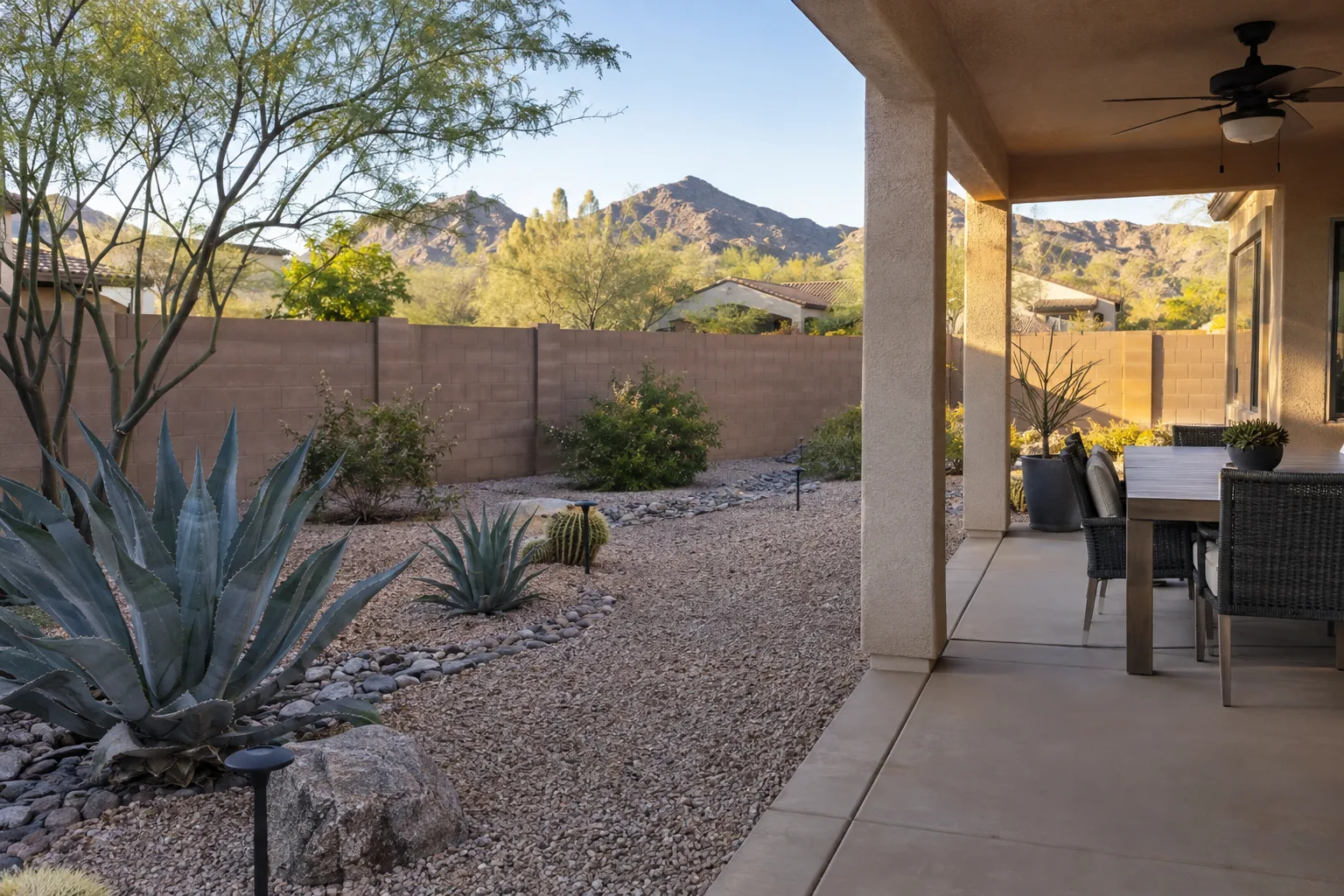
Which landscaping additions usually need a permit?
Structures, anything with utilities, and anything that moves a lot of soil usually need review, while plants and loose rock usually do not. Shade is the largest category in the East Valley. Patio covers, ramadas and pergolas are often treated as buildings once they pass a size threshold, even when they stand apart from the house. Size limits differ by town.
Wind load and footings drive much of the review. Monsoon gusts from roughly July through September can be strong, and caliche makes digging slow, so reviewers want to see how every post is anchored. Pouring new concrete footings for a shade sail is closer to building a patio cover than to hanging fabric from posts that already exist.
Outdoor kitchens follow the same logic. A portable grill needs no approval, but a built-in masonry island with a gas line, power and plumbing usually involves permits for the structure and for each utility connection.
Are native desert plants protected in Arizona?
Yes, some are. The Arizona Department of Agriculture administers the state native plant law, and the protected list includes saguaro and a number of other native cacti and trees. Removing or moving a listed plant can require a tag or notice, even on your own lot. Check the department’s current list for the species growing on your property, because the categories differ in how much paperwork they need before anything is cut or relocated.

This comes up when a pool, wall or patio cover lands where a saguaro, ironwood or palo verde already grows. Drawing the layout around existing natives avoids most of the paperwork. Some cities add their own tree rules on top of state law, so ask your town as well.
If you plan to add shade near a new structure, our desert trees section covers trees that suit the low desert, and availability changes week to week and season to season.
Do block walls and retaining walls need a permit?
Often yes, and retaining walls draw closer review than freestanding garden walls. Cities set height limits for walls that can go up without approval, and those limits can be lower near the street or a property line. Heights vary. Retaining walls hold back soil, so reviewers look at structural design, drainage behind the wall and the load the soil places on it.
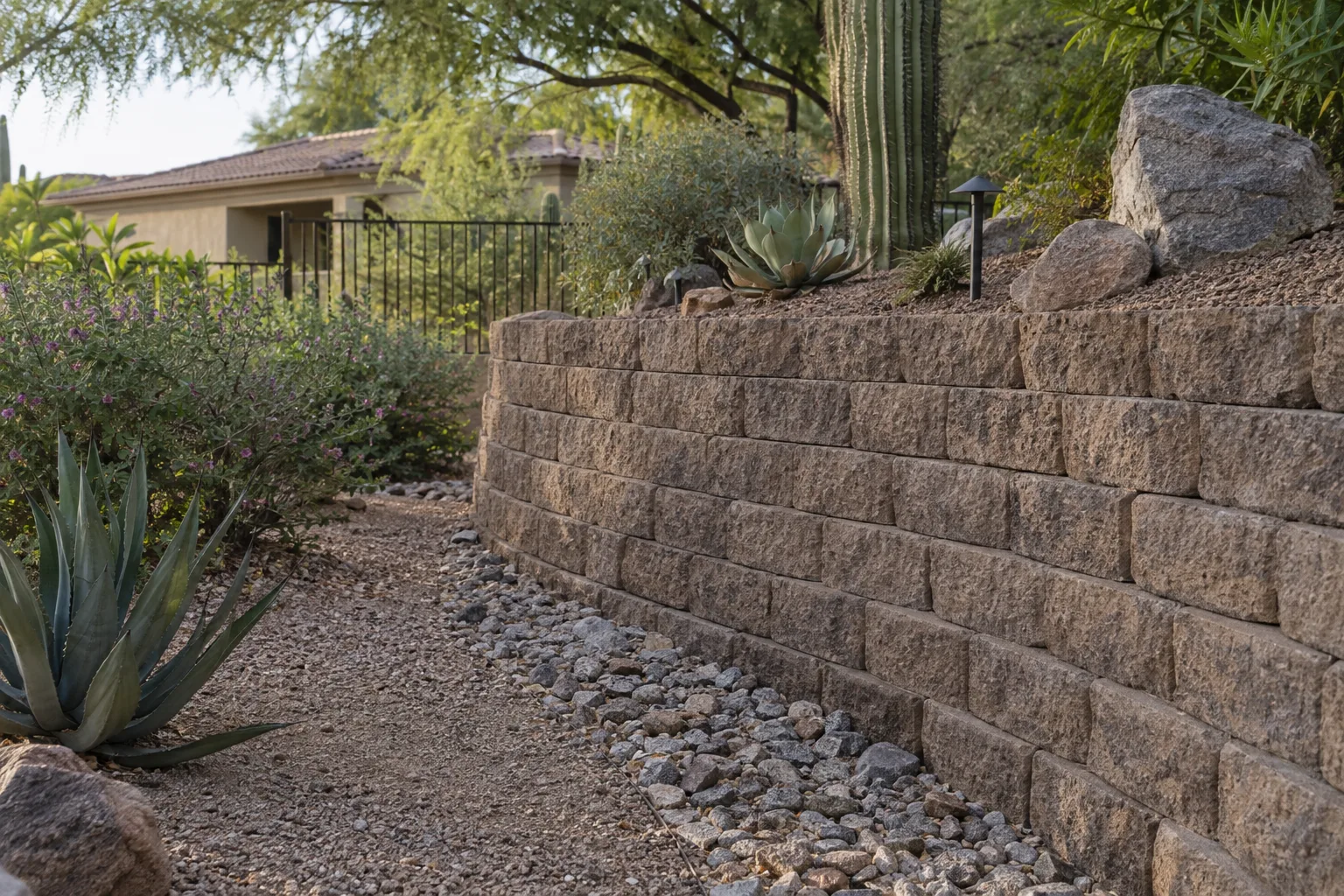
Monsoon rain matters here. Caliche slows drainage, soil behind a wall can saturate quickly, and a poorly built wall can lean or fail. Wrought iron and wood fences often carry lighter rules than masonry, though setbacks from the street can still apply.
Addresses in unincorporated parts of a county follow county rules rather than the rules of the nearest town, which matters for many San Tan Valley homes. An HOA may also have its own height and material standards, and those are reviewed separately from the city.
What about pools, spas and water features?
Pools almost always need a permit, and Arizona sets barrier requirements meant to prevent drowning. Your city’s pool permit usually covers the barrier, electrical bonding and plumbing, so ask for the full checklist before you sign a contract. Do not skip this one.
A prefabricated spa often needs no building permit, but a new 240-volt circuit to power it usually needs an electrical permit. Permanent in-ground spas generally follow the same path as pools.
Water features fall in between. A self-contained fountain that plugs into an existing outdoor outlet often needs no approval, and you can browse fountains of that type for a patio or entry. A pond with deep excavation, dedicated plumbing or a new electrical line is different, so call the city before anyone digs.
When does electrical or plumbing work need a permit?
New circuits and new gas or water lines generally need permits, even when the structure they serve does not. A pergola with no wiring may be one conversation, and the same pergola with ceiling fans and a new circuit is another. Cities review the utility work on its own track.
Low-voltage (12-volt) landscape lighting usually does not need a permit, and adding drip lines to an existing irrigation system generally does not either. Changes to your water service or the installation of a backflow preventer can involve the water provider and inspections.
Unpermitted electrical work can also complicate an insurance claim, so ask your insurer how it treats work that was never inspected. Ask before you trench.
Does grading or drainage work need approval?
It can. Moving a large amount of soil, changing the grade of your lot or redirecting runoff may require a grading permit, and the volume that triggers one is set by each city or county. Properties in a mapped floodplain or near a wash often get additional review.
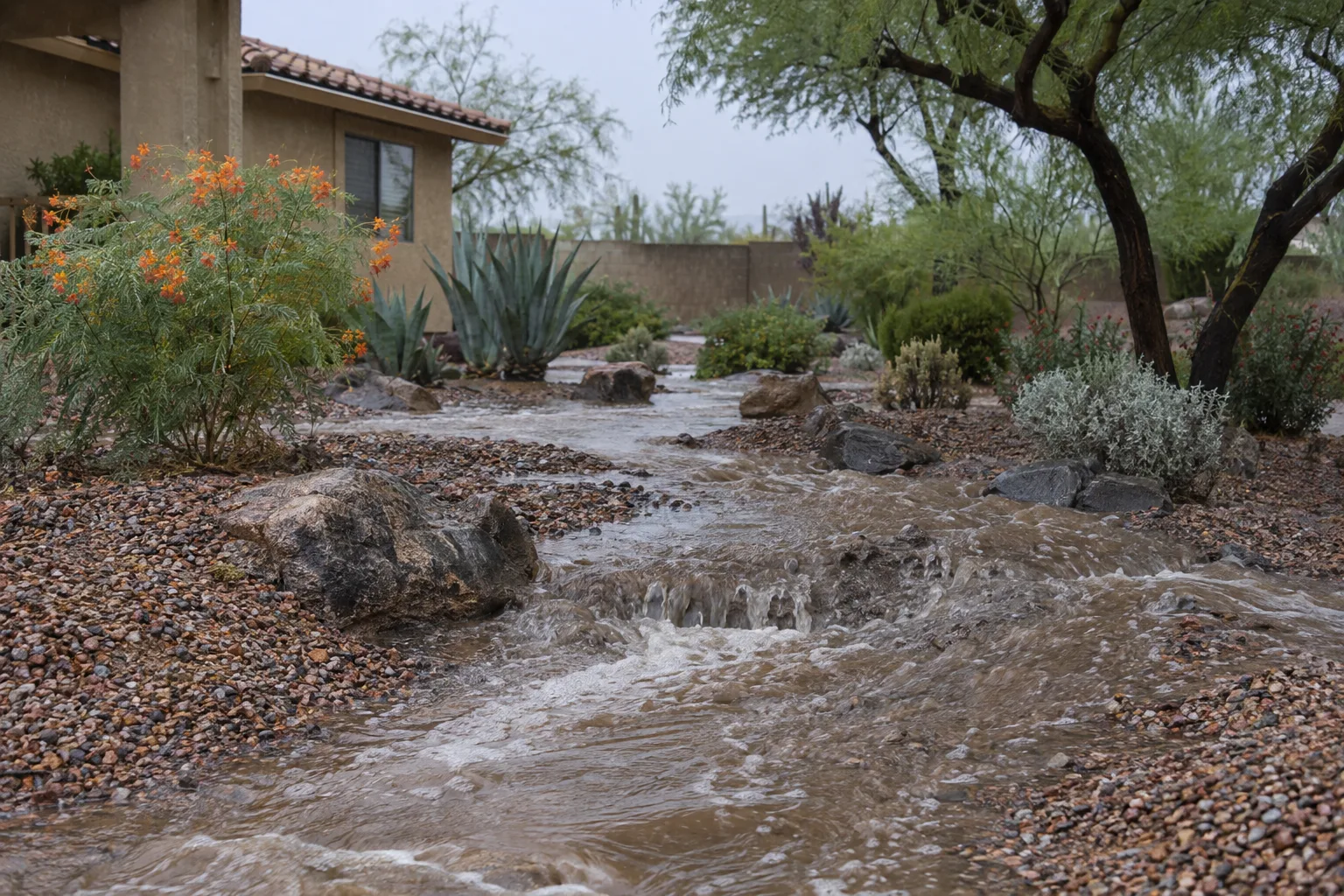
Monsoon storms can drop heavy rain in short bursts, and caliche absorbs water slowly. Water you push off your lot ends up on a neighbor’s property or in a street, which is why drainage changes get attention. Your county flood control district may have a say in places the city does not cover.
Level installs, such as setting pavers on existing grade, usually raise fewer questions than regrading a slope. If a crew arrives with equipment to reshape the yard, ask whether a permit is in place before work begins.
Which landscaping work usually needs no permit?
Planting trees, shrubs and groundcovers generally needs no building permit. The same goes for setting containers on a patio and spreading decorative rock or decomposed granite over existing grade. You can look through our plants for ideas, with availability changing through the year.
Native plant protections still apply to saguaros and other listed species already in your yard, and some cities have tree rules. HOA landscape guidelines can limit plant choices and rock colors, so read them before you buy.
How do I find out if my project needs a permit?
Call or visit your city or county building department with a written description of the project, and ask them directly. A short, specific question gets a faster and more reliable answer than a general one.
- Confirm which agency covers your address: Queen Creek, Gilbert, Mesa, Chandler or an unincorporated county area.
- Write down dimensions, materials, footing depth, utility connections and how much soil will move.
- Ask which parts need review: the structure, electrical, plumbing, grading or all of them.
- Ask what drawings are required, such as a site plan showing property lines and setbacks.
- Get HOA approval in writing, since it is a separate process.
- Schedule each inspection the city lists, and keep work uncovered until it passes.
Two mistakes cause most of the trouble. One is taking a contractor’s word that no permit is needed without checking with the city. The other is assuming a neighbor’s wall or ramada proves yours is exempt, since theirs may have been permitted or may predate current rules.
Frequently asked questions
Do I need a permit for artificial turf in Arizona?
Artificial turf laid on existing flat ground often needs no building permit, but rules vary by city. Regrading the yard first, changing drainage or adding a base that alters how water leaves the lot can bring grading rules into play. HOA approval is a separate step, and many associations have turf standards. Call your city before you order.
Does HOA approval replace a city permit?
No, an HOA approval and a city permit are separate. The association reviews appearance and community standards, while the city reviews building code and safety. A project may need both, and approval from one does not satisfy the other. Ask your HOA first, since design changes are cheaper before drawings are final.
Can I pull a permit myself as a homeowner?
Often yes, for work on a home you live in, though each city sets its own owner-builder rules. You still need accurate plans and must pass every inspection. Pools, structural walls and large structures are often easier with a licensed contractor who handles permitting. Ask your building department how its owner-builder process works.
What happens if I build without a permit?
Consequences vary by city but can include a stop-work order, fines and a requirement to open up or remove the work for inspection. Unpermitted work can also surface when you sell the home. Some cities offer after-the-fact permits. Talk to the building department before deciding what to do.
Should you call the city before your next yard project?
Yes, if the project involves anything built, wired, plumbed, excavated or retained. A short call to your building department can save you from tearing work out later. You can skip the call if you are only planting shrubs, adding drip lines to an existing system or spreading rock on level ground, though native plant and HOA rules still apply. Stop by Desert Horizon Nursery in Queen Creek and we will gladly talk through the planting side of your project.
