
The most reliable way to keep javelinas away from your garden is a sealed perimeter: close every gap in walls and gates wider than about 4 inches, then cage young plants, clear out food and add deterrents as backup.
Key takeaways
- Close every gap wider than about 4 inches in block walls and gates, because a herd of roughly 6 to 20 animals will find the weak spot.
- Fence vegetable beds with welded wire at least 3 feet tall, buried about 6 inches, and cage young trees, agaves and aloes.
- Pick up fallen fruit daily, and keep pet food, birdseed and open compost out of reach.
- Reapply scent repellents every few days in summer heat and after rain or irrigation, and rotate products so the herd does not get used to one.
- Plan on several weeks of steady effort, since herds follow routes they have used for a long time.
Why are javelinas coming into my yard?
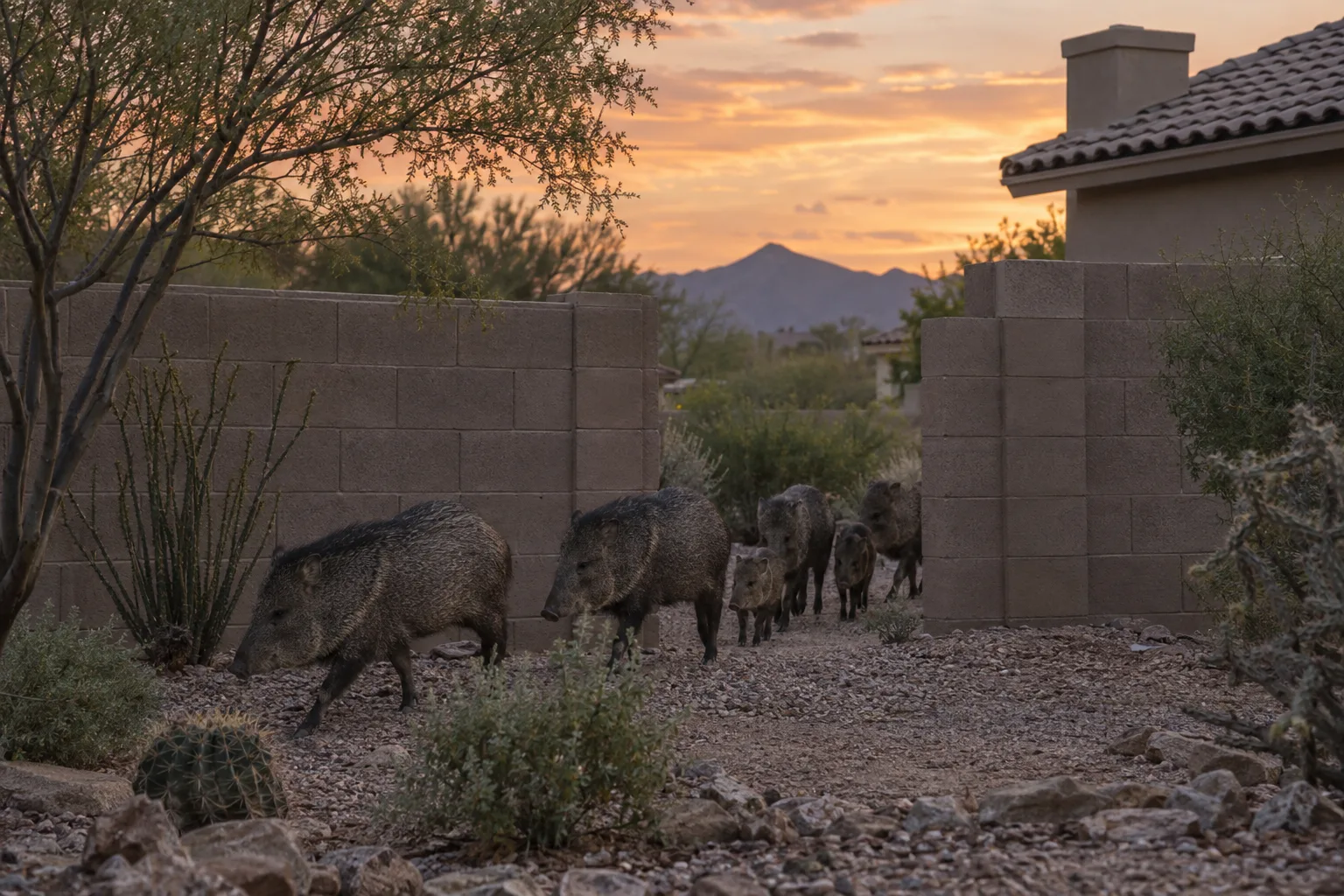
Javelinas visit East Valley yards for food, water and easy travel, mostly at dusk, overnight and around dawn. They are collared peccaries, a separate animal family from pigs, and they move in herds that commonly number around 6 to 20.
Their eyesight is poor and their sense of smell is strong, so fragrant, juicy plants draw them from a distance. Pressure tends to rise in two windows. Late spring, when native forage dries out, sends herds looking for green growth, and the monsoon months (roughly July through September) bring new growth and standing water that pull them in again.
Homes near washes, open desert and undeveloped parcels see the most traffic, though herds can also travel through established neighborhoods. Soft, succulent or fragrant plants get hit first, while spiny, bitter or woody ones usually survive, so what you plant matters as much as what you fence. You can browse our plants page to compare tougher options by category. Finish barrier work in April or May, before the late-spring push.
How do I block javelinas with walls and fences?
Start with the walls and gates you already have, because a sealed perimeter protects the whole yard at once. Smaller barriers around beds and prized plants come second.
1. Seal gaps in block walls and gates
Walk the perimeter and crouch to about 18 inches off the ground. Look for gaps under gates, between wall sections and around utility openings. Javelinas can squeeze through openings larger than about 4 inches, so close each one with concrete block, galvanized hardware cloth or a gate sweep. A solid wall also hides what is inside, which gives a herd less reason to test it.
2. Fence individual beds
Welded wire or hardware cloth around a vegetable bed should stand at least 3 feet tall, with the bottom edge buried about 6 inches, since javelinas root under loose edges. A 2-foot fence is a weak bet. Caliche makes post holes slow work in Queen Creek soil, so plan on a rotary hammer or a pneumatic post driver for steel T-posts.
3. Cage young trees, agaves and aloes
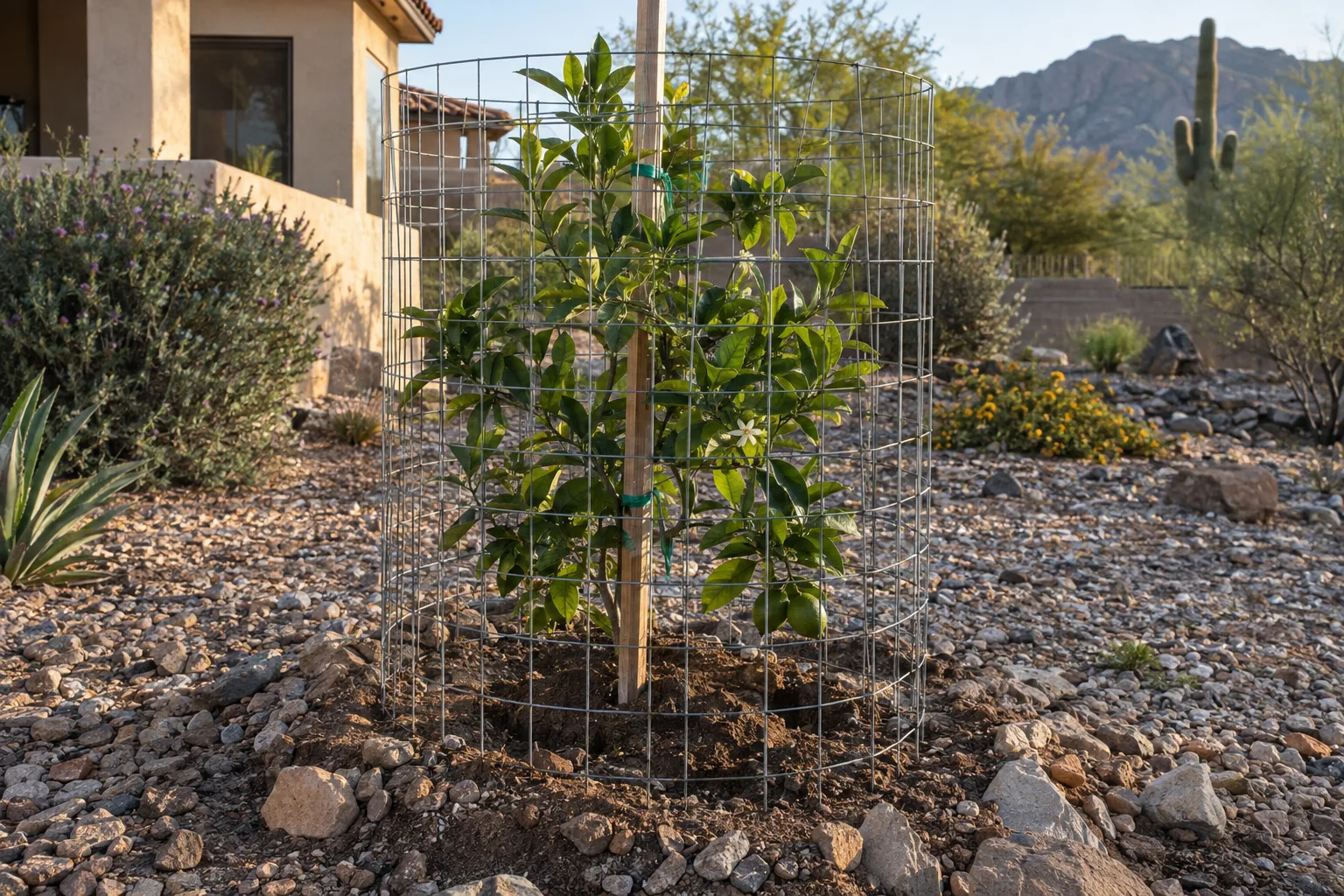
Cylinders of concrete reinforcing mesh with a 6-inch grid, staked firmly, protect single plants while still letting in light and air. Cage young citrus until the trunk and lower branches toughen. Soft-leafed agaves and aloes, and the pups of larger agaves, are favorites of javelinas, so they deserve a cage until they harden and grow larger.
What should I clear out, and what should I plant instead?
Remove the food and water that bring a herd to your yard, then replace the softest, most fragrant plants with tougher ones where you can. Both steps lower the reward for a visit.
4. Remove food and water
Pick up fallen fruit daily during harvest, especially from citrus trees. Bring pet food inside, take down low birdseed feeders and latch compost bins. Javelinas chew drip tubing and emitters for the moisture inside, so check lines after a visit and tuck loose tubing under mulch or rock. Drain standing water from low spots after monsoon storms.
Tomato and pepper seedlings are soft and appealing, so grow them in a fenced bed or in pots and planters on a patio behind a closed gate. If you are planning a new herb and vegetable bed, fence it before you plant. Prickly pear is a natural javelina food, so site it well away from the beds you most want to protect.
5. Plant what javelinas tend to skip
A hungry herd will test nearly anything, and no plant is javelina-proof. Reports that these plants get left alone come mostly from gardeners, not controlled trials, so treat them as good odds and not a guarantee. Here are the ones most often mentioned:
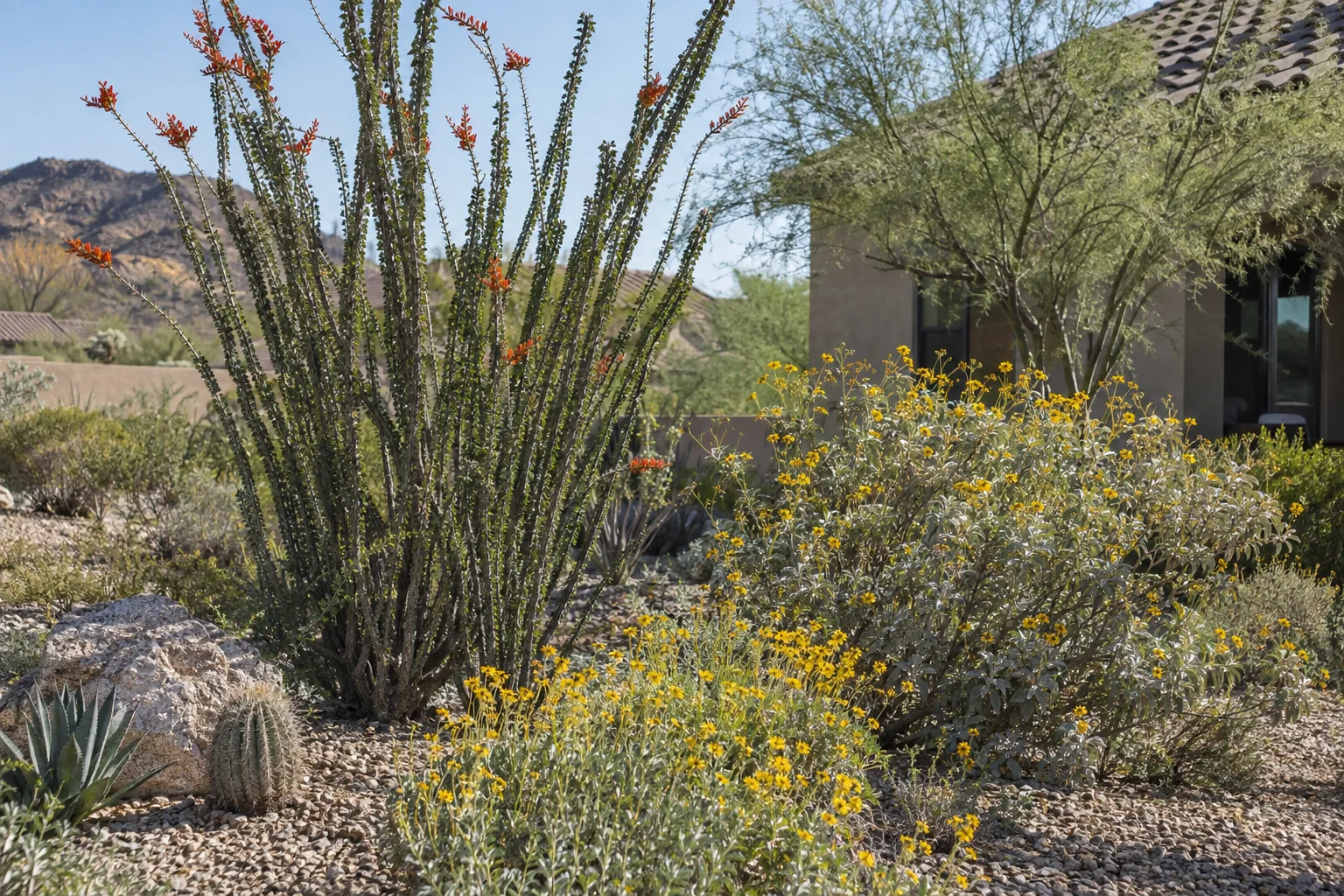
- Ocotillo (Fouquieria splendens) has spiny canes, grows roughly 10 to 20 feet tall and needs fast drainage.
- Brittlebush (Encelia farinosa) has silvery, aromatic foliage, reaches about 3 to 5 feet and blooms yellow in spring.
- Desert marigold (Baileya multiradiata) has bitter foliage, stays around 1 to 2 feet and reseeds easily.
- Texas sage (Leucophyllum frutescens) handles alkaline soil, grows about 4 to 8 feet tall and blooms after monsoon humidity.
- Deer grass (Muhlenbergia rigens) forms tidy clumps roughly 3 to 4 feet tall and gives a herd little to eat.
- Bougainvillea has thorny stems that make a poor path for a herd, but it needs frost protection in winter here.
These are varieties we commonly carry, though availability changes week to week and season to season. Aloe vera, soft annual flowers and young agaves sit at the other end of the scale and are the plants most often reported eaten.
Do motion devices and scent repellents work?
They work as short-term backup, not as a fence. Both startle or annoy a herd for a while, and both lose strength as the animals get used to them.
6. Motion-activated sprinklers and lights
A sprinkler that sprays when it senses movement is one of the more practical devices, because a sudden burst of water startles a herd without harming it. Look for hoof prints along the soil or driveway, then aim the device at the path the animals use to enter. Move it every week or two so the herd does not learn to ignore it. Bright motion lights add a second layer after dark, and a neighbor may not enjoy loud sounds at 2 a.m.

7. Scent repellents, rotated
Javelinas rely on smell, so gardeners try coyote urine products, human hair in mesh bags hung at nose height, and commercial repellents. Evidence for all of these is mostly anecdotal. Summer heat and irrigation break them down, so expect to reapply every few days, and rotate two or three products so the herd does not adjust. Follow the label on any commercial product, especially around edible plants. Homemade mixes such as ammonia can burn foliage, so we do not recommend them.
Does what my neighbors do matter?
8. Compare notes with neighbors
Yes, because a herd can cover several blocks in one night. If only your yard is sealed, the animals move to the next one and return to any gap you missed. Ask nearby households where they see tracks or damage, and encourage them to pick up fallen fruit and move feeders. If you live in an HOA, ask whether the community has guidance on fencing and wildlife before you build. Even loose coordination narrows the herd’s routes.
When should I call Arizona Game and Fish?
Call the Arizona Game and Fish Department if a herd has lost its fear of people, charges, or injures a pet. Javelinas are wild animals managed by the department, so contact them before you trap, relocate or harm one. Rules and permits apply, and we cannot tell you what is allowed on your property.
Small dogs are at the most risk. Keep dogs on a leash at dawn and dusk, secure the yard at night, and make noise before stepping outside so you do not surprise an animal. Never feed javelinas, since feeding teaches a herd to keep coming back.
Frequently asked questions
Are javelinas dangerous to pets?
They can be, especially to small dogs and cats. Javelinas defend themselves and their young when startled or cornered at close range. Keep pets indoors at dawn, dusk and overnight, walk dogs on a leash, and check the yard before letting them out. If your pet is injured, call a veterinarian right away.
Will a chain-link fence keep javelinas out?
Chain-link alone is not dependable, because javelinas push and root under loose bottom edges. Attach hardware cloth along the bottom, bury it about 6 inches deep and run it roughly 12 inches up the fence. Seal any gate gaps as well. A modified fence performs much better than a bare one.
Do javelinas damage cactus?
Yes, they eat prickly pear and can damage young cactus and other succulents. Mature, spiny plants are less likely to be bothered than young or soft ones. Cage new cactus plantings with mesh until they are established, and keep your most valued specimens inside a protected area.
How long before javelinas stop visiting?
Expect several weeks of steady effort before a herd changes its route. Animals that have used your yard for a long time will keep checking it. Layer barriers, cleanup and deterrents, and judge results after a few weeks, then reinforce only the spots they still reach.
Should I leave food or water elsewhere to redirect them?
No, because feeding or watering wildlife keeps a herd close to homes and makes it bolder. The Arizona Game and Fish Department discourages feeding javelinas. Remove attractants from your own yard, and ask the department for advice if a herd keeps returning.
Is javelina-proofing worth the effort for your yard?
It is worth it if javelinas have already damaged plants or chewed irrigation, since sealed gaps and a few cages cost far less than replacing trees and drip lines. If you have never seen tracks or damage, a quick check of walls and gates is enough. Skip sprays if you want a fix with no upkeep. Come by the nursery in Queen Creek and we will talk through tougher plants for your yard.