
The best Arizona plants to prune in January are roses, desert willow, Texas sage, autumn sage, palo verde, lantana and red bird of paradise. Citrus, bougainvillea and yellow bells should wait until frost danger passes. Here is how each one works in Queen Creek.
Key takeaways
- Prune roses from late January to mid-February, removing about one-third of their height and leaving 3 to 5 strong canes.
- Desert willow, Texas sage and autumn sage take their cuts in January, and a palo verde needs only light thinning of no more than 20% of the canopy.
- Lantana and red bird of paradise are frost-tender, so wait for a mild stretch in late January or February and leave frost-burned stems on until then.
- Citrus, bougainvillea and yellow bells wait until frost danger passes, usually late February to April.
- Sharp bypass pruners, a clean cut above an outward-facing bud, and no topping or shearing cover most of the technique.
Is January the right month to prune in the East Valley?
Yes, for plants that are leafless or slowing down, and no for anything that freezes easily. Cool weather from December through February slows growth, so cuts heal before spring shoots push. Queen Creek winter lows often reach the 30s, and a frost can still show up in February or early March, so the forecast matters more than the date on the calendar.
One rule covers most of this list: prune hardy plants while it is cool, and prune frost-tender ones after the last cold night. Frost-burned leaves and stems shield the crown underneath, so leave them on through a cold snap. Our gardening calendars are a good place to check timing for other months. Check the forecast first.
Which seven plants should I prune in January?
Roses, desert willow, Texas sage, autumn sage, palo verde, lantana and red bird of paradise. The first five take cuts in January. The last two need a frost-free stretch first, which in a cold winter can push the job into February.
Roses (Rosa hybrids)
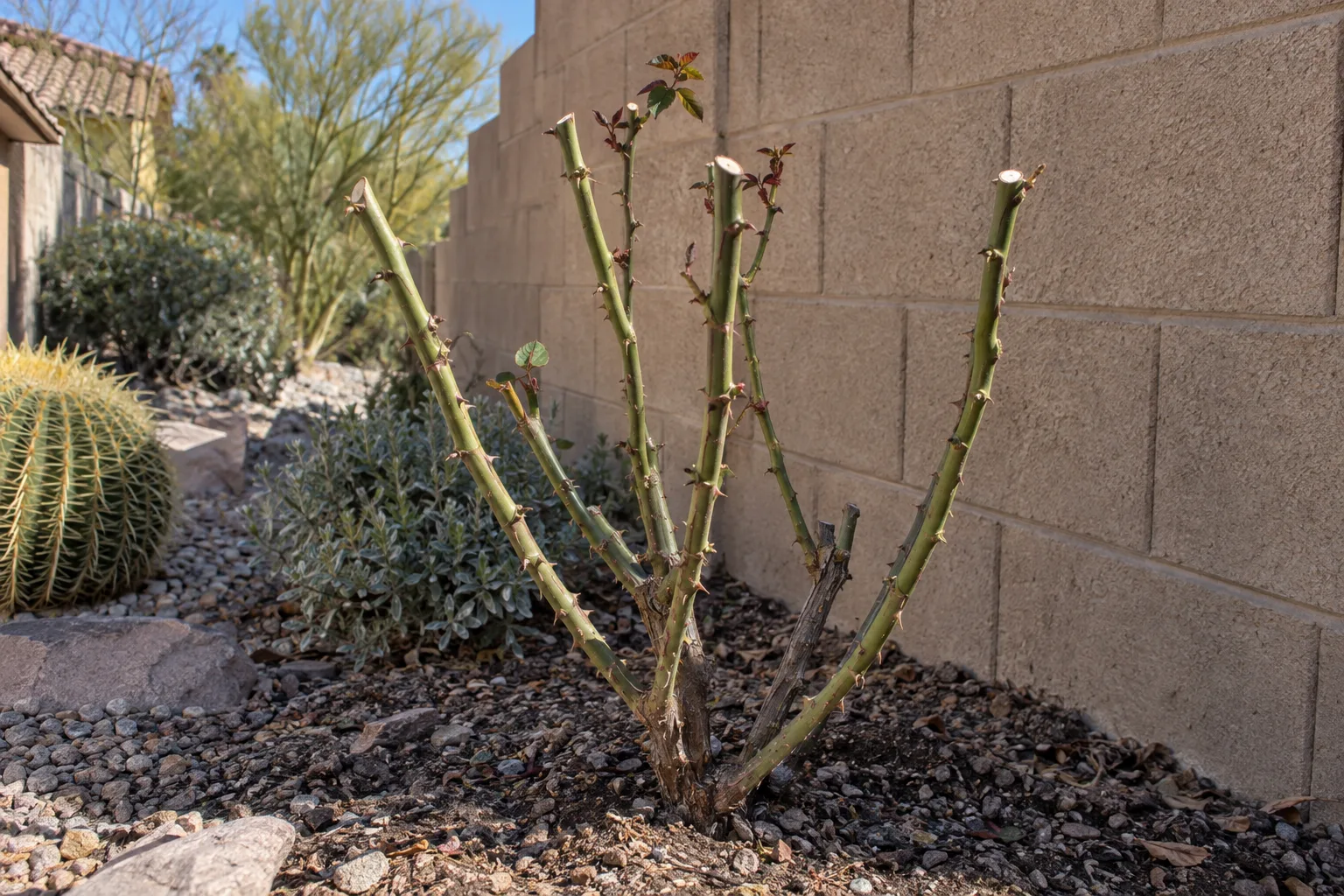
Prune roses from late January to mid-February. Most bush roses grow 3 to 5 feet tall, want at least 6 hours of sun with some afternoon shade in July and August, and need regular deep watering. Cut about one-third of the height, remove dead and crossing canes and thin pencil-sized twigs, and leave 3 to 5 strong canes. The drawback is upkeep, since roses need steady water and feeding. Waiting past March cuts into buds that have already formed.
Desert willow (Chilopsis linearis)
Desert willow loses its leaves in winter, so the branch structure is easy to read. It grows 15 to 25 feet tall, wants full sun, and needs little water once established. Remove dead wood first, then branches that cross or rub. Never top it, because topping produces weak, fast-growing sprouts and ruins the natural shape. The drawback is a steady drop of seed pods, which some gardeners find messy. Browse our desert trees for similar low-water choices.
Texas sage (Leucophyllum frutescens)
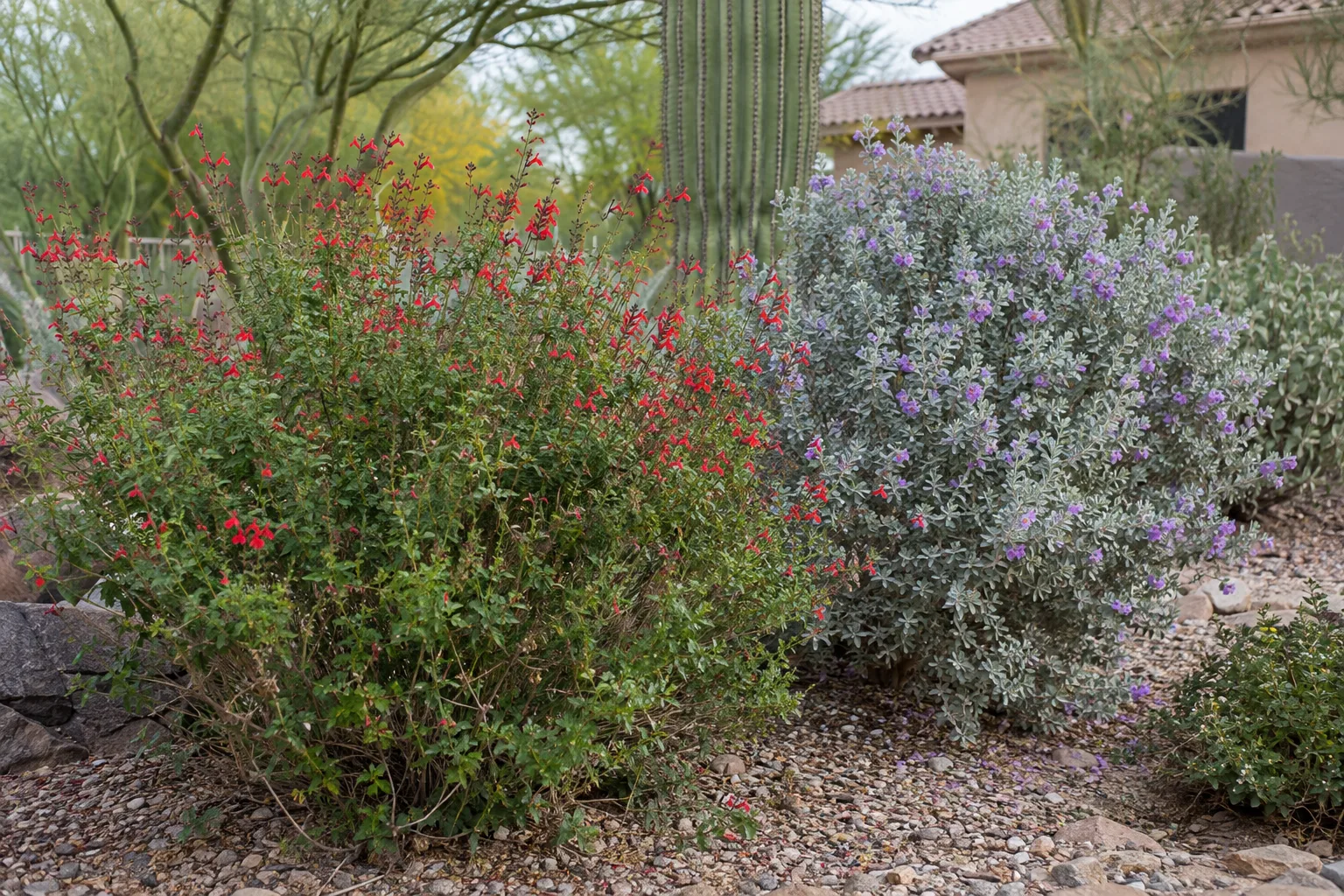
Texas sage grows 5 to 8 feet tall and wide, takes full sun, and needs very little water. Remove up to one-third of the oldest, woodiest stems at the base and lightly tip the outside if needed. This keeps the loose natural form. Sheared into a ball, the plant tends to bloom poorly. The drawback is root rot in soil that stays wet, so keep irrigation infrequent.
Autumn sage (Salvia greggii)
Autumn sage stays 2 to 3 feet tall, likes full sun to light afternoon shade, and needs low to moderate water. Cut it back by about half in January, removing spent flower stalks and dead interior stems. New growth fills in from late winter on. The drawback is that it turns woody and short-lived if you never cut it back, and even trimmed plants may need replacing after several years.
Palo verde (Parkinsonia species)
Palo verdes reach 15 to 30 feet, want full sun, and need little water once established. January suits light structural work: remove crossing branches, inward-facing growth and low suckers, and take no more than 20% of the canopy. Do not top the tree. The drawback is litter from leaves, flowers and pods, and a dense canopy can drop limbs in monsoon wind, so thinning also reduces wind load.
Lantana (Lantana camara)
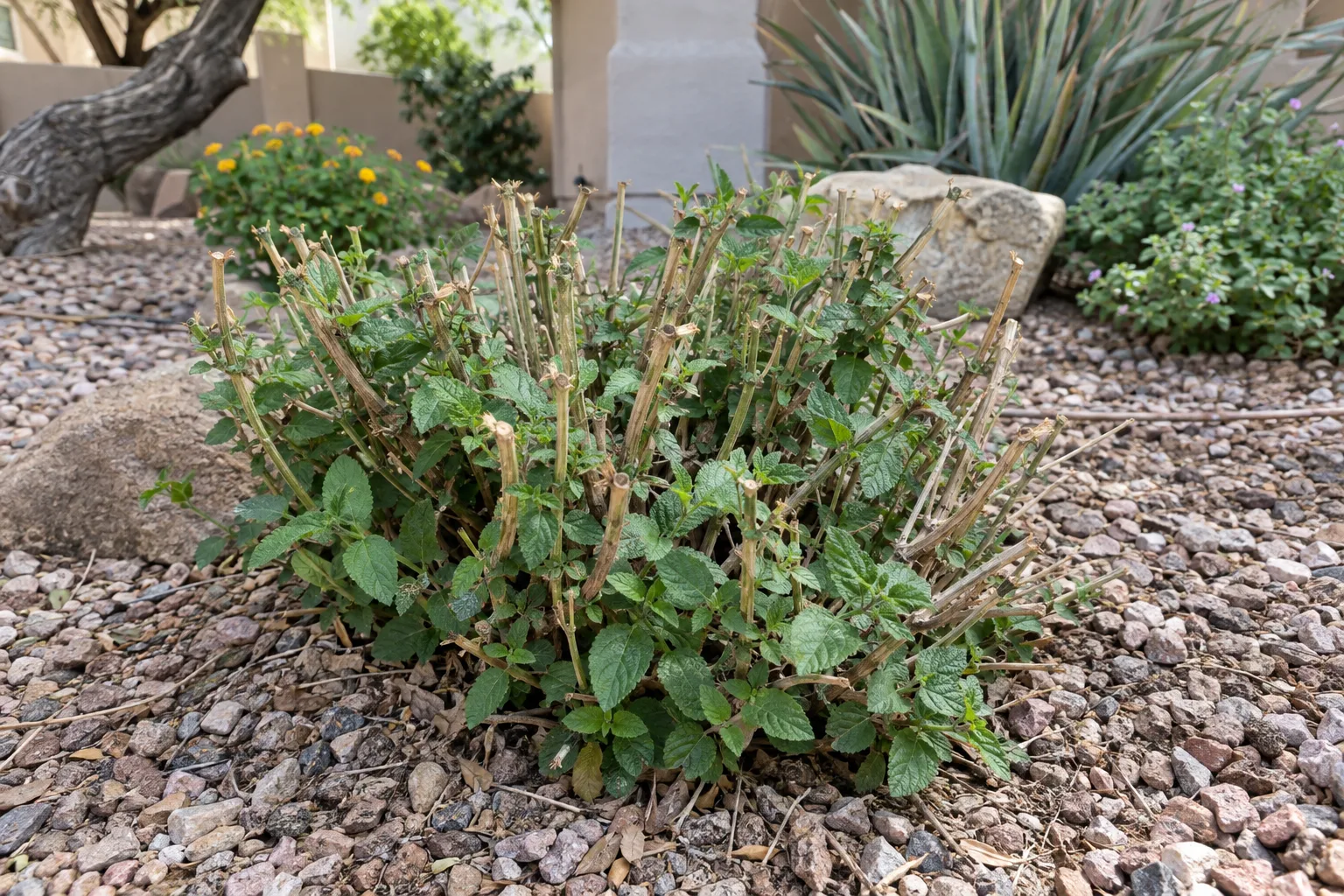
Lantana grows 2 to 4 feet tall, with trailing types spreading wider, and blooms best in full sun with low to moderate water. Once frost danger is past, cut it back to about 6 to 12 inches. In many East Valley winters that falls between late January and late February. The drawback is frost damage, so a plant cut early can lose its new growth to one cold night. Leave the brown top growth in place until then.
Red bird of paradise (Caesalpinia pulcherrima)
Red bird of paradise grows 5 to 8 feet tall, wants full sun, and needs little water once established. Cut it back to about 12 to 24 inches after frost risk eases, then expect new shoots as the weather warms. The drawback is cold sensitivity, since a hard freeze can kill it to the ground. Resprouting from the base is common, so be patient before you pull it out.
Which three plants should I skip in January?
Citrus, bougainvillea and yellow bells. All three are frost-tender, and cutting them now exposes fresh wood and bark to the next cold night. Each will be easier to prune correctly a few weeks from now.
Citrus (Citrus species)
Citrus trees range from 8 to 20 feet tall depending on the variety, need full sun, and want deep, infrequent watering. Wait until frost danger has passed, usually late February through April, and remove only dead, broken or crossing wood. Heavy pruning opens the canopy and can sunburn bark that was shaded. The drawback is cold sensitivity, and winter fruit may still be hanging on the tree. See our citrus trees for more on the types that grow here.
Bougainvillea (Bougainvillea species)
Bougainvillea grows 6 to 15 feet as a shrub or vine, takes full sun, and needs little water once established. Frost burns the tips and can blacken whole canes. Leave damaged growth until late February or March, when live buds show you where to cut. The drawback is thorns, so wear thick gloves, and the plant resents hard cuts made too early in the season.
Yellow bells (Tecoma stans)
Yellow bells grows 6 to 10 feet tall, wants full sun, and needs low to moderate water. A frost often browns the tops, and those stems protect the crown below. Wait until new growth appears in spring, then cut dead wood back to live green tissue. The drawback is dieback in cold winters and a lot of seed pods in summer, so shaping after growth resumes keeps the plant tidy.
How do I make a clean pruning cut?
Use sharp, clean tools and cut just above an outward-facing bud. The steps are the same for most shrubs and small trees.
- Sharpen and clean your tools. Use bypass pruners for stems up to about 3/4 inch, loppers up to about 1.5 inches, and a pruning saw for anything thicker.
- Wipe the blades with 70% isopropyl alcohol between plants so disease does not travel from one to the next.
- Remove dead, broken and diseased wood first, cutting back to live tissue.
- Take out crossing and rubbing branches, then shape the plant.
- Cut about 1/4 inch above an outward-facing bud, angled slightly away from it. On trees, leave the branch collar intact.
- Step back after every few cuts to check the balance, because you can remove more later but cannot put wood back.
- Bag diseased clippings for the trash, not the compost.
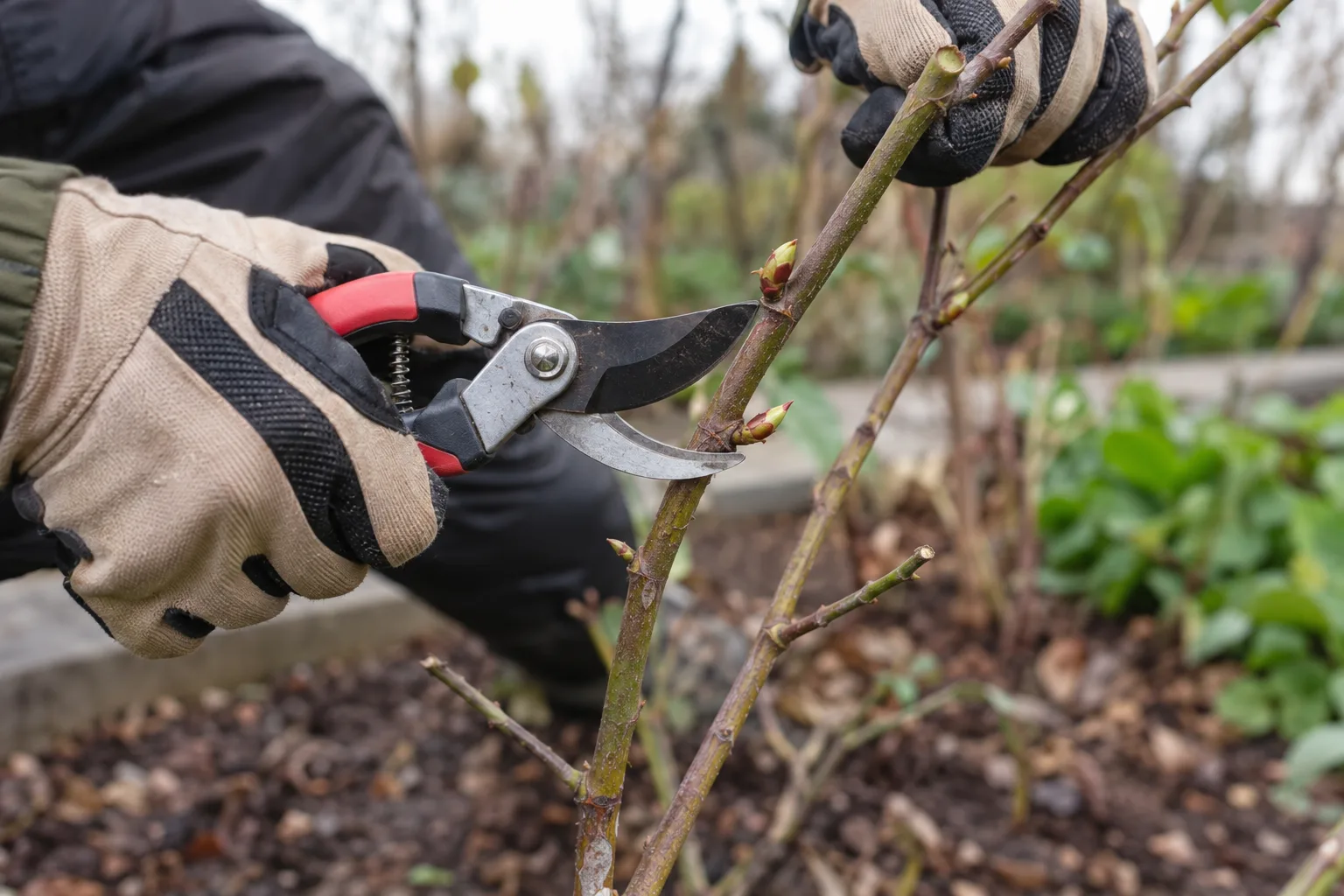
If you would rather watch than read, check our classes and events page for upcoming workshops.
When does each plant get pruned?
The table below puts all ten plants on one calendar for Queen Creek and the East Valley. Shift each date a few weeks later after a cold winter.
| Plant | Timing | Cut |
|---|---|---|
| Roses | Late January to mid-February | About one-third of height |
| Desert willow | January to February | Dead and crossing wood, no topping |
| Texas sage | January to February | Up to one-third of oldest stems |
| Autumn sage | January to February | About half the height |
| Palo verde | January to February | Light thinning, 20% of canopy at most |
| Lantana | Late January to February, after frost risk | To 6 to 12 inches |
| Red bird of paradise | February, after frost risk | To 12 to 24 inches |
| Citrus | Late February to April | Dead and crossing wood only |
| Bougainvillea | Late February to March | Frost-damaged tips and canes |
| Yellow bells | March, once new growth shows | Dead wood to live green tissue |
What pruning mistakes should I avoid?
Shearing shrubs into balls, topping trees and cutting frost-tender plants too early cause most of the damage. Shearing leaves a dense mat of growth at the cut line and ruins the loose shape that plants like Texas sage have. Topping creates weak regrowth that breaks in wind.
Dull blades crush stems and slow healing, so sharpen before each season. Pruning a shrub that keeps outgrowing its spot is a sign it may be the wrong plant for the space. Our plant selection includes smaller options for tight beds.
Frequently asked questions
How can I tell if a branch is dead or just dormant?
Scratch a small patch of bark with a fingernail. Green or white moist tissue underneath means the branch is alive. Dry, brown and brittle means it is dead. Work from the tip inward, since often only the ends have died. Always cut back to a point where the tissue is still green.
Should I fertilize after pruning in January?
Wait until growth starts, usually late February to March. Fertilizer applied in January can push tender new shoots ahead of the last frost, and cold nights then burn them. Roses are the exception only if a label calls for early feeding, so follow the product directions.
Do I need to water extra after pruning in winter?
No, keep to your normal winter schedule. Cool air and slow evaporation keep soil moist longer, and extra water in January raises the risk of root rot, especially in clay or where caliche slows drainage. Check the soil a few inches down before you irrigate.
Should I seal pruning cuts with paint?
No. Sealants can trap moisture against the wound and encourage rot, and healthy plants close their own cuts. Make the cut cleanly, at the right spot, and leave it open. Clean, sharp tools do more for healing than any coating.
How much can I remove in one session?
For trees and most shrubs, keep it to about a quarter to a third of the canopy at a time. Cutback perennials such as autumn sage and lantana are the exception, since they regrow from low buds. Stretch heavy renovation of a large shrub across two seasons.
Is January pruning worth doing in your yard?
Yes if you grow roses, sages, desert willow or a palo verde that has gone shaggy, because a cool-weather trim improves shape and bloom. Skip it if your yard is mostly cactus, agave and young trees, which need little cutting, or if a cold snap is in the forecast. When in doubt, wait two weeks. Stop by our nursery in Queen Creek and bring a photo of any plant you are unsure about.