
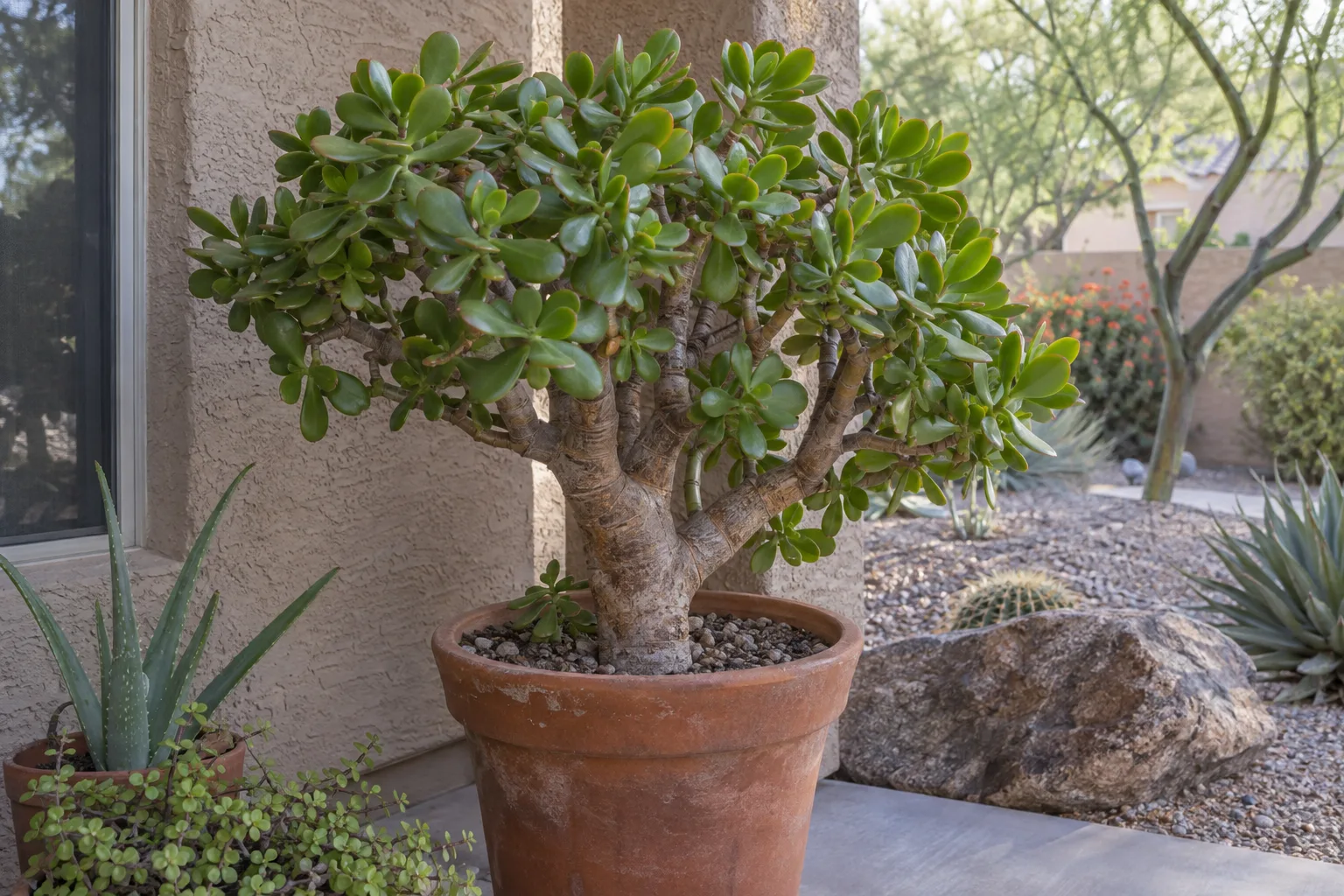
Jade plant care in Arizona comes down to bright morning sun with afternoon shade, fast-draining soil, and less water than you expect. Give it those three things and a jade plant (Crassula ovata) can live outdoors in the East Valley for decades, with protection from frost below about 30°F.
Key takeaways
- Give a jade plant bright morning sun and shade after about 1 p.m. from May through September, when highs pass 110°F.
- Grow it in cactus mix blended with 20 to 30 percent coarse perlite, or in ground that drains a test hole of water within about 30 minutes.
- Water only when the top 2 inches of soil are dry. Potted jades usually need water every 7 to 10 days in summer and every 21 to 30 days in winter.
- Cover or bring in a jade plant when the forecast reaches 32°F, and wait until late February or early March to prune frost damage.
- Repot in March to mid-April, and go up only one pot size.
How much sun does a jade plant need in Arizona?
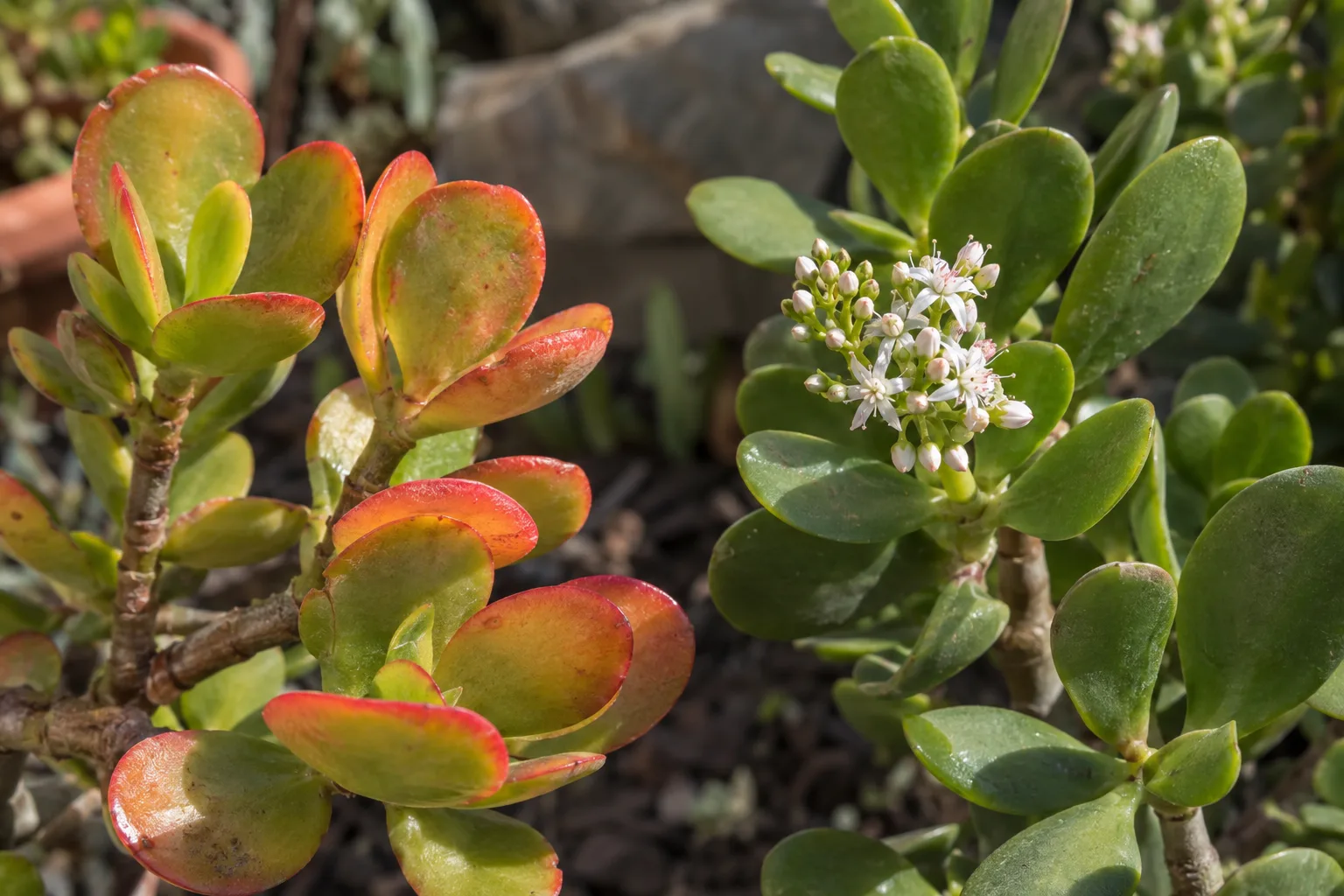
A jade plant needs about 4 to 6 hours of bright light a day, ideally morning sun with shade from early afternoon on. Many gardeners assume a succulent wants full sun all day. Direct afternoon sun from May through September scorches the leaves, turns them red-orange or bleached, and can kill the outer branches when temperatures sit above 110°F. Afternoon shade matters most.
Tip 1: Plant it where it gets morning sun and afternoon shade
An east-facing patio, the filtered light under a palo verde, or a spot along a wall that falls into shade after midday all work well. West-facing block walls hold heat into the evening and reflect it onto the plant, so skip them. If you are choosing a spot for a new plant, browse our plant selection and think about where the afternoon shadow falls in your yard first.
Tip 2: Use shade cloth or move the pot from May through September
Shade cloth rated 30 to 40 percent trims the worst of the afternoon sun without leaving the plant dim. A potted jade can also spend the summer indoors near an east or south window, then go back outside in October when the weather turns comfortable. Our houseplant selection is a good place to look if you want companions for a bright indoor window.
What soil does a jade plant need in the low desert?
A jade plant needs a gritty, fast-draining soil that dries out between waterings. Native soil in Queen Creek and across the East Valley is alkaline, often with a pH of 7.5 to 8.5, and many yards have a caliche layer that stops water from draining. Wet roots rot fast.
Tip 3: Use a gritty mix in pots
Start with a commercial cactus and succulent mix and blend in 20 to 30 percent coarse perlite. Skip mixes heavy in peat moss, because they hold moisture longer than a jade root can handle. Always use a pot with a drainage hole.
Tip 4: Fix drainage before planting in the ground
Dig the hole at least twice as wide as the root ball, and break through any caliche with a digging bar so water has somewhere to go. Fill the hole with water and watch it. If water is still standing after about 30 minutes, choose a raised bed or a pot instead. For backfill, blend native soil with coarse sand and perlite or decomposed granite.
How often should you water a jade plant in Arizona?
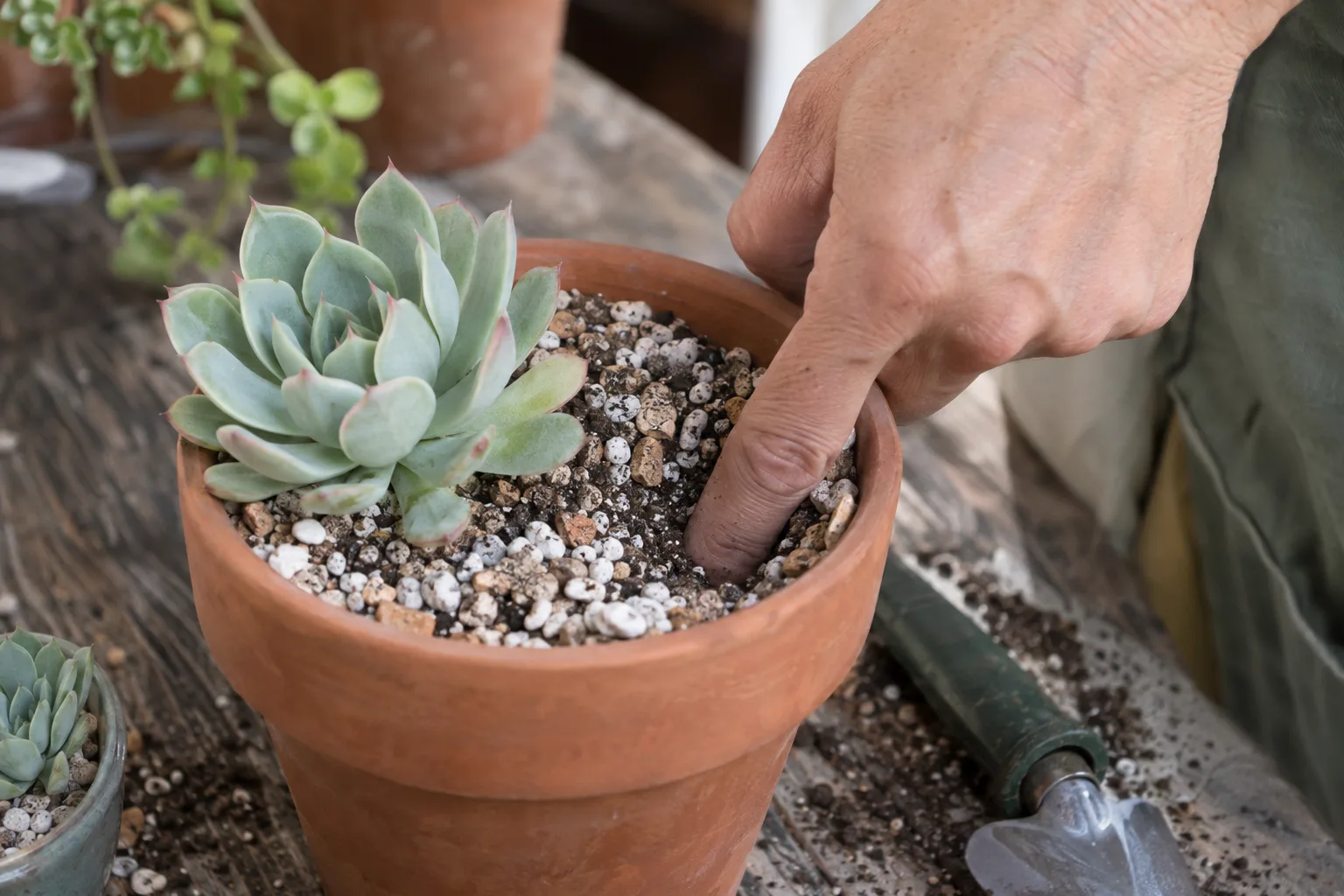
Water a jade plant only when the top 2 inches of soil are dry, which in summer is roughly every 7 to 10 days for a pot. Stick a finger 2 inches into the soil, and if it feels even slightly damp, wait a few more days before you water again.
Tip 5: Water deeply, then let the soil dry
Water until it runs out of the drainage holes, then leave the plant alone until the soil dries. Overwatering kills more jades than drought. The table below gives starting points for potted jades, so adjust them to what the soil tells you.
| Season | Potted jade | In-ground jade |
|---|---|---|
| Spring (March to May) | Every 10 to 14 days | Every 14 to 21 days |
| Summer (June to September) | Every 7 to 10 days | Every 10 to 14 days |
| Fall (October and November) | Every 14 to 21 days | Every 21 to 28 days |
| Winter (December to February) | Every 21 to 30 days | Only if the soil is bone dry |
Tip 6: Count monsoon rain as a watering
The monsoon runs from roughly July through September. A storm that drops half an inch of rain covers the next scheduled watering for a potted jade, so skip it. Warm, soggy soil in a saucer or a low spot is where root rot starts.
Should a jade plant live in a pot or in the ground?
A pot gives you more control, while the ground gives a jade room to grow into a tree-like shrub. Container plants can move out of afternoon sun, come inside before a freeze, and sit in a soil mix you control. In-ground jades can reach 4 to 5 feet with thick woody trunks, but they stay wherever you plant them.
Tip 7: Choose a pot if you want control
Terra cotta breathes and helps prevent overwatering, but it dries faster from May through August, so check the soil more often. Pick a pot only one size bigger than the root ball. You can browse pottery and planters to match a jade to a container that suits your patio. Pots dry out quickly in summer heat.
How do you protect a jade plant from frost?
Cover it or bring it indoors on any night the forecast reaches 32°F. A jade plant tolerates a brief dip into the upper 20s, but sustained cold below about 25°F damages the leaves and stems, which turn soft, translucent and then brown.
Tip 8: Cover in-ground plants and move pots
Set potted jades near a bright window, away from heating vents that dry the air. For plants in the ground, drape frost cloth (not plastic) before sunset and take it off the next morning once temperatures climb above freezing. Cover first, prune later. Wait until late February or early March, when new growth shows how far the damage reaches. Our gardening calendars are handy for tracking when cold nights are likely.
When should you repot a jade plant in Arizona?
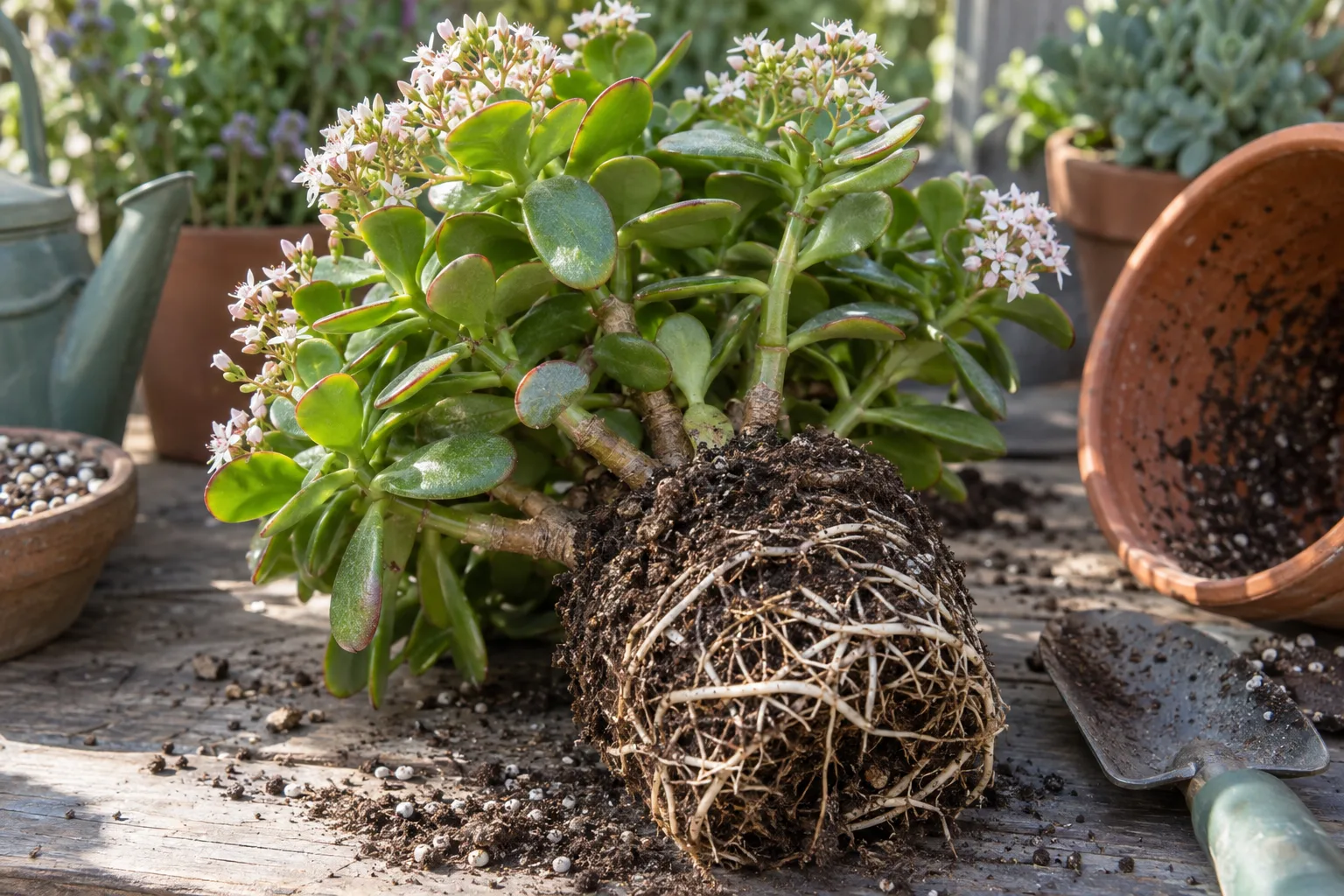
Repot a jade plant in March through mid-April, before summer heat arrives. Signs it needs more room include roots circling the bottom, roots coming out of the drainage holes, or a plant so top-heavy it tips over. Avoid repotting in July or August, when the plant is already stressed by temperatures above 110°F.
Tip 9: Go up only one pot size
Go up only one size, about 2 inches wider, because extra soil stays wet too long and invites rot.
- Stop watering 5 to 7 days before repotting so the roots are dry and less prone to damage.
- Tip the pot sideways and ease the root ball out, loosening stuck edges with a butter knife rather than pulling on the trunk.
- Cut off any black, mushy roots with clean scissors. Healthy roots are white to tan and firm.
- Leave the plant in a shaded spot for 24 to 48 hours so cut ends can callous over.
- Set it at the same depth it grew before and backfill with your gritty mix, pressing gently to remove large air pockets.
- Wait 5 to 7 days before the first watering.
- Keep it out of direct sun for 2 to 3 weeks, then return it to its normal spot gradually.
How should you feed a jade plant and catch problems early?
Feed a jade lightly, only in its active seasons, and look it over every couple of weeks for early signs of trouble. Jades are light feeders, and too much fertilizer produces weak, leggy growth. Skip fertilizer in summer.
Tip 10: Feed at half strength in spring and fall
Use a balanced liquid fertilizer diluted to half the label strength, no more than once a month in March through May and again in October and November. Skip it from June through September and from December through February. If leaves yellow even though your watering is right, alkaline soil may be locking up iron, and a chelated iron product used exactly as the label directs can help.
Tip 11: Check for root rot, mealybugs and mineral crust
Heavy leaf drop with wet soil and a bad smell points to root rot, so repot into dry, fresh mix. Mealybugs look like white cottony masses in leaf joints and are more common on indoor jades. For a small infestation, dab them with a cotton swab dipped in rubbing alcohol, and read and follow the label on any insecticidal soap you use for larger outbreaks. A white crust on the soil is mineral buildup from hard water, and flushing the pot until water runs freely from the holes every few months clears it.
What mistakes shorten a jade plant’s life?
These habits cut a jade plant’s life short more often than any pest does. Most are easy to fix once you spot them, and several come from treating a jade like a typical garden shrub in a bed that gets watered on a timer.
- Planting it against a west-facing wall with no afternoon shade.
- Letting a pot sit in a saucer of water.
- Watering on a calendar instead of checking the soil.
- Moving up two or three pot sizes at once.
- Pruning frost damage in January, before the damage is clear.
- Fertilizing in the heat of summer.
Frequently asked questions
Can a jade plant stay indoors all year in the East Valley?
Yes, a jade plant grows well indoors all year if it sits near an east or south window with at least 4 to 6 hours of bright light. Dry air from air conditioning is tolerable. Water less often than you would outdoors because the soil dries more slowly, and keep it away from heating vents in winter.
Why are my jade plant’s leaves turning red?
Red or orange leaf edges usually mean too much direct sun or temperature stress. Some varieties show red tips in cool weather, and that is normal. Widespread reddening with leaf drop points to afternoon sun, so add shade cloth or move the plant. Yellow leaves more often signal overwatering.
When is the best time to propagate a jade plant?
March through early May is the best window. Take a stem cutting 3 to 4 inches long, let it callous for 2 to 3 days in shade, and set it in dry cactus mix. Water sparingly, just enough to moisten the top inch. Roots usually form in 3 to 5 weeks.
Which jade plant varieties suit pots?
Compact varieties such as ‘Gollum’, ‘Hobbit’ and ‘Hummel’s Sunset’ suit pots well, while common jade grows into the largest woody shrub. These are varieties we commonly carry, though availability changes week to week and season to season. ‘Hummel’s Sunset’ shows its best color in cool weather.
Is the white crust on my jade plant’s soil harmful?
The crust is mineral buildup from hard irrigation water and is not immediately harmful. Left alone, it can build up around the roots over time. Scrape off the top layer, flush the pot every few months until water runs freely from the drainage holes, and make sure the pot never sits in standing water.
Is a jade plant right for your Arizona yard?
Yes, if you can give it morning sun, afternoon shade and a well-drained spot, or a pot you can move. A jade plant pays off slowly, growing into a woody, tree-like shrub over many years. It is a poor match if your only open space gets full western sun with no way to shade it, or if you prefer to water on a fixed schedule regardless of soil. Stop by our nursery in Queen Creek and we will help you choose a jade and a spot for it.