
The best indoor plants for air quality in Arizona homes are snake plant, pothos, ZZ plant, spider plant, aloe, rubber plant and peace lily. They tolerate dry air and AC. Expect a small air benefit, though; ventilation and filters do the heavy lifting.
Key takeaways
- Houseplants remove only small amounts of airborne chemicals in a lived-in home, so opening windows on cool winter mornings and running a HEPA filter do more.
- Snake plant, ZZ plant and aloe handle dry indoor air and need water roughly every 2 to 4 weeks.
- Set leafy plants 3 to 6 feet back from west and south windows, where summer afternoon sun can scorch leaves.
- Check the soil 2 inches down before watering, and flush each pot every 2 to 3 months to clear mineral buildup from hard East Valley water.
- Only the spider plant is listed as non-toxic to cats and dogs; the other six plants here can cause problems if chewed.
Do indoor plants really clean the air in Arizona homes?
Only a little. The 1989 NASA study that made houseplants famous measured chemical removal in small sealed chambers, and later research on occupied rooms, where fresh air keeps moving in and out, found the effect small compared with ventilation and filtration.
That matters here because our homes stay closed up for months. With the AC running and outdoor highs above 110°F, chemicals released by paint, new flooring and pressed-wood furniture have few ways out. The EPA names source control, ventilation and air cleaners as the main fixes.
Plants still earn a spot. They add a little moisture to dry air, and researchers think the microbes in potting mix contribute to any cleaning effect. Choose plants for how they look and how easily they live indoors, and count any air benefit as a bonus.
Which indoor plants work best in dry, air-conditioned Arizona homes?
The seven below tolerate low humidity, irregular watering and indoor light. You can browse our houseplants to see what is on hand; these are varieties we commonly carry, and availability changes week to week and season to season.
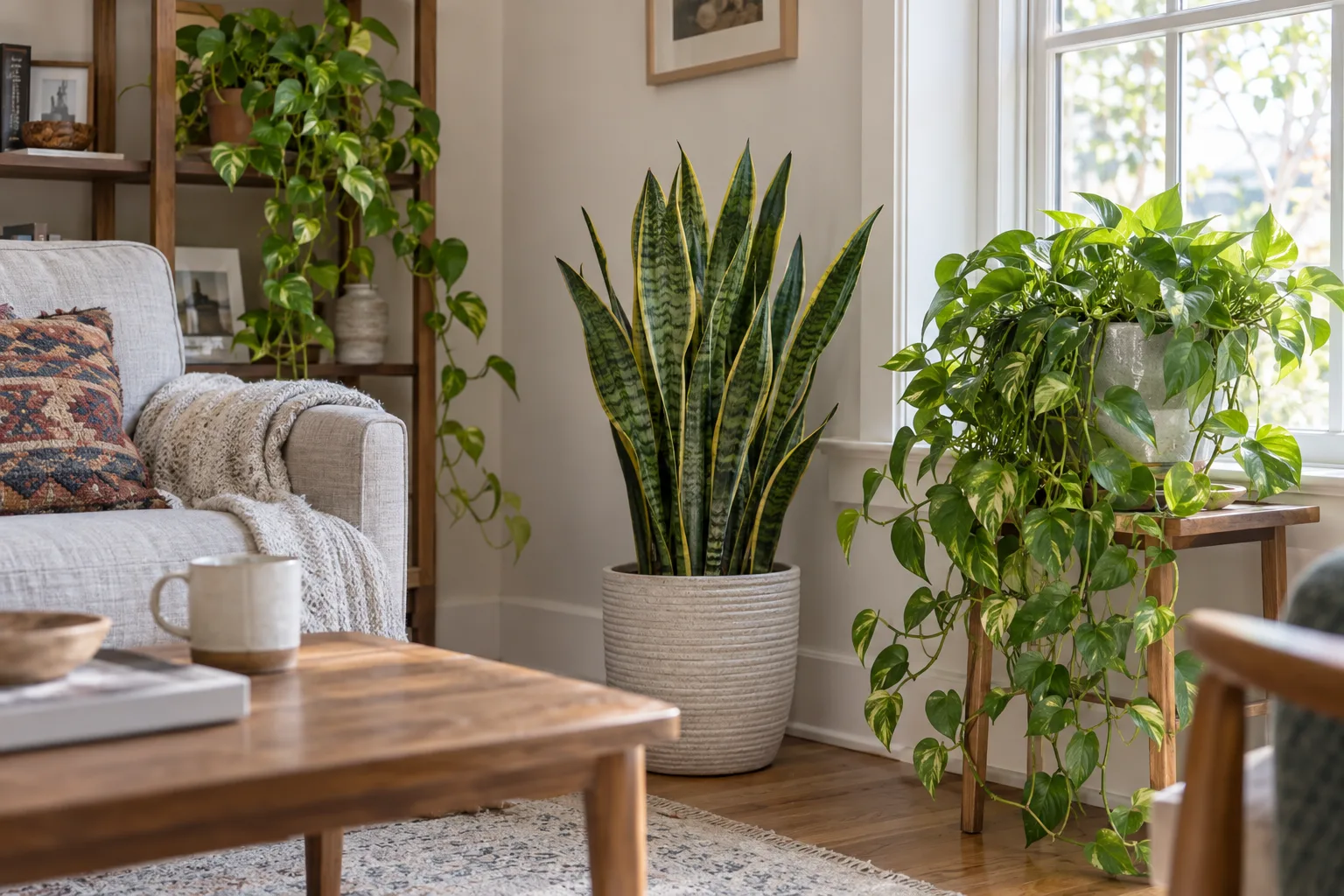
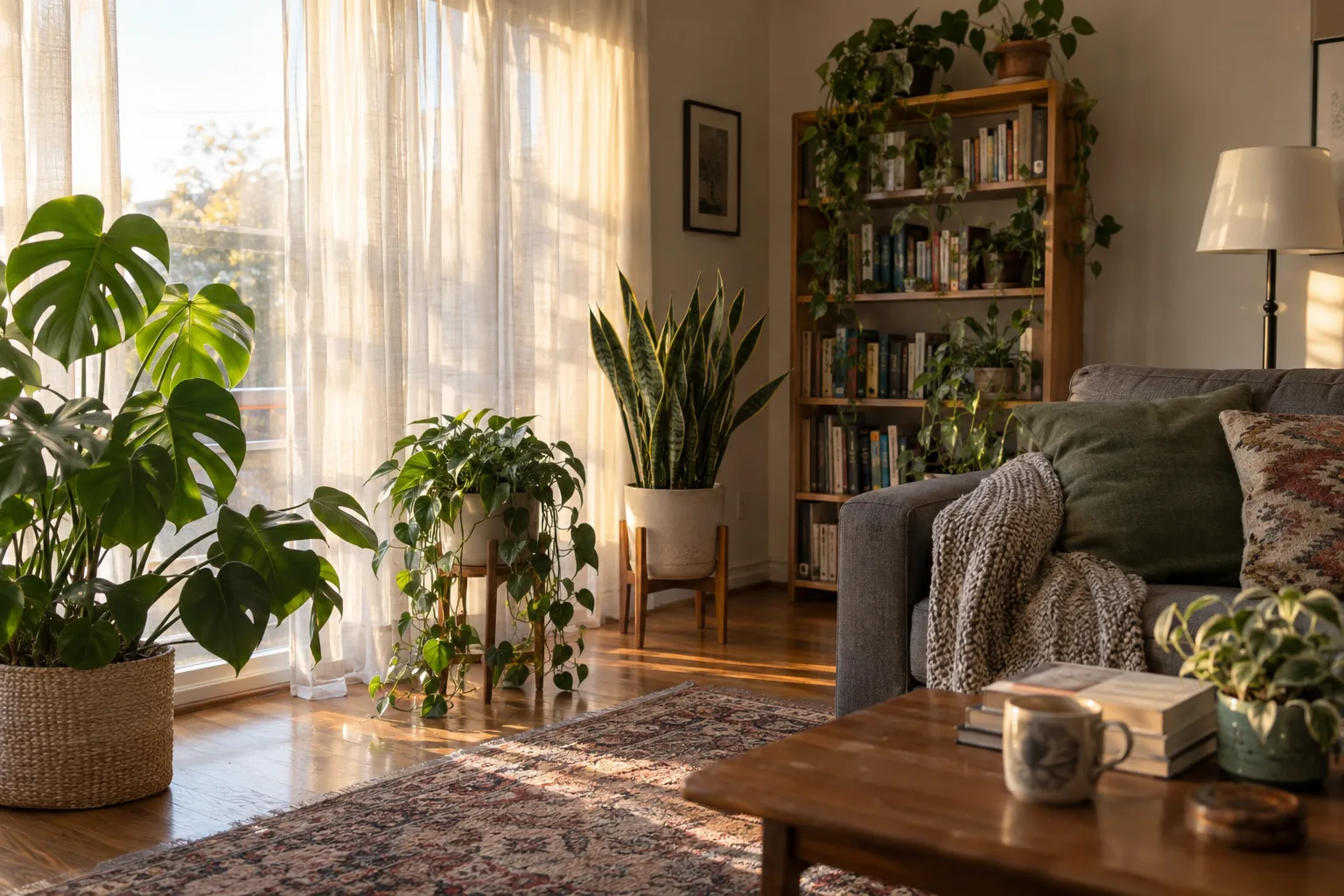
Snake plant (Dracaena trifasciata)
Grows 2 to 4 feet tall indoors in low to bright indirect light, and it tolerates a few hours of morning sun. Water every 2 to 4 weeks, less in winter. The thick leaves store water, which suits AC-dried air. Drawback: soggy soil rots the roots fast, and the leaves are toxic to cats and dogs.
Pothos (Epipremnum aureum)
Vines trail 6 to 10 feet from a shelf or hanging pot in low to bright indirect light. Water when the top 1 to 2 inches of soil is dry, usually every 1 to 2 weeks. Drawback: leaves yellow quickly when watered too often, and the plant is toxic to pets.
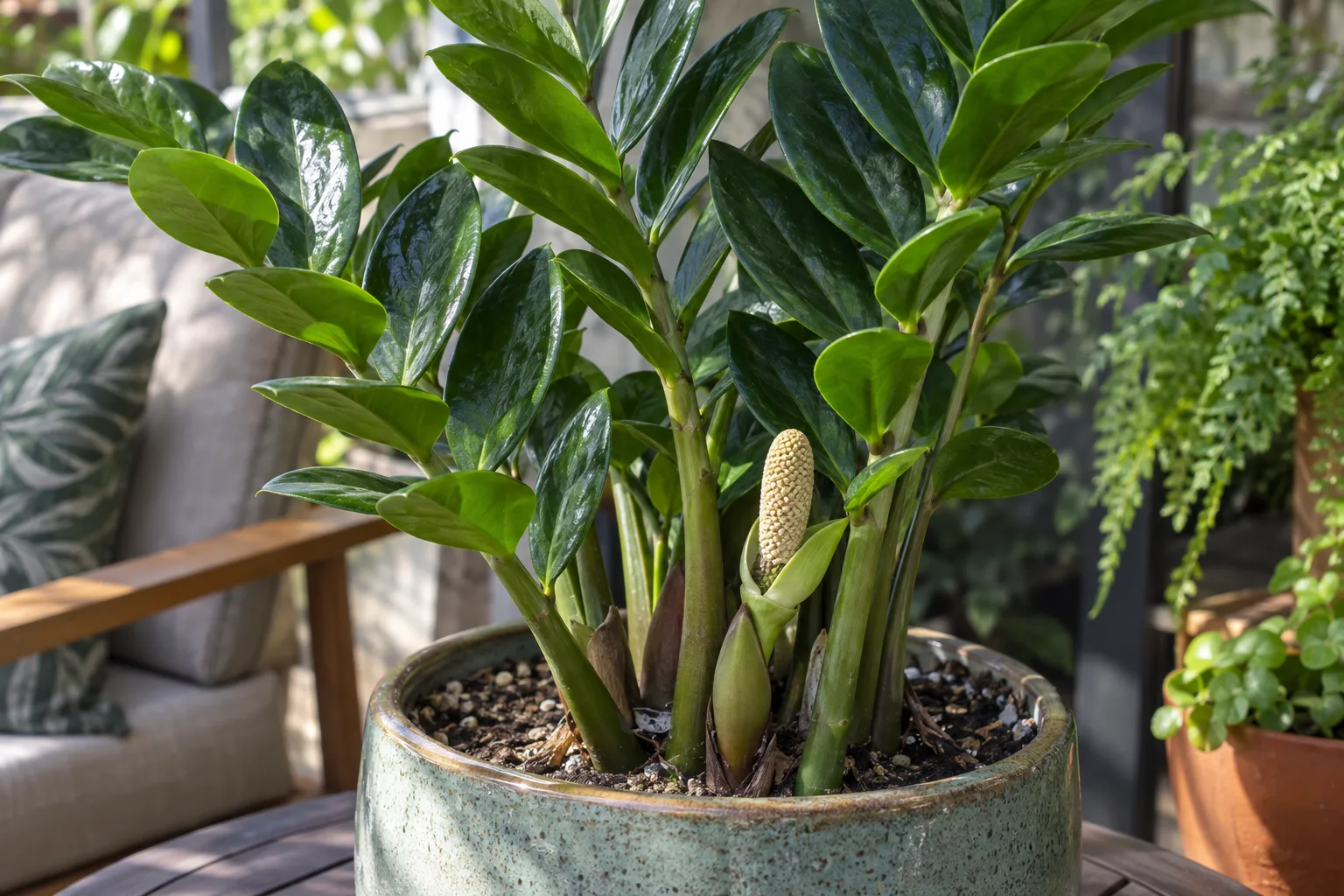
ZZ plant (Zamioculcas zamiifolia)
Reaches 2 to 3 feet in low to medium indirect light. Thick underground rhizomes store water, so every 2 to 4 weeks is enough. Drawback: growth is slow, and it is toxic to pets if chewed.
Spider plant (Chlorophytum comosum)
Forms an arching clump 1 to 2 feet tall with dangling plantlets, in medium to bright indirect light. Water every 1 to 2 weeks. Drawback: leaf tips brown in dry air and hard water. The ASPCA lists it as non-toxic to cats and dogs.
Aloe (Aloe vera)
Stays 1 to 2 feet tall and wants bright light, including a few hours of direct sun at an east or south window. Water deeply every 3 to 4 weeks in summer and less in winter, in a gritty mix. Drawback: it stretches and flops in low light, and it is toxic to pets.
Rubber plant (Ficus elastica)
Reaches 6 to 8 feet indoors and can be pruned shorter, in bright indirect light. Water when the top 2 inches of soil are dry, about every 1 to 2 weeks. Drawback: it drops leaves after a move or in AC drafts, and the milky sap irritates skin and is toxic to pets.
Peace lily (Spathiphyllum)
Grows 1 to 3 feet tall in low to medium indirect light and produces white blooms. Water about weekly; it droops dramatically when thirsty and usually recovers. Drawback: tips brown from dry air and hard water, and it is toxic to pets if chewed.
| Plant | Light | Water | Safe for cats and dogs? |
|---|---|---|---|
| Snake plant | Low to bright indirect | Every 2 to 4 weeks | No |
| Pothos | Low to bright indirect | Every 1 to 2 weeks | No |
| ZZ plant | Low to medium indirect | Every 2 to 4 weeks | No |
| Spider plant | Medium to bright indirect | Every 1 to 2 weeks | Yes |
| Aloe | Bright, some direct sun | Every 3 to 4 weeks | No |
| Rubber plant | Bright indirect | Every 1 to 2 weeks | No |
| Peace lily | Low to medium indirect | About weekly | No |
Where should I put houseplants in an Arizona home?
An east-facing window suits most of these plants, because it gives gentle morning sun and then shade. Window direction changes the light more than most people expect, and afternoon sun during our long summers is the strongest of the day.
- East windows: pothos, spider plant, peace lily and rubber plant.
- North windows: low, even light that snake plants and ZZ plants tolerate; other plants stretch and thin out.
- South windows: bright light suits aloe, while leafy plants belong 3 to 5 feet back from the glass.
- West windows: afternoon sun from roughly May through September can scorch leaves, so add a sheer curtain or pull plants back 4 to 6 feet.
Vents dry leaves fast. Cold, dry air blowing straight across the foliage browns the tips within weeks and can make a rubber plant drop its lower leaves, so shift pots a few feet away from any vent.
How should I water indoor plants with hard water?
Water only when the soil is dry 2 inches down, then water until it drains from the bottom. Push a finger or a wooden skewer into the pot, because the top inch dries quickly in AC air while the root zone stays wet. Soggy roots are the most common way people lose snake plants, ZZ plants and aloe.
Tap water across the East Valley is hard and alkaline, though the numbers vary by city, and your city’s annual water quality report lists them. Minerals collect as a white crust on the soil and pot rim. Every 2 to 3 months, flush each pot by watering slowly until water runs freely from the bottom for a minute or two, then empty the saucer.
Water less in winter. Indoor humidity can fall below 20 percent in the cooler months, and grouping plants together raises the humidity around them slightly. Pebble trays add very little.
What pots and potting mix do indoor plants need here?
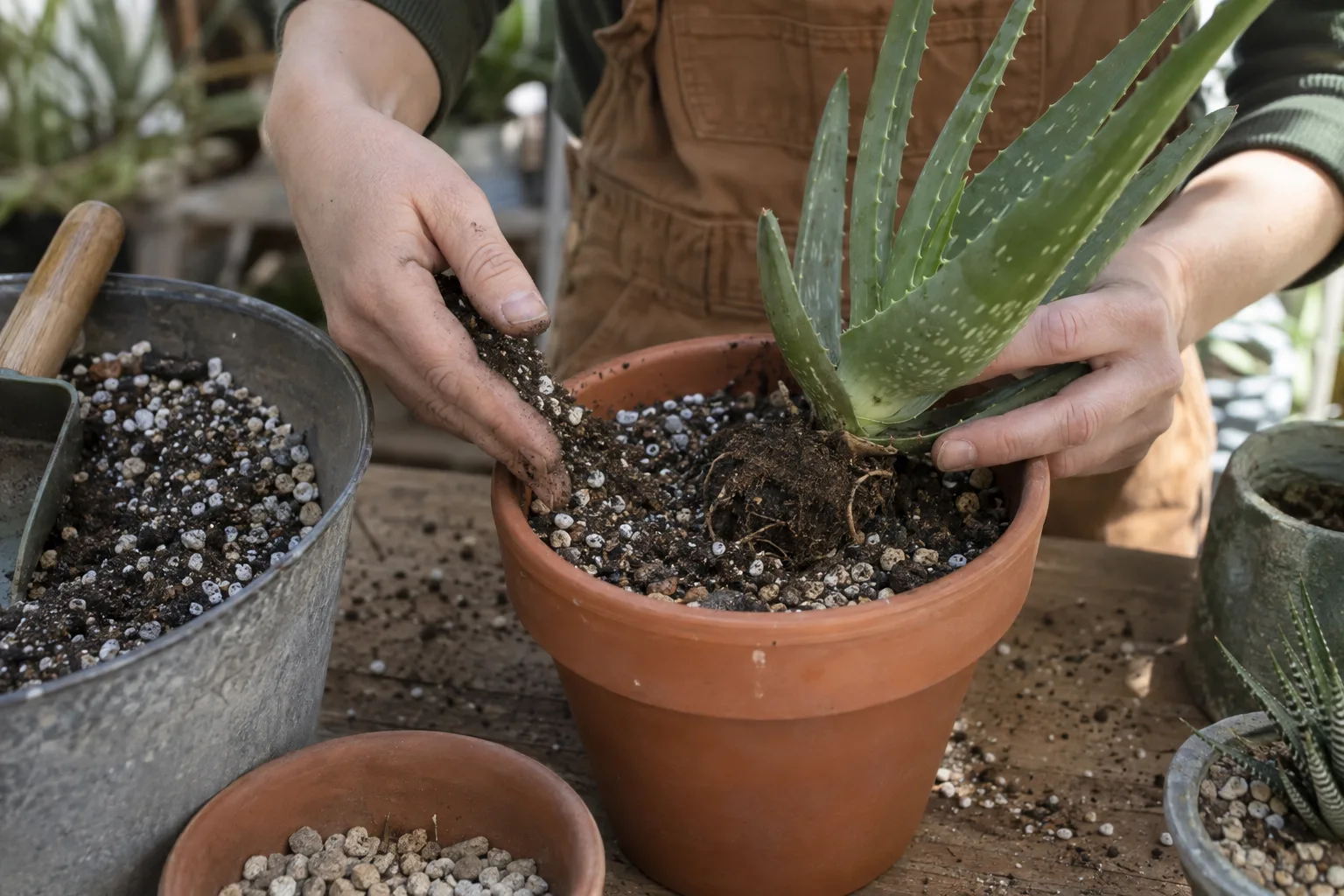
Use pots with drainage holes and a bagged indoor potting mix, never soil from your yard. Our native soil is alkaline and full of caliche, and it packs hard in a container, squeezing out the air that roots need. For aloe, snake plant and ZZ plant, blend cactus mix with perlite or coarse sand, roughly half and half.
When you shop for pottery and planters, check the base for a drainage hole, or keep the plant in its plastic nursery pot and slip that inside the decorative one. Repot when roots circle the pot or poke from the drainage holes, usually every 1 to 2 years in spring, and move up only 1 to 2 inches in pot width.
If you learn better by doing, the classes and events page shows what is scheduled.
Which popular houseplants struggle in dry Arizona air?
Boston fern (Nephrolepis exaltata), calathea (Goeppertia) and nerve plant (Fittonia albivenis) need steady humidity, and AC air plus hard water leaves them with crisp brown edges. They dry out fast or get overwatered in an attempt to compensate. Start with the seven above, then add a fussier plant once your watering routine is steady.
Frequently asked questions
Are these houseplants safe for cats and dogs?
Only the spider plant is listed as non-toxic to cats and dogs by the ASPCA. Snake plant, pothos, ZZ plant, aloe, rubber plant and peace lily can cause drooling, vomiting or mouth irritation if chewed. Keep them out of reach, and call your vet or the ASPCA Animal Poison Control Center if a pet chews one.
Can I move houseplants outside for the summer?
Keep them indoors from about May through September. Outdoor highs above 110°F and strong sun scorch leaves quickly, even in shade, and a plant moved from indoor light can burn in a day. In cooler months, start in full shade for a week and bring plants in before nights drop near 40°F.
Do indoor plants need fertilizer?
Yes, lightly. A balanced houseplant fertilizer at half the label strength about once a month from March through September is plenty, and you can skip it from October through February when growth slows. Fertilizer salts add to the mineral buildup from hard water, so flush pots regularly and never feed a dry plant.
Why are my snake plant’s leaves wrinkling?
Wrinkled leaves mean the roots are either too dry or rotting. If the soil is dry several inches down, water deeply and the leaves should firm up within a few days. If the soil is wet and smells musty, unpot the plant, cut off black or mushy roots, let it dry for a day or two, and repot in fresh mix.
What do I do about spider mites?
Rinse both sides of the leaves with lukewarm water in the shower and isolate the plant. Spider mites show up as fine webbing and pale speckled leaves, and dry indoor air favors them. If weekly rinsing does not clear them, contact us for advice, and follow the label on any product you use.
Are houseplants worth it for cleaner air in an Arizona home?
Yes for greenery and a small humidity boost, no if cleaner air is your main goal. Snake plant, ZZ plant and pothos suit busy households, and spider plant suits homes with cats or dogs. If someone in your home has asthma or severe allergies, talk to a doctor about filtration and ventilation rather than counting on plants. Pick two or three that match your windows, then visit us in Queen Creek to see our houseplants in person.