
The best long-lasting indoor flowering plants for Arizona homes are anthurium, bromeliad, Phalaenopsis orchid, kalanchoe, peace lily, Christmas cactus, African violet and jasmine. Most hold color for four weeks to several months in the dry, air-conditioned air of the low desert.
Key takeaways
- Anthurium and bromeliad hold color longest, roughly 2 to 3 months for anthurium spathes and 3 to 6 months for bromeliad bracts.
- Kalanchoe and Christmas cactus handle dry indoor air best, while orchids, peace lilies and African violets need extra humidity help.
- Most of these plants want bright light without direct sun, usually a spot 2 to 6 feet from an east or filtered south window.
- Water when the top inch of soil is dry, and flush the pot with plain water every 1 to 2 months to clear salts left by hard water.
- Peace lily, anthurium and kalanchoe are listed as toxic to pets by the ASPCA, so place them out of reach.
How do Arizona homes affect indoor flowering plants?
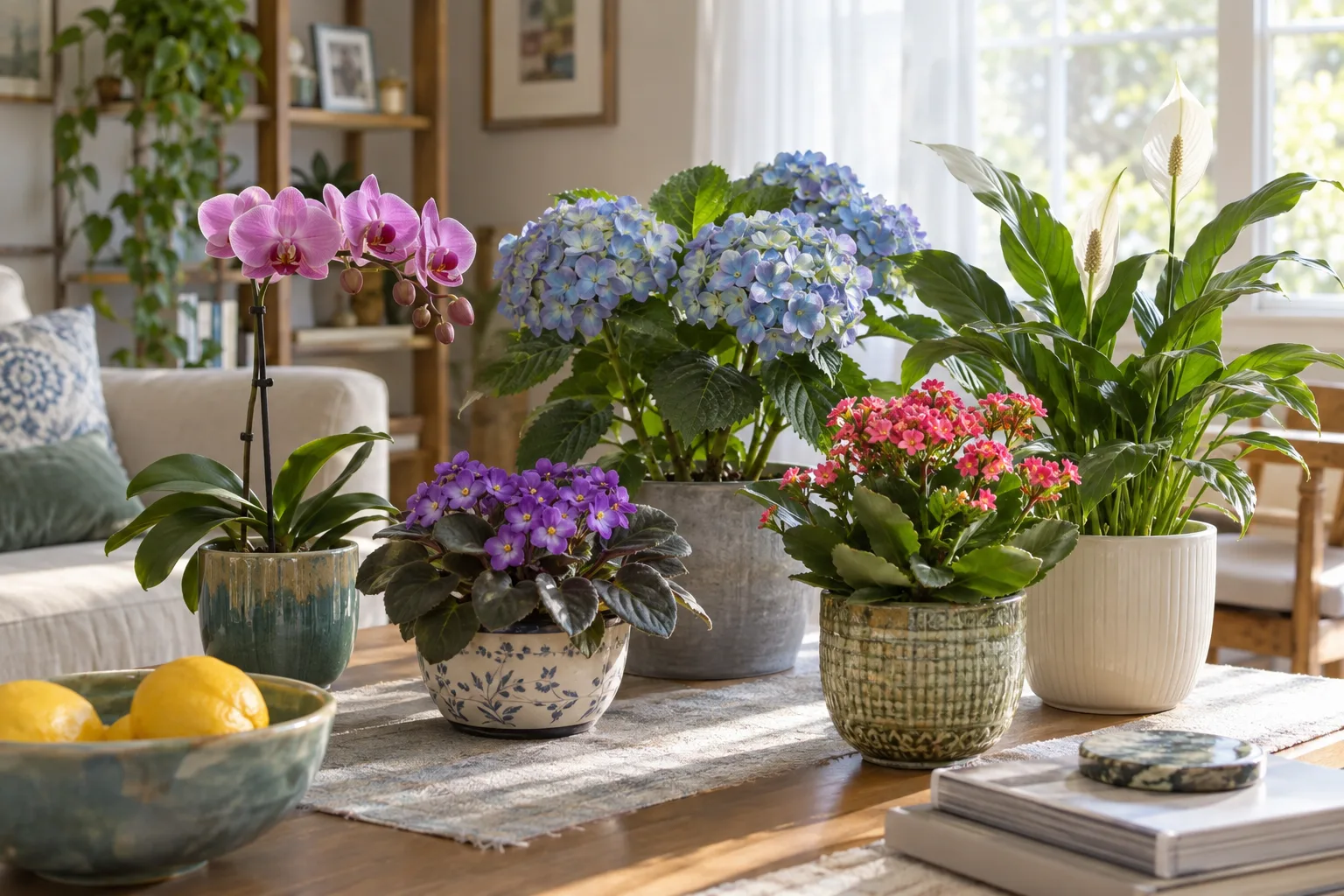
Dry air and strong window light are the two biggest factors. Indoor temperatures of roughly 70 to 78°F suit tropical bloomers well, but humidity in air-conditioned East Valley homes often sits well below 30%, and many flowering houseplants prefer 40% or more.
Light comes with its own twist. When it is above 110°F outside, a west or south window can scorch leaves through the glass in an afternoon. A sheer curtain softens the light enough for most plants on this list.
Hard, alkaline tap water adds a third factor. Minerals build up as white crust on the soil surface and brown the leaf tips of sensitive plants. Grouping pots together, setting them on a tray of pebbles with water below the pot base, and running a small humidifier nearby all raise the humidity around the leaves. Browse our houseplant department to see the kinds of indoor plants that suit these conditions.
Which indoor plants bloom longest in the low desert?
Anthurium and bromeliad lead the list, followed by Phalaenopsis orchid and kalanchoe. These are varieties we commonly carry, though availability changes week to week and season to season. Bloom times below are typical ranges and vary with light and care.
Anthurium (Anthurium andraeanum)
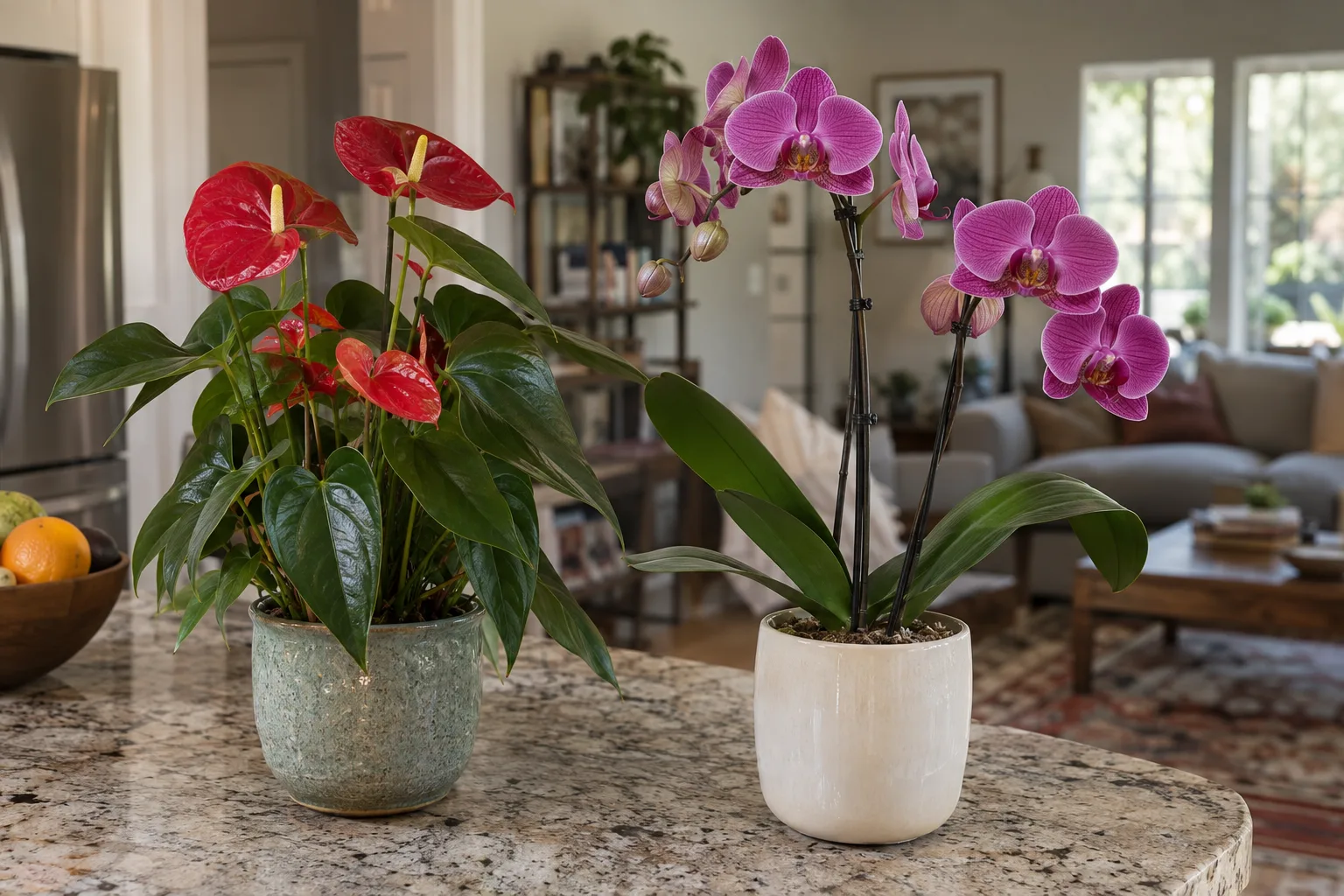
Anthurium bears glossy, heart-shaped red, pink, white or coral spathes that stay fresh for about 2 to 3 months. It grows 12 to 24 inches tall and wants bright indirect light, such as a few feet from an east window. Water when the top inch of the mix dries, and use a coarse, fast-draining mix. The drawback is sensitivity to soggy roots and to temperatures below about 60°F near cold glass.
Bromeliad (Guzmania and Aechmea)
The showy part of a bromeliad is a cluster of colored bracts, which hold for roughly 3 to 6 months. Plants reach 1 to 2 feet tall and prefer bright indirect light. Keep the central cup lightly filled with fresh water, flush it every week or two, and keep the potting mix barely moist. Each plant blooms once, then produces pups, so the display eventually fades and you start over with the offsets.
Moth orchid (Phalaenopsis)
A moth orchid holds its flowers for about 2 to 3 months on an arching spike that can reach 2 to 3 feet. Give it bright indirect light, and water by letting the bark mix go nearly dry between soakings. Keep water out of the crown of leaves. It dislikes very dry air, so group it with other plants or use a humidifier. Getting a second bloom takes a cooler night period, which many warm Arizona homes struggle to provide.
Kalanchoe (Kalanchoe blossfeldiana)
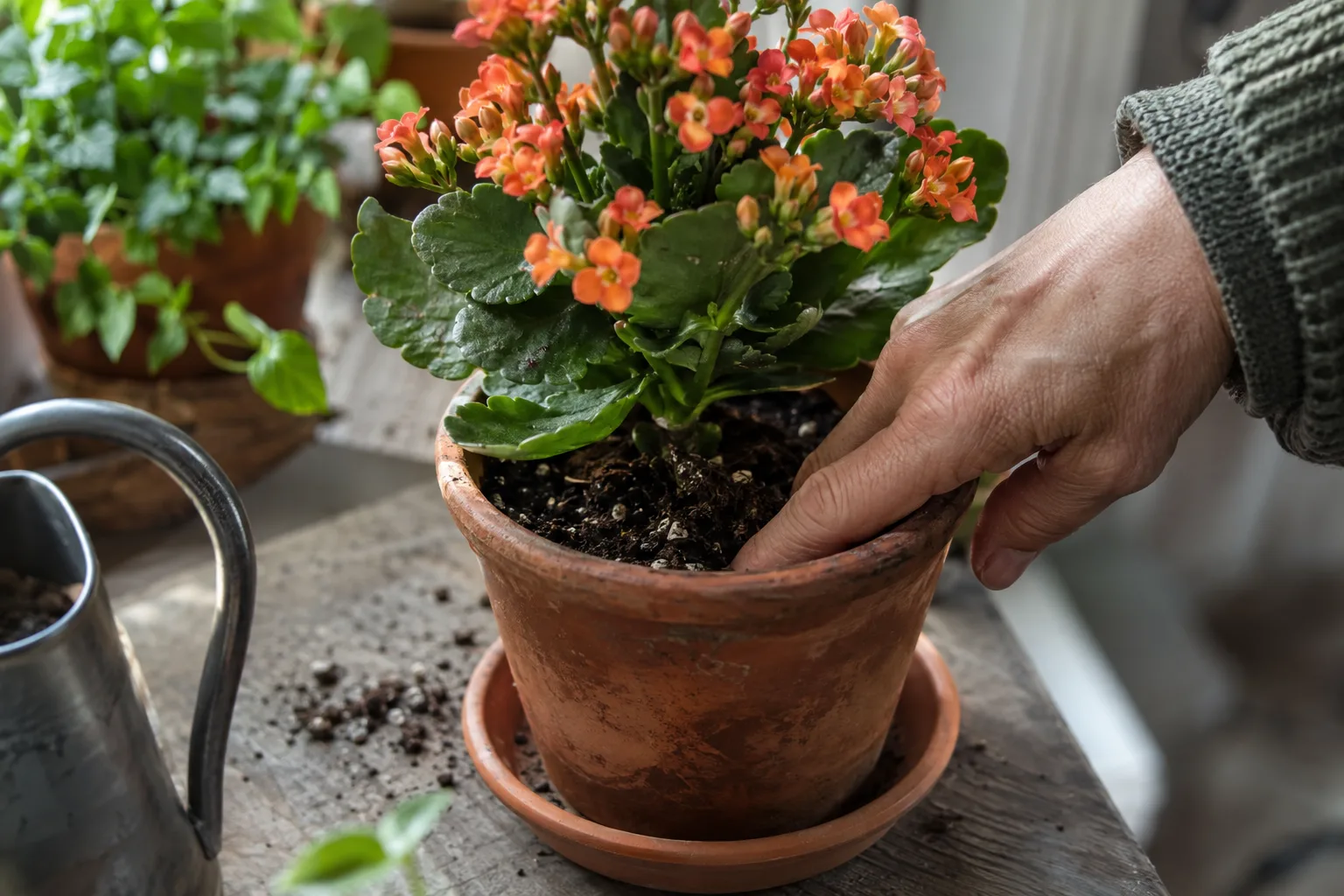
Kalanchoe is a succulent with clusters of small red, orange, yellow, pink or white flowers that last about 6 to 8 weeks. It stays 8 to 16 inches tall and wants the brightest window you have, with a little direct morning sun. Let the soil dry thoroughly between waterings. To rebloom, it needs long nights of about 14 hours of darkness for several weeks. The drawback is root rot in heavy, wet soil.
Peace lily (Spathiphyllum)
Peace lily produces white spathes for roughly 4 to 8 weeks and grows 1 to 3 feet tall. It tolerates lower light than most plants here, so it suits a room several feet from a window. The leaves droop when it is thirsty and recover quickly after watering. Hard water and dry air brown the leaf tips, and the plant is listed as toxic to pets.
Christmas cactus (Schlumbergera)
Despite the name, Christmas cactus is a Brazilian forest cactus, not a desert plant. It forms an arching mound 8 to 18 inches tall with pink, red, white or purple blooms that last about 4 to 6 weeks, usually in late fall and winter. Give it bright indirect light and let the top inch of soil dry between waterings. Its drawback is bud drop when it is moved or when light and temperature swing suddenly.
African violet (Saintpaulia ionantha)
African violet stays compact, usually 6 to 8 inches across, and can flower in repeating flushes of about 3 to 4 weeks through much of the year. It likes bright indirect light or a grow light. Water from below with room-temperature water, and keep drops off the fuzzy leaves. The drawback is its dislike of cold air from vents and of very low humidity.
Arabian jasmine (Jasminum sambac)
Arabian jasmine is a semi-vining shrub that can reach 3 to 6 feet in a pot and be pruned shorter. Its white, fragrant flowers open over a period of weeks in the warm months. It needs the brightest indoor spot you have, such as a south or west window with a sheer curtain in summer, and steady moisture without standing water. The drawback is demand for light. In a dim room it grows leaves and few flowers.
Which flowering plant fits my window and my schedule?
Match the plant to the light you already have, then to how often you want to water. Low-light rooms suit African violet under a grow light or peace lily, while bright south windows suit kalanchoe and jasmine. Busy households do well with kalanchoe, bromeliad and Christmas cactus.
| Plant | Typical bloom time | Light | Dry-air tolerance |
|---|---|---|---|
| Anthurium | 2 to 3 months | Bright indirect | Medium |
| Bromeliad | 3 to 6 months | Bright indirect | Good |
| Moth orchid | 2 to 3 months | Bright indirect | Low |
| Kalanchoe | 6 to 8 weeks | Bright, some direct morning sun | Good |
| Peace lily | 4 to 8 weeks | Low to medium | Low |
| Christmas cactus | 4 to 6 weeks | Bright indirect | Good |
| African violet | 3 to 4 weeks per flush | Bright indirect or grow light | Low |
| Arabian jasmine | Several weeks | Brightest available | Medium |
How should I water and pot flowering houseplants in hard water?
Water when the top inch of the mix feels dry, and always use a pot with drainage holes. Dry indoor air speeds evaporation, so a fixed schedule often fails. Checking with a finger works better than counting days.
Hard water leaves mineral salts behind. Every month or two, run plain water through the pot until it drains freely, and empty the saucer afterward. Letting a plant sit in drained water invites root rot within days. Plants that dislike minerals, such as orchids and African violets, do better with filtered or collected rainwater when you can manage it.
Potting mix matters as much as water. Anthurium, orchids and kalanchoe want a coarse, fast-draining mix, and many plants arrive in dense soil that holds too much moisture. Browse pottery and planters for pots with drainage holes that fit your plants.
What shortens bloom time in Arizona homes?
Cold drafts from AC vents, overwatering and constant moving shorten blooms most. A plant parked in front of a vent can drop buds within days.
Direct afternoon sun through west glass bleaches spathes and scorches leaves, so pull plants back a few feet or add a sheer curtain. Fertilizer follows the same rule of moderation. A balanced liquid feed at half strength every few weeks during active growth is enough, and heavy feeding builds salts in the pot.
Give a new plant two weeks in one spot before you judge it. Flowering plants often react to a move by dropping a few blooms and then settle. Our classes and events page lists workshops where you can ask about houseplant problems in person.

Frequently asked questions
Why do my flowering houseplants drop buds before they open?
Sudden changes in temperature, light or moisture cause most bud drop. In Arizona homes the usual triggers are AC airflow, very dry air and a pot that dried out completely during budding. Move the plant away from vents, raise humidity with a tray or humidifier, and keep moisture steady once buds appear.
Are these indoor flowering plants safe for pets?
Not all of them. The ASPCA lists peace lily, anthurium and kalanchoe as toxic to cats and dogs, while it lists African violet, bromeliad, Phalaenopsis orchid and Christmas cactus as non-toxic. Check the ASPCA plant database for each plant you buy, and talk to your vet if a pet chews on anything.
Can I move these plants outdoors in summer?
Most should stay inside from June through September. Summer highs above 110°F will scorch tropical plants like anthurium, orchids and peace lilies quickly, even in shade. If you move a plant outside during cooler months, choose a covered spot out of direct sun and bring it in before the first frost.
What fertilizer helps indoor plants bloom?
A balanced liquid houseplant fertilizer at half the label strength works for most of these plants. Apply it every 2 to 4 weeks while the plant is growing. Some growers switch to a bloom formula higher in phosphorus when buds form. Skip feeding right after repotting, and flush the pot regularly to clear salts.
Which flowering houseplant is right for your home?
Choose bromeliad or kalanchoe if you want the longest color for the least fuss, and anthurium if you have a bright, draft-free spot. Orchids and African violets suit people who enjoy checking their plants often. Skip jasmine if your rooms are dim, and skip peace lily, anthurium and kalanchoe if a pet chews plants. Stop by our Queen Creek nursery to see what is available and talk through your windows.