

Increase watering in April when the soil 3 inches down is still dry two days after a cycle, which in Arizona usually happens once daytime highs hold in the 90s. Lengthen run times first, add days second, and change one thing at a time.
Key takeaways
- Start checking soil in the first week of April, and raise watering when soil 2 to 3 inches deep is dry two days after irrigation.
- Lengthen drip run times by roughly 25% before you add extra watering days.
- Water plants in their first two years, citrus and annual flowers or vegetables first; established desert trees can usually wait until late April or May.
- Run irrigation between about 4 AM and 7 AM, before the afternoon heat pulls water off the soil surface.
- Soil that is still wet 48 hours after a cycle means you should cut back, whatever the calendar says.

When should I increase watering in April in Arizona?
Most low desert yards need a small increase between the first and third week of April, and the soil tells you when. Daytime highs in Queen Creek climb from the 80s into the 90s over the month, and a first 100°F day is possible near the end. Plants are leafing out, blooming and setting fruit while evaporation rises, so demand and water loss grow together.
A February or March schedule is usually too light by late April. The calendar is a starting point only, because a cool, cloudy week needs less water than a run of 100°F days. Our gardening calendars lay out month-by-month care for East Valley yards. Check the soil weekly.
How do I check whether my soil is drying out too fast?
Check two days after a watering cycle, because that shows how long the water lasts. Push a finger 2 to 3 inches into the soil beside a drip emitter. Cool, moist soil means the schedule still works. Dry, crumbly soil means the plant is already running short.
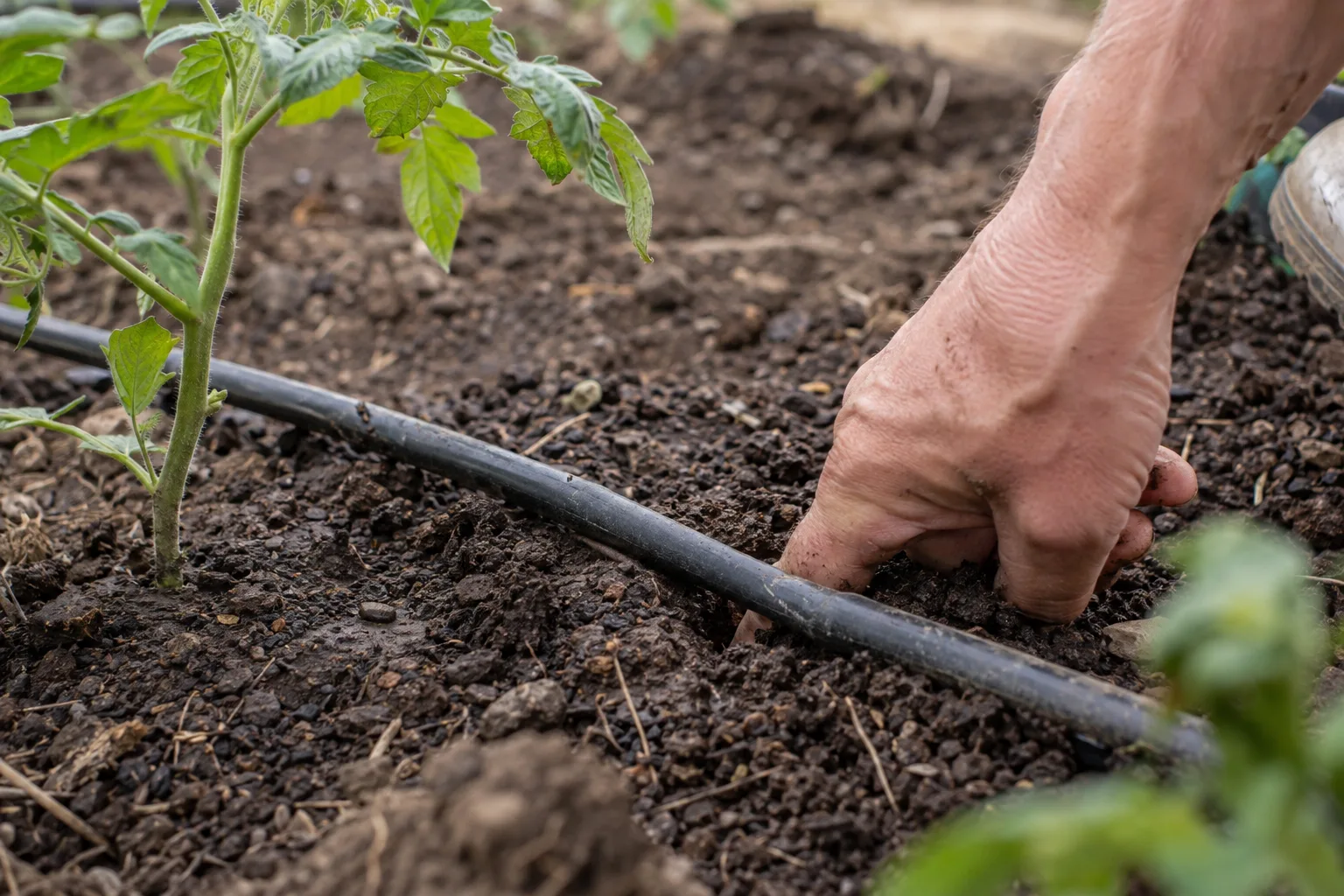
A long screwdriver gives a deeper reading. It slides 6 to 8 inches into moist soil and stops hard against dry, compacted ground or caliche. Test three or four spots around the yard, since a bed against a west-facing block wall dries out much faster than one that gets afternoon shade.
Which plants need more water first in April?
Plants with shallow or young roots need more water first, and established desert trees come last. Work through the yard in that order instead of raising every zone at once.
New trees and shrubs (first two years)
Young plants have not spread their roots beyond the original planting hole, so they depend completely on your irrigation. They are the first to show stress when highs reach the 90s. Give them more frequency before anything else, and keep the watering basin or emitters positioned at the edge of the root ball and just beyond it as it grows.
Citrus
April is bloom and fruit-set time, and uneven moisture can lead to dropped blossoms and small fruit. Citrus trees do best with deep, slow watering that wets the soil 18 to 24 inches down for established trees. Shallow, frequent sprinkles leave roots near the surface where they dry out first.

Annual flowers and vegetables
Shallow roots make annual flowers and foliage the quickest to react. Plants that wilt in the morning, when it is still cool, need water sooner. Containers dry out faster than ground beds, so they may need water every day by the end of April.
Palms
Established palm trees are putting on new fronds in April and use more water than they did in winter. Increase deep watering gradually, and avoid keeping the soil right at the trunk base soggy, since that invites rot.
How do I raise my watering schedule without overdoing it?
Make one small change, wait a week, and check the soil again. Each step below builds on the one before it.
- Pull a few drip emitters and run the system by hand. Hard water leaves mineral deposits that clog emitters, and a partly blocked emitter delivers far less than its rating.
- Lengthen run time by about 25% (for example, 30 minutes to 40 minutes). Longer cycles push water deeper and encourage roots to follow it.
- Wait a week and repeat the finger or screwdriver test two days after a cycle.
- Add one watering day only if the soil is still dry, and only for young plantings and non-native shrubs.
- If your controller has a seasonal adjustment percentage, raise it in small steps, such as 80% to 100%, so every zone changes proportionally.
- Move any afternoon cycles to the early morning, between about 4 AM and 7 AM.
- Spread 2 to 3 inches of mulch over the root zone, keeping it a few inches away from trunks and stems, to slow evaporation.
Skip a cycle after a rare April rain if the soil is still wet 3 inches down.
What does an April watering schedule look like by plant type?
The table gives starting ranges for drip irrigation in the low desert, and your soil, exposure and emitter output will shift them. Treat them as a first guess and let the soil checks settle the details.
| Plant type | Early April | Late April | Target depth |
|---|---|---|---|
| Established citrus | Every 7 to 10 days | Every 5 to 7 days | 18 to 24 inches |
| Trees and shrubs under 2 years | Every 3 to 4 days | Every 2 to 3 days | 12 to 18 inches |
| Lantana and other flowering shrubs | Every 7 to 10 days | Every 5 to 7 days | About 12 inches |
| Established palms | Every 7 days | Every 5 to 7 days | 18 to 24 inches |
| Established desert trees | Every 2 to 3 weeks | Every 10 to 14 days | 24 to 36 inches |
| Annuals and vegetables | Every 2 to 3 days | Daily to every other day | 6 to 10 inches |
How do I tell overwatering from underwatering?
Look at the soil first and the leaves second, because the two problems can look alike from a distance. Both cause yellowing and leaf drop, but the soil moisture points in opposite directions.
Signs a plant needs more water:
- Leaves curl or droop in the morning, not only in the afternoon.
- New growth wilts before noon.
- Soil is dry and pulls away from the edge of the watering basin.
- Leaf edges turn brown and crisp.
Signs of too much water:
- Soil stays wet or muddy 48 hours after a cycle.
- Leaves turn evenly yellow or yellow-green.
- Soft, mushy tissue appears at the base of agaves or aloes.
- Fungus or algae shows on the soil or mulch surface.
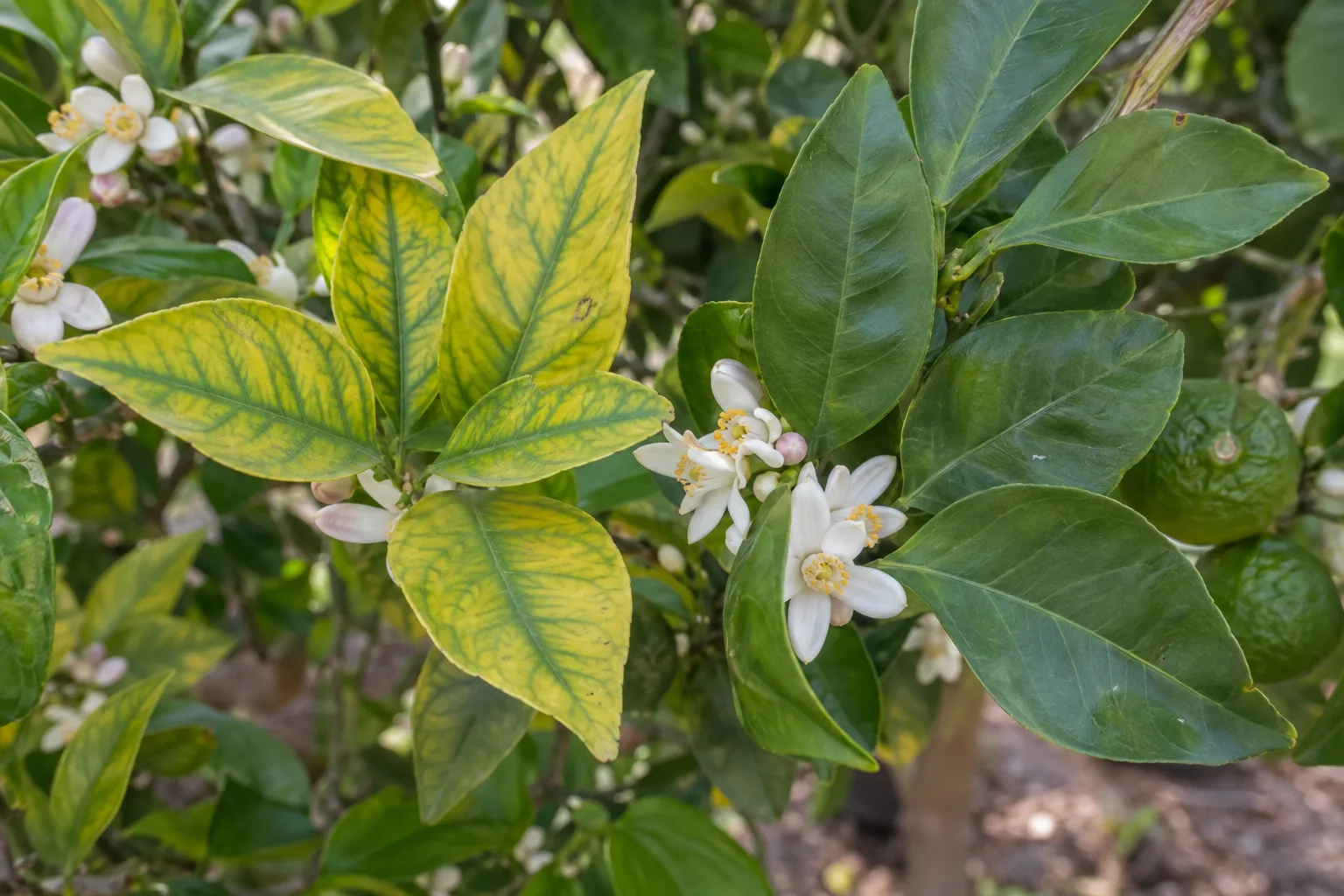
Yellow leaves with green veins on citrus often point to iron chlorosis, which is common in our alkaline soil. That is a nutrient problem, and extra water will not fix it. Check the soil moisture before you change anything.
What should I leave alone in April?
Leave established desert trees, cacti and agaves on their current schedule until late April at the earliest. Their roots reach deep, and added water pushes soft, weak growth and encourages fungal disease.
Mature desert trees such as mesquite and palo verde can handle another few weeks, and a deeper watering every 2 to 3 weeks usually covers them. Cacti and agaves are growing again but still need the soil to dry between waterings. Bougainvillea blooms best when it dries out between deep waterings, so resist the urge to water it as often as your shrubs.
How does April watering affect summer and the monsoon?
Deep, less frequent watering in April builds roots that reach lower, cooler soil. That depth protects plants through June heat above 110°F and the sudden soil saturation of the monsoon, which runs from roughly July through September. Plants trained on shallow, frequent sprinkles keep their roots near the surface. Those roots dry out in early summer and sit in soggy soil after a storm.
Frequently asked questions
Is it okay to water in the evening in April?
Evening watering works for drip-irrigated trees and shrubs, but morning is better. Soil takes up water more efficiently before the day heats up, and less is lost to evaporation. Wet foliage overnight can encourage fungal problems on some plants, so aim emitters at the soil rather than the leaves.
How do I know my drip system is delivering water?
Run a manual cycle and watch every emitter for a full minute. Clogged or weak emitters are common in the East Valley because hard water leaves mineral buildup. Replace any that drip slowly or not at all, and consider a filter at the valve. Do this check each spring before increasing run times.
Does alkaline soil change how I water in April?
Yes, because alkaline soil and caliche can form a crust that sheds water sideways instead of letting it soak in. If puddles form or runoff appears, break up the surface around emitters, add mulch, and run shorter cycles twice with an hour between them so the water has time to enter the soil.
Does mulch really cut down on watering?
Mulch slows evaporation from the soil surface, so the same water lasts longer between cycles. Use 2 to 3 inches of wood chips or similar material over the root zone. Pull it back from trunks and stems to avoid rot.
Where can I get help setting up a watering schedule?
Our team can talk through your yard in person, and our classes and events page lists any workshops that are scheduled. Bring a few photos and a rough list of what you have planted, plus how your irrigation is set up. That helps us suggest a realistic starting schedule.
Is it worth changing your watering schedule in April?
For most East Valley yards, yes. A small increase in April protects new plantings, citrus and annuals just as heat arrives, and it costs very little. If your yard is mostly established desert trees, cacti and agaves, you may only need a check of emitters and soil, and no schedule change at all. Skip big changes on plants that already show soggy soil. If you want a second opinion on your plants, stop by our nursery in Queen Creek.