Plants that are illegal to grow or sell in Arizona fall into two groups: noxious weeds on the state list, and native plants protected from removal. The Arizona Department of Agriculture (ADA) administers both, so confirm with them before you plant, move or dig.
Key takeaways
- Arizona’s noxious weed list sorts restricted plants into Class A, B and C, so check a plant’s botanical name against the current list before you buy it.
- Buffelgrass and fountain grass (both Pennisetum) are the restricted grasses East Valley gardeners are most likely to meet.
- The Arizona Native Plant Law covers saguaros and many other desert natives, and it can apply on private lots, so ask the ADA before removing or relocating one.
- Hand-pull small stands of weedy grasses before the seed heads mature, then bag the material and put it in the trash, not the compost bin.
- Deer grass, pink muhly and desert willow are low-desert alternatives to fountain grass and tamarisk.

What makes a plant illegal to grow in Arizona?
Two sets of rules decide it: the state noxious weed list and the Arizona Native Plant Law. The noxious weed list targets plants that damage farms, waterways and wild desert. The native plant law protects many cacti and desert trees from being dug up, destroyed or sold without authorization.
Most plants at a garden center fall under neither. Rules mostly concern selling, moving, planting and removing, and they differ plant by plant. Rules change. We are a nursery, not a legal authority, so confirm anything important with the ADA before you act. When you want to see what suits a low-desert yard, our plant department covers shrubs, perennials and groundcovers, and availability changes week to week.
Which noxious weeds do East Valley gardeners run into most?
Buffelgrass, fountain grass and Saharan mustard are the likeliest, plus a few water-loving invaders along canals and ponds. The state sorts its list into Class A, B and C, and you can read the current version in the Arizona noxious weed list (2023). Check every name below against it, since entries and classes are updated.
Buffelgrass (Pennisetum ciliare)
Buffelgrass is a tufted perennial grass from Africa and Asia that was once planted for erosion control and cattle forage. It escaped into the Sonoran Desert, where it forms dense stands of dry fuel on slopes and in washes. Saguaros, palo verdes and other natives evolved with sparse ground cover and little fire, so a grass-fed blaze can kill plants poorly adapted to it. Look for clumps roughly 2 to 4 feet tall with bristly, tan to purplish seed heads.

Fountain grass (Pennisetum setaceum)
Fountain grass is sold as an ornamental in many places because of its soft, feathery plumes, and you still see it in older East Valley landscapes. It reseeds into washes, roadsides and desert edges, much like buffelgrass. Plumes run pink to purple and the clumps reach about 2 to 4 feet. Several cultivars are sold under names such as purple fountain grass. Check the tag for the botanical name.
Saharan mustard (Brassica tournefortii)
Saharan mustard is a cool-season annual that sprouts after fall or winter rain, flowers in late winter and spring, and dries into a rounded skeleton that scatters seed. It crowds out native wildflowers in wet years. Pulling plants while they are still green and before the seed pods form is the practical fix for a few plants in a yard.
Giant reed and tamarisk
Giant reed (Arundo donax) looks like bamboo topped with feathery plumes and can reach 15 feet or more, while tamarisk or saltcedar (Tamarix species) is a feathery-leaved shrub or small tree. Both draw heavily on water along canals, washes and rivers. If your lot backs onto a canal and you find either one, call the ADA before cutting it back, because pieces of giant reed can resprout.
Water hyacinth and hydrilla
If you keep a pond, ask before adding aquatic plants. Water hyacinth (Eichhornia crassipes) and hydrilla (Hydrilla verticillata) form dense mats that block sunlight and clog irrigation, and restrictions on them can apply at both the state and federal level.
Which native plants are protected from removal?
Saguaros are the best known, and the Arizona Native Plant Law also covers many other desert natives, including numerous cacti and trees such as ironwood, palo verde and mesquite. Which plants are covered, and how, varies by species, so ask the ADA for the current protected plant list.
Protection can apply on private lots as well as public land. If you plan a pool, addition, driveway or a cleared lot, ask the ADA about permits or notice requirements before ground work starts, and tell your contractor early. Ask first, then dig. If you want these trees in a new planting, nursery-grown plants are the usual source, and our desert trees page is a good place to look. We commonly carry palo verde and desert willow varieties, though availability changes week to week and season to season.
How can I tell if a plant is restricted before I buy it?
Look up the botanical name, because common names overlap and change from seller to seller. A tag that says only “ornamental grass” or “desert grass” tells you nothing, so ask for the genus and species and check them against the noxious weed list.
Ornamental grasses sold online or by out-of-state vendors need the most attention, since a plant sold freely in another state may be restricted here. Native cacti raise a different question: ask whether the plant was nursery propagated or salvaged, and keep any paperwork that comes with it.
What should I do if I find a restricted plant in my yard?
Identify it first, then contact the ADA before you remove anything large or growing near a canal or wash. Small stands in a typical yard are usually manageable by hand.
- Photograph the leaves, stems, seed heads and the whole plant, then match it to a botanical name. The University of Arizona Cooperative Extension is a good source for identification.
- Hold off on mowing or cutting, because chopping some plants spreads seed or root pieces.
- Contact the ADA for guidance, especially for stands larger than a few clumps.
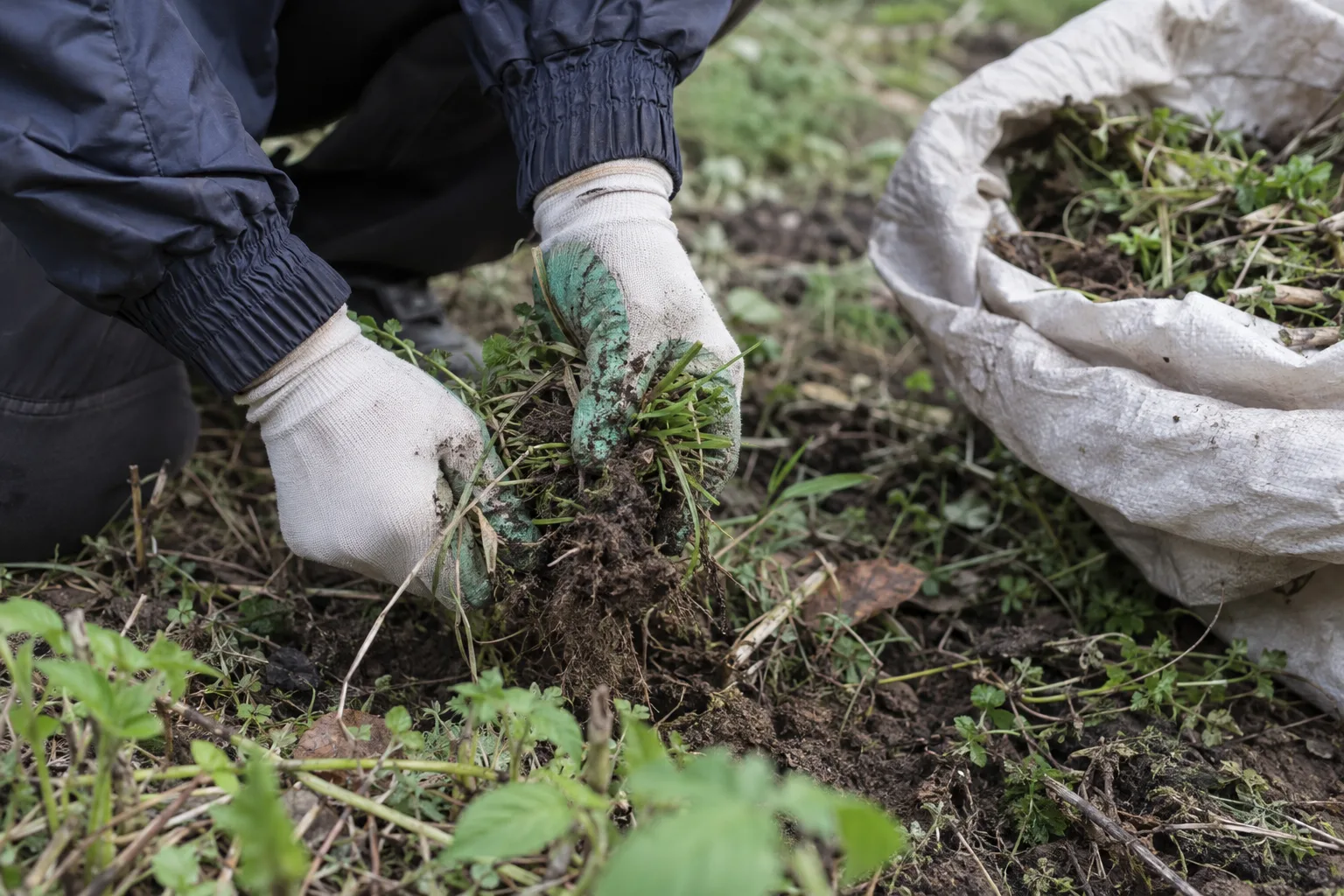
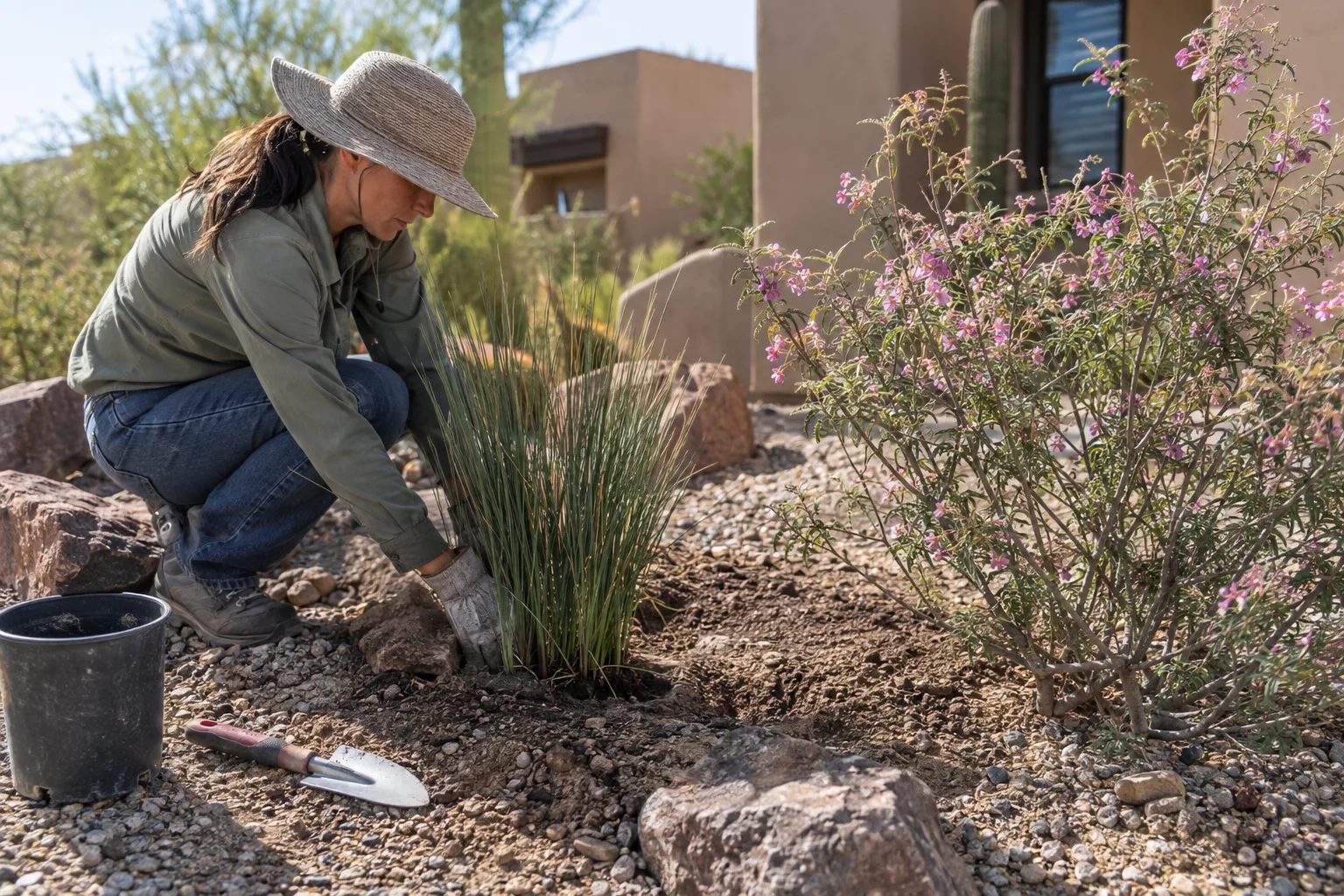
- Hand-pull small plants when the soil is damp, wearing gloves, and before the seed heads mature. Take the crown and as much root as you can.
- Bag everything and put it in the trash. Skip the compost bin and green waste unless your city says otherwise.
- For large stands, ask the ADA or Maricopa County about control methods. Herbicides carry label rules and may call for a licensed applicator.
- Replant the bare soil and look again after each rain, since seed left in the ground can sprout for several seasons.
What can I plant instead of fountain grass or tamarisk?
Deer grass, pink muhly and desert willow cover the same design jobs and are adapted to low-desert conditions. These are varieties we commonly carry, and availability changes week to week and season to season. The cooler months, roughly October to March, are the easiest time to plant most shrubs and grasses here, and our gardening calendars can help you plan it.
Deer grass (Muhlenbergia rigens)
Deer grass grows 3 to 4 feet tall and wide in full sun to light shade and needs moderate water once established. It is a native bunchgrass with arching blades and slim seed spikes. The drawback is upkeep: the clumps turn shaggy and need a hard cutback once a year, usually in late winter.
Pink muhly (Muhlenbergia capillaris)
Pink muhly reaches 2 to 3 feet in full sun with low to moderate water, and its pink plumes appear in fall. It gives the soft, airy look people want from fountain grass. The drawback is that it looks sparse in shade.
Desert willow (Chilopsis linearis)
Desert willow grows 15 to 25 feet tall in full sun and needs little water after its first couple of years. It stands in for tamarisk where you want a light, airy tree with trumpet-shaped summer flowers. It is bare in winter and drops seed pods and flower litter.
Desert marigold (Baileya multiradiata)
Desert marigold stays 1 to 2 feet tall in full sun on low water and blooms with yellow daisy-like flowers over a long season. It fills the color role without any spreading habit. The drawback is a short life, so expect to let it reseed or replace it every few years.
Who should I ask if I am not sure a plant is allowed?
Start with the ADA, since it keeps the lists and handles permits. The University of Arizona Cooperative Extension can help identify an unknown plant, and your town or HOA may have landscape rules of its own. We can help put a name to a plant if you reach us through our contact page, but only the ADA can tell you what the rules require.
Frequently asked questions
Can I plant fountain grass if an online seller ships it to Arizona?
A seller shipping to you does not mean the plant is allowed here. Restrictions are set state by state, and a grass sold freely in California or Texas can appear on Arizona’s list. Check the botanical name against the ADA list before ordering. If it appears there, deer grass and pink muhly give a similar look.
Is a restricted plant left by the previous owner my problem?
The ADA is the right place to ask, because responsibility depends on the plant, its class and the situation. In practical terms, a plant left alone keeps seeding, so removing it early is cheaper and easier than waiting. Take photos before and after removal in case questions come up later.
Is it okay to buy a saguaro or other native cactus?
Nursery-grown cacti from a licensed seller are the usual route, and the seller should be able to explain how the plant was produced or tagged. Wild plants dug from the desert fall under the Native Plant Law and generally involve permits and tags. Ask for documentation and confirm requirements with the ADA before moving a large cactus.
Do city or HOA rules add to the state rules?
They can. Towns such as Queen Creek, Gilbert, Chandler and Mesa, along with many homeowner associations, set their own landscape rules on things like tree removal or approved plant lists. Read your HOA guidelines and ask the town about permits for large removals. State and local requirements are separate, so check both.
When is the best time to hand-pull buffelgrass?
Pull it when the soil is damp and before the seed heads mature. In the low desert that often means after monsoon rains, which run roughly July through September, when the grass is green and easy to spot. Dry soil snaps the crown and leaves roots behind. Check with the ADA or Maricopa County for timing in your area.
Do you need to check your yard for restricted plants?
A quick check is enough for most gardeners. If you buy named, nursery-grown plants and leave wild desert plants where they stand, you are unlikely to run into the plants on these lists. Spend more time if you have older fountain grass, a canal-side lot, a pond, or land you plan to clear. If your yard is gravel, citrus and a few flowering shrubs, skip the deep dive. Stop by our Queen Creek nursery and we will help you with plant names.