

Hoya blooming indoors in Arizona comes down to bright light, a snug pot, cleaner water, cooler fall nights and leaving old flower spurs alone. Most Hoyas need these working together for a season or more before the first flower cluster opens.
Key takeaways
- Give the plant 4 to 6 hours of bright, indirect light a day, such as 2 to 4 feet back from an east window.
- Keep the roots snug, and when you must repot, go up only 1 to 2 inches in pot diameter.
- Flush the pot every 2 to 3 months, and use rainwater or filtered water when you can, because East Valley tap water is hard.
- Start cooler-night exposure in October, when nights fall below 70°F, and keep the plant above 55°F.
- Never cut the short woody spur (the peduncle) behind a faded flower cluster, because it blooms again.
Why won’t my Hoya bloom indoors in Arizona?
Most Hoyas stay leafy because they get too little light, sit in too much pot, or live at one steady temperature all year. Hoyas come from tropical and subtropical Asia, Australia and the Pacific islands, where seasonal shifts in temperature and moisture cue flowering, and a house held near 72°F by air conditioning removes most of those cues. Age is the first thing to rule out. A Hoya grown from a cutting often needs 2 to 5 years before its first bloom.
Hard tap water and very dry indoor air add to the problem, but a handful of small changes made together can fix most of it. If you are still choosing a plant, our houseplants page shows the kinds of plants we work with, and the steps below apply to any Hoya.
What do I need before I start?
You need a bright window or a grow light, a snug pot with drainage holes, and a few basic supplies. Nothing on the list is hard to find, and gathering it first lets you make every change in one weekend.
- A spot with bright, indirect light, or a full-spectrum LED grow light on a timer
- A pot with drainage holes, only slightly larger than the root ball
- A chunky mix, such as cactus mix and perlite at roughly 1 to 1
- Rainwater or filtered water, plus a tray to catch water when you flush the pot
- A balanced liquid fertilizer and a bloom formula higher in phosphorus
- A pebble tray or a small humidifier
What are the seven steps to get a Hoya blooming?
The seven steps are light, a snug pot, cleaner water, a seasonal feeding plan, cooler fall nights, steady humidity and leaving the peduncles alone. Work through them in this order.
- Place the plant where it gets bright, indirect light for 4 to 6 hours a day.
- Keep the roots snug in a pot with drainage, and water only when the top 1 to 2 inches of mix feel dry.
- Use rainwater or filtered water when possible, and flush the pot every 2 to 3 months to wash out mineral salts.
- Feed a balanced fertilizer in spring, switch to a higher-phosphorus bloom formula from June through October, and stop in winter.
- Give the plant cooler nights starting in October.
- Raise the humidity around the plant to roughly 40 to 50 percent without watering more often.
- Leave every peduncle on the stem, and do not move the pot once buds form.
The sections below explain the steps that need more detail.
How much light does a Hoya need to bloom?
A Hoya needs bright, indirect light for roughly 4 to 6 hours a day to store enough energy to flower. A dim corner keeps the plant alive but rarely produces buds.
In an East Valley home, an east window is the easiest fit, with the pot 2 to 4 feet back from the glass. South windows work well from October through February, when the sun sits lower. West windows can scorch leaves from May through September, so hang a sheer curtain to diffuse the late-day sun that pours through the glass.

What if I have no bright window?
A full-spectrum LED grow light set 12 to 18 inches above the vines for 12 to 14 hours a day can fill the gap. Put it on a timer, because an irregular schedule may delay budding.
Should a Hoya stay rootbound, and what water should I use?
Yes, a Hoya usually blooms best with its roots snug, and rainwater or filtered water works better than hard tap water. In a pot that is too large, the plant puts its energy into roots and leaves instead of flowers.
When you must repot, go up only 1 to 2 inches in diameter. If a plant has sat in a roomy pot for two or more years without flowering, moving to a pot one size smaller is reasonable. Terracotta from our pottery and planters lets moisture evaporate through the walls, which helps if you tend to overwater to make up for dry indoor air.

Tap water across the East Valley is hard and alkaline, and the minerals leave a white crust on the soil and pot rim over time. Those salts can interfere with how the roots take up nutrients. Flush the pot every 2 to 3 months by running water through until it drains freely for a couple of minutes. Letting tap water sit overnight does not remove the minerals.
Rainwater collected during the monsoon, roughly July through September, is low in minerals. A bucket set out during a storm can cover several weeks of watering. In winter, water less often, since growth slows.
Do cool nights and fertilizer help a Hoya flower?
Many growers report that cooler fall nights and a higher-phosphorus fertilizer both help trigger buds, though neither is guaranteed. Try them together with the other steps.
Hoyas respond to a nighttime drop of roughly 10 to 15°F below the daytime temperature. Wait until October, when Queen Creek nights fall below 70°F, then set the plant near a window that cools off after dark, or in a room that stays above 55°F. Skip this in July and August, when nights stay hot and the glass radiates heat into the plant.
For feeding, use a balanced fertilizer at half strength every 3 to 4 weeks from March through May. From June through October, switch to a bloom formula with more phosphorus, still at half strength. Stop from December through February. Always apply fertilizer to moist mix, and keep the strength low to avoid adding to the salt buildup from hard water. For month-by-month timing of other seasonal jobs, see our gardening calendars.
How do I keep Hoya buds from dropping?
Hold conditions steady once buds appear. Buds drop when you move the pot, change the watering routine or let the air get too dry.
Air-conditioned rooms can run very dry, so raise the humidity around the plant instead of watering more. Set the pot on a tray of pebbles and water with the pot bottom above the waterline. Group the plant with others, or run a small humidifier nearby and aim for 40 to 50 percent. Do not mist open flowers, which can make them fall early.

Why should I never cut the peduncle?
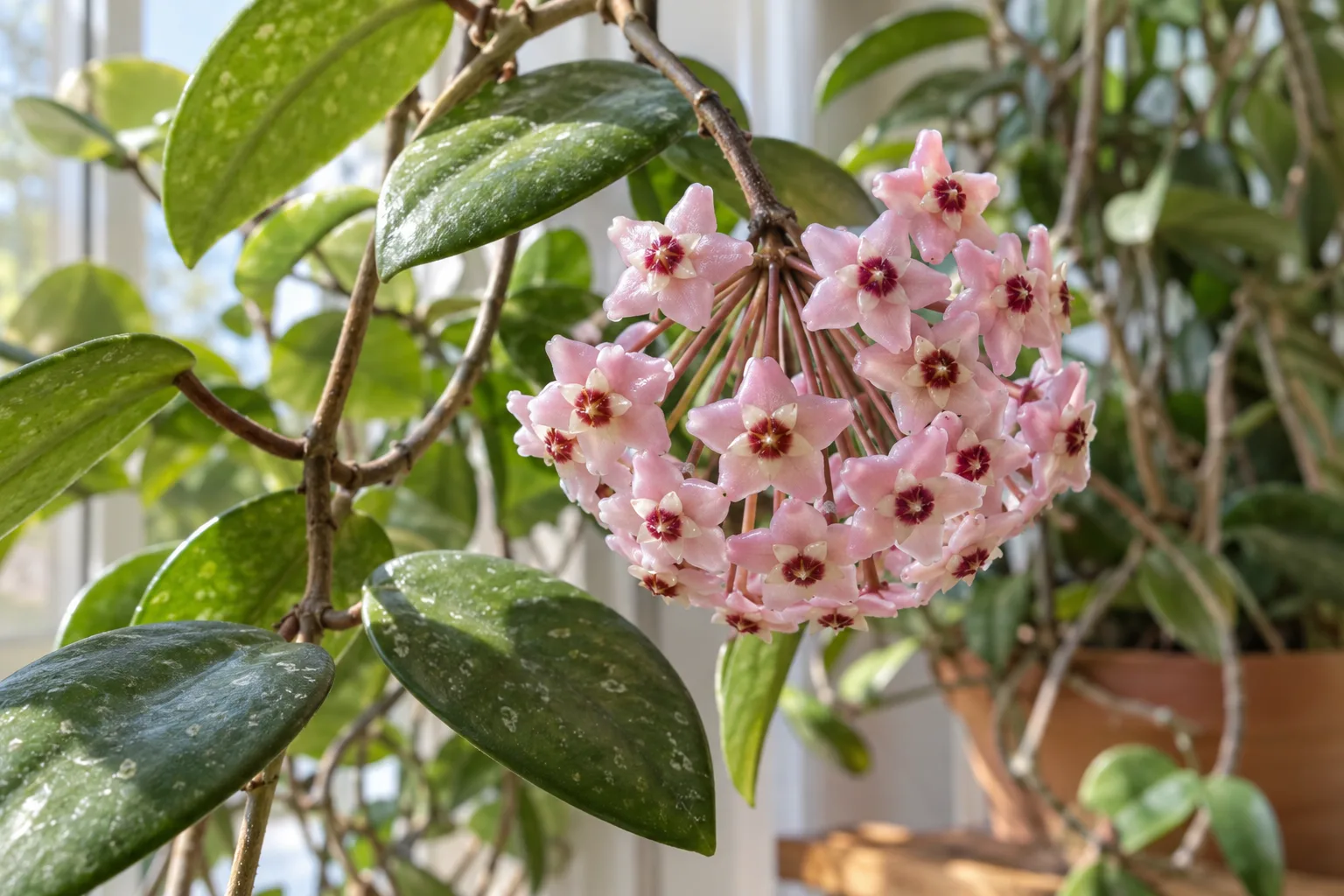
The peduncle is the short, woody spur that held the flower cluster. It looks like a dead twig after the blooms fade, but the same spur flowers again in later seasons. Cutting it can mean waiting another 1 to 2 years for a new one to form, so leave it in place.
What mistakes keep a Hoya from blooming?
Most failures trace back to a short list of habits. Check yours against these.
- Planting in a pot much larger than the root ball
- Placing the plant in a west window in summer without a sheer curtain, or in a dim corner year-round
- Watering more often to make up for dry air, which leads to root rot
- Feeding a high-nitrogen fertilizer all year, which favors leaves over flowers
- Trimming peduncles during a tidy-up
- Moving or rotating the pot after buds form
Frequently asked questions
How long until a Hoya blooms for the first time?
A Hoya grown from a cutting often takes 2 to 5 years to bloom for the first time. Some faster species can flower in 18 to 24 months with good light. If the plant keeps pushing out healthy new leaves and vines, it is on track and only needs time and steady care.
Can I put my Hoya outside in Queen Creek?
Yes, but only in the cooler months and only in shade. A covered patio with morning light and no afternoon sun works from October through April. Bring the plant in before nights drop to about 50°F, and never leave it out in frost. Summer highs above 110°F will scorch the leaves.
Which Hoyas flower most easily indoors?
Hoya carnosa, Hoya pubicalyx and Hoya australis are widely grown species with a reputation for flowering indoors. They are varieties we commonly carry, though availability changes week to week and season to season. Whichever you choose, the light, pot and peduncle steps above apply the same way.
Is the sticky nectar a problem?
Yes, Hoya flowers can drip a sugary nectar that is sticky on wood, fabric and flooring. Place a tray or mat under the plant as soon as buds open. Tile and concrete clean up easily, so a hanging pot over a hard floor is a safer spot than one over carpet.
Should I repot a Hoya that has not bloomed in five years?
Not necessarily, because a snug pot often helps flowering. Repot only if water runs straight through or the mix has broken down and shrunk from the pot edge. Then refresh the mix in the same pot or go up 1 to 2 inches in diameter at most. Check light and water quality first. Our classes and events page lists what is on the calendar if you want hands-on help.
Is a Hoya worth the wait in an Arizona home?
Yes, if you have a bright window or will add a grow light and can wait a season or more. The flowers are waxy, fragrant and return from the same spurs for years. Skip it if you want blooms within a few months, or if your home has no spot with 4 to 6 hours of bright, indirect light. Stop by our Queen Creek nursery and talk it over with us.
