

Arizona HOAs tend to flag front yards in winter because summer growth fades and weeds, frost damage and bare soil become easy to see. Most of these problems cost less to prevent in October than to fix in January.
Key takeaways
- Winter annual weeds such as London rocket, filaree and sowthistle sprout after the first soaking rains, often between October and December, and can set seed by late winter.
- A pre-emergent herbicide only works before weeds sprout, so many East Valley gardeners apply it in early to mid fall, following the label.
- A freeze at or below 32°F can blacken bougainvillea, lantana and yellow bells within days, and waiting until late February or March to cut them back usually protects the plant.
- Your CC&Rs decide which ground cover, plants and rock colors are acceptable, so read the landscape section before you spend money.
- Answer a violation notice in writing, with dated photos, before the deadline printed on the letter.
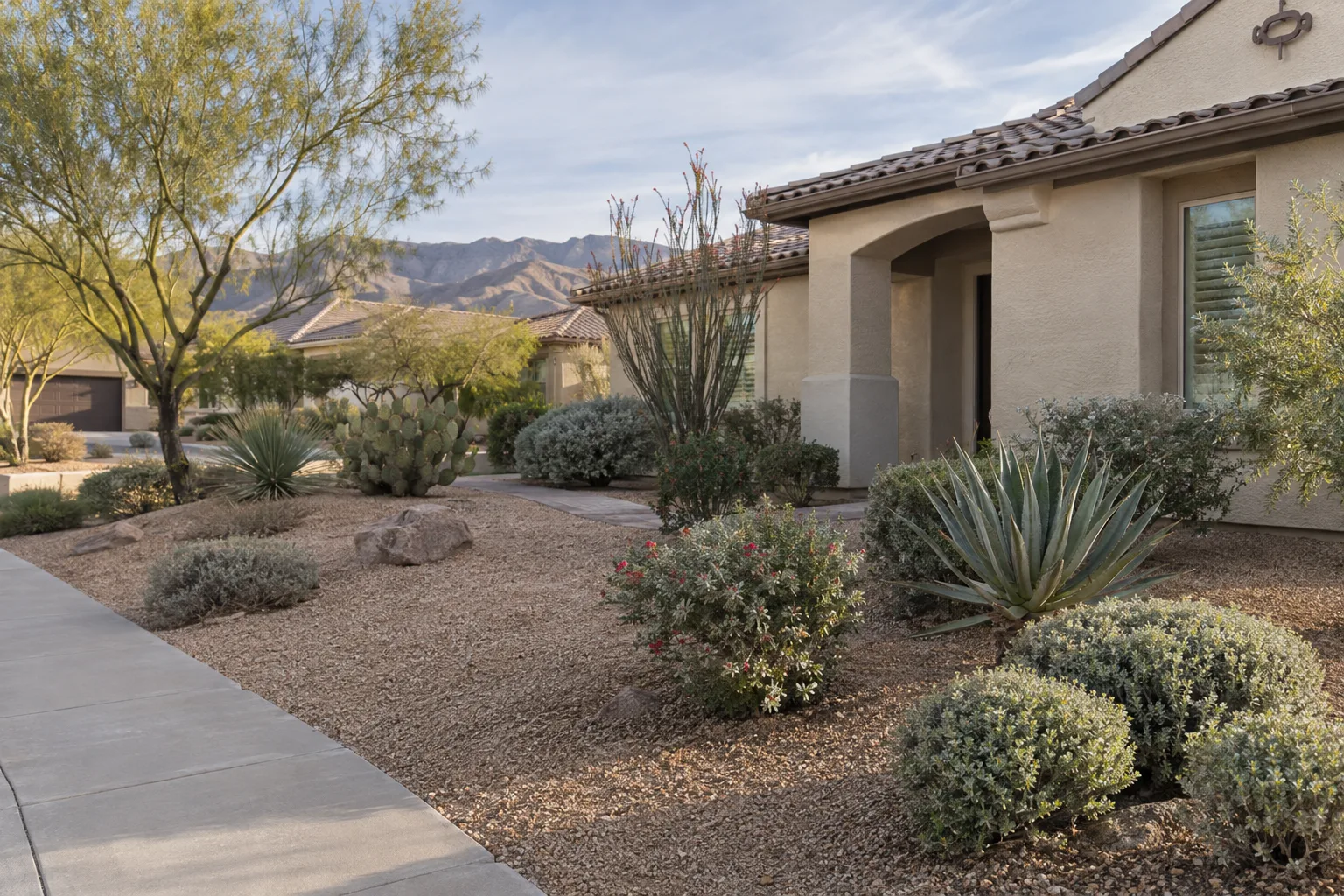
Why do HOAs notice more front yard problems in winter?
Winter removes the summer cover that hides weeds, dead stems and bare soil. A yard that looked acceptable in August can look neglected in January because the leafy growth that masked it has died back or gone dormant. Bare ground stands out.
We cannot tell you that every association inspects more often in winter, and your community may follow a fixed schedule or respond mostly to neighbor complaints. If your notice arrived between November and February, the timing most likely reflects what is visible on the street. The rules in your CC&Rs are the same ones that applied in summer.
Which front yard problems draw HOA notices most often?
Dead plants, visible weeds, bare soil, overgrown shrubs and loose debris cause most landscape notices, though your CC&Rs list the exact standards. Each one is easy to spot from the street, which is where inspectors usually start.
- Dead or collapsed plants: frost-blackened stems, mushy cactus pads and dead agave pups. Many associations set a number of days for removal, so check your notice.
- Weeds: London rocket, filaree, sowthistle and common mallow can cover a gravel yard within weeks after a soaking rain.
- Bare soil: rock that washed toward the street during monsoon storms leaves gaps behind. Refill them with approved rock, or add low plants from our plant department.
- Overgrowth: shrubs reaching over sidewalks, driveways or house numbers.
- Debris: fallen palm fronds, dead flower stalks, and seed pods and leaf litter from desert trees such as palo verde and mesquite.
Documents differ a lot. Some name specific plants, rock colors or maximum shrub heights, so reread the notice alongside the landscape section of your CC&Rs to see exactly which standard applies to you.
What should I do about frost-damaged plants?
Protect tender plants before a freeze, and wait to cut back damaged growth until the risk of frost has passed, unless it has fully collapsed. Queen Creek gets occasional winter frost, with lows that can reach 32°F or colder on clear, still nights.
Bougainvillea, lantana, yellow bells (Tecoma stans) and young citrus are common casualties in East Valley yards. Damaged leaves and stems can shield the growth beneath them from the next cold night, so many gardeners wait until late February or March to prune. Mushy cactus pads and fully collapsed stems are different. They rot, so remove those promptly.
That timing can conflict with a notice. If your HOA wants a plant removed while frost is still possible, send a short written note saying the plant is frost-damaged, give the date you plan to prune, and attach dated photos taken within a day or two of the freeze. Photos protect you.
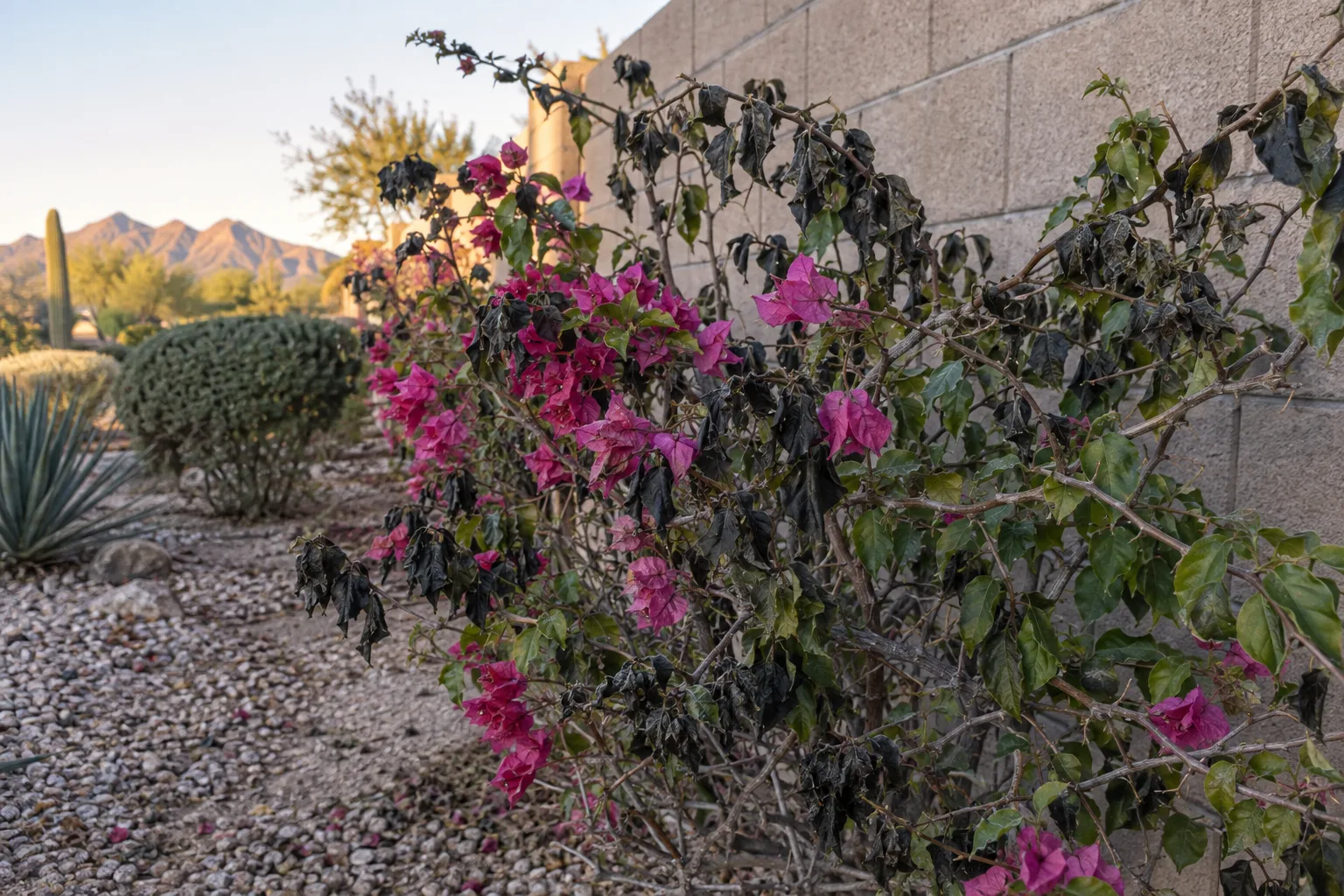
When the forecast calls for 32°F or colder, cover tender plants with frost cloth in the evening and take it off the next morning. Our gardening calendars show monthly timing for low desert tasks.
How do I keep winter weeds out of a gravel yard?
Apply a pre-emergent herbicide before winter weeds germinate, then pull what escapes while it is small. Winter annuals such as London rocket, filaree, sowthistle and common mallow sprout after the first soaking rains of the cool season.
A pre-emergent works only on seeds that have not yet sprouted, so it does nothing to weeds already growing. Many East Valley gardeners apply it in early to mid fall and water it in as the label directs. Labels differ on timing, rates and approved sites, and the label is the authority on how to use a product safely.
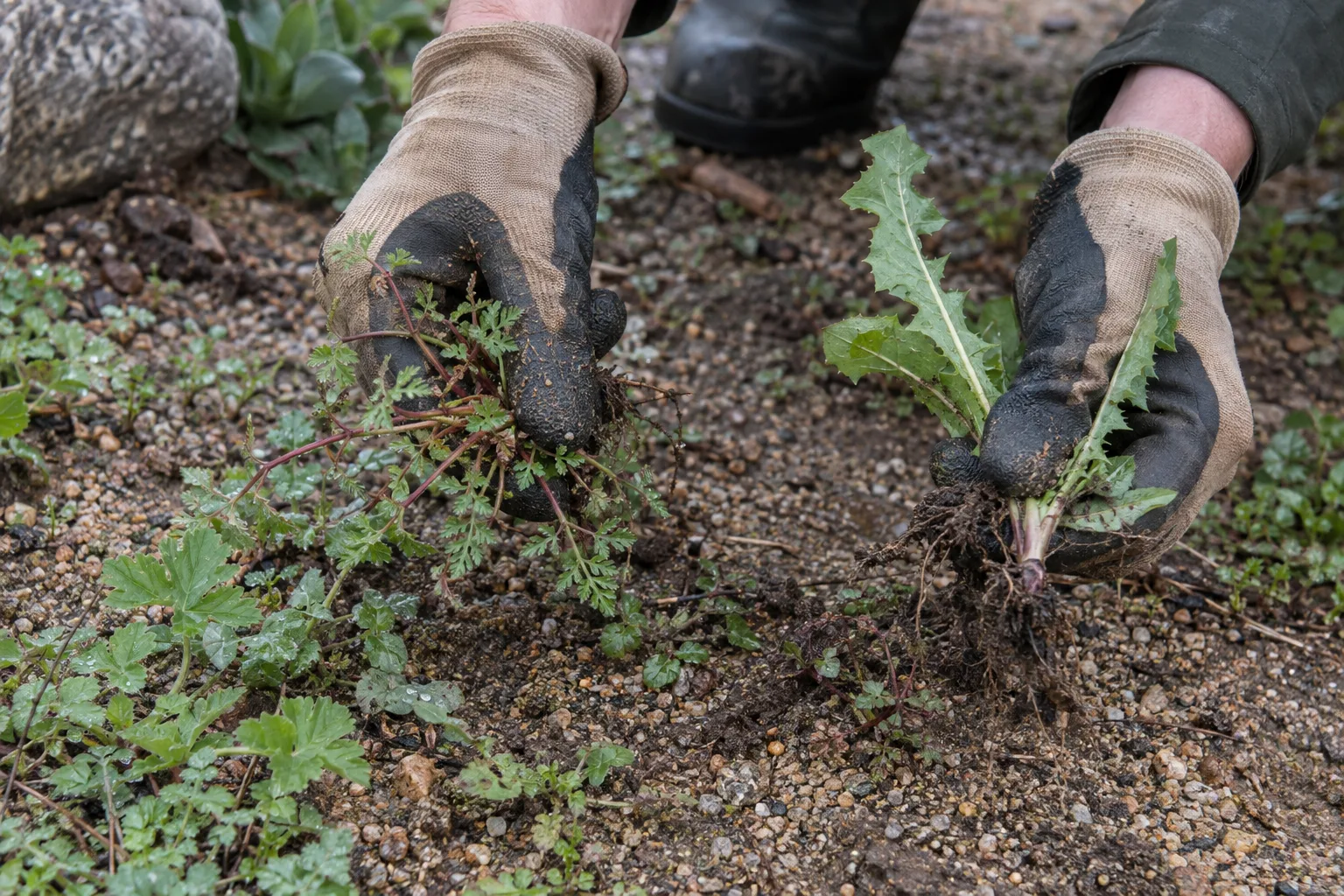
Hand-pulling works best when the soil is damp and the weeds have not flowered. Pull the whole root and bag the plants, because seed heads can ripen after pulling. For large established patches, a post-emergent herbicide labeled for the site is an option, but read the label first and check whether your CC&Rs say anything about chemical use.
State rules are a separate matter. Arizona publishes its own noxious weed list of regulated species, while your association’s idea of a weed comes from its own documents. Check both.
What ground cover do HOAs usually require?
Most associations require approved rock, decomposed granite or mulch over bare soil, but the type, color, size and coverage vary by community. “Approved” often means a specific color range or particle size, so read the landscape section before buying material.
Decomposed granite and crushed rock are widely used in low desert front yards, and depth matters for weed control. A layer of about 2 to 3 inches suppresses more weeds than a thin scattering, though deeper rock costs more and holds heat against plant stems. Organic mulch such as wood chips breaks down over time, and some associations restrict it in front yards. Rake migrated rock back each fall, before you apply pre-emergent. Check first.
How do I respond to an HOA violation notice?
Read the notice, fix what it names, and reply in writing with dated photos before the deadline on the letter. Arizona statutes for planned communities, including A.R.S. 33-1803, set out procedures for violation notices and fines, so confirm your rights and deadlines with your association or an attorney.
- Read the notice and find the CC&Rs section it cites.
- Photograph the problem areas before you start.
- Remove dead material and pull weeds, then rake rock back into bare spots.
- Apply pre-emergent after cleanup if weeds have not sprouted yet and the label allows it.
- Photograph the finished work and send a short written reply listing what you did and when.
- If you cannot finish in time, ask the board for an extension in writing before the deadline, with your plan and dates.
For larger changes such as a new rock color, removing plants or adding hardscape, ask whether your association requires architectural review approval before you begin. Approval in writing protects you if a neighbor complains about the work in progress.
Which plants keep a front yard tidy through winter?
Compact evergreen and low-litter desert plants hold their shape through the cool months and need little cleanup. Check your association’s approved plant list first, since some documents name allowed or restricted plants.
- Dasylirion wheeleri (desert spoon): an evergreen rosette that stays neat in all seasons and grows slowly. The leaf edges are toothed and sharp, so keep it away from walkways.
- Salvia greggii (autumn sage): a compact flowering shrub that stays mostly leafy in mild winters. It can drop leaves in hard frost and looks best with a trim in late winter.
- Melampodium leucanthum (blackfoot daisy): a low mound with white flowers over a long season. It can look sparse if overwatered.
- Penstemon parryi (Parry’s penstemon): a green rosette in winter with flower spikes from late winter into spring. Spent stalks need cutting back.
- Baileya multiradiata (desert marigold): silvery foliage and yellow flowers. It self-seeds and can look ragged after a heavy bloom.
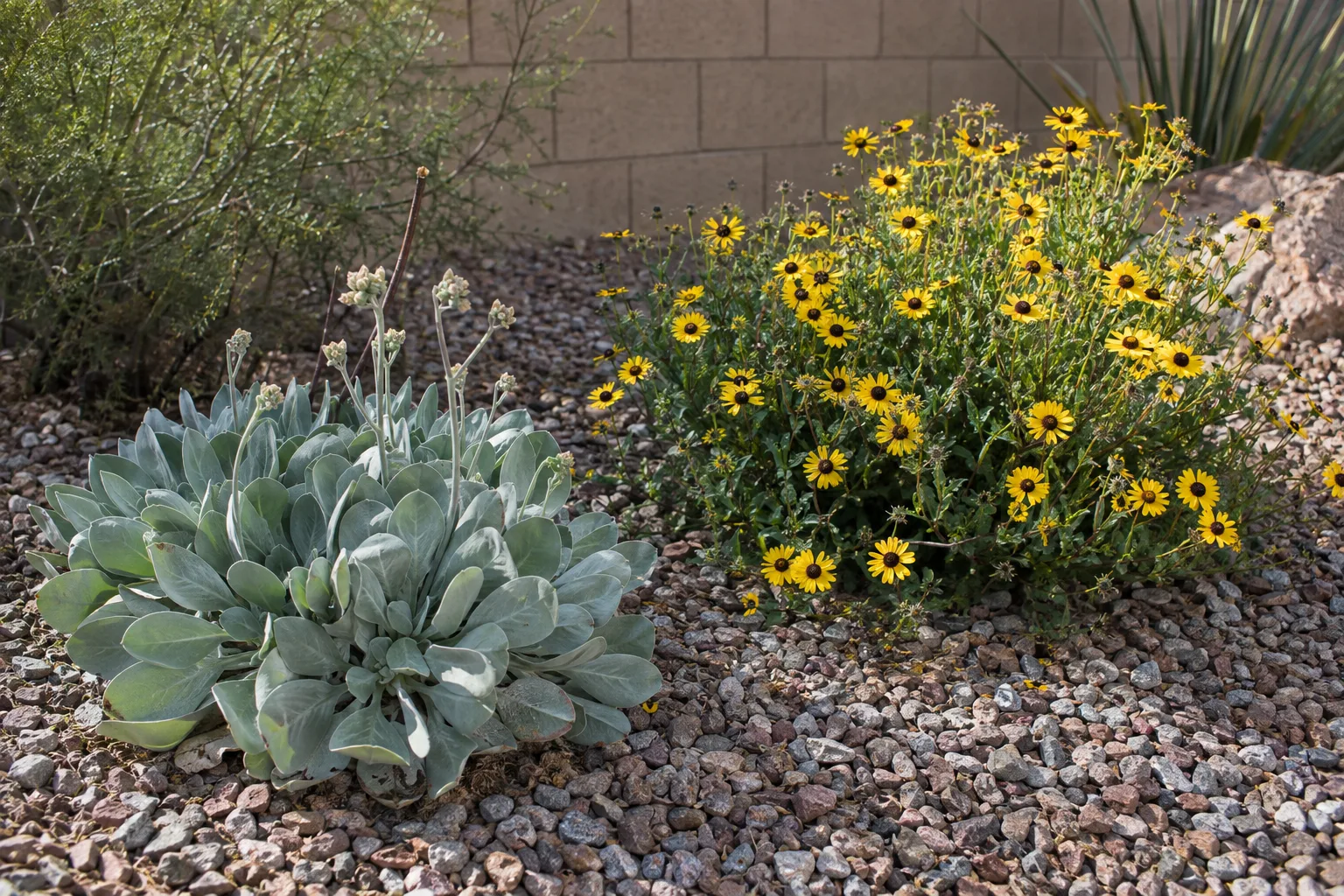
These are varieties we commonly carry, though availability changes week to week and season to season. Our classes and events page lists upcoming sessions if you want to learn more before planting.
When should I do each winter yard task?
Work in rough order: weed prevention in early fall, frost protection from late fall, weed pulling through winter, and cutting back frost damage in late winter. Dates shift with the weather, so treat this as a guide and adjust to your own yard.
| Months | Task | Reason |
|---|---|---|
| September to October | Rake rock back, trim overgrown shrubs, apply pre-emergent | Weed seeds sprout after the first cool rains |
| November to December | Keep frost cloth ready, pull the first weeds | Early weeds are easiest to remove whole |
| January to February | Pull weeds before they flower, photograph any freeze damage | Seed set begins in late winter |
| March | Cut back frost damage, replace losses, top off rock | The risk of frost has mostly passed |
Frequently asked questions
Does a dormant plant count as dead?
No, a dormant plant is alive, and many desert plants drop leaves or die back in cold weather before regrowing in spring. Scratch a stem with a fingernail, and green tissue underneath means it is alive. If your HOA asks, send a photo of the scratch test with a note naming the plant. Brittle gray stems all the way down mean the plant is dead.
Do I need approval before replacing front yard plants?
Often, yes, for larger changes. Many associations require architectural review approval for changes to front yard plants, rock or hardscape, while routine replacements in kind may not need it. Your CC&Rs and landscape guidelines spell out the difference. Ask the management company or board in writing before you buy, and keep the reply with your photos.
Can I use wood mulch instead of rock?
Maybe, depending on your CC&Rs. Organic mulch such as wood chips suppresses weeds when spread 2 to 4 inches deep, but it breaks down and needs topping off, and some associations restrict it in front yards. Rock stays put longer. Check the approved ground cover list in your documents before you order any material.
What if I cannot finish the work by the deadline?
Contact the board or management company in writing before the deadline. Send a short plan with dates, a few dated photos of work already done, and the reason for the delay, such as a contractor schedule or weather. Associations often work with owners who show progress, though an extension is the board’s decision and not a guarantee.
Is it better to pull weeds after rain?
Yes, damp soil lets roots slide out whole, so weeds are less likely to regrow from broken pieces. Wait a day after a soaking rain so the surface is not muddy. Pull before flowers open, wear gloves around spiny plants, and bag the weeds rather than leaving them on the rock.
Is it worth tidying your front yard before a notice arrives?
Yes, if your community has landscape rules, because a few hours of weeding and raking in fall or early winter cost far less than a fine or a rushed repair in January. Read your CC&Rs, photograph the yard, and apply pre-emergent on time. If you live where no association governs the yard, you can loosen the schedule and tidy up for your own enjoyment. Stop by our nursery in Queen Creek and bring photos of your front yard, and we will help you choose plants that suit it.
